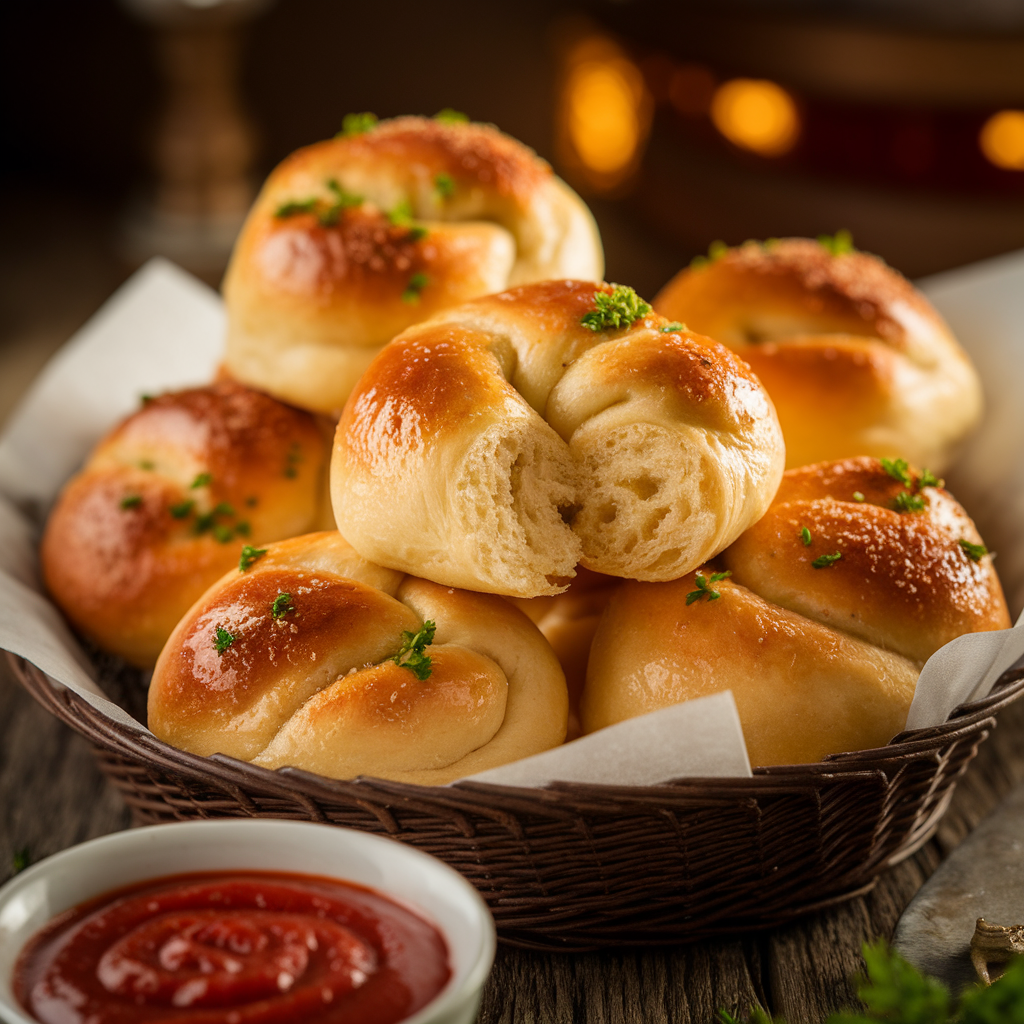
Let’s cut right to the chase: is there anything better in this world than warm, soft bread? Yes, there is. It’s Garlic Parmesan Knots—the puffy, doughy little masterpieces drenched in butter, garlic, and salty Parmesan cheese. They are the reason we order pizza and then eat half the knot basket before the pizza even arrives. Don’t lie; you know I’m right.
I spent years chasing that perfect restaurant-style garlic knot: soft on the inside, golden outside, and absolutely soaked in garlic butter. After many attempts, I finally developed a recipe that delivers every time, and honestly, it’s easier than driving to the pizzeria. This isn’t just a side dish; it’s a vehicle for dipping in marinara and a one-way ticket to comfort town. Ready to learn the secrets to the most irresistible bread knots ever? Let’s get rolling! 🚀
🥣 The Ultimate Garlic Parmesan Knots Blueprint: Recipe & Technique
We use a simple yeast dough here, but the real magic is in the technique: knotting the dough and then soaking it in that perfect butter mixture after baking. This recipe yields about 12 medium-sized knots.
H3: Ingredients: The Simple Dough Base 🍞
Don’t be afraid of yeast! You can do this. The secret to soft knots is using a rich, slightly sweet dough.
- Flour: 3 cups of All-Purpose Flour
- Yeast: 2 1/4 teaspoons (1 packet) of Active Dry Yeast
- Sweetener: 1 tablespoon of Granulated Sugar
- Salt: 1 teaspoon of Salt
- Water: 1 cup of Warm Water (105∘F–115∘F / 40∘C–46∘C)
- Fat: 2 tablespoons of Olive Oil
H3: Ingredients: The Garlic Parmesan Bath 🧈
This is the non-negotiable part. Fresh garlic and fresh Parmesan are mandatory!
- Butter: 1/2 cup of Unsalted Butter, melted
- Garlic: 4 cloves of Fresh Garlic, minced (Yes, four! Don’t be shy.)
- Herb: 1 tablespoon of Fresh Parsley, finely chopped
- Cheese: 1/2 cup of Freshly Grated Parmesan Cheese (The finely grated kind.)
- Seasoning: 1/2 teaspoon of Salt
H3: Instructions: Knead, Knot, and Soak! 🎯
The knotting technique is easier than tying your shoes—I promise!
- Activate the Yeast: In a large bowl, whisk the warm water and sugar. Sprinkle the yeast over the top and let it sit for 5–10 minutes until foamy. That foam means the yeast is happy!
- Make the Dough: Add the flour, salt, and olive oil to the yeast mixture. Mix until a shaggy dough forms. Turn the dough out onto a lightly floured surface and knead for 5–7 minutes until the dough is smooth and elastic.
- Rise Time: Place the dough in a lightly oiled bowl, cover it, and let it rise in a warm place for 1 hour, or until doubled in size.
- Knotting: Punch the dough down. Roll it out into a large rectangle (1/2 inch thick). Cut the dough into 12 strips (about 1 inch wide). Take one strip, stretch it slightly, and tie it into a simple knot. Place the knots on a parchment-lined baking sheet.
- Bake: Cover the knots and let them rise again for 20 minutes. Bake at 400∘F (200∘C) for 12–15 minutes, or until golden brown.
- The Garlic Bath: While the knots are baking, whisk together the melted butter, minced garlic, parsley, Parmesan, and salt.
- Soak and Serve: Immediately pull the hot knots from the oven. Brush the entire surface of each knot generously with the garlic-Parmesan butter. Serve immediately with marinara sauce for dipping!
🔬 The Science of the Perfect Knot: Texture is Everything
Why do we love knots more than just a slice of garlic bread? It’s the surface area, people! That knot shape is a genius move.
H3: Maximizing the Garlic Bath 🧈
The twisted shape of the knot is not just for aesthetics; it’s a strategic flavor delivery system.
- Twisted Edges: The knot creates more nooks, crannies, and exposed surface area compared to a smooth roll. This means more places for that delicious garlic-Parmesan butter to soak in.
- Soft Center: The dough seals in moisture during baking, ensuring the center of the knot remains pillowy soft and tender, even as the outside gets a crisp, golden crust.
- Active Voice Logic: When I make bread rolls, they’re great, but they can’t hold a candle to the knots. I think the knot shape is essential for soaking up the maximum amount of garlic butter goodness.
H3: The Parmesan After-Bake Rule 🧀
Notice we add the Parmesan to the butter mixture after the knots come out of the oven. This prevents burning.
- Melting Point: Parmesan cheese has a low melting point. If we baked the knots with the Parmesan butter on them, the cheese would scorch and taste bitter before the dough cooked through.
- Best Flavor: Adding it after baking, while the knots are still screaming hot, allows the Parmesan to melt slightly and adhere beautifully, giving you the freshest, cheesiest flavor.
📊 Nutritional Snapshot: Garlic Parmesan Knots 🔥
While this is definitely an indulgent side, bread is primarily a source of carbohydrates, and the garlic butter provides essential fats. This is an estimate for two medium-sized knots.
| Component | Estimated Value (Per Serving – 2 Knots) |
| Calories 🔥 | ~300-350 |
| Total Fat | ~15-20g |
| Protein | ~8-10g |
| Dietary Fiber | ~2g |
| Carbohydrates | ~35-40g |
التصدير إلى “جداول بيانات Google”
This serving size provides a good mix of complex carbs for energy and healthy fats from the olive oil and butter—perfect for soaking up that sauce!
🧄 The Garlic Game: Fresh vs. Powdered
Do you use fresh garlic or the jarred stuff? Or worse—powder? The success of these Garlic Parmesan Knots hinges on fresh garlic.
H3: The Aroma and Flavor Divide 👃
Fresh garlic contains compounds that release potent flavors and aromas when crushed, minced, and heated.
- Potency: Four cloves of fresh, minced garlic give you a much brighter, sharper, more aromatic flavor than an equivalent amount of powder. Powdered garlic can often taste dusty or flat.
- The Infusion: We melt the butter and add the garlic while the butter is warm (not hot). This gently infuses the butter with the essential oils of the garlic without burning them, yielding the best flavor.
- Active Voice Opinion: I tried this once with garlic powder when I was lazy. I found the results deeply disappointing. The knots lacked that fresh, pungent “bite” that makes them so addictive.
H3: Yeast: Your Dough’s Engine ⚙️
Getting the yeast right is the first step to a soft, fluffy knot. Don’t kill the yeast!
- Temperature Control: Water that is too cold won’t activate the yeast, and water that is too hot (above 130∘F) will kill it instantly. Aim for warm, comfortable bath water temperature (105∘F–115∘F).
- Foam Check: The initial foamy mixture of yeast, water, and sugar is your sign that the yeast is active and ready to make your dough rise.
🍕 Creative Customizations: Beyond the Classic Knot
You’ve mastered the classic Garlic Parmesan Knots recipe. Now, let’s explore ways to adapt the dough or the topping to match different meals.
H3: Dough Swaps and Flavor Infusions 🧅
You can adjust the initial dough to add complexity before it even bakes.
- Semolina Dough: Swap out 1/2 cup of the all-purpose flour for semolina flour. This gives the knots a slightly coarser texture and a lovely yellow hue, similar to some restaurant pizza doughs.
- Onion and Herb: Add 1 teaspoon of onion powder and 1/2 teaspoon of dried oregano to the dry ingredients. This introduces a classic Italian bread flavor directly into the knot.
H3: Sauce Variations (For Dip Lovers) 🌶️
Customize the butter bath to match your dipping sauce!
- Spicy Knots: Add 1/2 teaspoon of red pepper flakes to the melted butter mixture. The subtle heat is phenomenal with the rich butter and cheese.
- Pesto Knots: Replace half the butter with basil pesto. The pine nuts and basil add a savory, herbaceous twist that is perfect for dipping in plain tomato soup.
- Black Sesame: Add a tablespoon of black sesame seeds to the dough before the final rise for a beautiful speckled look and a subtle nutty crunch.
🛑 Garlic Knot Calamities: Mistakes to Never Make
You’re a seasoned baker now—don’t let a simple mistake ruin your perfect knot!
- Under-Kneading: The dough needs sufficient kneading to develop the gluten. Under-kneaded dough results in dense, heavy knots that won’t achieve that fluffy interior. Knead for the full 5–7 minutes!
- Overcrowding the Pan: The knots need room to breathe and bake into a perfect shape. Overcrowded knots touch and steam each other, resulting in pale sides instead of a golden crust.
- Using Cold Butter: Ensure your butter is completely melted for the bath. If you use cold or semi-melted butter, the garlic and Parmesan won’t infuse properly, and the glaze will be chunky, not smooth.
🎉 Conclusion: Your New Favorite Side Dish MVP
You now possess the foolproof blueprint for the ultimate Garlic Parmesan Knots (Bread). You know the magic of fresh garlic, the importance of the after-bake butter soak, and the simple beauty of a well-kneaded dough. You never have to settle for store-bought knots again!
Stop serving average bread. Go make this ridiculously flavorful side and watch everyone swoon. Go grab that garlic—dinner is about to get a whole lot better! What kind of dipping sauce are you pairing with your first batch of knots?