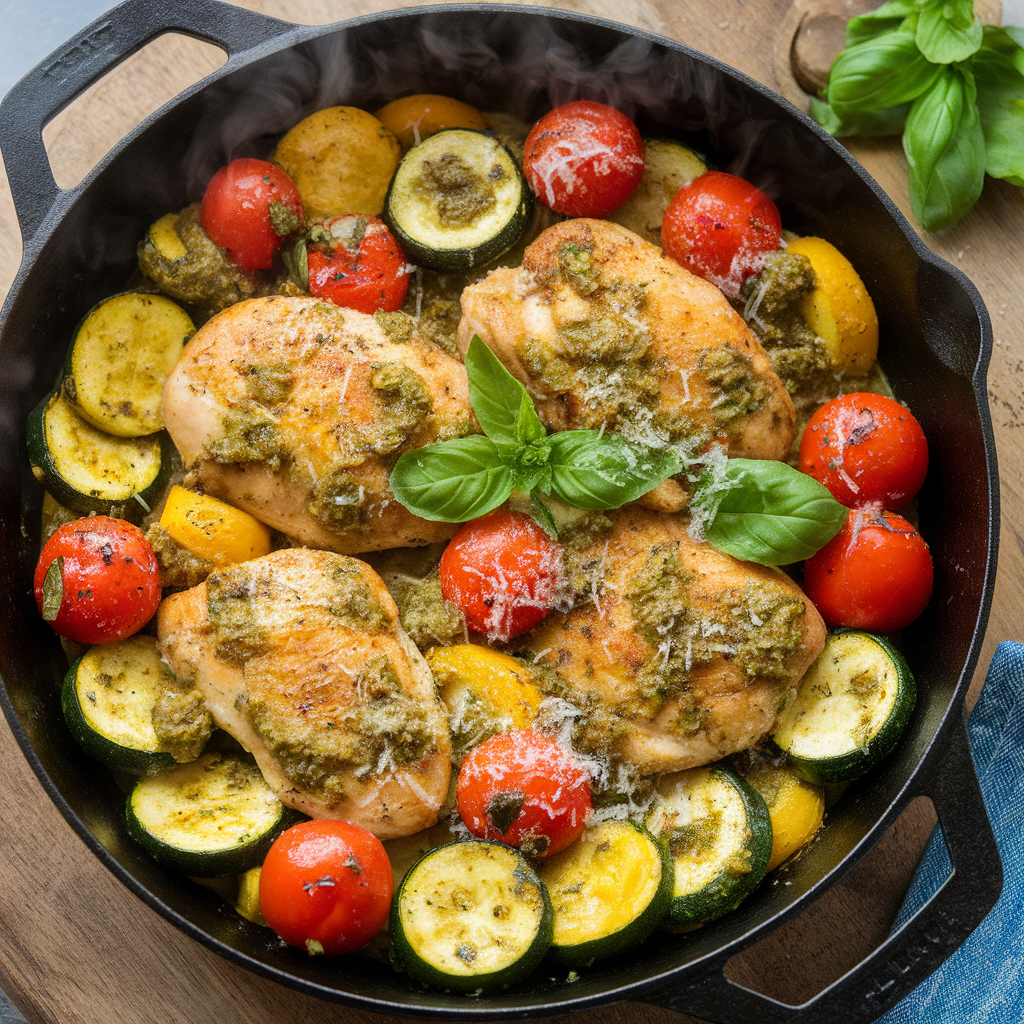
Let’s face it. On a chaotic Tuesday night, you need dinner that feels like a full, satisfying meal but doesn’t require five different pots or a culinary degree. That’s where the Chicken and Vegetable Skillet with Pesto steps in. It’s a one-pan wonder that delivers big flavor, minimal cleanup, and zero fuss. If you’ve ever stared into your fridge at 6 PM thinking, “I need food, like, now,” this recipe is your new best friend. 🎯
I initially tried to make a similar dish using a complex sauce, and honestly, it was a disaster. It was watery, the chicken dried out, and I spent an hour scrubbing the pan. Then, I realized the power of pesto. Pesto is a secret weapon; it is already seasoned perfectly with basil, pine nuts, cheese, and oil. It’s like instant gourmet flavor. This skillet method capitalizes on that instant flavor, creating a robust, healthy, and incredibly quick dinner that tastes like you actually tried.
Why the Skillet Method is Genius
We are using a single pan for a reason: efficiency and flavor layering. When you cook everything together in one skillet, the juices from the chicken, the moisture from the vegetables, and the oil from the pesto all merge. This creates a savory, concentrated pan sauce that coats every bite.
We’re skipping boiling, roasting, and separate saucing. This is a sear-and-sauté method, ensuring the chicken gets a good color and the vegetables retain a little bit of their snap. Plus, washing one pan versus three? It’s a no-brainer. IMO, one-pan meals are the true definition of smart cooking.
The Power of Pesto
Pesto isn’t just a sauce; it’s a flavor profile powerhouse. It brings together several key tastes that instantly elevate plain chicken and veggies:
- Umami: Thanks to the Parmesan cheese and the rich pine nuts.
- Aromatic: Driven by the fresh basil and garlic.
- Fat: Provided by the olive oil, which acts as the perfect vehicle to coat the protein and vegetables.
Using pesto guarantees a flavorful coating without requiring you to chop, mince, and measure seven different spices. Seriously, it’s culinary cheating, and I love it.
The Grocery Haul
The beauty of this skillet is its flexibility. You can swap the vegetables based on what you have, but this specific combination works perfectly with the pesto.
Here is your shopping list for 4 servings:
- Chicken Breast: 1.5 lbs (about 3 large breasts), cut into 1-inch cubes.
- Pesto (Jarred or Homemade): ½ cup (about 4 oz). Use good quality!
- Zucchini: 2 medium, halved lengthwise and sliced ½-inch thick.
- Yellow Squash: 1 medium, halved lengthwise and sliced ½-inch thick.
- Cherry Tomatoes: 1 cup, halved.
- Garlic: 3 cloves, minced.
- Extra Virgin Olive Oil: 1 tablespoon (for searing).
- Chicken Broth (or White Wine): ¼ cup.
- Salt: ½ teaspoon.
- Black Pepper: ½ teaspoon.
- Parmesan Cheese: ¼ cup, freshly grated (for finishing).
Prep Mastery: Uniformity and Seasoning
We need to treat the ingredients well before they hit the heat. Proper prep ensures even cooking.
H3: Sizing the Chicken
Cut the chicken breasts into uniform 1-inch cubes. If you cut some pieces too large and some too small, the small ones will overcook and dry out before the larger ones finish. Uniformity equals juiciness. Pat the chicken cubes dry with a paper towel.
H3: Pre-Season the Protein
Place the chicken cubes in a bowl. Toss them with the salt and pepper. We are seasoning the meat directly, not just the oil in the pan. This step is non-negotiable for flavor penetration.
H3: Vegetable Chopping
Slice the squash and zucchini into ½-inch pieces. Don’t cut them too thin! Thicker cuts prevent them from turning into mush during the sauté. We want firm, vibrant vegetables, not a sad vegetable puree.
The Skillet Execution
Grab your largest, heaviest skillet—cast iron or stainless steel works best. This ensures even heat distribution, which is key for a proper sear.
1. Sear the Chicken
Heat the 1 tablespoon of olive oil in your skillet over medium-high heat. Once the oil shimmers, add the seasoned chicken cubes. Do not overcrowd the pan. If you have too many pieces, cook them in two batches. Overcrowding lowers the pan temperature, which results in steaming the chicken instead of searing it. We want a golden-brown crust.
Sear the chicken for about 3–4 minutes, turning occasionally, until the cubes are browned on all sides. They won’t be cooked through yet, and that’s perfect. Remove the chicken from the pan and set it aside. Leave the glorious browned bits (the fonds) in the pan.
2. Sauté the Vegetables
Reduce the heat to medium. Add the minced garlic to the skillet and sauté for about 30 seconds until fragrant. Don’t let it burn! Burnt garlic is bitter garlic.
Toss in the sliced zucchini and yellow squash. Sauté them for 5–7 minutes, stirring frequently. We want them tender-crisp, with a slight char on the edges, but still maintaining their shape.
3. Deglaze and Combine
Pour the ¼ cup of chicken broth (or white wine) into the hot skillet. Scrape up all those browned bits from the bottom of the pan—that’s pure flavor! Let the liquid bubble and reduce slightly. This is deglazing, and it forms the base of our savory sauce.
Return the partially cooked chicken to the skillet. Add the halved cherry tomatoes.
4. Pesto Perfection
Reduce the heat to low. Spoon the ½ cup of pesto over the chicken and vegetables. Stir gently until everything is coated in that gorgeous green sauce. Cook for just 2–3 minutes, until the chicken is cooked through.
The internal temperature of the chicken must reach 165°F (74°C). Use an instant-read thermometer to check the largest piece.
5. Finish and Serve
Turn the heat off. Sprinkle the ¼ cup of freshly grated Parmesan cheese over the top. The residual heat melts the cheese slightly, finishing the sauce. Serve immediately.
Troubleshooting: Why Is My Skillet Watery?
If your final skillet looks soupy instead of saucy, don’t worry, it’s a common issue with vegetable skillets.
- Excessive Moisture in Veggies: Squash and zucchini release a lot of water. If you used too much broth or added too many vegetables that weren’t properly sautéed, you’ll get excess liquid. Cook the veggies longer before adding the chicken back in.
- Overcrowding the Pan: This goes back to searing. If you steam the chicken and vegetables, they dump all their water at once, and the sauce doesn’t reduce properly. Cook in batches!
- The Pesto Factor: Some store-bought pestos contain more water than oil. If your brand is very liquidy, drain off some of the excess oil before adding it.
Nutritional Information (Per Serving)
This Chicken and Vegetable Skillet offers an excellent balance of lean protein, healthy fats, and fiber-rich vegetables. It’s definitely a winner for a healthy dinner.
Assuming 4 servings:
- Calories: ~450 kcal
- Protein: 45g
- Carbohydrates: 10g
- Fat: 25g (mostly healthy fats from the pesto and olive oil)
- Fiber: 3g
Note: The fat content can fluctuate widely depending on the type and brand of pesto you use.
Pro-Tips for Pesto Perfection
Want to make this dish even better? Here are a few tweaks I use regularly:
- Char the Corn: If you have it, cut kernels from 2 fresh cobs and sauté them dry in the pan before adding the oil for the chicken. Charred corn adds a smoky depth that is fantastic with pesto.
- Add Acid: If the finished dish tastes a little heavy, squeeze a tiny bit of fresh lemon juice over the top. This immediately brightens all the flavors.
- Use the Good Cheese: Always finish with freshly grated Parmesan. The pre-shredded stuff contains anti-caking agents that prevent it from melting properly. You want that fresh, nutty flavor melt.
Variations and Swaps
This is your dinner, so swap out anything you don’t like!
- Different Veggies: Try swapping the squash for broccoli florets or chopped asparagus. Just remember to add harder veggies (like broccoli) earlier in the sauté process.
- Different Protein: Swap the chicken breast for boneless, skinless chicken thighs. Thighs contain more fat, making them even juicier and harder to overcook. Cook them a minute or two longer.
- Pesto Alternatives: If you don’t like basil, try a sun-dried tomato pesto (for richness) or a kale pesto (for earthiness and color).
Final Thoughts
You just created a satisfying, flavor-packed Chicken and Vegetable Skillet with Pesto using one single pan. You successfully bypassed all the typical pitfalls of weeknight cooking—too many dishes, dry chicken, and bland flavors. The high-heat sear, the deglazing, and the final kiss of pesto all worked together to make a dinner that feels way more elaborate than the 20 minutes it took.
This recipe proves that fast food can be fresh food. Seriously, you rock for getting a full serving of protein and veggies on the table so quickly!