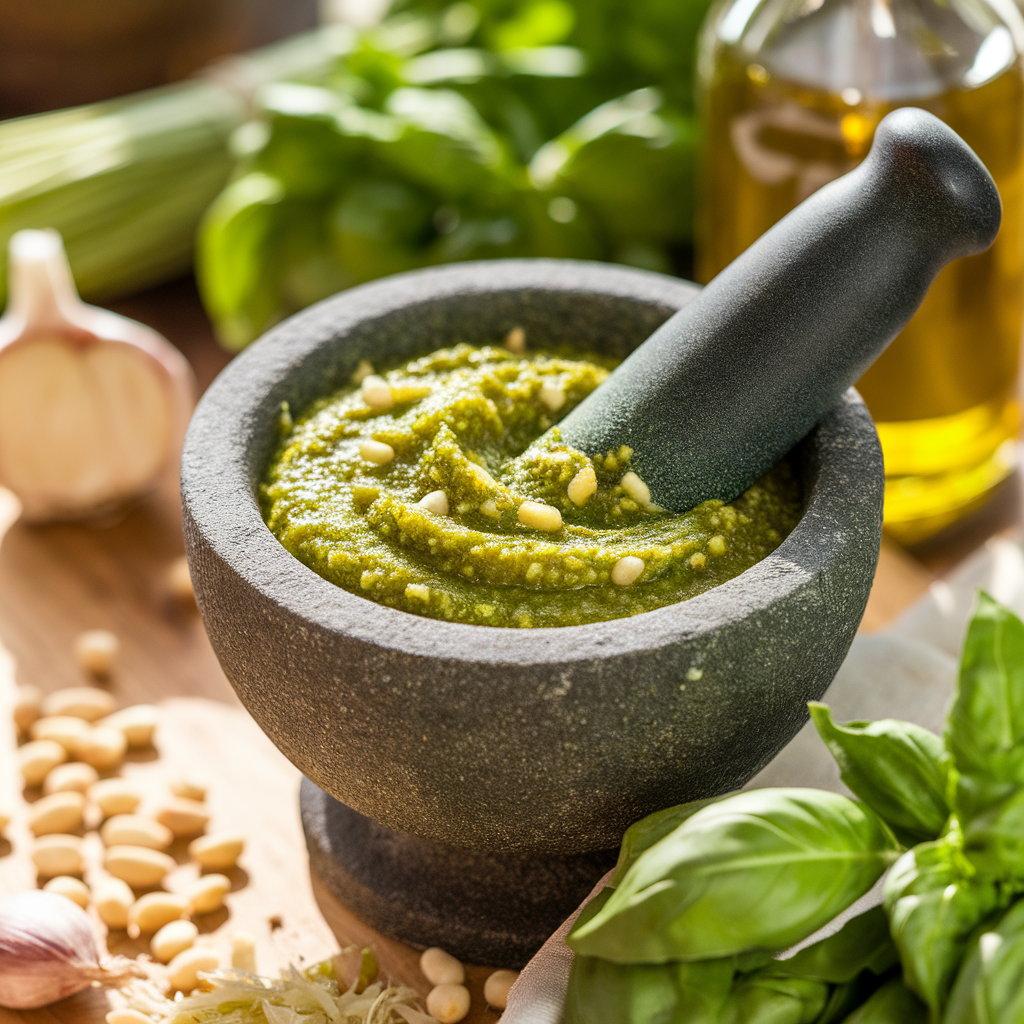
Let’s be real. Have you ever tried to pass off that neon green goo from a jar as authentic Basil Pesto? I’m judging you, but only slightly, because I used to do it too. That jarred stuff is usually lackluster, oily, and lacks the bright, fiery freshness of truly homemade pesto. We are talking about liquid sunshine, Italian style!
If you want to feel like a culinary genius with minimal effort, making your own pesto is the answer. It’s vibrant, it’s garlicky, it’s intensely cheesy, and it takes literally five minutes in a food processor. I started making this recipe when my basil plant nearly took over my patio, and now I can’t go back. This pesto is the easiest way to elevate everything from pasta to eggs. 🇮🇹
🥜 The Pesto Puzzle: Understanding the Classic Ingredients
Authentic Pesto alla Genovese follows a strict formula, relying on five core ingredients, each playing a vital role. You need the perfect balance of fresh herbs, fat, texture, and salt.
- Basil (The Star): It must be fresh basil. No substitutions! It provides the sweet, peppery, aromatic base.
- Pine Nuts (The Creamy Crunch): They lend a subtle, rich flavor and a creamy texture when blended.1
- Parmesan Cheese (The Umami Bomb): Freshly grated Parmigiano-Reggiano adds essential saltiness and depth.
- Garlic (The Kick): A little goes a long way. It gives the pesto its signature punch.
- Olive Oil (The Binder): Use a good quality Extra Virgin Olive Oil for its fruity flavor and to create the smooth emulsion.
Ever wondered why pesto is sometimes bitter? Usually, you either over-blended the basil or used poor-quality oil. We’ll fix that!
🧄 The Secret Sauce Ingredients (The Genoese Formula)
We stick to tradition for the best flavor, but I offer a few hacks for a better texture and brighter color. Active voice check: You will love this ingredient lineup!
H3: Homemade Basil Pesto Ingredients
This recipe makes about 1 1/2 cups of pesto, which is enough for a large pasta dish or several small meals.
- 2 Cups Fresh Basil Leaves: Lightly packed. Make sure you use only the leaves; the stems get bitter.
- 1/2 Cup Extra Virgin Olive Oil: Good quality is crucial here.
- 1/4 Cup Pine Nuts: Lightly toasted (we’ll cover why below).
- 1/2 Cup Freshly Grated Parmigiano-Reggiano: Do not use the pre-shredded stuff in a tub.
- 2 Small Cloves Fresh Garlic: Peeled. (Adjust to your garlic tolerance, but two is the traditional amount).
- 1/2 Teaspoon Kosher Salt: To taste, since the Parmesan adds salt too.
- 1/4 Teaspoon Black Pepper: Freshly ground.
🎯 The Method: Fast, Fresh, and Flavorful
Making pesto is less about cooking and more about assembly. Your food processor is your best friend here. IMO, it’s the easiest tool for the job.
H3: Step 1: Toast the Pine Nuts (Don’t Skip!)
- Toast for Flavor: Place the pine nuts in a small, dry skillet over medium heat.
- Watch Closely: Toast them for about 2–4 minutes, shaking the pan constantly, until they turn light golden and smell fragrant.
- Cool Down: Transfer them immediately to a plate to cool. FYI, this step deepens the nutty flavor and is totally worth the minimal effort.
H3: Step 2: Blitz the Solids
- Pulse the Hard Stuff: Place the cooled pine nuts and the garlic cloves into the bowl of your food processor.
- Process: Pulse several times until they are finely chopped and combined.
H3: Step 3: Add the Basil and Cheese
- Introduce the Basil: Add the fresh basil leaves and the salt and pepper to the processor bowl.
- Pulse the Herbs: Pulse until the basil is coarsely chopped. Stop before it turns into a paste. We don’t want a smooth purée yet, which avoids over-processing and bitterness.
- Add the Cheese: Scrape down the sides, then add the Parmesan cheese and pulse a few more times.
H3: Step 4: Emulsify with Oil
- Slow Drizzle: With the food processor running continuously, slowly drizzle the olive oil through the feed tube.
- Process to Consistency: Continue processing until the pesto reaches your desired consistency—usually about 30–60 seconds. Active voice: You will see the texture turn into a beautiful, coarse, rich sauce.
🎨 Troubleshooting and Variations: Pesto Perfection
Pesto is remarkably forgiving, but a few pitfalls can ruin your beautiful sauce. Here is how you ensure perfection and explore fun variations.
- The Browning Basil Issue: Basil can oxidize quickly. To help keep the Homemade Pesto vibrant green, you can blanch the basil leaves for 10 seconds in boiling water and then immediately plunge them into an ice bath before blending.
- Nut Swaps: Ran out of pine nuts? Walnuts are a fantastic, slightly earthier substitute. You can also use almonds or pistachios!
- Oil Substitution: You can use part vegetable oil with a milder flavor, but always use at least half Extra Virgin Olive Oil for that essential Mediterranean complexity.
- Herb Alternatives: Try swapping out half the basil for fresh spinach or arugula for a peppery kick and even brighter color.
🍝 Serving Suggestions: More Than Just Pasta
I always make a double batch of Basil Pesto because it disappears so fast. Limiting it to pasta is a culinary crime; it deserves to be everywhere!
- Pizza and Flatbread: Use it as a vibrant base instead of tomato sauce.
- Grilled Cheese Upgrade: Spread a layer inside your grilled cheese sandwich before cooking.
- Spread and Dip: Mix a spoonful into cream cheese for a dip, or spread it on toasted baguette slices.
- Egg Scramble: Stir a spoonful into scrambled eggs before cooking them for a burst of flavor.
- Vegetable Roast: Toss roasted potatoes or broccoli with a dollop of pesto right before serving.
🧊 Storage Hacks: Keeping Your Pesto Fresh
Since pesto contains fresh herbs, it won’t last forever. However, you can easily preserve that summer flavor for months.
- Refrigerator: Store it in an airtight container in the fridge for up to 5 days. To prevent browning, pour a thin layer of olive oil on top before sealing the container.
- Freezer (Best Method): Spoon the pesto into ice cube trays. Pour a little extra oil over the top of each cube, then freeze. Active voice: You pop out a cube whenever you need a flavor boost! The frozen cubes last for up to 6 months.
📊 Nutritional Information (Per 2 Tablespoon Serving)
Pesto is rich in healthy fats from the nuts and olive oil. This estimate uses the quantities listed and assumes high-quality ingredients.
| Component | Value |
| Calories 🔥 | ~170 kcal |
| Fat | ~17g |
| Protein | ~4g |
| Carbohydrates | ~1g |
Final Verdict: Embrace the Pesto Life! 💚
You’ve successfully defeated the sad jar and created your own luminous, fresh, and complex Homemade Basil Pesto. You now possess the ultimate flavor enhancer. Enjoy that beautiful green gold!
Now that you have the perfect sauce, what’s next? Would you like my easy recipe for a Caprese Pasta Salad that highlights your new pesto?