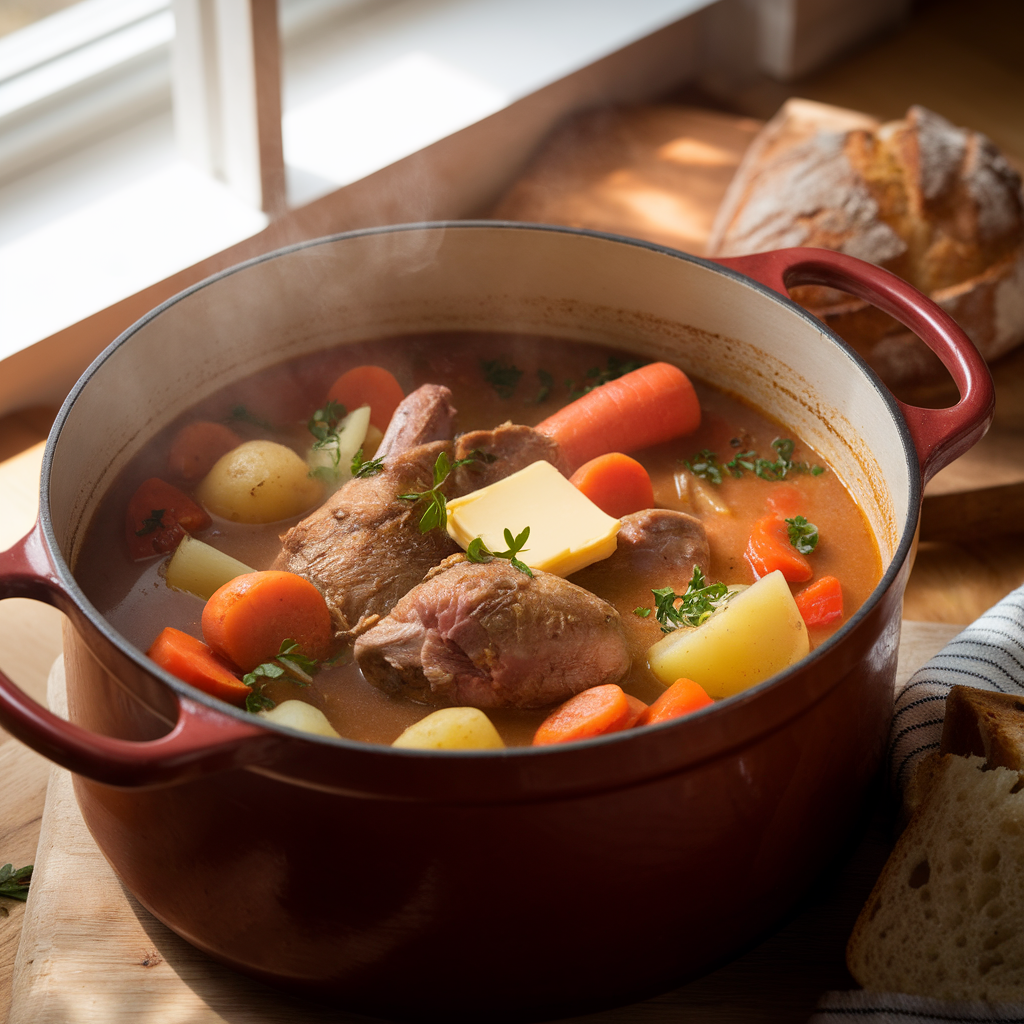
Meta Description: Discover the ultimate Classic Rabbit Stew Recipe with Root Vegetables! Learn how to cook rabbit stew that’s unbelievably tender and packed with flavor. Complete with pro tips, pairings, and a step-by-step guide.
🥕 Classic Rabbit Stew with Root Vegetables: A Cozy Kitchen Masterpiece
If there is one dish that instantly transports me back to my grandmother’s kitchen—a space always filled with the comforting smell of woodsmoke and savory herbs—it’s Classic Rabbit Stew Recipe with Root Vegetables. It’s not just a meal; it’s an experience. I remember her telling me that the secret to a great stew wasn’t just the ingredients, but the patient simmering that turns simple food into gold. She’d throw in a mix of what she called “earth treasures”—carrots, parsnips, and potatoes—that grew sweeter the longer they cooked.
This recipe is my tribute to that slow-cooked magic. It’s the kind of hearty, soul-soothing food you crave when the weather turns crisp, and all you want is a bowl that warms you from the inside out. We’re going to use simple, fresh ingredients to create a deeply flavored sauce and meat so tender it falls right off the bone. Forget the bland, boring stews you might be picturing. This one is rich, rustic, and profoundly satisfying. It’s also surprisingly straightforward, making it the perfect weekend project for any home cook looking to elevate their kitchen game.
The Heritage of Comfort: Why You’ll Love This Dish
Rabbit, often overlooked in modern cooking, has been a staple in European and American kitchens for centuries, particularly in rustic country fare. If you’ve never tried it, you might be asking: what does rabbit taste like in a stew? It’s a common question! Think of it as a lean, mild-flavored chicken that’s slightly more robust and gamey, with a wonderful texture that absorbs the flavors of the stew beautifully. Because the meat is lean, the low-and-slow cooking method we use here—braising—is absolutely essential for achieving that melt-in-your-mouth tenderness.
Using a medley of root vegetables doesn’t just add bulk; it builds complexity. The carrots, parsnips, and celery root caramelize slightly as they cook, releasing a natural sweetness that balances the savory herbs and rich broth. This is the foundation of a true comfort food classic. You’ll find that the final dish is not only a fantastic meal but also an impressive piece of culinary history you can bring to your own table. It’s a perfect example of a frugal dish transformed into an elegant, deeply satisfying dinner.
⏰ Prep Time & Cook Time Summary
| Task | Time |
| Prep Time | 30 Minutes |
| Cook Time | 2 Hours 30 Minutes |
| Total Time | 3 Hours |
| Serves | 6 |
✅ Ingredients for a Classic Rabbit Stew
To make this deeply flavorful Classic Rabbit Stew Recipe with Root Vegetables, you’ll need the following components. Quality ingredients are the first step to an unforgettable meal. Always choose fresh, high-quality root vegetables for the best flavor infusion.
🥩 The Rabbit and Base
- 3 lbs (approx. 1.4 kg) rabbit, cut into 6–8 pieces (or substitute with chicken thighs for a variation)
- 3 Tbsp all-purpose flour
- 1 tsp kosher salt
- 1/2 tsp freshly ground black pepper
- 4 Tbsp olive oil or bacon fat, divided
- 1 large yellow onion, roughly chopped
- 4 cloves garlic, minced
- 2 cups dry red wine (a Cabernet Sauvignon or Pinot Noir works well)
- 4 cups chicken or vegetable stock (low sodium)
- 2 Tbsp tomato paste
- 2 bay leaves
- 4 sprigs fresh thyme
- 2 sprigs fresh rosemary
🥕 The Root Vegetables
- 4 large carrots, peeled and cut into 1-inch chunks
- 3 celery stalks, roughly chopped
- 2 parsnips, peeled and cut into 1-inch chunks
- 1 lb (approx. 450g) potatoes (Yukon gold or small red potatoes), peeled and quartered
- 1 celery root (celeriac), peeled and diced (optional, but adds a wonderful earthy note)
🌿 Finishing Touches
- 2 Tbsp fresh parsley, chopped (for garnish)
- 1 Tbsp butter (to enrich the sauce at the end)
👩🍳 Step-by-Step Cooking Instructions
Follow these steps precisely to master the art of stewing rabbit meat for tenderness and developing an incredibly deep, rich sauce.
- Prepare the Rabbit: In a shallow dish, combine the flour, salt, and pepper. Dredge the rabbit pieces in the mixture, shaking off any excess. This light coating is vital for a good sear and helps to thicken the stew later.
- Sear the Meat: Heat 2 tablespoons of the olive oil or bacon fat in a large, heavy-bottomed Dutch oven over medium-high heat. Working in batches to avoid crowding the pan, sear the rabbit pieces until they are deeply golden-brown on all sides. This step is non-negotiable for building flavor! Once browned, remove the rabbit and set it aside.
- Sauté the Aromatics: Reduce the heat to medium. Add the remaining 2 tablespoons of oil to the pot. Add the chopped onion and celery, cooking until softened and translucent, about 5–7 minutes. Scrape up any browned bits from the bottom of the pot—that’s pure flavor!
- Add Garlic and Tomato Paste: Stir in the minced garlic and cook for about 1 minute until fragrant. Then, stir in the tomato paste and cook it for another 2 minutes. Cooking the paste helps to concentrate its sweetness and deep red color.
- Deglaze with Wine: Pour in the red wine. Use a wooden spoon to scrape all the delicious fond (the browned bits) from the bottom of the pot. Bring the wine to a boil and let it bubble and reduce by about half, which should take 5–8 minutes. This concentrates the wine flavor and cooks off the sharp alcohol.
- Simmer the Stew: Return the seared rabbit to the pot. Add the chicken stock until the meat is mostly submerged. Tuck in the bay leaves, thyme, and rosemary. Bring the liquid to a gentle simmer.
- Braise for Tenderness: Once simmering, reduce the heat to low, cover the pot tightly, and let it cook for 1.5 hours. This extended, gentle braise is key to stewing rabbit meat for tenderness.
- Introduce Root Vegetables: After 1.5 hours, the rabbit should be nearly tender. Now, add the carrots, parsnips, potatoes, and diced celery root to the pot. Stir gently to combine.
- Finish Cooking: Re-cover the pot and continue to simmer for another 45–60 minutes, or until the root vegetables are fork-tender and the rabbit meat is falling off the bone. The sauce should have thickened slightly from the flour coating.
- Final Touches: Remove the herb sprigs and bay leaves. Stir in the tablespoon of butter to add richness and a beautiful glossy finish to the sauce. Taste and adjust the seasoning with more salt and pepper as needed. Garnish generously with fresh parsley before serving. You’ve now mastered this Classic Rabbit Stew Recipe with Root Vegetables!
🌟 Pro Tips and Common Questions
This section will help you tackle common hurdles and refine your technique so you know exactly how to cook rabbit stew like a seasoned professional.
Why Sear the Meat?
Searing the rabbit pieces is not merely a step; it’s an absolute foundation of flavor. The high heat creates the Maillard Reaction, a chemical process that browns the exterior of the meat, creating hundreds of new, complex flavor compounds. Without this dark, caramelized crust, your stew will taste flat and watery. A good sear seals in flavor and gives the stew a deeper, more robust, and meaty profile. Don’t skip it!
Choosing the Best Root Vegetables
While this recipe calls for braised rabbit with carrots and potatoes, you can definitely customize your vegetable mix. The key is to choose vegetables that can hold up to long, slow cooking. Avoid delicate vegetables like broccoli or spinach, which will turn to mush.
- Alternatives: Consider adding cubed turnips for a slight bitterness, sweet potatoes for extra sweetness, or pearl onions for a beautiful texture and flavor pop. Just make sure to cut all your vegetables into roughly the same size—about 1-inch chunks—so they cook evenly.
Can I Use Less Wine?
The red wine in this recipe serves multiple crucial purposes: it deglazes the pot (releasing flavor), tenderizes the meat with its acidity, and adds a layer of fruity, savory depth that is hard to replicate. You can certainly substitute the wine with extra beef or chicken stock, but your stew will lack the same depth. If you must substitute, consider adding a tablespoon of balsamic vinegar to the stock to mimic the wine’s acidity and dark flavor notes.
✨ Serving, Variations, and Storage
Once your gorgeous, rich stew is ready, half the fun is deciding how to present it and what to pair it with.
The Best Pairings: Side Dishes for Rabbit Stew
Rabbit stew is already a complete meal, but a few simple additions can elevate the experience. When considering best side dishes for rabbit stew, think about textures that contrast the stew’s richness.
- Crusty Bread: Essential for soaking up every last bit of that luscious sauce. A baguette or sourdough is perfect.
- Creamy Polenta or Mashed Potatoes: A velvety, smooth base provides a wonderful contrast to the chunky vegetables and tender meat.
- Simple Green Salad: A light, slightly acidic vinaigrette on a bed of peppery arugula cuts through the stew’s richness beautifully.
For a drink pairing, the red wine used in the recipe (like a full-bodied Cabernet Sauvignon) often pairs perfectly with the finished dish.
Creative Recipe Variations
This recipe is rooted in the classic French preparation, often called French-style rabbit stew or Lapin à la jardinière (rabbit with gardener’s vegetables). You can easily adapt it:
- Dijon Variation: Stir in 2 tablespoons of whole-grain Dijon mustard right before serving. The mustard adds a tangy, sharp counterpoint to the savory meat.
- Creamy Stew: For a richer finish, remove a cup of the hot broth and whisk it with 1/4 cup of heavy cream. Stir the cream mixture back into the pot and simmer for a minute.
- Herb Twist: Swap out the rosemary and thyme for a combination of Herbes de Provence and a pinch of fennel seed for a truly rustic Southern French flavor. This makes for a slightly different, but still excellent, easy root vegetable stew recipe.
Storage Tips
- Refrigeration: The stew is excellent the next day! Cool it completely, then store it in an airtight container in the refrigerator for up to 3–4 days. Stews often taste even better after the flavors have had a chance to meld overnight.
- Freezing: This stew freezes exceptionally well. Pour the cooled stew into freezer-safe containers, leaving about an inch of headspace. It will keep in the freezer for up to 3 months. Thaw overnight in the refrigerator and reheat gently on the stovetop.
Nutritional Information (Estimated Per Serving)
This information is an estimate based on the ingredients and serving size of 6.
| Component | Amount |
| Calories | 450 kcal |
| Protein | 40g |
| Fat | 18g |
| Carbohydrates | 30g |
| Fiber | 6g |
| Iron | 4mg |
A Final Invitation to the Table
You’ve made it! You now have a pot full of a delicious, authentic, and wonderfully comforting meal. This Classic Rabbit Stew Recipe with Root Vegetables is a truly rewarding dish to prepare. It’s a gentle reminder that the best things in life—and in the kitchen—often require a little time and patience. The deep, savory flavors, the fall-apart meat, and the sweet earthiness of the root vegetables all combine into a single, perfect spoonful. The long braise is what transforms simple ingredients into an extraordinary feast.
So, gather your favorite people, pull out a few big, sturdy bowls, and share this moment. I promise you’ll be scraping the pot clean! Now it’s your turn. Give this recipe a try this weekend, and don’t forget to tell me how your stew turned out and what kind of root vegetables you decided to use. Happy cooking!