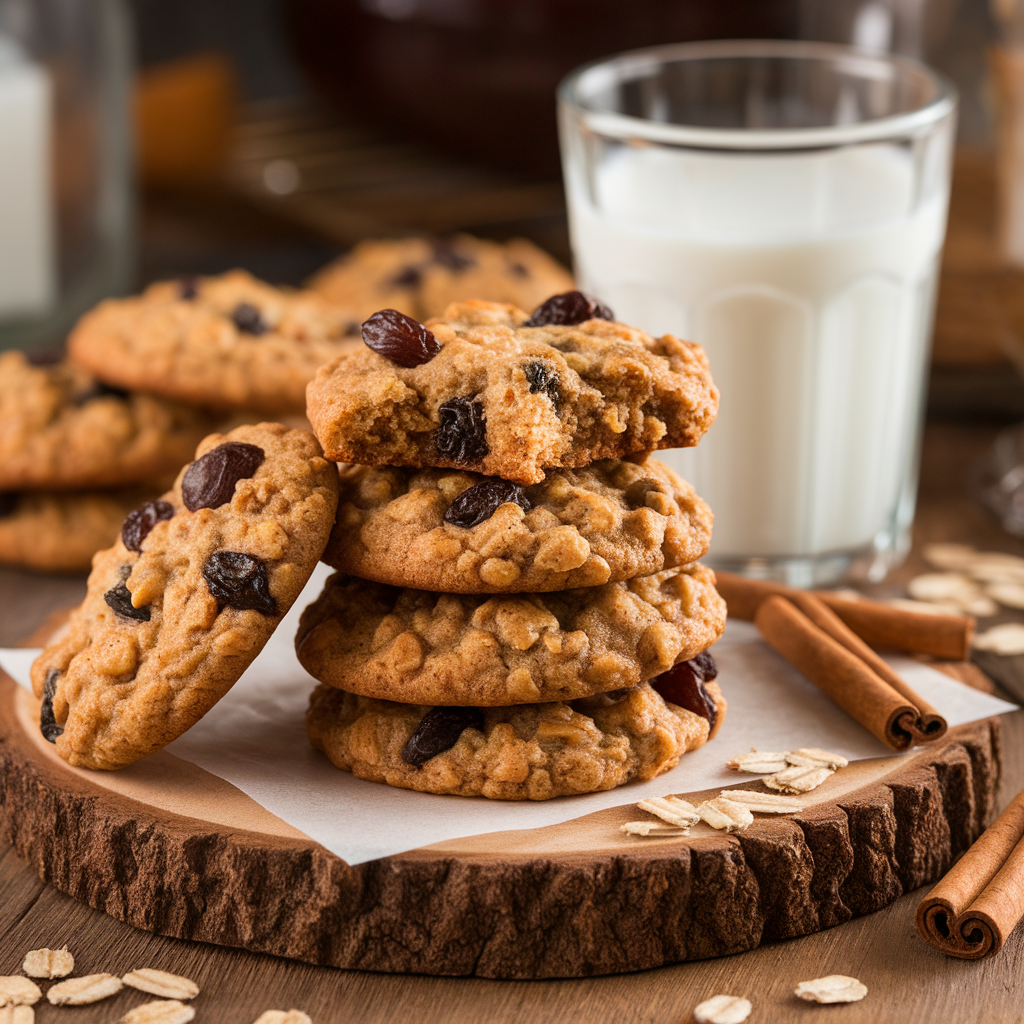
Oatmeal raisin cookies. Just the name conjures up memories of grandmas and cozy kitchens, but let’s be real—they have a serious reputation problem. Too often, they turn out either rock-hard, bland, or confusingly cakey. It’s like they’re trying to be healthy but failing spectacularly at being delicious. Am I right, or am I right? 🍪
I spent an embarrassing amount of time perfecting this Oatmeal Raisin Cookies (Soft and Chewy) recipe. I was determined to prove that these cookies deserve a seat at the dessert table next to the chocolate chip kings. This recipe delivers a cookie that is thick, soft in the center, perfectly chewy at the edges, and packed with warm spices and plump raisins. The secret is a combination of brown sugar, melted butter, and a mandatory chilling period. We are making a cookie that doesn’t crumble your dreams.
The Science of Soft and Chewy
Baking is chemistry, and achieving that sought-after soft and chewy texture requires specific ingredient ratios. We are fighting two common enemies here: spread and dryness.
H3: The Brown Sugar Advantage
We use significantly more brown sugar than white sugar in this recipe. Why? Brown sugar contains molasses, which adds flavor, sure, but more importantly, it adds moisture. This extra moisture is key to the cookie’s final texture, preventing it from drying out during baking. It also makes the final cookie chewier.
H3: The Melted Butter Factor
Notice we are using melted butter instead of softened butter. Melted butter disperses the fat more evenly, which encourages the cookies to spread less and results in a denser, chewier center. Using softened butter incorporates too much air, which gives you a lighter, cakier texture. If you want chew, use melted butter. 🧈
The Grocery Haul
This recipe yields about 2 dozen large cookies. You should definitely double the batch; these disappear fast.
Here is your essential list:
- Unsalted Butter: 1 cup (2 sticks), melted.
- Brown Sugar (packed): 1 cup.
- Granulated Sugar: ½ cup.
- Large Egg: 2 (room temperature).
- Vanilla Extract: 1 tablespoon.
- All-Purpose Flour: 1 ½ cups (187g).
- Old-Fashioned Rolled Oats: 2 cups. Crucial: Use old-fashioned, not quick-cook.
- Baking Soda: 1 teaspoon.
- Ground Cinnamon: 2 teaspoons.
- Kosher Salt: 1 teaspoon.
- Raisins: 1 ½ cups.
- Optional Soak: 1 tablespoon of hot water or rum (for soaking raisins).
Prep Mastery: The Plump Raisin Secret
No one wants a hard, dried-out raisin that feels like a pebble in their soft cookie. We are fixing that with a simple soak.
H3: Plumping the Fruit
Put the 1 ½ cups of raisins in a small, heatproof bowl. Pour 1 tablespoon of hot water or rum over them. Let them sit while you prepare the dough—about 10 minutes. The raisins absorb the moisture, resulting in plump, soft bursts of sweetness in the baked cookie. FYI, rum adds a lovely depth of flavor that complements the spice beautifully. Drain the excess liquid before adding them to the dough.
H3: Dry Ingredients First
In a medium bowl, whisk together the flour, baking soda, cinnamon, and salt. Use a generous two full teaspoons of cinnamon; it’s what gives oatmeal raisin cookies that essential cozy, spiced flavor. Set this mixture aside.
Building the Perfect Dough
We need to create a stable, flavorful base that is ready for its mandatory chill time.
1. Creaming the Sugars and Butter
In a large bowl, or the bowl of a stand mixer, pour the 1 cup of melted butter. Add the 1 cup packed brown sugar and ½ cup granulated sugar. Beat on medium speed for about 1 minute until well combined and slightly lighter in color.
2. Eggs and Vanilla
Beat in the 2 large eggs one at a time, ensuring each is fully incorporated before adding the next. Then mix in the 1 tablespoon of vanilla extract. Scrape down the sides of the bowl.
3. Incorporate Dry Ingredients
Reduce the mixer speed to low. Gradually add the dry flour mixture. Mix only until just combined—stop as soon as you see no more streaks of dry flour. Overmixing develops gluten, which makes the cookies tough.
4. Oats and Raisins
Fold in the 2 cups of old-fashioned rolled oats and the plumped raisins using a wooden spoon or rubber spatula. The dough will be thick and sticky, which is exactly what we want.
The Most Critical Step: Chilling the Dough
I know, I know. Waiting is the hardest part of baking. But skipping this step is how you end up with thin, overly spread cookies.
H3: Why Chilling is Mandatory
Cover the dough bowl with plastic wrap. Chill the dough in the refrigerator for at least 30 minutes, but ideally 1 hour.
- Stops Spreading: Chilling solidifies the melted butter. This prevents the cookies from spreading too quickly when they hit the hot oven, ensuring they stay thick and chewy.
- Hydrates Oats: It allows the oatmeal to absorb some of the liquid in the dough. This softens the oats, giving the cookie that desirable uniform, chewy texture.
If you skip chilling, you will get flat, crispy cookies. You want thick and chewy, so chill that dough! 🧊
Baking and Finishing
Preheat your oven to 375°F (190°C). Line two baking sheets with parchment paper. Parchment paper prevents sticking and encourages even browning.
1. Scooping and Spacing
Use a 2-tablespoon cookie scoop to drop uniform balls of dough onto the prepared baking sheets. Space them at least 2 inches apart. Uniform size ensures uniform cooking time.
2. The Bake
Bake for 9–11 minutes. The edges should look set and lightly golden brown, but the centers should still look slightly soft and underdone. This is the secret to maximum chewiness. If you bake them until they look fully cooked, they will be hard after cooling.
3. Cooling is Key
Remove the baking sheets from the oven. Leave the cookies on the hot baking sheets for 5 minutes. The residual heat from the pan finishes cooking the center without drying out the edges. Then, transfer the cookies to a wire rack to cool completely.
Troubleshooting: Avoiding Common Mistakes
If your cookies came out thin or crunchy, one of these things likely went wrong.
- Did you use Quick Oats? Quick-cooking oats are cut smaller and absorb liquid too fast, leading to a flatter, less chewy cookie. Only use old-fashioned rolled oats.
- Did you substitute Ingredients? For example, swapping an egg for applesauce changes the moisture and structure entirely. Stick to the recipe ratios for guaranteed softness.
- Oven Temperature: If your oven runs hot, it could be over-baking the cookies in the set time. Check your oven temperature with a thermometer; IMO, it is the best investment any baker can make.
Nutritional Information (Per Cookie)
This is a hearty, filling cookie! The oats and raisins provide fiber, making this a slightly more substantial treat than a standard sugar cookie.
Assuming 24 cookies:
- Calories: ~180 kcal
- Protein: 3g
- Carbohydrates: 28g
- Fat: 7g
- Fiber: 1g
Note: Nutritional values vary based on the final size of the cookie and the exact brand of ingredients.
Storage and Meal Prep
These Soft and Chewy Oatmeal Raisin Cookies hold up beautifully, whether you store the baked goods or the raw dough.
H3: Storing Baked Cookies
Store fully cooled cookies in an airtight container at room temperature for up to 5 days. Add a half slice of white bread to the container. The bread will dry out, and the cookies will absorb the moisture, keeping them incredibly soft. It’s an old trick that still works!
H3: Freezing Cookie Dough
Scoop the raw dough balls onto a baking sheet and freeze until solid. Transfer the frozen dough balls to a freezer bag. Bake from frozen: just add 2–4 minutes to the baking time. It’s fantastic to have fresh-baked cookies ready at a moment’s notice.
Final Thoughts
You just made a batch of spectacular Oatmeal Raisin Cookies (Soft and Chewy) that completely redeems the reputation of this classic treat. You mastered the science of chewiness by using melted butter and brown sugar, and you respected the critical chilling time. These cookies are warm, spiced, soft, and exactly what comfort food should taste like.
Now, grab a glass of cold milk and enjoy the fruits of your labor. You deserve it!