Meta Description: Master the authentic korean kimchi jjigae recipe! Learn how to make kimchi stew with the essential fermented kimchi for jjigae, the secrets to jjigae seasoning, and the perfect balance of savory and spicy in this korean comfort food.
🌶️ The Ultimate Authentic Korean Kimchi Jjigae Recipe: A Bowl of Soul-Soothing Spice
If there’s one dish that perfectly captures the heart and soul of Korean home cooking, it’s Kimchi Jjigae (Kimchi Stew). It’s fiery, tangy, deeply savory, and absolutely guaranteed to warm you up from the inside out. For Koreans, it’s more than just a meal; it’s a cultural touchstone—the ultimate expression of korean comfort food.
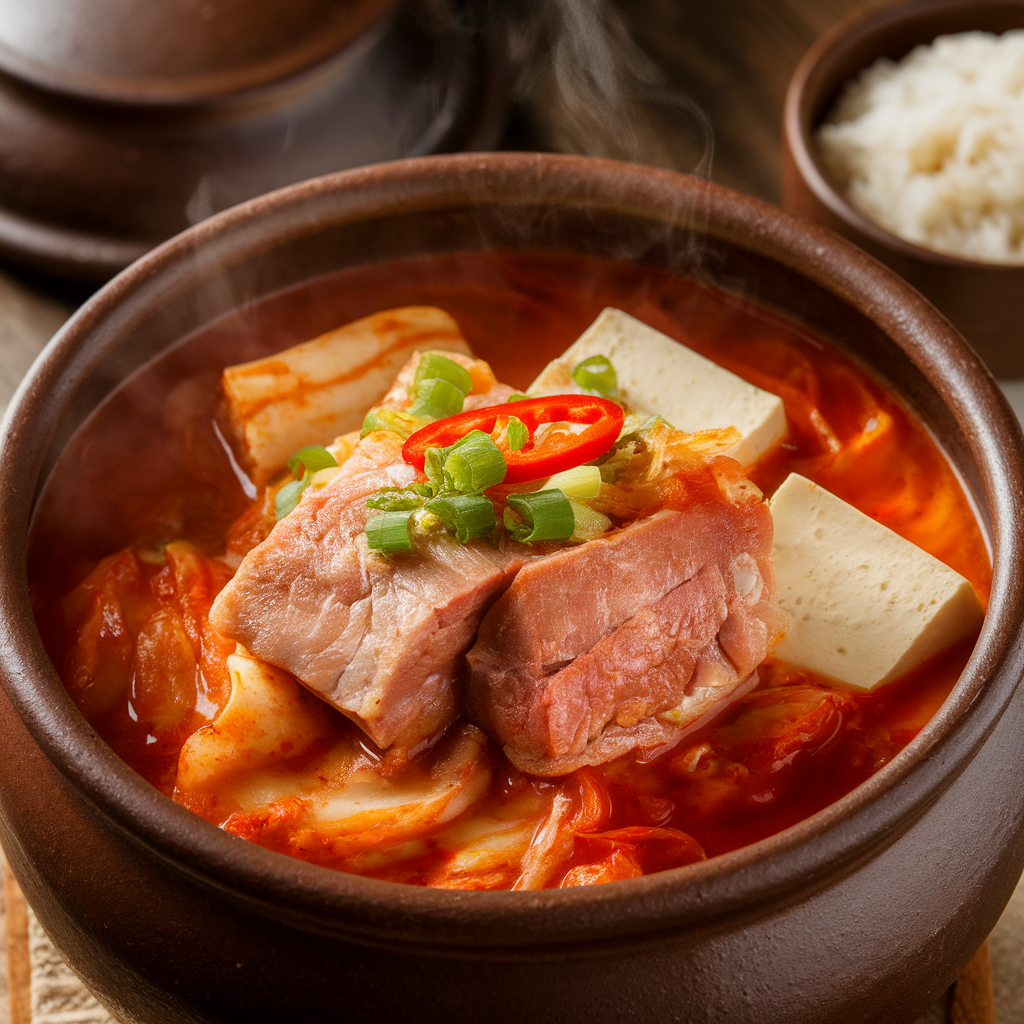
My first true bowl of Kimchi Jjigae wasn’t in a restaurant; it was at the home of a Korean friend on a blustery, cold day. The rich, ruby-red broth arrived bubbling in a small stone pot, packed with silky tofu, tender pork belly, and hunks of soft, translucent kimchi. The aroma was intoxicating: spicy, pungent, and savory. I took a spoonful of that intensely flavored liquid, and suddenly, the cold outside didn’t matter anymore. It was spicy, yes, but the richness of the pork and the deep sour tang of the fermented kimchi for jjigae created a perfect, mouthwatering harmony.
If you’ve only ever had quick, thin versions of this stew, get ready for a revelation. This guide will walk you through the definitive authentic korean kimchi jjigae recipe. We’ll cover the essential ingredients, the secrets to building the deepest flavor base, and the non-negotiable step of pre-sautéing the kimchi. You’re about to learn how to make kimchi stew that’s truly unforgettable!
💎 The Holy Trio: Secrets to the Perfect Jjigae
The magic of Kimchi Jjigae comes from a focused use of three main components. Skip or skimp on any one of these, and you miss the soul of the dish.
1. Fermented Kimchi for Jjigae
This is the most critical component. Fresh kimchi simply won’t do. You need kimchi that is very sour, ideally 1-2 weeks past its peak crispness. The sourness comes from lactic acid, which is what gives the stew its essential tang and deep umami flavor. The older the kimchi, the better the stew!
2. The Pork Belly (The Flavor Bomb)
While you can make Jjigae with tuna, beef, or just vegetables, the traditional and most flavorful version uses pork belly kimchi stew. The fat from the pork renders during the initial sauté, becoming the base oil for the entire stew, and infusing the kimchi with a savory, unctuous richness.
3. The Gochugaru Paste (Jjigae Seasoning Secrets)
The color and heat come from Gochugaru (Korean chili flakes) and sometimes Gochujang (chili paste). A mix of both gives you deep color and intense flavor. We’ll build a simple seasoning mix to ensure perfect, deep flavor—the core of the jjigae seasoning secrets.
✅ Ingredients for Authentic Kimchi Jjigae
This recipe makes 4 servings and is best served family-style in the pot it was cooked in!
The Meat & Kimchi
- 1 lb well-fermented kimchi (cabbage kimchi), cut into bite-sized pieces
- $1/4$ cup kimchi brine (liquid from the jar)
- 6 oz pork belly (or pork shoulder/butt), cut into $1/2$-inch thick pieces
- 1 tablespoon vegetable oil (if pork is lean)
The Broth and Aromatics
- 4 cups anchovy stock or water (see Pro Tips for best broth for kimchi jjigae)
- 1 medium yellow onion, thinly sliced
- 3 cloves garlic, minced
- 1 package (14 oz) soft tofu (or medium firm), drained and cubed
Jjigae Seasoning Secrets
- 2 tablespoons Gochugaru (Korean chili flakes)
- 1 tablespoon Gochujang (Korean chili paste)
- 1 tablespoon soy sauce
- 1 teaspoon sesame oil
- $1/2$ teaspoon salt (or to taste)
Garnish
- 2 scallions, chopped
- 1 small red chili (optional, for extra heat)
⏰ Prep Time & Cook Time Summary
| Component | Prep Time | Cook Time |
| Slicing | 10 mins | 0 mins |
| Sauté & Season | 5 mins | 8 mins |
| Simmer | 5 mins | 20 mins |
| Finish | 5 mins | 5 mins |
| Total Active Time | ~25 mins | ~33 mins |
🧑🍳 Step-by-Step Kimchi Jjigae Instructions
The entire process is quick, but the first step is essential for maximum flavor!
1. Sautéing the Pork and Kimchi
- Render Fat: In a heavy-bottomed pot or a traditional Korean earthenware pot (ttukbaegi), add the pork belly (and 1 tablespoon of oil if the pork is lean). Cook over medium-high heat until the pork is nicely browned and the fat has rendered.
- Sauté Kimchi: Push the pork to the side. Add the cut fermented kimchi for jjigae to the rendered fat. Sauté the kimchi vigorously for 5-7 minutes. This step is vital! Cooking the kimchi deepens its sour flavor and turns it translucent.
- Add Aromatics: Add the sliced onion and garlic. Sauté for 2 minutes until fragrant.
2. Building the Jjigae Seasoning Base
- Season: Add the Gochugaru, Gochujang, soy sauce, and sesame oil directly to the kimchi and pork. Stir well to coat the ingredients and let the spices bloom for 1 minute.
3. The Simmer
- Add Liquid: Pour in the anchovy stock and the $1/4$ cup of reserved kimchi brine. Bring the pot to a boil.
- Simmer: Once boiling, reduce the heat to medium-low. Cover and let the pork belly kimchi stew simmer for 15-20 minutes. This allows the flavors to truly meld and deepen.
- Taste: Taste the broth. This is the time to add the $1/2$ teaspoon of salt or a little more kimchi brine if you need more saltiness or tang.
4. Adding Tofu and Finishing
- Add Tofu: Gently place the cubes of soft tofu on top of the stew. Simmer for 5 more minutes, gently basting the tofu with the broth.
- Garnish: Turn off the heat. Garnish with chopped scallions and sliced red chili. Serve the authentic korean kimchi jjigae recipe directly from the pot with a bowl of rice.
🌟 Pro Tips and Variations
The Best Broth for Kimchi Jjigae
The best broth for kimchi jjigae is anchovy stock (myeolchi yuksu). Anchovy stock adds a deep, savory, slightly smoky complexity that water or plain chicken stock simply can’t replicate. It is the secret savory base for almost all Korean stews. You can buy dried anchovies and make the stock easily by simmering them with dried kelp (dashima) for 20 minutes. If you need a quick substitute, use vegetable broth and add a teaspoon of fish sauce for a boost of umami.
Jjigae Seasoning Secrets: Sweetness and Depth
Some chefs add a tiny bit of sweetener (like a teaspoon of sugar, honey, or a tablespoon of mirin) to the Jjigae. This is not for a sweet flavor, but to balance the intense sourness of the old kimchi and the bitterness of the chili. Use this trick if your kimchi is overwhelmingly sour.
Recipe Variations to Broaden Your Appeal
- Seafood Jjigae: Replace the pork with firm white fish (like cod) and shellfish (mussels or clams). Add them during the last 10 minutes of simmering, as seafood cooks quickly.
- Tuna Kimchi Jjigae: A famous variation! Use canned tuna (in oil, drained) instead of pork. Sauté the kimchi in a bit of oil first, add the tuna at the end, and serve with sliced jalapeño.
- Vegetarian Jjigae: For a vegan kimchi jjigae, replace the pork with sautéed mushrooms (shiitake or oyster). Use vegetable stock and replace the fish sauce in the seasoning with extra soy sauce or a good quality mushroom powder for a deep umami flavor.
❓ Common Questions on Kimchi
How do I know if my kimchi is “fermented enough” for jjigae?
For this authentic korean kimchi jjigae recipe, the kimchi should taste very sour and be a bit soft, lacking the crisp crunch of fresh kimchi. If it’s still very crisp and only mildly sour, it’s too fresh. Let it sit on the counter for a day or two to speed up fermentation, or buy a jar that has been sitting in your refrigerator for a few weeks. The high acidity is the key to the final flavor.
Why should I sauté the kimchi first?
Sautéing the fermented kimchi for jjigae is the most important step! When the kimchi is heated with the pork fat, it releases all of its deep, complex flavors and softens beautifully. This caramelization deepens the color and creates the rich, unctuous base of the pork belly kimchi stew before any liquid is added, guaranteeing maximum flavor in the final broth.
Can I add other vegetables to the stew?
Absolutely! While the base is simple, some home cooks add small amounts of vegetables like diced zucchini, daikon radish, or enoki mushrooms for texture. Add them early with the potatoes (if using) or during the last 10 minutes for a crunchier texture.
🧊 Storage Tips
Like most Korean stews, Kimchi Jjigae tastes even better the next day after the flavors have had a chance to marry fully.
- Storage: Store the entire stew (with meat and tofu) in an airtight container for up to 4 days in the refrigerator.
- Reheating: Reheat gently on the stovetop. If it has thickened too much, add a splash of water or stock. Avoid boiling it too hard, as this can make the tofu slightly rubbery.
📊 Nutritional Information (Estimated Per Serving)
Please note that these values are estimates based on the ingredients and a serving size of 4, using pork belly and soft tofu. Kimchi and tofu are excellent sources of probiotics and protein. [Placeholder link for reputable nutritional resource on kimchi and pork stew]
| Nutrient | Amount |
| Calories | 480 kcal |
| Protein | 35 g |
| Fat | 28 g |
| Carbohydrates | 18 g |
| Sodium | High |
| Probiotics | High |
💖 Conclusion: Your Korean Comfort Masterpiece
You have successfully mastered the authentic korean kimchi jjigae recipe! You’ve learned the essential role of fermented kimchi for jjigae, unlocked the savory depth of the best broth for kimchi jjigae, and implemented the key jjigae seasoning secrets to create that perfect balance of spicy, savory, and sour. This dish is pure culinary gold—a bowl of rich, bubbling flavor that is deeply satisfying and instantly memorable.
The warmth and intense flavor of this pork belly kimchi stew are the very definition of Korean hospitality and cooking at its best. It’s proof that the most comforting food is often found in the simplest, most traditional stews.
Go on, grab your spoon and dig into this korean comfort food! Try this how to make kimchi stew guide today and tell me: Was the sourness of your kimchi just right? Did you use the traditional anchovy stock or opt for a substitute? Share your fiery culinary success with me!