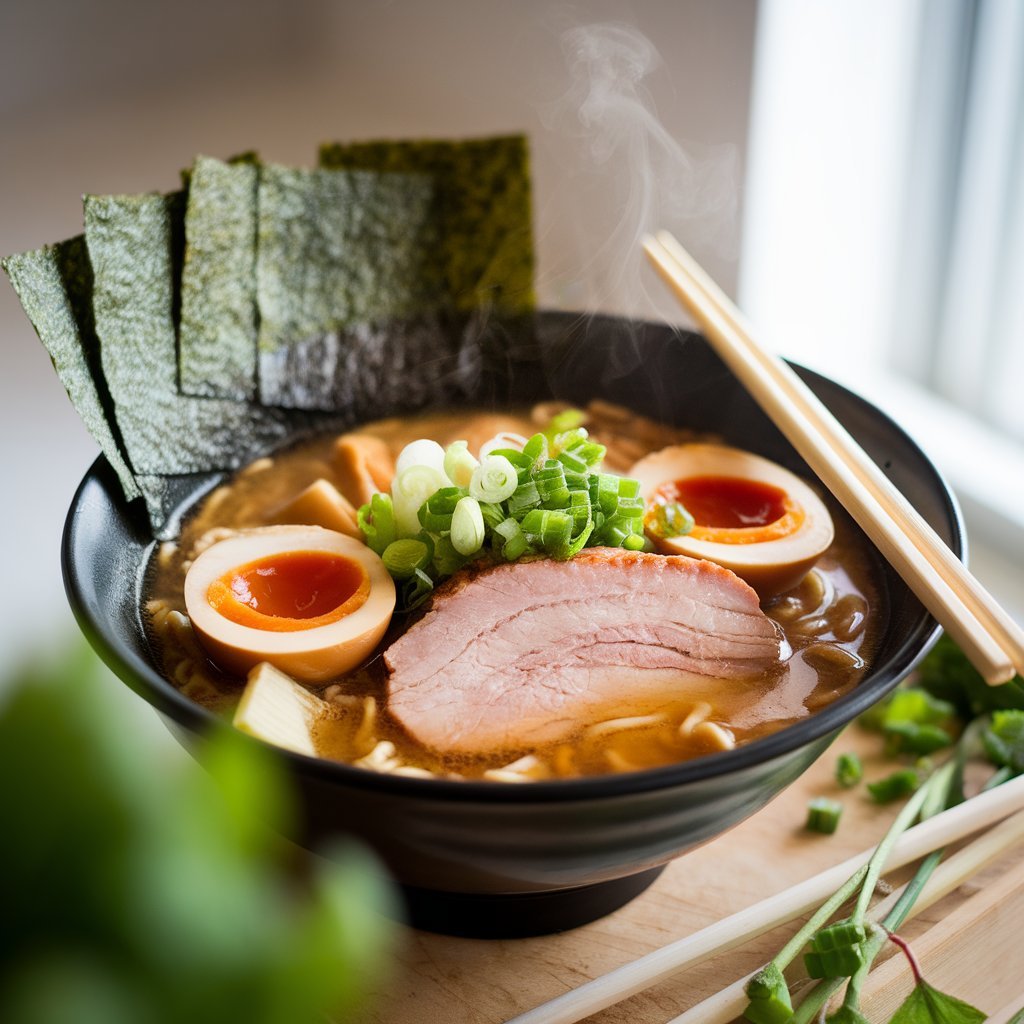
Meta Description: Learn how to make ramen broth from scratch and master the perfect ramen egg recipe. Our step-by-step guide to simple shoyu ramen shows you how to make chashu pork belly and choose the best toppings for ramen at home.
The Ultimate Homemade Japanese Ramen Recipe with Perfect Ramen Eggs
Ramen. It’s more than just a soup; it’s a bowl of pure comfort, a culinary masterpiece built on layers of flavor, warmth, and texture. Think about the last time you slurped a perfect bowl: the rich, savory depth of the broth, the springy resistance of the noodles, and that moment when you break open the Japanese soft boiled egg, letting the golden, jammy yolk mix into the soup. That, my friends, is bliss.
For years, I believed that truly great ramen was confined to the expertise of dedicated ramen shops—a sacred craft too complicated for a home kitchen. The first time I tried to make it, the result was frankly embarrassing: thin, salty water with some soggy noodles. But I was determined. After dozens of attempts and endless research, I cracked the code. And I’m here to tell you: you can create an Authentic Japanese Ramen Recipe that rivals your favorite restaurant bowl, right in your own kitchen. It takes time and care, but the reward is worth every minute.
Our focus today is on simple shoyu ramen recipe (soy sauce based), a foundational and accessible style, paired with the show-stopping perfect ramen egg recipe. We will demystify how to make ramen broth from scratch and guide you through preparing the silkiest easy chashu pork belly recipe imaginable. Prepare your palate—this is the ramen journey you’ve been waiting for.
🍜 The Anatomy of Authentic Ramen
Before we dive into the recipe, let’s understand the core components of a truly great bowl. Ramen is built in four essential tiers:
- The Broth (Soup): This is the soul of the dish. For shoyu, it’s typically chicken or pork based, infused with aromatics, and cooked for hours to develop deep savory richness.
- The Tare (Seasoning Base): This concentrated seasoning (in our case, soy sauce-based) sits at the bottom of the bowl and gives the broth its primary flavor, salt, and Umami boost.
- The Noodles: Wheat noodles, often alkaline (kansui) to give them their distinct yellow color and springy chew. They must be added last and cooked briefly.
- The Toppings: The meat, the vegetables, and, most importantly, the Japanese soft boiled egg. These provide texture, visual appeal, and complexity.
⏰ Prep Time & Cook Time Summary
| Component | Prep Time | Cook Time | Notes |
| Broth | 10 minutes | 3 hours | Simmering time is key! |
| Chashu | 15 minutes | 2 hours | Slow and low for tenderness. |
| Ramen Eggs | 5 minutes | 6 minutes | The fastest, most critical step. |
| Assembly | 5 minutes | 5 minutes | Final boil and assembly. |
| Total Time | ~35 minutes | ~5.5 hours | Most of the time is passive simmering. |
✅ Ingredients for Homemade Japanese Ramen Recipe (Serves 4)
🍲 The Broth and Tare: The Soul of the Ramen
- 2 lbs chicken bones (backs/wings) OR 1 lb pork bones (neck/feet)
- 1 large yellow onion, roughly chopped
- 4 cloves garlic, smashed
- 2 inches ginger, sliced
- 8 cups water
- For the Tare:
- 1/2 cup soy sauce (shoyu)
- 1/4 cup mirin (sweet rice wine)
- 2 tablespoons sake (optional, but adds depth)
- 1 tablespoon sesame oil
🥚 The Toppings: Chashu Pork and Eggs
- 1 lb pork belly, rolled and tied with butcher’s twine (for the easy chashu pork belly recipe)
- 4 large eggs
- Chashu Braising Liquid (use for egg marinade, too!):
- 1 cup soy sauce
- 1 cup water
- 1/2 cup sugar or honey
- 2 inches ginger, sliced
🍜 The Assembly
- 1 lb fresh or dried ramen noodles (refer to ramen noodle substitutes section if needed)
- 4 sheets nori (seaweed), sliced
- 1 cup bamboo shoots (menma), drained
- 4 stalks scallions, thinly sliced
- A pinch of sesame seeds
- Rayu (chili oil) for serving (optional)
🔪 Step-by-Step: How to Make Ramen Broth from Scratch
Making the broth seems intimidating, but it’s mostly a waiting game. Follow these steps for a rich, flavorful base.
1. Simmer the Broth
- Rinse your chicken or pork bones under cold water to remove any impurities.
- In a large pot, combine the bones, onion, garlic, ginger, and 8 cups of water.
- Bring the pot to a rapid boil, then immediately reduce the heat to the lowest possible setting so the broth is barely bubbling. This is called a gentle simmer.
- Skim off any foam or scum that rises to the surface during the first 30 minutes. This ensures a clean-tasting broth.
- Simmer, uncovered, for at least 3 hours (4-6 hours is even better!). The liquid will reduce, and the flavors will concentrate.
- Strain the broth through a fine-mesh sieve, discarding the solids. Set the clear broth aside, ready for assembly.
2. Prepare the Easy Chashu Pork Belly
- In a deep, small pot, combine the chashu braising liquid ingredients (soy sauce, water, sugar, ginger). Bring to a simmer.
- Gently place the rolled pork belly into the liquid. It should be mostly submerged.
- Cover the pot and let the pork gently simmer for 2 hours, turning it halfway through. The pork should be fork-tender.
- Remove the pork from the liquid (keep the liquid—it’s magic!). Let the pork cool completely, then slice thinly. This makes the easy chashu pork belly recipe melt-in-your-mouth soft.
3. The Perfect Ramen Egg Recipe (Ajitama)
This is the most crucial topping! The jammy yolk is non-negotiable for an Authentic Japanese Ramen Recipe.
- Bring a small pot of water to a rolling boil.
- Gently lower the eggs straight from the refrigerator into the boiling water using a slotted spoon.
- Set a timer for 6 minutes and 30 seconds. This is the secret to a slightly firm white and a perfectly gooey, jammy yolk.
- When the timer goes off, immediately plunge the eggs into a bowl of ice water to stop the cooking.
- Carefully peel the eggs.
- Place the peeled eggs into a zip-top bag or container with about 1/2 cup of the reserved Chashu Braising Liquid. Marinate for at least 2 hours or, ideally, overnight in the refrigerator. The soy sauce bath gives you those beautiful brown Japanese soft boiled eggs.
4. Final Assembly: The Ramen Bowl
- In a small saucepan, bring the desired amount of your homemade broth back up to a simmer.
- In a separate, small pot, boil water for the noodles. Cook your ramen noodles according to the package directions, usually 2-3 minutes. Drain them immediately.
- To assemble, pour 2 tablespoons of the prepared Tare (soy sauce/mirin mix) into the bottom of each serving bowl.
- Ladle about 1.5–2 cups of the hot broth over the tare. Stir gently to combine.
- Add the drained ramen noodles to the broth.
- Finally, arrange your best toppings for ramen: the sliced chashu pork, half a marinated ramen egg, bamboo shoots, nori, and a generous sprinkle of sliced scallions. Serve immediately!
💡 Troubleshooting & Ingredient Swaps
What if I don’t have time to make broth from scratch?
While making the broth from scratch is the key to an Authentic Japanese Ramen Recipe, you can use high-quality, low-sodium chicken or vegetable stock in a pinch. To boost the flavor, simmer the store-bought stock with some scallion whites, ginger slices, and dried shiitake mushrooms for 30 minutes before assembling.
Are there any good Ramen Noodle Substitutes?
Yes. While traditional ramen noodles are best, you can use dried Chinese egg noodles or even linguine pasta (cooked with a pinch of baking soda in the water to give it a chewier, more ramen-like texture).
Why are my Chashu slices tough?
If the pork is tough, it means it didn’t simmer long enough. The easy chashu pork belly recipe relies on the long, gentle cooking time (2 hours minimum) to break down the connective tissue and render the fat, resulting in that unbelievably tender texture. Don’t rush it!
🌟 Pro Tips for Next-Level Flavor
- The Reheat Trick: Always reheat the broth and the chashu pork separately. Adding cold meat to hot broth will cool the entire bowl down.
- The Oil Layer: Add a teaspoon of chicken fat (rendered from the broth) or a specialty oil like smoked sesame oil to the finished bowl. This fat layer adds richness and helps keep the broth hot until the last slurp.
- Salt Adjustment: Taste the broth and the tare separately, but only adjust the final seasoning after you combine them. The tare is concentrated, so a little salt goes a long way!
🥕 Creative Toppings & Serving Suggestions
The beauty of ramen is its adaptability. Once you master the simple shoyu ramen recipe, the door is open to endless customization.
Best Toppings for Ramen (Beyond the Basics)
- Corn and Butter: A classic, creamy Hokkaido-style combination that adds sweetness and richness.
- Kikurage Mushrooms: Thinly sliced wood-ear mushrooms provide an essential, satisfying crunch.
- Red Ginger (Beni Shoga): The vinegared, shredded ginger adds a bright, sharp contrast to the rich broth.
- Spice: For a kick, add a teaspoon of Doubanjiang (fermented chili bean paste) or a drizzle of homemade rayu (chili oil).
Perfect Pairings
- The Drink: A light, crisp Japanese beer (like a lager) cuts through the richness of the broth perfectly. For a non-alcoholic option, try a cold glass of lightly sweetened green tea.
- Side Dish: Serve your ramen alongside a simple side of Gyoza (pan-fried dumplings) or a quick cucumber salad dressed with rice vinegar and sesame seeds. The crunch and acid are a welcome break from the savory soup.
📊 Nutritional Information (Per Serving)
| Component | Calories | Protein (g) | Fat (g) | Carbs (g) | Sodium (mg) |
| Ramen Bowl (Est.) | 780 | 45 | 38 | 65 | 1100 |
| (Includes Chashu, Egg, Broth, Noodles) |
Note: This is an estimated nutritional breakdown based on a standard preparation of this Homemade Japanese Ramen Recipe and will vary based on exact portion size and fat content of the chashu pork.
✨ Summary and Next Steps
You’ve done it. You have transitioned from a ramen admirer to a ramen master. You now know how to make ramen broth from scratch, you have the precise timing for the perfect ramen egg recipe, and you’ve unlocked the secrets to the tender easy chashu pork belly recipe. This Homemade Japanese Ramen Recipe proves that the highest form of comfort food is achievable in your own kitchen.
The key to your success was patience—allowing the broth to simmer slowly to extract every ounce of flavor and letting the eggs and pork marinade to achieve deep, layered savory notes. The result is a complex, satisfying bowl that elevates a simple meal into an experience. The journey doesn’t stop here; now that you have the foundation, you can experiment with different tare flavors, like miso or spicy tonkotsu variations.
Storage Tips: Store the broth, the sliced chashu, and the marinated eggs in separate airtight containers in the refrigerator for up to 3 days. When ready to eat, simply reheat the broth, cook fresh noodles, and assemble!
Now, go forth and slurp! Give this simple shoyu ramen recipe a try, invite some friends over, and share the warmth. What topping are you most excited to add to your bowl? Let me know!