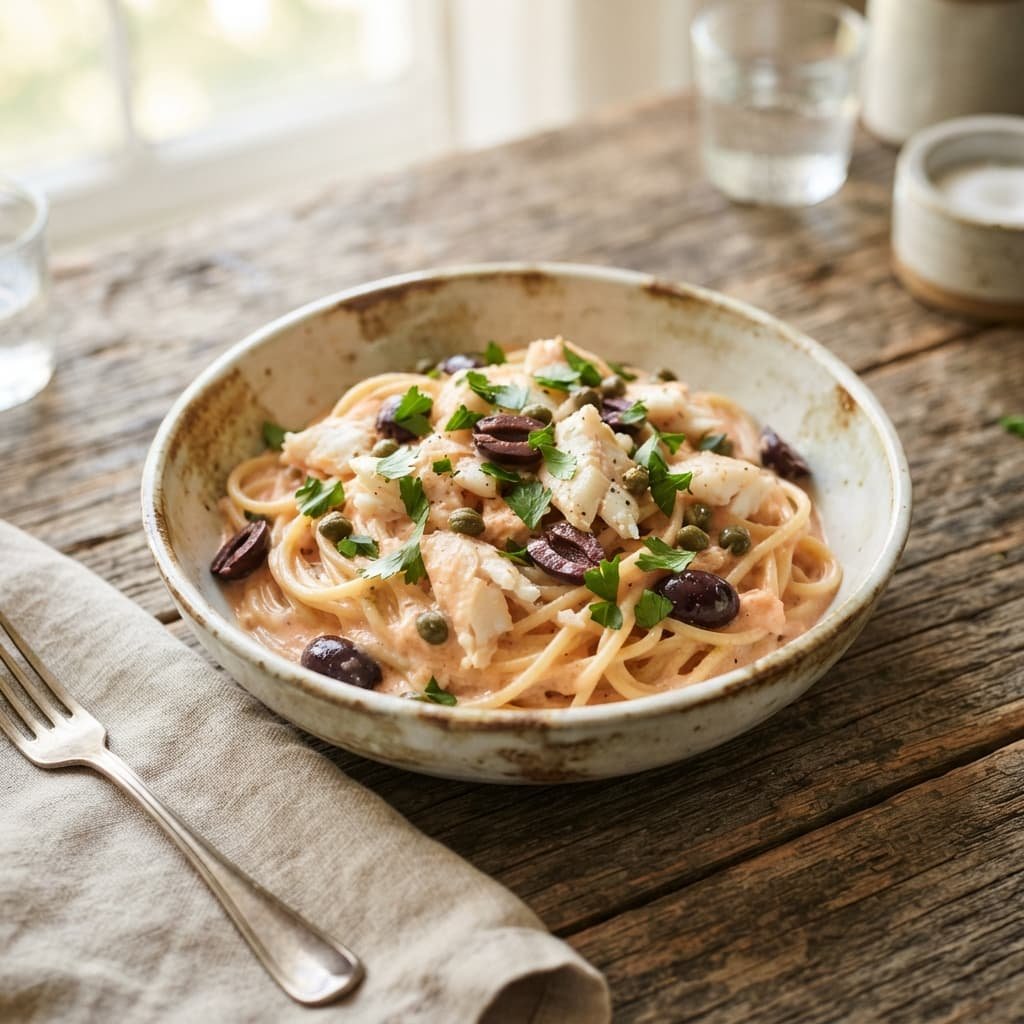
The color changes first. A skillet of tomatoes, olives, and garlic simmers down to a deep brick red, and then the cream goes in and the red softens into a pale, glowing coral, flecked with dark olive and green herbs. Creamy Provençal Tilapia Pasta begins with that moment, and it is worth watching, because the sauce is ready when it clings to the back of a spoon in a smooth, satiny sheet and no longer looks thin or separated.
A note on what is documented and what is a variation. Tilapia Provençal, tilapia cooked with tomatoes, olives, garlic, and herbs, is an established dish, and the same flavors are classic across the south of France. A cream sauce over pasta is not traditional Provençal cooking, which leans on olive oil rather than cream. This recipe is a variation: the Provençal flavors are kept, the sauce is enriched with cream, and the whole thing is served over pasta.
| Prep Time | 15 minutes |
| Cook Time | 25 minutes |
| Total Time | 40 minutes |
| Servings | 4 |
| Difficulty | Easy |
The Flavors of Provence in One Skillet
What makes a dish “Provençal” is a short list of ingredients: tomatoes, garlic, olive oil, olives, capers, and a blend of dried herbs. Herbes de Provence is usually a mix of thyme, rosemary, savory, and oregano, sometimes with lavender. Blends vary by brand, and lavender-heavy ones can taste soapy in a cream sauce, so smell the jar first. If it smells floral and perfumed, use a smaller pinch or substitute equal parts dried thyme and oregano.
Olives and capers bring brine and salt, which is why the sauce needs very little added salt. They also cut through the richness of the cream, so each forkful stays bright rather than heavy.
The 40-Minute Plan
Creamy Provençal tilapia pasta takes about 40 minutes. Sear the tilapia for 2 to 3 minutes per side, simmer the tomato sauce for 8 minutes, add the cream and simmer 3 minutes more, then flake the fish into the sauce and toss it with the pasta.
The fish is cooked first and set aside, then folded back in at the end. Tilapia is thin and lean, so it only needs a few minutes of heat, and adding it back off the heat keeps it from overcooking in the sauce. While the sauce simmers, the pasta boils, and the two finish together.
Ingredients
This serves 4. Wine is traditional in this kind of sauce, but this version uses stock and lemon, with no alcohol.
For the Pasta and Fish
- 12 oz (340g) rigatoni or penne
- 1 lb (450g) tilapia fillets, patted very dry
- 1/2 teaspoon kosher salt (for the fish)
- 1/4 teaspoon black pepper
- 2 tablespoons (30ml) olive oil
For the Provençal Cream Sauce
- 1 medium shallot (about 40g), finely chopped
- 3 garlic cloves, minced
- 1 tablespoon (16g) tomato paste
- 1 can (14.5 oz / 400g) diced tomatoes, with their juice
- 1 teaspoon herbes de Provence
- 1/2 cup (120ml) low-sodium chicken or vegetable stock
- 1/3 cup (50g) pitted black olives, halved (Niçoise or Kalamata)
- 1 tablespoon (9g) capers, drained
- 3/4 cup (180ml) heavy cream
- 1 teaspoon lemon zest and 1 tablespoon (15ml) lemon juice
- 2 tablespoons (8g) chopped fresh parsley or basil, for serving
How to Make Creamy Provençal Tilapia Pasta
- Bring a large pot of generously salted water to a boil. Cook the pasta 1 minute less than the package says, usually 9 to 10 minutes, until it is firm to the bite. Reserve 1/2 cup (120ml) of the pasta water, then drain.
- While the water heats, season the tilapia with the salt and pepper. Heat the olive oil in a large, deep skillet over medium-high heat until it shimmers.
- Sear the fillets for 2 to 3 minutes per side, until golden on the outside and just opaque and flaking in the center, at 63°C (145°F). Move them to a plate. Do not wash the skillet.
- Lower the heat to medium. Cook the shallot in the same skillet for 2 minutes, until soft and translucent. Add the garlic and tomato paste and stir for 1 minute, until the paste darkens to brick red and smells sweet.
- Add the tomatoes, herbes de Provence, and stock. Scrape up the browned bits from the pan. Simmer for 8 minutes, stirring now and then, until the sauce thickens and the oil begins to shimmer at the edges.
- Stir in the olives, capers, and cream. Simmer gently, not boiling hard, for 3 minutes, until the sauce turns a pale coral and coats the back of a spoon.
- Add the drained pasta and toss for 1 minute so it finishes cooking in the sauce, adding a splash of the reserved pasta water if the sauce is too thick.
- Take the skillet off the heat. Flake the tilapia into large pieces and fold it in gently with the lemon zest and juice. Scatter parsley over the top and serve right away.
Small Choices That Shape the Sauce
- Cook the tomato paste until it darkens. Raw paste tastes tinny. A minute in the pan turns it deeper and sweeter.
- Simmer the tomatoes before adding the cream. Canned tomatoes are acidic, and cream added too early to a thin, acidic sauce can look grainy. Reducing the sauce first helps it stay smooth.
- Hold the pasta back by a minute. It finishes in the sauce and absorbs some of its flavor.
- Add the lemon last, off the heat. It keeps the fish and herbs tasting fresh.
- Fold the fish in gently. Stirring hard breaks it into small bits that disappear into the sauce.
Common Mistakes and How to Fix Them
The sauce looked grainy or split. It was likely boiled hard after the cream went in, or the tomatoes were too watery. Keep the simmer gentle, reduce the tomatoes first, and whisk in a splash of pasta water off the heat if it starts to separate.
The fish was dry. It cooked too long in the pan or stewed in the sauce. Sear it only until it flakes at 63°C (145°F), and fold it in at the end, off the heat.
The sauce tasted too salty. Olives, capers, and stock all carry salt. Use low-sodium stock, rinse the capers, and skip any added salt in the sauce until you taste it at the end.
The sauce was too thin. It needed more time to reduce, or the pasta water was added too early. Simmer a few more minutes before adding the pasta, and add the pasta water a spoonful at a time.
Variations, Substitutions, and Serving
Cod, haddock, or any firm white fish of similar thickness can replace tilapia with the same timing. Shrimp works too, at 1 to 2 minutes per side. Canned crushed tomatoes can stand in for diced, and a few halved cherry tomatoes added with the olives bring extra freshness. A small strip of orange zest in the sauce adds the citrus note often found in southern French cooking. For a lighter dish, swap half the cream for whole milk, but add it off the heat to avoid curdling.
Serve with a green salad dressed with lemon and olive oil, and crusty bread for the last of the sauce.
Storage and Reheating
Refrigerate leftovers in an airtight container for up to 2 days. Reheat gently in a skillet over low heat with a splash of water or milk to loosen the sauce, until warmed through. The pasta will absorb sauce and the fish will soften, so this is best the day it is made. Do not freeze it, as the cream sauce can separate.
Nutritional Information
Values below are estimates per serving and will vary depending on exact brands and quantities used.
| Calories | 640 kcal |
| Protein | 38 g |
| Carbohydrates | 70 g |
| Fat | 24 g |
| Fiber | 5 g |
Frequently Asked Questions
Is tilapia Provençal traditionally creamy? No. The traditional version is built on olive oil, tomatoes, olives, and herbs. The cream here is a modern addition.
What if I do not have herbes de Provence? Mix equal parts dried thyme and oregano, with a tiny pinch of dried rosemary. It gives a similar herbal flavor without the floral note.
Can I use frozen tilapia? Yes. Thaw it fully in the refrigerator, then pat it very dry. Wet fillets steam instead of searing and fall apart.
What a Skillet of Red and Cream Remembers
Creamy Provençal Tilapia Pasta borrows the colors and flavors of a region that cooks with whatever grows nearby: tomatoes, olives, herbs, and a little sun. Adding cream changes the character, but not the idea. A few strong ingredients, treated with patience, make a plate that looks and tastes like more than the sum of its parts.
Creamy Provençal Tilapia Pasta
Ingredients
Method
- Bring a large pot of generously salted water to a boil. Cook the pasta 1 minute less than the package says, usually 9 to 10 minutes, until it is firm to the bite. Reserve 1/2 cup (120ml) of the pasta water, then drain.
- While the water heats, season the tilapia with the salt and pepper. Heat the olive oil in a large, deep skillet over medium-high heat until it shimmers.
- Sear the fillets for 2 to 3 minutes per side, until golden on the outside and just opaque and flaking in the center, at 63°C (145°F). Move them to a plate. Do not wash the skillet.
- Lower the heat to medium. Cook the shallot in the same skillet for 2 minutes, until soft and translucent. Add the garlic and tomato paste and stir for 1 minute, until the paste darkens to brick red and smells sweet.
- Add the tomatoes, herbes de Provence, and stock. Scrape up the browned bits from the pan. Simmer for 8 minutes, stirring now and then, until the sauce thickens and the oil begins to shimmer at the edges.
- Stir in the olives, capers, and cream. Simmer gently, not boiling hard, for 3 minutes, until the sauce turns a pale coral and coats the back of a spoon.
- Add the drained pasta and toss for 1 minute so it finishes cooking in the sauce, adding a splash of the reserved pasta water if the sauce is too thick.
- Take the skillet off the heat. Flake the tilapia into large pieces and fold it in gently with the lemon zest and juice. Scatter parsley over the top and serve right away.