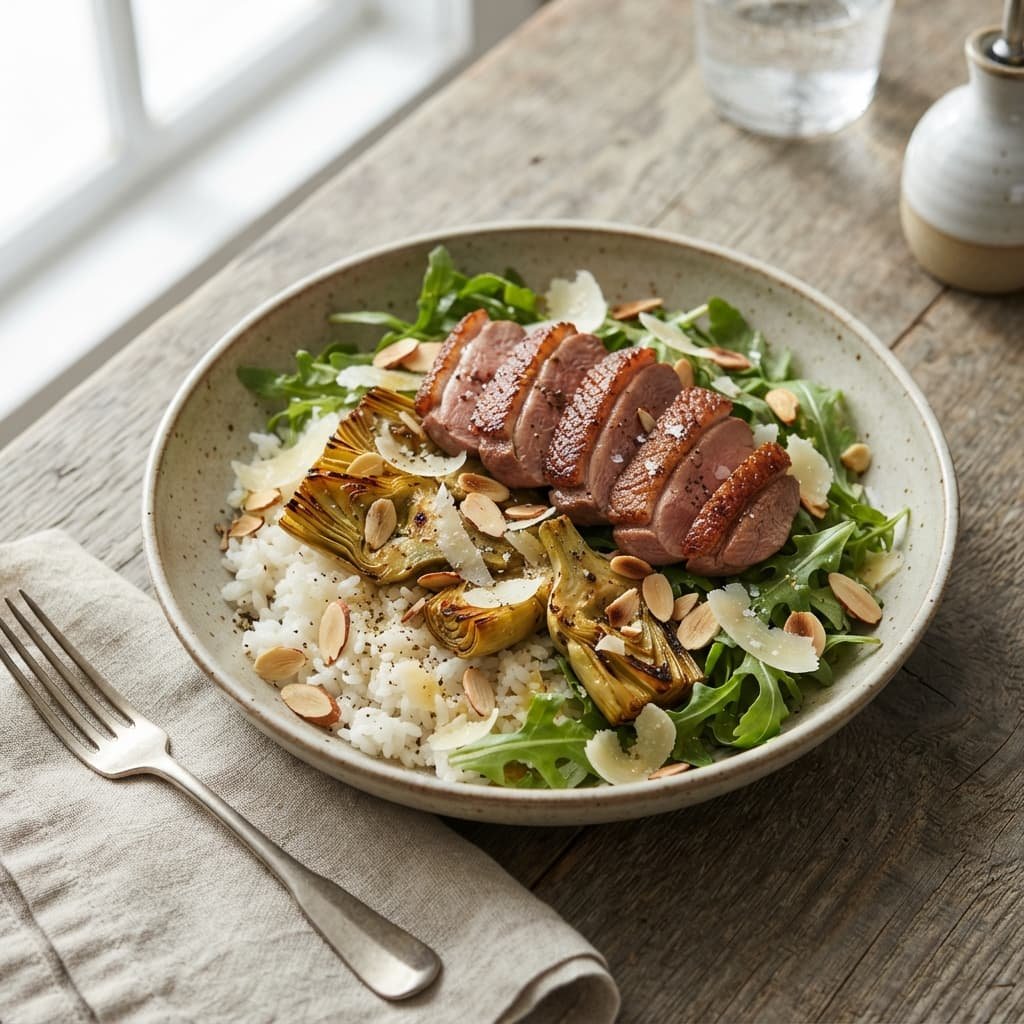
Duck sounds like restaurant food, but a duck breast cooks more like a thick steak with a layer of fat on top. The only real trick is the fat, and the trick is patience. Crispy Duck and Artichoke Bowl starts the duck in a cold pan, lets the fat melt out slowly, and uses a spoonful of that rendered fat to brown the artichokes. The result is a bowl with shatteringly crisp skin, savory artichokes, rice, and a sharp lemon dressing, and it takes about 45 minutes.
A note on what is documented and what is a variation. Pan-seared duck breast with crispy skin is a standard technique, and duck with artichokes is a classic pairing in French and Italian cooking. Serving them together in a grain bowl is a modern variation, not a traditional dish.
| Prep Time | 15 minutes |
| Cook Time | 30 minutes |
| Total Time | 45 minutes |
| Servings | 4 |
| Difficulty | Medium, because of the slow render |
What Makes the Duck Skin Crisp
The skin crisps in about 12 to 14 minutes in a cold pan over medium-low heat. Score the skin, pat it very dry, start skin-side down in a cold pan, and let the fat melt out slowly until the skin is deep golden and no longer rubbery.
A thick layer of fat sits under the skin. In a hot pan, the surface browns before the fat underneath has a chance to melt, and you get burnt skin over a rubbery layer. In a cold pan, the fat warms up gradually and melts out, leaving the skin thin and crisp. This is the one step that decides the whole bowl, so it is worth being patient with it.
Three cues tell you the render is on track. The sound starts as a loud spit and settles into a steady, gentle sizzle. The fat in the pan turns from cloudy to clear and gold. And the skin shrinks and tightens, going from pale and flabby to a deep amber that feels hard and dry when you tap it with a spoon.
Ingredients
This serves 4. You can use two large duck breasts (such as Moulard or Muscovy, about 12 oz / 340g each) or four smaller Pekin breasts (about 6 to 8 oz / 170 to 225g each).
For the Duck and Artichokes
- 1 1/2 lb (680g) duck breast, skin on
- 1 teaspoon kosher salt
- 1/2 teaspoon black pepper
- 1 can (14 oz / 400g) artichoke hearts in water, drained, patted dry, and quartered
- 1 tablespoon rendered duck fat (from the pan)
- 2 garlic cloves, thinly sliced
For the Bowls
- 1 cup (190g) long-grain white rice, cooked according to the package
- 2 cups (60g) baby arugula
- 1/4 cup (35g) toasted sliced almonds
- Shaved Parmesan (optional)
For the Lemon Dressing
- 3 tablespoons (45ml) olive oil
- 1 1/2 tablespoons (22ml) lemon juice
- 1 teaspoon Dijon mustard
- 1 teaspoon honey
- 1/4 teaspoon kosher salt
How to Make Crispy Duck and Artichoke Bowl
- Cook the rice and keep it warm. Whisk the dressing ingredients in a small bowl and set it aside.
- Pat the duck very dry. Score the skin in a crosshatch pattern with a sharp knife, cutting through the skin and fat but not into the meat. Season both sides with the salt and pepper.
- Place the breasts skin-side down in a cold, large skillet. Turn the heat to medium-low. Cook for 12 to 14 minutes, until a lot of fat has melted into the pan, the skin is deep golden brown, and it sizzles steadily rather than spitting. Pour off the fat into a heatproof jar twice during cooking, so the skin fries rather than boils.
- Flip the breasts and cook the meat side for 5 to 6 minutes, until a thermometer in the thickest part reads 74°C (165°F). Transfer the duck to a cutting board, skin-side up, and rest for 8 minutes.
- While the duck rests, pour off all but 1 tablespoon of fat from the skillet and heat it over medium-high heat. Add the artichokes cut-side down and cook for 4 to 5 minutes without moving, until deeply golden at the edges. Add the garlic for the last 30 seconds, until fragrant. Season with a pinch of salt.
- Slice the duck thinly against the grain, keeping the crispy skin on each slice.
- Divide the rice among four bowls. Top with arugula, artichokes, and sliced duck. Drizzle with the dressing, and scatter the almonds and Parmesan over the top. Serve right away so the skin stays crisp.
A Word About Doneness
The USDA recommends cooking all poultry to 74°C (165°F), and that is the temperature this recipe uses. Many restaurants and home cooks serve duck breast pink, pulling it at about 57 to 60°C (135 to 140°F). That is a personal food-safety choice and not USDA guidance, so I have not written it into the steps. If you cook to 74°C, slice the duck thinly and it will stay tender.
Tips From the Stove
- Dry the skin. Wet skin steams. Leaving the duck uncovered in the refrigerator for an hour or two beforehand makes it even crisper.
- Do not cut into the meat when scoring. Shallow cuts let the fat out without drying the breast.
- Dry the artichokes well. Canned hearts hold water that will keep them from browning.
- Keep the duck fat. Strain it into a jar and refrigerate. It keeps for weeks and makes excellent roast potatoes.
- Slice at the last moment. The skin stays crisp longer when it is cut just before serving.
Common Mistakes, Without the Scolding
The skin was rubbery. Most likely the heat was too high, so the surface browned before the fat melted, or the fat was not poured off. Next time, keep the heat at medium-low and give it the full 12 minutes before you check.
The duck was dry. It was overcooked or sliced too soon. Use a thermometer, rest the meat for 8 minutes, and slice it thinly against the grain.
The kitchen filled with smoke. The rendered fat got too hot. Pour it off regularly and lower the heat if the pan starts smoking. Use the vent fan.
The artichokes were pale and soggy. They were wet or crowded. Pat them dry, use a hot pan, and cook in a single layer.
Variations, Substitutions, and Serving
Farro, quinoa, or couscous can replace the rice. Marinated artichoke hearts work too, though they should be drained and patted dry, and you may want to reduce the lemon in the dressing. Baby spinach or watercress can replace the arugula. Chicken thighs with the skin on can stand in for duck using the same cold-pan method, though they take less time. A spoonful of capers or chopped olives in the dressing adds a briny note that suits the artichokes.
Storage and Reheating
Store the duck, rice, and artichokes in separate airtight containers in the refrigerator for up to 2 days. Reheat the duck skin-side up in a 200°C (400°F) oven for 8 to 10 minutes, until hot at 74°C (165°F) and the skin crisps again. The skin will not be as crisp as on the first day, and the dish does not freeze well. Keep the greens and dressing separate until serving.
Nutritional Information
Values below are estimates per serving and will vary depending on exact brands, the amount of fat rendered off, and quantities used.
| Calories | 620 kcal |
| Protein | 36 g |
| Carbohydrates | 42 g |
| Fat | 32 g |
| Fiber | 5 g |
Frequently Asked Questions
Why start duck in a cold pan? It lets the fat under the skin melt out slowly, so the skin crisps without burning.
Can I use canned artichokes? Yes. Drain them well and pat them dry so they brown instead of steam.
What do I do with the leftover duck fat? Strain it into a clean jar and refrigerate it. Use it for roasting potatoes or vegetables.
The Short Version
Crispy Duck and Artichoke Bowl is a patient dinner, not a difficult one. Start the duck in a cold pan, let the fat do its slow work, and use the rendered fat to brown the artichokes. Everything else is assembly.
Crispy Duck and Artichoke Bowl
Ingredients
Method
- Cook the rice and keep it warm. Whisk the dressing ingredients in a small bowl and set it aside.
- Pat the duck very dry. Score the skin in a crosshatch pattern with a sharp knife, cutting through the skin and fat but not into the meat. Season both sides with the salt and pepper.
- Place the breasts skin-side down in a cold, large skillet. Turn the heat to medium-low. Cook for 12 to 14 minutes, until a lot of fat has melted into the pan, the skin is deep golden brown, and it sizzles steadily rather than spitting. Pour off the fat into a heatproof jar twice during cooking, so the skin fries rather than boils.
- Flip the breasts and cook the meat side for 5 to 6 minutes, until a thermometer in the thickest part reads 74°C (165°F). Transfer the duck to a cutting board, skin-side up, and rest for 8 minutes.
- While the duck rests, pour off all but 1 tablespoon of fat from the skillet and heat it over medium-high heat. Add the artichokes cut-side down and cook for 4 to 5 minutes without moving, until deeply golden at the edges. Add the garlic for the last 30 seconds, until fragrant. Season with a pinch of salt.
- Slice the duck thinly against the grain, keeping the crispy skin on each slice.
- Divide the rice among four bowls. Top with arugula, artichokes, and sliced duck. Drizzle with the dressing, and scatter the almonds and Parmesan over the top. Serve right away so the skin stays crisp.