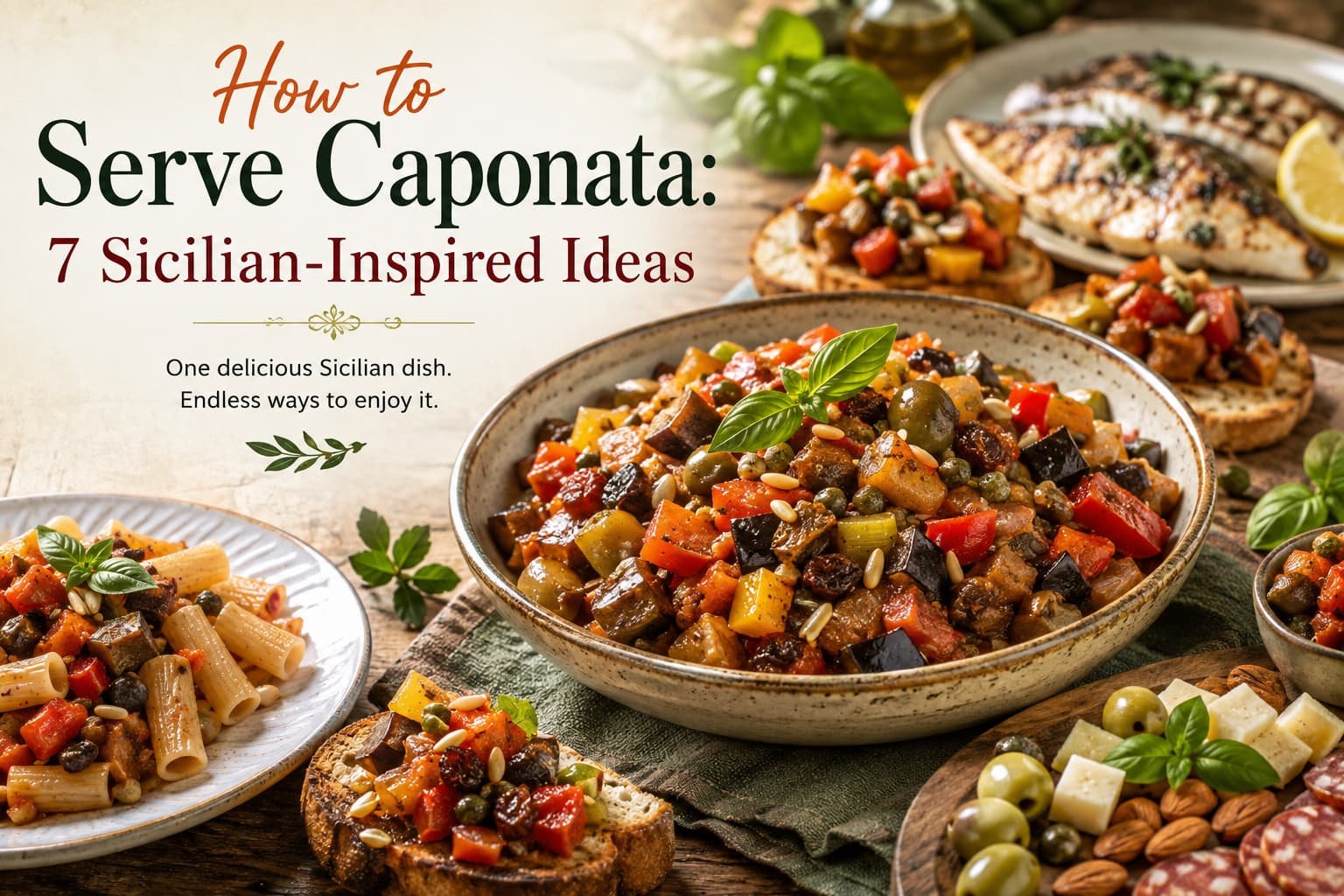
Let’s get one thCaponata is one of those dishes that becomes even more useful after you make it. A bowl of sweet-and-sour eggplant may begin as a simple Sicilian vegetable dish, but once it has cooled and the flavors have settled, it can become an appetizer, a topping, a side dish, or the centerpiece of a casual Mediterranean meal.
This version takes a slightly more generous approach to the traditional idea. Along with eggplant, tomatoes, celery, olives, and capers, it brings in sweet bell peppers, plump raisins, toasted almonds, garlic, and a small touch of chili. These ingredients are found in regional Sicilian interpretations of Caponata, where recipes vary considerably from one part of the island to another.
The result is colorful, sweet, tangy, salty, nutty, and pleasantly textured.
But the real question is not simply how to make Caponata.
It is how to serve it.
Here are seven Sicilian-inspired ways to turn one batch of Caponata into several completely different meals and appetizers.
What Makes This Caponata Different?
Traditional Caponata does not have one single universal recipe. Sicilian versions vary by location and family tradition. Some include peppers, while others use raisins, almonds, pine nuts, potatoes, garlic, or other local additions.
For this version, the combination of bell peppers, raisins, toasted almonds, garlic, and a little chili gives the dish a broader range of textures and flavors.
The eggplant remains soft and rich.
The celery provides freshness.
The olives and capers bring saltiness.
The vinegar and sugar create the familiar agrodolce character.
The raisins add little bursts of sweetness, while toasted almonds provide the crunch that soft vegetables usually lack.
That combination makes this particular Caponata especially versatile for serving.
Ingredients for This Sicilian-Inspired Caponata
Vegetables
- 2 large eggplants, cut into 1-inch cubes
- 1 red bell pepper, diced
- 1 yellow bell pepper, diced
- 2 celery stalks, diced
- 1 large red onion, finely chopped
- 2 garlic cloves, finely minced
- 1 1/2 cups crushed tomatoes or passata
Briny and Sweet Ingredients
- 1/3 cup green olives, pitted and roughly chopped
- 2 tablespoons capers, rinsed and drained
- 1/4 cup raisins
- 1/4 cup toasted almonds, roughly chopped
Agrodolce Sauce
- 1/4 cup red wine vinegar
- 2 tablespoons granulated sugar
- 1 small pinch red pepper flakes
- 1/2 teaspoon black pepper
- Salt, to taste
For Cooking
- Extra-virgin olive oil
- Neutral oil, for frying the eggplant
- Fresh basil leaves, for finishing
How to Make This Caponata
1. Prepare the Eggplant
Cut the eggplant into evenly sized cubes.
Place the pieces in a colander and sprinkle them lightly with salt. Let them stand for about 30 minutes.
Pat them completely dry before cooking.
This gives the eggplant a better texture and helps prevent excess moisture from interfering with browning.
2. Fry the Eggplant
Heat about 1 inch of neutral oil in a deep skillet.
When the oil is hot, fry the eggplant in batches. Avoid overcrowding the pan because too many pieces at once will lower the temperature and prevent proper browning.
Cook until the cubes are golden on the outside and tender inside.
Transfer them to a paper towel-lined plate and allow excess oil to drain.
Set the eggplant aside.
3. Cook the Peppers
Remove most of the frying oil from the skillet.
Add a little olive oil and place the diced red and yellow peppers into the pan.
Cook them over medium heat for several minutes until they soften but still retain some structure.
The two colors are not only attractive; they also give the finished Caponata a sweeter and more balanced vegetable flavor.
Transfer them to a bowl while you prepare the remaining vegetables.
4. Build the Vegetable Base
Add the chopped onion and celery to the skillet.
Cook until the onion becomes soft and translucent.
Add the minced garlic and cook for about 30 seconds, just until fragrant.
Do not allow the garlic to become dark or bitter.
5. Add the Tomatoes
Pour the crushed tomatoes into the skillet.
Stir everything together and allow the mixture to simmer gently for about 8–10 minutes.
The tomatoes should become thicker and more concentrated rather than remaining watery.
6. Add the Olives, Capers and Raisins
Stir in the green olives, capers, and raisins.
The raisins will soften as they cook and release small bursts of sweetness into the tomato mixture.
This is where the flavor begins to move beyond a basic vegetable stew.
7. Make the Agrodolce
In a small bowl, combine the red wine vinegar and sugar.
Stir until the sugar has mostly dissolved.
Pour the mixture into the skillet.
Add the red pepper flakes and black pepper.
Allow the sauce to simmer for a few minutes so the sharpness of the vinegar can mellow.
The finished sauce should taste deliberately balanced: sweet, sour, salty, and savory.
8. Bring Everything Together
Return the fried eggplant and cooked bell peppers to the skillet.
Fold everything together gently.
Do not aggressively stir the mixture because the eggplant should remain in recognizable pieces.
Cook over low heat for about 5 minutes.
The vegetables should become coated with the agrodolce sauce without collapsing into a puree.
9. Finish with Toasted Almonds
Remove the skillet from the heat.
Fold in half of the toasted almonds.
Save the rest for serving.
Tear a few fresh basil leaves over the top.
Allow the Caponata to cool before serving.
For the best flavor, refrigerate it overnight and bring it back toward room temperature before serving.
7 Sicilian-Inspired Ways to Serve Caponata
Now comes the fun part.
You do not need to serve Caponata the same way every time.
A single batch can become seven completely different dishes depending on what you put underneath it or beside it.
1. Serve Caponata on Toasted Sourdough
One of the easiest ways to serve Caponata is on thick slices of toasted sourdough.
Toast the bread until the edges become crisp while the center remains slightly chewy.
Rub the warm bread lightly with a cut garlic clove.
Spoon room-temperature Caponata generously over the top.
Finish with toasted almonds and a few fresh basil leaves.
The crisp bread provides exactly the contrast the soft eggplant needs.
For a dinner party, cut the toast into smaller pieces and serve them as individual crostini.
2. Pair Caponata with Grilled Fish
The acidity of Caponata makes it an excellent companion for rich grilled fish.
Try serving it alongside:
- Grilled swordfish
- Seared sea bass
- Grilled salmon
- Roasted cod
Place a spoonful of warm or room-temperature Caponata beside the fish rather than underneath it.
The sweet-and-sour vegetables provide brightness against the richer flavor of the fish.
A final drizzle of olive oil and a few basil leaves are all you need.
3. Toss Caponata with Pasta
Leftover Caponata can become an easy pasta dinner.
Cook rigatoni, penne, or another short pasta until just al dente.
Reserve some pasta water before draining.
Warm the Caponata gently in a large skillet, then add the pasta.
Toss everything together.
If the mixture seems too thick, add a small splash of pasta water until the sauce coats the pasta.
Finish with toasted almonds and fresh basil.
You can also add a little grated aged cheese if you want a richer finish, although the Caponata already provides plenty of flavor on its own.
4. Spoon Caponata over Creamy Polenta
For a comforting meal, serve Caponata over soft polenta.
Prepare the polenta until creamy and spoon it into shallow bowls.
Add a generous portion of warm Caponata directly on top.
The creamy polenta acts as a neutral base for the sharp, sweet, and savory vegetables.
Finish with toasted almonds and black pepper.
This is particularly good when the weather is cool and you want something more substantial than a traditional appetizer.
5. Make Caponata Bruschetta
Bruschetta is another excellent way to turn Caponata into a party appetizer.
Toast slices of rustic Italian bread.
Brush them lightly with olive oil and rub them with garlic.
Allow the bread to cool slightly before adding the Caponata.
Top each slice with a small spoonful of the vegetable mixture.
Add one or two toasted almond pieces and a tiny basil leaf.
The key is not to overload the bread.
You want enough Caponata to provide flavor without making the bruschetta impossible to eat.
6. Add It to an Antipasto Board
Caponata is also perfect for an antipasto spread.
Place it in a small serving bowl and surround it with Mediterranean-style ingredients such as:
- Marinated olives
- Artichoke hearts
- Crusty bread
- Roasted peppers
- Aged cheese
- Fresh tomatoes
- Toasted almonds
The sweet-and-sour Caponata provides a strong contrast to salty and savory foods on the board.
This makes it particularly useful when entertaining because most of the work can be completed before guests arrive.
7. Serve Caponata Beside Grilled Chicken or Lamb
Caponata does not have to remain strictly vegetarian when you are planning a larger meal.
Serve a spoonful beside grilled chicken, lamb chops, or another simply seasoned protein.
Keep the meat preparation relatively simple.
You do not need a heavy sauce because the Caponata already provides acidity, sweetness, saltiness, and vegetable richness.
For a complete Mediterranean-inspired plate, add a small portion of couscous, rice, or roasted potatoes.
Should Caponata Be Served Hot or Cold?
Caponata is one of those dishes that does not need to be served piping hot.
In fact, many people prefer it at room temperature or slightly chilled because the vinegar becomes less aggressive and the flavors have more time to blend.
For crostini and antipasto boards, room temperature is ideal.
For pasta or polenta, gently warm it first.
If you have refrigerated Caponata, take it out about 20–30 minutes before serving when you want the flavors to become more pronounced.
Avoid boiling it again because excessive reheating can make the eggplant too soft.
Can You Make Caponata Ahead of Time?
Absolutely.
Caponata is particularly convenient for entertaining because you can prepare it in advance.
After cooking, allow it to cool before transferring it to an airtight container.
Refrigerate it and let the flavors develop.
When you are ready to serve, decide whether you want it cold, at room temperature, or gently warmed depending on the dish.
If you are making bruschetta or an antipasto board, prepare the bread and other accompaniments separately so they remain fresh and crisp.
How to Store Leftover Caponata
Store leftover Caponata in a sealed container in the refrigerator.
Use clean utensils each time you serve it.
The flavor often becomes deeper after resting, which makes leftovers particularly useful for quick lunches and dinners.
If you plan to freeze it, keep in mind that the eggplant may become softer after thawing. For that reason, refrigerated leftovers are often preferable when you want to preserve the original texture.
How to Make the Seven Serving Ideas Work Together
You do not need to make seven separate batches of Caponata.
Prepare one batch and divide it according to how you plan to eat it.
For example:
Day One: Serve it on toasted sourdough.
Day Two: Use it beside grilled fish.
Day Three: Toss the leftovers with pasta.
Day Four: Spoon it over creamy polenta.
This makes Caponata particularly useful for meal planning.
Instead of thinking of it as one finished dish, think of it as a flavorful vegetable base that can be transformed throughout the week.
Frequently Asked Questions
What is the best way to serve Caponata?
Room-temperature Caponata works particularly well as an appetizer, crostini topping, or antipasto. Warm Caponata is better suited to pasta, polenta, fish, and grilled meats.
Can Caponata be served with fish?
Yes. The sweet-and-sour vegetable mixture pairs especially well with grilled or seared fish because its acidity helps balance richer seafood.
Can I serve Caponata on bread?
Yes. Toasted sourdough, rustic Italian bread, and crostini all work well. Garlic-rubbed toast provides an especially good contrast to the soft vegetables.
Is Caponata better the next day?
Many people prefer Caponata after it has rested because the vinegar, vegetables, olives, capers, and sweet elements have more time to blend.
Can I use Caponata in pasta?
Yes. Tossing Caponata with short pasta creates an easy meal, and a small amount of reserved pasta water can help loosen the sauce.
What makes this version different?
This version adds sweet bell peppers, raisins, toasted almonds, garlic, and a small amount of chili to the familiar eggplant, tomato, celery, olive, and caper foundation. These additions reflect ingredients found in regional Sicilian interpretations of Caponata.
Final Thoughts
Caponata does not need to be limited to one role on the table.
Prepare a generous batch once, let the sweet-and-sour flavors settle, and you have the foundation for appetizers, pasta, fish, polenta, antipasto boards, and simple grilled meals.
The combination of tender eggplant, colorful peppers, briny olives and capers, sweet raisins, and crunchy toasted almonds gives this version enough contrast to work in almost any setting.
If you are preparing Caponata for guests, make it ahead, let it rest, and resist the temptation to serve it straight from the pan.
Give it time.
Then choose your favorite way to serve it.