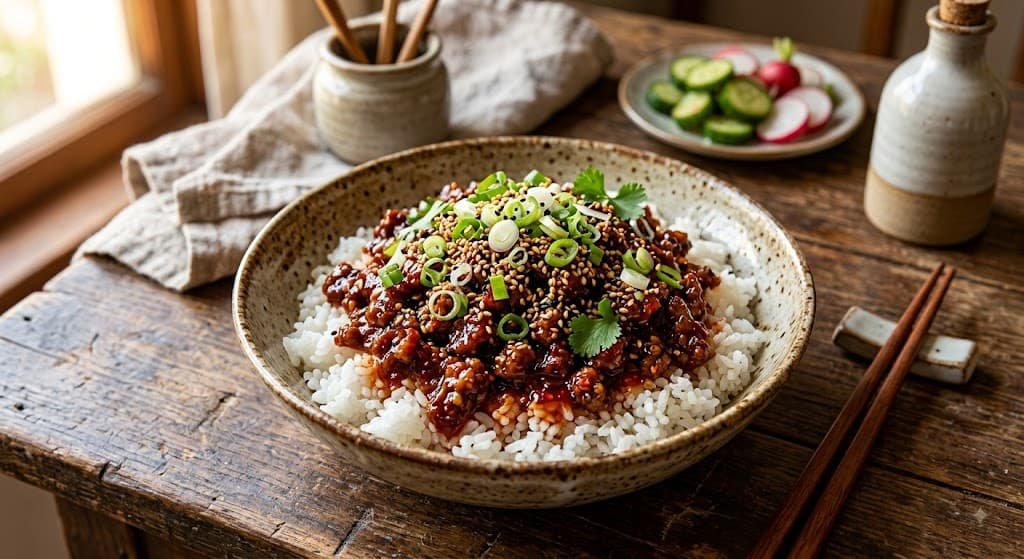
Ground beef in the slow cooker usually means chili or a Bolognese that’s been simmering for hours. This is neither. Slow Cooker Ground Beef with Gochujang Glaze cooks the beef low and slow in a sweet-spicy Korean chili paste sauce, then finishes with a quick broiler step that turns the sauce sticky and slightly charred at the edges — the kind of glaze you’d expect from something that spent real time over direct heat, not five hours on low in a slow cooker.
You dump everything in, walk away for most of the day, and come back to something that tastes like it took real effort. That gap between effort and result is the whole reason to make this.
Why This Recipe Is Worth Making
This is a genuine set-it-and-forget-it dinner. The active time is maybe ten minutes at the start and five minutes at the end for the broiler step — everything in between is the slow cooker doing its job with zero attention from you. If you work a full day and want dinner mostly done by the time you get home, this is built for exactly that.
It’s also forgiving in a way a lot of slow cooker recipes aren’t. Ground beef doesn’t dry out the way a whole cut of meat can if it goes an extra hour past when it’s technically done, so you’ve got real flexibility if your schedule shifts. And gochujang, once you have a jar in the fridge, works its way into a lot more than just this recipe — it keeps for months and this is a low-stakes way to get comfortable cooking with it.
What You’ll Need
| Prep Time | 10 minutes |
| Cook Time | 4-5 hours |
| Broiler Step | 5 minutes |
| Servings | 4 people |
- 2 lbs ground beef, 85/15 — the fat content matters here; leaner beef dries out over a long cook, and 85/15 renders enough fat to keep things moist without turning greasy
- 1 small yellow onion, finely chopped
- 4 cloves garlic, minced
- 1-inch piece fresh ginger, grated
- 1/3 cup gochujang (Korean chili paste) — check the label if you’re heat-sensitive, since spice levels vary noticeably between brands; start with a little less if you’re not sure
- 3 tablespoons soy sauce
- 3 tablespoons brown sugar
- 2 tablespoons rice vinegar
- 1 tablespoon toasted sesame oil
- 1/2 cup beef broth
- 2 teaspoons cornstarch, mixed with 2 tablespoons cold water
- Cooked white rice, for serving
- Sliced green onions and toasted sesame seeds, for serving
Ground turkey works if you want something leaner, but go with 93/7 rather than the leanest option available, or you’ll lose the moisture that keeps this from tasting dry after hours in the slow cooker. If you can’t find gochujang, a mix of 3 tablespoons sriracha and 1 tablespoon miso paste gets you into similar territory — spicy, salty, a little sweet — though it won’t have gochujang’s specific fermented depth.
How to Make It
- Brown the beef first — don’t skip this. Heat a large skillet over medium-high heat and cook the ground beef with the onion, breaking it up with a spoon, until it’s no longer pink and has picked up some real color, about 7–8 minutes. Drain excess fat if there’s a lot pooling in the pan. Yes, this is an extra step before the slow cooker even gets involved, and yes, it’s worth doing — beef added raw to a slow cooker steams instead of browning, and you lose the deeper flavor that actual browning builds. This is the one part of the recipe where skipping ahead costs you.
- Build the sauce. In a bowl, whisk together the gochujang, soy sauce, brown sugar, rice vinegar, sesame oil, garlic, ginger, and beef broth until smooth. It should look glossy and deep reddish-brown, with the sugar fully dissolved rather than sitting in grainy clumps at the bottom.
- Combine and cook. Transfer the browned beef to the slow cooker and pour the sauce over it, stirring to coat everything evenly. Cover and cook on low for 4–5 hours, or on high for 2–3 hours. You’re looking for the sauce to have thickened slightly and the beef to be fully infused with color — it should look uniformly reddish-brown throughout, not just on the outer layer.
- Thicken the sauce. About 20 minutes before serving, stir in the cornstarch-water mixture. Turn the slow cooker to high if it isn’t already there, and let it cook uncovered for those final 20 minutes. The sauce should go from thin and watery to coating the back of a spoon in a visible, glossy layer.
- Broil for the glaze. Spread the beef mixture in an even layer on a rimmed baking sheet lined with foil. Broil on high for 3–5 minutes, watching closely, until the edges start to darken and turn slightly sticky and charred in spots. This step is what gives the dish its glazed, slightly caramelized finish — without it, you’ve got a good slow cooker beef dish; with it, you’ve got something that tastes like it spent real time under direct heat.
- Serve. Spoon over rice and top with green onions and sesame seeds.
Tips That Actually Make a Difference
- Don’t skip the broiler step even if you’re tired and hungry. It’s five minutes and it’s the difference between a decent slow cooker dinner and one that actually tastes like it has some char and complexity to it. If you genuinely can’t be bothered, the dish is still fine without it — just noticeably flatter.
- Taste the sauce before it goes into the slow cooker, not after. Once everything’s cooked for hours, it’s harder to correct balance — a quick taste at the start tells you whether you want more sugar to round out the heat, or more vinegar if it’s leaning too sweet.
- Line the baking sheet with foil for the broiler step. The sauce gets sticky and will bake onto an unlined pan, turning cleanup into a real chore.
- Buy gochujang in the tub, not the small packets. You’ll use it again, and the tub keeps well in the fridge for months once opened.
Mistakes to Watch Out For
- Skipping the browning step. This is the mistake that costs the most flavor for the least effort saved. Raw ground beef dumped straight into the slow cooker cooks through fine, but it never develops the roasted, savory depth that browning builds, and there’s no fixing that later in the process.
- Walking away during the broiler step. Broilers work fast and unevenly, and sugar-heavy sauces like this one go from caramelized to burnt in under a minute if you’re not watching. Stay by the oven for those five minutes.
- Not draining excess fat after browning. 85/15 beef renders a real amount of fat, and if you don’t drain most of it off before adding the sauce, the finished dish can taste greasy instead of rich.
- Adding the cornstarch slurry too early. Stir it in too soon and it can break down and lose its thickening power over a long remaining cook time. Add it in that last 20-minute window, not at the start.
Easy Ways to Change It Up
- Add shredded carrots and a diced bell pepper to the slow cooker along with the beef — they hold up fine over the long cook and add color and a little sweetness that plays well with the gochujang.
- Turn it into lettuce wraps instead of serving over rice — butter lettuce or romaine leaves work well and turn this into a lighter, lower-carb version without changing the cooking method at all.
- Cut the gochujang to 3 tablespoons and add an extra tablespoon of brown sugar for a milder, kid-friendly version — you’ll lose a good amount of the heat but keep the same underlying sweet-savory profile.
- Use ground pork instead of beef for a slightly sweeter, richer version — it pairs naturally with the gochujang’s fermented funk and works with the same timing and method.
What to Serve It With
White rice is the straightforward choice and it works because it doesn’t compete with the sauce — it just soaks it up. If you want something with more texture, try it over rice noodles instead, tossed with a little of the sauce before topping with the beef. A quick cucumber salad with rice vinegar and a pinch of salt gives you something cool and crisp against the heat, and steamed or roasted broccoli is an easy vegetable side that won’t clash with the gochujang’s flavor profile. Kimchi on the side, if you have it, makes sense here in a way it wouldn’t with most other ground beef dishes.
Leftovers and Reheating
Store leftovers in an airtight container in the refrigerator for up to 4 days. The flavor actually holds up well, and some people find it tastes even better the next day once the sauce has had more time to soak into the beef. Reheat in a skillet over medium heat, stirring occasionally, until warmed through — this also gives you a chance to let a little more of the sauce reduce and thicken if it’s loosened up in the fridge. Microwaving works too, in 60-second intervals stirred between each, though you’ll lose a bit of the glazed texture from the broiler step, since that’s not something a microwave can bring back.
This also freezes well for up to 3 months. Freeze it before the broiler step if you’re planning ahead — thaw overnight in the refrigerator, reheat on the stovetop until hot throughout, then broil for a few minutes to bring back that charred edge before serving.
Approximate Nutrition Per Serving
Values are estimates for informational purposes only and will vary based on specific ingredients and portion sizes.
| Calories | 420 kcal |
| Protein | 30 g |
| Carbs | 14 g |
| Fat | 26 g |
| Fiber | 1 g |
Final Thoughts
The reason this one stays in rotation at my house is that gap between how little it asks of you and how much it delivers by dinnertime — ten minutes of real work, a slow cooker doing the rest, and a five-minute broiler step that makes the whole thing taste like you did more than you actually did. Give it a shot on a night you want dinner mostly handled for you.