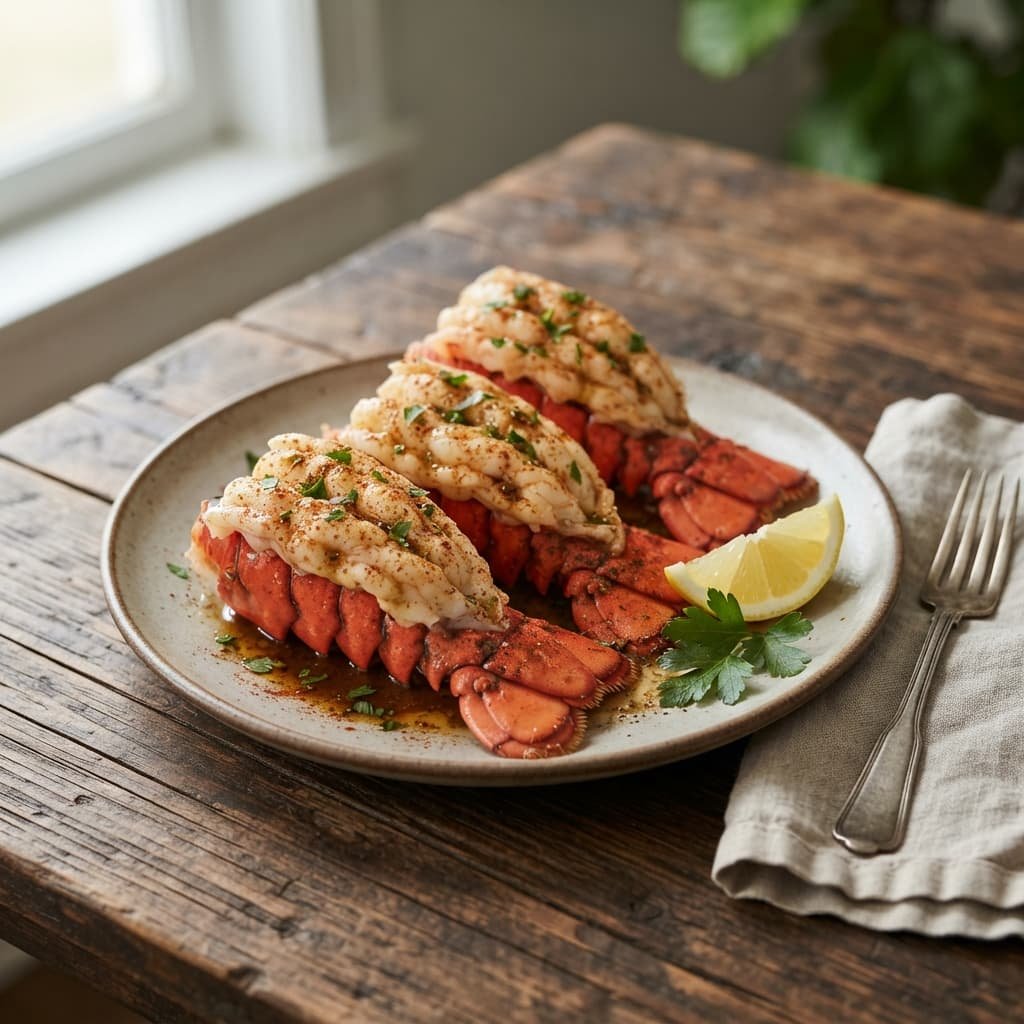
Split a lobster tail open and the color alone tells you something: pale, almost translucent flesh sitting inside a shell that’s already turned a deep coral red from the heat. Spoon a ras el hanout butter sauce over that same tail and a second color arrives on top — a warm, rust-brown pool, flecked with cinnamon and paprika, pooling into every seam of the meat. Baked Lobster with Ras el Hanout Sauce is built entirely around that contrast, pale meat under a spiced, amber-dark sauce, and it’s as much a dish you eat with your eyes first as with a fork.
Neither half of this pairing is a stretch. Ras el hanout butter is a documented, real preparation — one well-known version explicitly lists lobster among the proteins it’s meant to top, alongside salmon, shrimp, and lamb. Baking or broiling split lobster tails with a spiced or herbed butter is a classic technique across seafood cooking generally. This recipe simply puts the two together rather than inventing anything new, and the result tastes like something that could easily have existed on a restaurant menu for years already.
Why Baked Lobster with Ras el Hanout Sauce Works
This dish takes about 25 minutes, and nearly all of that is oven time. Lobster tails bake fast, usually 12 to 15 minutes depending on size, and the ras el hanout butter sauce comes together in the few minutes it takes the oven to preheat, so timing the two together is simple rather than delicate.
Lobster meat is lean and cooks fast, which means it dries out just as fast if left in the oven too long. The butter sauce solves two problems at once: it bastes the meat as it bakes, keeping it moist, and it carries the ras el hanout’s warmth and complexity directly into the flesh rather than leaving the spice sitting only on the surface. Without that fat as a carrier, the spice blend would taste dry and dusty rather than rounded and rich, and the whole point of pairing it with lobster in the first place would be lost.
Ingredients
This serves 2 to 4, depending on tail size.
For the Lobster
- 4 lobster tails (about 5 to 6 oz each)
- Salt, to taste
For the Ras el Hanout Sauce
- 6 tablespoons unsalted butter
- 2 tablespoons ras el hanout
- 2 garlic cloves, minced
- 1 tablespoon lemon juice
- 1 tablespoon fresh parsley, chopped, plus more for serving
- Salt, to taste
How to Make Baked Lobster Tails with Ras el Hanout Butter
- Preheat the oven to 425°F (220°C).
- Using kitchen scissors, cut through the top of each lobster shell lengthwise, stopping just before the tail fin. Gently pull the meat up and over the shell, keeping it attached at the base, so it sits on top rather than inside.
- Place the lobster tails on a baking sheet and season lightly with salt.
- Melt the butter in a small saucepan over low heat. Add the ras el hanout and garlic and cook for 1 minute, stirring, until fragrant.
- Remove from heat and stir in the lemon juice, parsley, and a pinch of salt.
- Spoon about half the sauce generously over the lobster meat, reserving the rest.
- Bake for 12 to 15 minutes, until the meat is opaque and firm to the touch, and reads 140°F (60°C) on a thermometer.
- Spoon the reserved sauce over the lobster just before serving, and finish with extra parsley.
Good vs. Excellent: The Details That Matter
A good version of this dish is already a treat. An excellent one comes down to a few specific calls.
- Pull the lobster the moment it turns opaque. A minute or two past done and lean lobster meat turns rubbery fast, since there’s no fat marbling to buy you extra time.
- Split the shell carefully, keeping the meat attached at the base. This lets the meat sit above the shell for even baking and makes the finished tail far easier to eat.
- Save some sauce for after baking. Butter sauce brushed on before the oven loses some of its brightness to the heat; the reserved portion added at the end keeps that vivid, fresh spice flavor intact.
- Use a thermometer if you have one. Lobster tail size varies more than most recipes account for, and 140°F is a far more reliable marker than a fixed number of minutes.
Common Mistakes and How to Fix Them
Lobster came out tough and rubbery: it almost always means it stayed in the oven too long. Check a minute or two before the timer suggests, especially with smaller tails, and pull it the moment it turns fully opaque rather than waiting for extra browning, since lean lobster meat has very little margin for error once it crosses from just-done into overcooked.
Sauce tastes flat instead of vibrant: the ras el hanout likely cooked too long in the butter, dulling its brighter notes, or the lemon and salt weren’t added at the end. Keep that first cooking stage to about a minute, just enough to bloom the spices without cooking off their character, and always finish the sauce off the heat rather than letting it simmer longer than necessary.
Meat stuck to the shell and was hard to remove: the shell probably wasn’t split deeply enough, or the meat wasn’t loosened from the sides before baking. Run your fingers gently along the edges to free the meat from the shell before it goes in the oven, working slowly so the shell doesn’t crack in the wrong place.
Variations and Substitutions
Large shrimp or salmon fillets work with this same ras el hanout butter sauce, giving a lobster-free take on the same lobster sauce with ras el hanout logic, though shrimp will need a much shorter bake, closer to 6 to 8 minutes. If ras el hanout isn’t available, a mix of cumin, cinnamon, ginger, and a pinch of cayenne approximates some of its warmth, though the layered complexity won’t be quite the same.
For a richer sauce, a splash of heavy cream stirred in at the end turns the butter sauce into something closer to a light bisque-style finish. A pinch of orange zest added along with the lemon juice brightens the whole dish further if a little extra citrus is welcome.
Serving and Pairing
Serve the lobster tails with crusty bread for soaking up any extra sauce on the plate. A simple couscous or rice pilaf makes a natural side, echoing the North African roots of the spice blend. Steamed green beans or asparagus add color and a fresh, light contrast to the richness of the butter. This ras el hanout lobster dish also plates beautifully for a special occasion without requiring much extra effort.
Storage and Reheating
Store leftover lobster meat and sauce separately in airtight containers in the refrigerator for up to 2 days. Reheat the meat very gently, covered, in a low oven or a few seconds at a time in the microwave, since lobster toughens quickly with any prolonged heat. This dish is best enjoyed fresh rather than frozen, since the texture of the meat suffers noticeably once thawed.
Nutritional Information
Values below are estimates per serving and will vary depending on exact brands and quantities used.
| Calories | 310 kcal |
| Protein | 22 g |
| Carbohydrates | 2 g |
| Fat | 23 g |
| Fiber | 1 g |
What Stays With You
This recipe was tested and refined in the bebup.org kitchen, with particular attention paid to the timing of the sauce so its color and flavor stay vivid rather than muted by the time it reaches the plate.
What lingers after Baked Lobster with Ras el Hanout Sauce isn’t just the taste, but that first look at the tail before you even pick up a fork — pale meat, coral shell, and a dark amber sauce pooling in between. It’s proof that a dish doesn’t need an invented gimmick to feel special; two real, well-established techniques, brought together with care, are often more than enough.
Baked Lobster with Ras el Hanout Sauce
Ingredients
Method
- Preheat the oven to 425°F (220°C).
- Using kitchen scissors, cut through the top of each lobster shell lengthwise, stopping just before the tail fin. Pull the meat up and over the shell, keeping it attached at the base.
- Place the lobster tails on a baking sheet and season lightly with salt.
- Melt the butter over low heat. Add the ras el hanout and garlic and cook 1 minute, stirring, until fragrant.
- Remove from heat and stir in the lemon juice, parsley, and a pinch of salt.
- Spoon about half the sauce generously over the lobster meat, reserving the rest.
- Bake 12 to 15 minutes, until the meat is opaque and reads 140°F (60°C).
- Spoon the reserved sauce over the lobster just before serving, and finish with extra parsley.