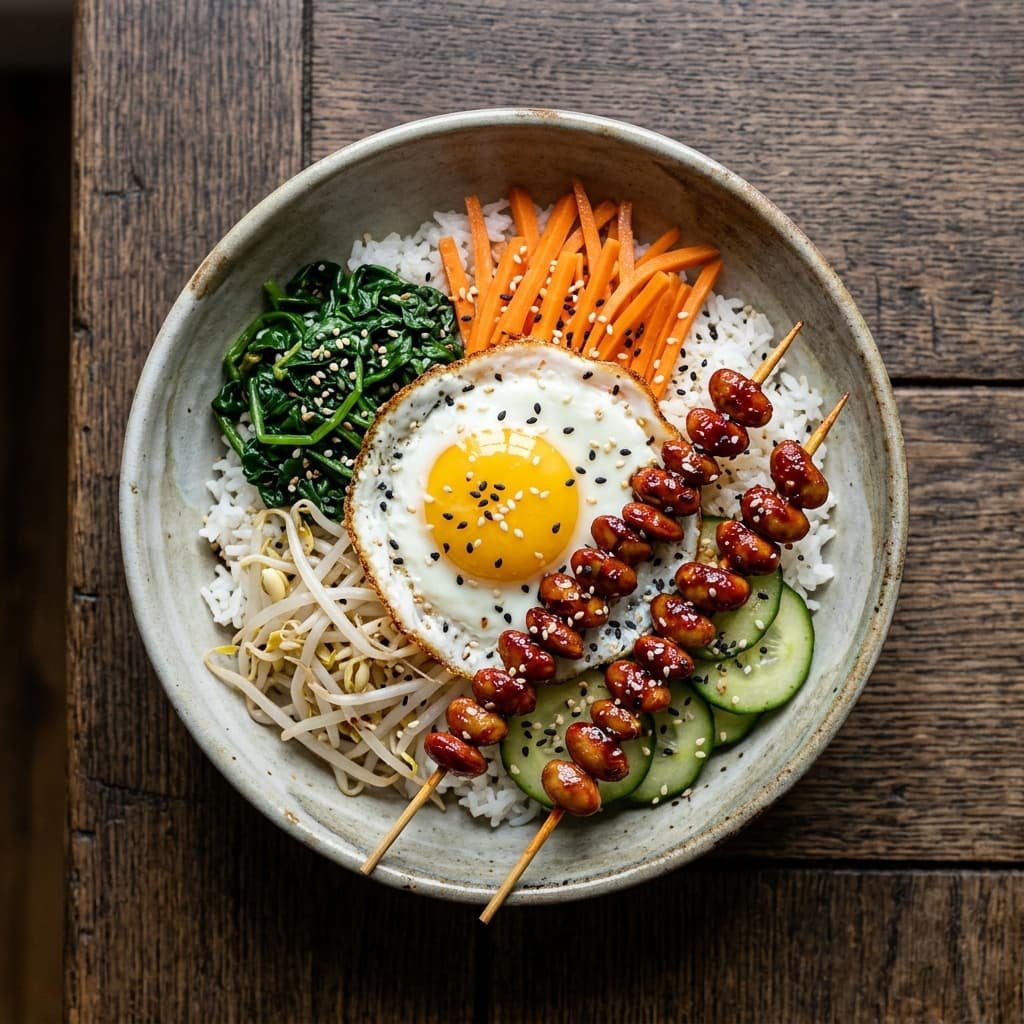
Skewered edamame bibimbap with spinach is a 50-minute Korean-style rice bowl topped with glazed, broiled edamame skewers, sesame-seasoned spinach, quick-cooked carrots and bean sprouts, crisp cucumber, a fried egg and a gochujang sauce. Bibimbap means “mixed rice”, and every topping is cooked and seasoned on its own so each flavor stays distinct until the bowl is stirred. The skewers add a smoky, sticky element that the classic bowl does not have.
| Prep | 25 minutes (the rice cooks during this time) |
| Cook | 25 minutes |
| Total | 50 minutes |
| Servings | 4 |
| Difficulty | Medium (many small components) |
Why Every Component Is Cooked Separately
Bibimbap is built from parts that need different handling. Four principles decide whether the bowl works.
- Water control. Spinach is mostly water, and heat releases it. Squeezing the cooked leaves removes that water before it can pool at the bottom of the bowl and turn the rice soggy.
- Separate seasoning. Each vegetable gets its own pinch of salt, sesame oil or vinegar. Seasoned individually, the vegetables taste distinct, and the gochujang sauce ties them together at the end.
- Late glazing. The sauce contains honey, and sugar scorches under direct heat. Brushing it on in the final minute gives a lacquered coating without burnt pods.
- Egg order. Egg whites set before yolks do. Gentle heat gives fully set whites and a yolk that stays as soft or as firm as preferred.
Ingredients
Rice
- 1 1/2 cups (300 g) short-grain white rice, cooked according to its package
Gochujang Sauce
- 1/4 cup gochujang (about 70 g)
- 2 tablespoons honey (30 ml)
- 1 1/2 tablespoons rice vinegar (22 ml)
- 1 tablespoon toasted sesame oil (15 ml)
- 2 teaspoons minced garlic (about 2 cloves)
- 1 tablespoon water (15 ml)
Edamame Skewers
- 1 lb (450 g) frozen edamame in the pod, thawed
- 2 teaspoons toasted sesame oil (10 ml)
- 1/2 teaspoon kosher salt
- 8 wooden or metal skewers
Vegetables
- 8 oz (225 g) fresh baby spinach
- 1 teaspoon soy sauce or tamari (5 ml)
- 1 teaspoon toasted sesame oil (5 ml)
- 1 small garlic clove, grated
- 1 teaspoon sesame seeds
- 2 cups (about 6 oz or 170 g) fresh mung bean sprouts
- 3 medium carrots, cut into thin matchsticks (about 2 cups or 200 g)
- 1 teaspoon neutral oil (5 ml), for the carrots
- 1 English cucumber, thinly sliced
- 1 teaspoon rice vinegar (5 ml) and a pinch of salt, for the cucumber
- Kosher salt, for seasoning the sprouts and carrots
Eggs and Finish
- 4 large eggs
- 1 tablespoon neutral oil (15 ml), for frying
- Sliced scallions and extra sesame seeds, for topping
Swaps and allergens: this bowl contains soy, sesame, eggs and often wheat, since many gochujang and soy sauce products include it. Check labels and use tamari and a gluten-free gochujang if needed. Cubed baked tofu replaces the eggs, and maple syrup replaces the honey for a vegan bowl.
Instructions
- Start the rice and soak the skewers. Cook the rice according to its package and keep it covered. Put wooden skewers in a baking dish of water so they do not burn under the broiler. Metal skewers need no soaking.
- Make the sauce. Stir the gochujang, honey, rice vinegar, sesame oil, garlic and water together until smooth and glossy. Spoon 2 tablespoons into a small separate bowl for glazing the skewers. The rest is for the bowls.
- Skewer the edamame. Pat the thawed pods dry and toss with the sesame oil and salt. Thread the pods onto the skewers, pushing through the pod near one end, with about 8 pods per skewer.
- Heat the broiler. Set a rack 4 to 6 inches (10 to 15 cm) from the broiler element, line a rimmed baking sheet with foil, and heat the broiler on high.
- Blanch the bean sprouts. Bring a medium pot of water to a boil. Drop in the sprouts for 1 minute, then lift them out with a spider or drain them. Rinse under cold water, drain well and toss with a pinch of salt.
- Cook the spinach. Drop the spinach into the same boiling water for 30 seconds, until bright green and collapsed. Move it to a bowl of cold water, then squeeze it in your fist until no water drips out. Chop roughly and toss with the soy sauce, sesame oil, garlic and sesame seeds.
- Cook the carrots. Heat the neutral oil in a skillet over medium heat. Cook the carrots with a pinch of salt for 1 to 2 minutes, until slightly soft but still bright orange.
- Dress the cucumber. Toss the cucumber slices with the rice vinegar and a pinch of salt. Drain off any liquid before assembling.
- Broil the skewers. Lay the skewers on the baking sheet and broil for 6 to 8 minutes, turning once, until the pods look tender with a few charred spots. Brush with the reserved glaze and broil 1 minute more, until the glaze looks tacky and deep red. Take them out before it darkens to black.
- Fry the eggs. Heat the frying oil in a nonstick skillet over medium-low heat. Crack in the eggs and cook 2 to 3 minutes, until the whites are opaque and fully set with lacy edges. Cook longer for a firmer yolk.
- Assemble. Divide the rice among four bowls. Arrange the spinach, sprouts, carrots and cucumber in sections on top, set an egg in the center, and lay two skewers across each bowl. Drizzle with the remaining sauce and sprinkle with scallions and sesame seeds. Squeeze the beans from the pods onto the rice, discard the pods, and stir everything together.
Skewered Edamame Bibimbap with Spinach: Timing and Order
Skewered edamame bibimbap with spinach takes about 50 minutes. Start the rice first, cook the vegetables in sequence in about 10 minutes, broil the edamame skewers for 6 to 8 minutes, and fry the eggs last. Assemble while the eggs are hot and the rice is warm.
The order matters. The sprouts and spinach share one pot of water, the skewers broil while the carrots cook, and the eggs go in last because fried eggs are best served straight from the pan.
Mastering the Skewers and the Spinach
Pods are the easiest form of edamame to skewer. They stay intact on the stick, and the shell shields the beans inside from direct heat under the broiler. Thread them through the thick part of the pod, close to one end, so they hold their grip when turned. Leave a small gap between pods so heat reaches the sides.
For spinach, a short blanch keeps the flavor clean. The cold water stops the cooking, which keeps the color bright. Squeeze in several small handfuls rather than one large ball, since a loose ball hides pockets of water.
A grill works as well as the broiler. Cook the skewers over medium-high heat with the lid closed, turning once, for 6 to 8 minutes, until tender and slightly charred, then brush with the glaze for the last minute.
Troubleshooting: Problem, Cause, Fix
- Problem: watery, soggy bowl. Cause: wet spinach, undrained sprouts or cucumber liquid. Fix: squeeze the spinach until it stops dripping, drain the sprouts well, and drain the cucumber before assembling.
- Problem: burnt, bitter glaze. Cause: honey scorches when it sits under high heat for too long. Fix: brush the glaze on only for the final minute, and watch the pods through the oven door.
- Problem: pale, dull pods. Cause: the rack sits too far from the heat, or the pods were wet. Fix: move the rack closer and pat the pods dry before oiling.
- Problem: skewers charring or snapping. Cause: dry wooden skewers. Fix: soak them in water, or switch to metal.
- Problem: rubbery, browned egg. Cause: heat too high, which sets the whites hard before the yolk warms. Fix: fry over medium-low and pull the pan off as soon as the whites turn opaque.
- Problem: sauce too hot. Cause: gochujang is the only heat source. Fix: stir in a little water and honey, or reduce the paste by a tablespoon next time.
Variations and Serving
- Mushrooms: Sauté sliced shiitake or cremini in sesame oil until deeply browned and add them as another section.
- Kimchi: A spoonful on the side adds crunch and tang.
- Crisp rice: Press the rice into a hot, oiled skillet for a few minutes before assembling, for a golden crust on the bottom.
- Heat level: For a milder sauce, use one tablespoon less gochujang and a little extra water. For more heat, stir in a teaspoon or two of Korean chili flakes.
Storing and Reheating
Cool leftovers quickly and refrigerate within 2 hours of cooking. Store the rice, vegetables, edamame and sauce in separate airtight containers, and eat within 2 days. Fried eggs are best fresh, so cook them to order. Reheat the rice and edamame until steaming hot all the way through, and eat the vegetables cold. The sauce keeps longer in a glass jar in the refrigerator, but it is best kept as its own container rather than mixed into the leftovers.
Nutrition (Estimate)
Nutrition values are estimates per serving and vary with quantities and brands.
| Calories | About 640 |
| Protein | About 22 g |
| Fat | About 21 g |
| Carbohydrates | About 94 g |
Frequently Asked Questions
Can shelled edamame be used instead of pods?
Shelled beans are small and hard to thread. Toss them with the sesame oil and salt, roast on a sheet pan under the broiler for a few minutes, and brush with the glaze instead of skewering them.
Does the rice have to be short-grain?
Short-grain rice has a sticky texture that holds toppings and sauce well. Medium-grain rice is the closest alternative. Long-grain rice works but the bowl will be looser.
Can the components be prepared ahead?
Yes. The sauce, the cooked vegetables and the rice can be made earlier in the day and kept separately in the refrigerator. Broil the skewers and fry the eggs just before serving.
Stir Before the First Bite
The point of bibimbap is the mix, so break the yolk, add sauce a spoonful at a time, and stir the bowl together before eating. Start with less sauce than seems necessary, since it is easy to add more but not to take it out.
Skewered Edamame Bibimbap with Spinach
Ingredients
Method
- Start the rice and soak the skewers. Cook the rice according to its package and keep it covered. Put wooden skewers in a baking dish of water so they do not burn under the broiler. Metal skewers need no soaking.
- Make the sauce. Stir the gochujang, honey, rice vinegar, sesame oil, garlic and water together until smooth and glossy. Spoon 2 tablespoons into a small separate bowl for glazing the skewers. The rest is for the bowls.
- Skewer the edamame. Pat the thawed pods dry and toss with the sesame oil and salt. Thread the pods onto the skewers, pushing through the pod near one end, with about 8 pods per skewer.
- Heat the broiler. Set a rack 4 to 6 inches (10 to 15 cm) from the broiler element, line a rimmed baking sheet with foil, and heat the broiler on high.
- Blanch the bean sprouts. Bring a medium pot of water to a boil. Drop in the sprouts for 1 minute, then lift them out with a spider or drain them. Rinse under cold water, drain well and toss with a pinch of salt.
- Cook the spinach. Drop the spinach into the same boiling water for 30 seconds, until bright green and collapsed. Move it to a bowl of cold water, then squeeze it in your fist until no water drips out. Chop roughly and toss with the soy sauce, sesame oil, garlic and sesame seeds.
- Cook the carrots. Heat the neutral oil in a skillet over medium heat. Cook the carrots with a pinch of salt for 1 to 2 minutes, until slightly soft but still bright orange.
- Dress the cucumber. Toss the cucumber slices with the rice vinegar and a pinch of salt. Drain off any liquid before assembling.
- Broil the skewers. Lay the skewers on the baking sheet and broil for 6 to 8 minutes, turning once, until the pods look tender with a few charred spots. Brush with the reserved glaze and broil 1 minute more, until the glaze looks tacky and deep red. Take them out before it darkens to black.
- Fry the eggs. Heat the frying oil in a nonstick skillet over medium-low heat. Crack in the eggs and cook 2 to 3 minutes, until the whites are opaque and fully set with lacy edges. Cook longer for a firmer yolk.
- Assemble. Divide the rice among four bowls. Arrange the spinach, sprouts, carrots and cucumber in sections on top, set an egg in the center, and lay two skewers across each bowl. Drizzle with the remaining sauce and sprinkle with scallions and sesame seeds. Squeeze the beans from the pods onto the rice, discard the pods, and stir everything together.