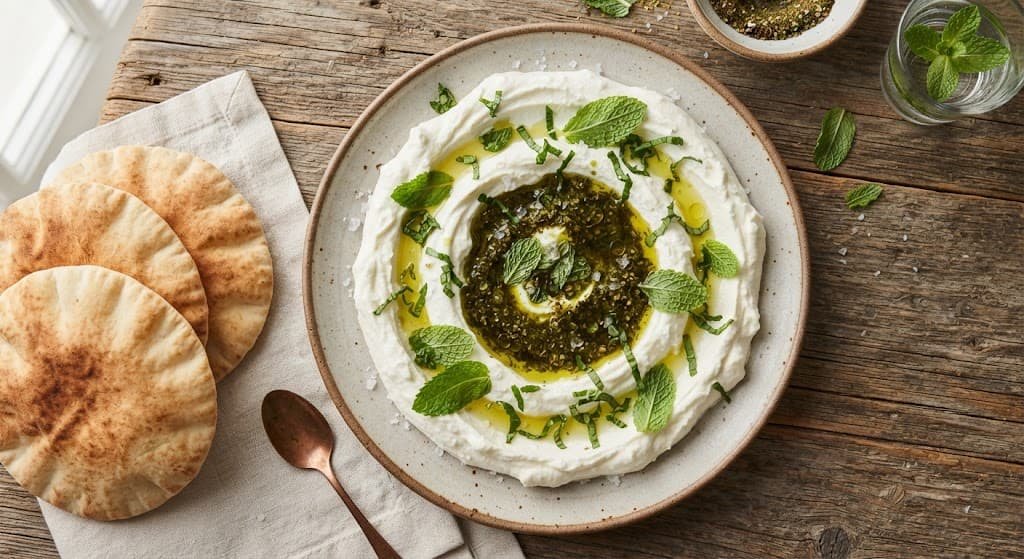
There’s no cooking involved here, no heat, no timer to watch. Labneh topped with za’atar oil is really just two things meeting on a plate: thick, tangy strained yogurt and a spoonful of olive oil loaded with earthy, herby za’atar. The whole dish lives or dies on getting the proportions between those two things right, which makes it one of those recipes where restraint matters more than skill. It’s a staple across Levantine kitchens for good reason, showing up at breakfast tables, mezze spreads, and everywhere in between, precisely because it takes almost no effort to make something that tastes considered.
Za’atar Oil and Tangy Labneh, In the Right Ratio
This comes together in about 10 minutes if you’re using store-bought labneh, or over a day or two if you’re straining your own yogurt from scratch. Either way, there’s no actual cooking step, just assembly and, if you’re making the labneh yourself, patience while it drains.
The ratio that matters most is oil to za’atar: too little oil and the spice blend sits dry and dusty on top instead of forming a proper sauce; too much and the za’atar gets diluted and loses its punch. Roughly three tablespoons of za’atar to a quarter cup of olive oil gives you something that pools and coats a spoon without drowning the flavor. The second ratio worth paying attention to is salt in the labneh itself, since unsalted or under-salted labneh tastes flat no matter how good the za’atar oil on top is. A proper pinch stirred in before straining, or added at serving time if you’re using store-bought, makes a bigger difference than most people expect from something this simple.
Za’atar itself is a blend, not a single spice, and the exact mix varies by region and even by household, but it typically combines dried thyme or oregano, toasted sesame seeds, sumac, and salt. The sumac is what gives it a tart, slightly citrusy edge, which is part of why labneh topped with za’atar oil tastes bright rather than heavy despite the amount of oil involved. Buying a good-quality blend, or making your own if you have the components on hand, makes a noticeably bigger difference here than it would in a dish with more competing flavors.
Ingredients
For the Labneh (Skip if Using Store-Bought)
- 2 cups plain whole-milk yogurt
- 1/2 tsp salt
For the Za’atar Oil
- 1/4 cup extra-virgin olive oil
- 3 tbsp za’atar spice blend
To Finish
- Flaky salt
- Fresh mint or parsley leaves (optional)
- Warm pita bread, for serving
How to Put It Together
- If making your own labneh, stir the salt into the yogurt. Line a fine-mesh strainer with cheesecloth, set it over a bowl, and spoon in the yogurt. Cover and refrigerate for 24 to 48 hours, until thick enough to hold a spoon upright; the longer it drains, the thicker it gets.
- If using store-bought labneh, taste it first and stir in a pinch of salt if it seems flat.
- Spread the labneh onto a shallow plate or wide bowl, using the back of a spoon to create a swirled well in the center where the oil can pool.
- Stir the za’atar into the olive oil in a small bowl until evenly combined.
- Spoon the za’atar oil generously over the labneh, letting extra pool in the center rather than spreading it edge to edge.
- Finish with a pinch of flaky salt and a few fresh mint or parsley leaves if using. Serve right away with warm pita for scooping.
What Makes Labneh Topped with Za’atar Oil Worth Repeating
A decent version has good labneh and enough za’atar oil to taste it in every bite. A great one has labneh thick enough to actually hold the oil in a proper well rather than letting it run off the edges, and za’atar oil made fresh rather than pulled from a jar that’s been sitting mixed together for days, since the spices lose some of their punch once they’ve been steeping in oil for too long. The last small detail: serve it the moment the oil goes on, while the contrast between cold, tangy labneh and room-temperature oil is still sharp.
Common Mistakes and Easy Fixes
Using thin, unstrained yogurt instead of real labneh is the most common one; it just pools into a soupy mess instead of holding the oil where you want it. If your yogurt is on the thinner side, strain it for at least a few hours before using it here, even if you’re not aiming for full labneh thickness. Skipping the salt in the labneh itself is another easy miss, since za’atar oil alone can’t fully make up for bland yogurt underneath it. And mixing the za’atar oil too far ahead of time dulls the flavor; stir it together right before serving rather than storing it premixed. One more worth mentioning: spreading the labneh completely flat instead of leaving a well in the center. Without that shallow dip, the oil just runs off toward the edges of the plate instead of staying pooled where it belongs, and you end up with dry patches of labneh in the middle.
Ways to Change It Up
A drizzle of pomegranate molasses alongside the za’atar oil adds a tart, slightly sweet contrast that works well if you want more complexity. Toasted pine nuts scattered over the top bring some crunch to an otherwise soft dish. If za’atar isn’t available, a rough mix of dried thyme, sesame seeds, and a pinch of sumac gets you close enough, though a proper store-bought or homemade za’atar blend has more depth than any quick substitute. For a heartier version, top with warm roasted vegetables like eggplant or cauliflower instead of serving it as a standalone dip. However you dress it up, labneh topped with za’atar oil stays flexible enough to work as an appetizer one night and a full light meal the next, just by changing what sits next to it on the plate.
Serving and Pairing
This works well as part of a larger mezze spread alongside hummus, olives, and fresh vegetables, or on its own with warm pita as a simple breakfast or light lunch. A side of sliced cucumber and tomato rounds it out nicely if you want something fresher alongside the richness of the oil. It also travels well to a potluck or gathering, since the labneh can be spread ahead of time and the oil added just before serving, which keeps the whole thing looking freshly made even after sitting in a cooler bag for the drive over.
Storage
Plain labneh, without the za’atar oil, keeps well in an airtight container in the fridge for up to a week, and often tastes even tangier after a day or two. Once the oil is added, it’s best eaten the same day, since the labneh underneath will start to absorb the oil and lose its clean, distinct layers if it sits too long. Za’atar oil on its own keeps in the fridge for a few days and works well drizzled over other dishes in the meantime.
Nutrition (Per Serving, Serves 4)
These are estimated values per serving. Actual numbers will vary depending on the exact yogurt and olive oil used.
| Calories | 185 kcal |
| Protein | 6 g |
| Carbohydrates | 4 g |
| Fat | 17 g |
| Fiber | 1 g |
This recipe was tested and refined in bebup.org’s kitchen before publishing, including a few rounds spent settling on the right oil-to-za’atar ratio above.
Simplicity That Doesn’t Need Dressing Up
Some dishes earn their place at the table by doing the least possible amount of work between two or three good ingredients, and this is one of them. There’s nothing here to master, only a ratio to get comfortable with, and once that clicks, it’s hard to imagine a mezze spread without it on the table somewhere.
Labneh Topped with Za’atar Oil
Ingredients
Method
- If making your own labneh, stir salt into yogurt. Strain in cheesecloth over a bowl in the fridge for 24 to 48 hours until thick.
- If using store-bought labneh, taste and add a pinch of salt if needed.
- Spread the labneh on a plate, creating a swirled well in the center.
- Stir za’atar into the olive oil until evenly combined.
- Spoon the za’atar oil over the labneh, letting it pool in the center.
- Finish with flaky salt and fresh herbs if using. Serve immediately with warm pita.