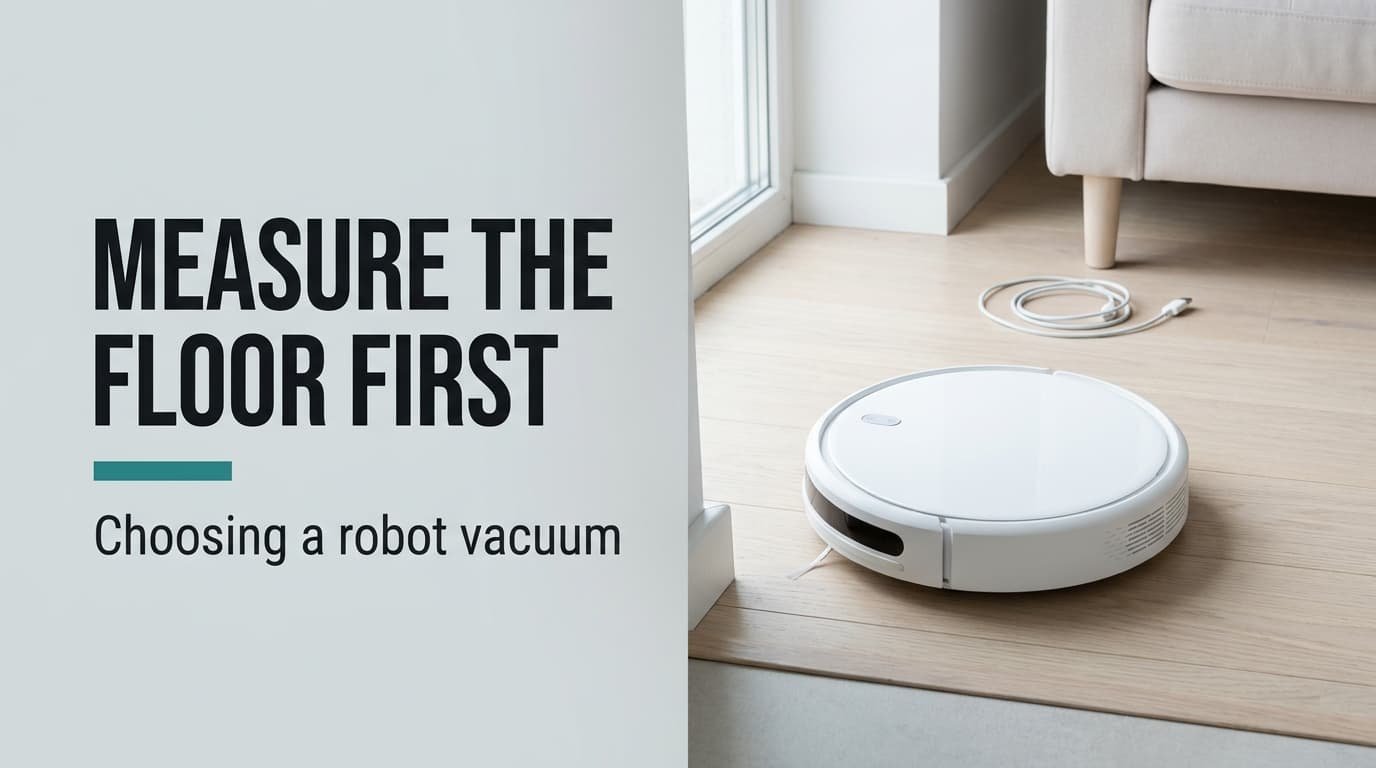
A robot vacuum for a small flat sounds like the easy case, because there’s so little floor to cover. The catch is that every obstacle sits close to the next one: a threshold by the balcony door, a sofa with a low gap beneath it, a phone cable across the hall. You need to know which of those the machine will meet each morning. This page sets out four checks in the order they matter. It also names the headline numbers that deserve less of your attention and closes with a two-minute test at home. Each check asks what changes in daily use, since that’s where a good match pays off.
What Matters Most in a Robot Vacuum for a Small Flat
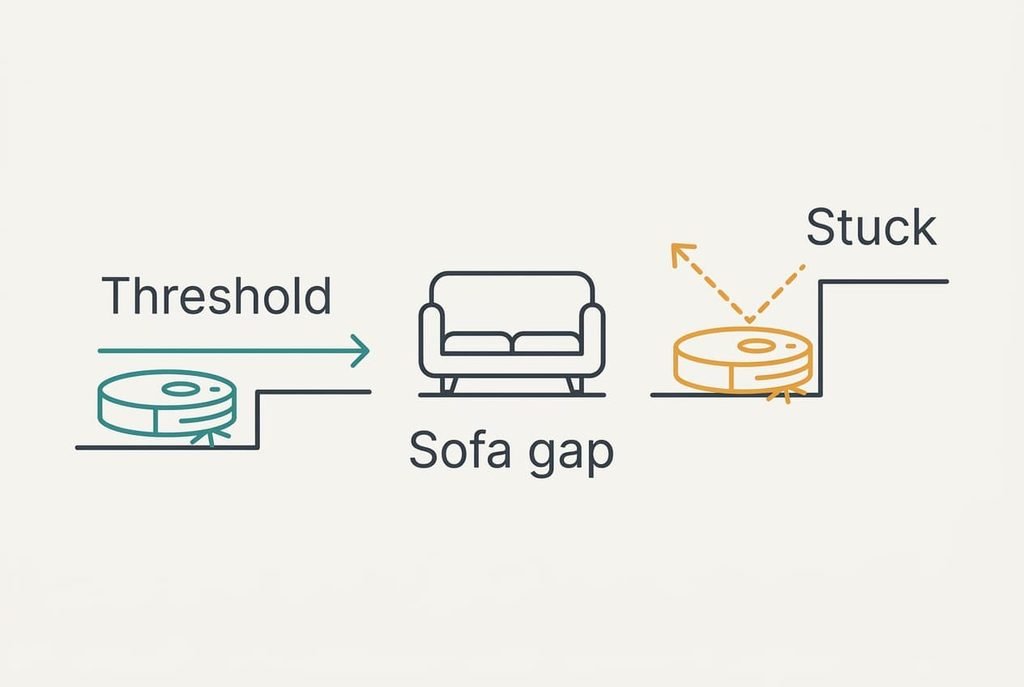
The gap between the machine and your floor decides the match. The check that settles it is whether the unit physically fits the spaces it has to cross and clean, because a machine that stalls costs more attention than sweeping by hand.
Take a flat of 48 m² with a balcony threshold of 20 mm and a sofa that leaves 9 cm underneath. Those two numbers sort the market into machines that cope and machines that quit on day one. Open floor of around 30 m² should fit into one battery run, so the job finishes while you’re out.
Each failure has a price. You walk over and restart the machine, which takes about a minute. Four rescues a week come to under five minutes, yet the habit of glancing across the room to check on it is what makes owners give up within a season. A fit problem also repeats itself. The same threshold stops the same machine again tomorrow, so the cost never turns into a one-off. A smaller flat helps in one way: fewer rooms mean fewer places to get stuck, but each obstacle that does exist is met on every run.
Four Checks, in Order of Priority
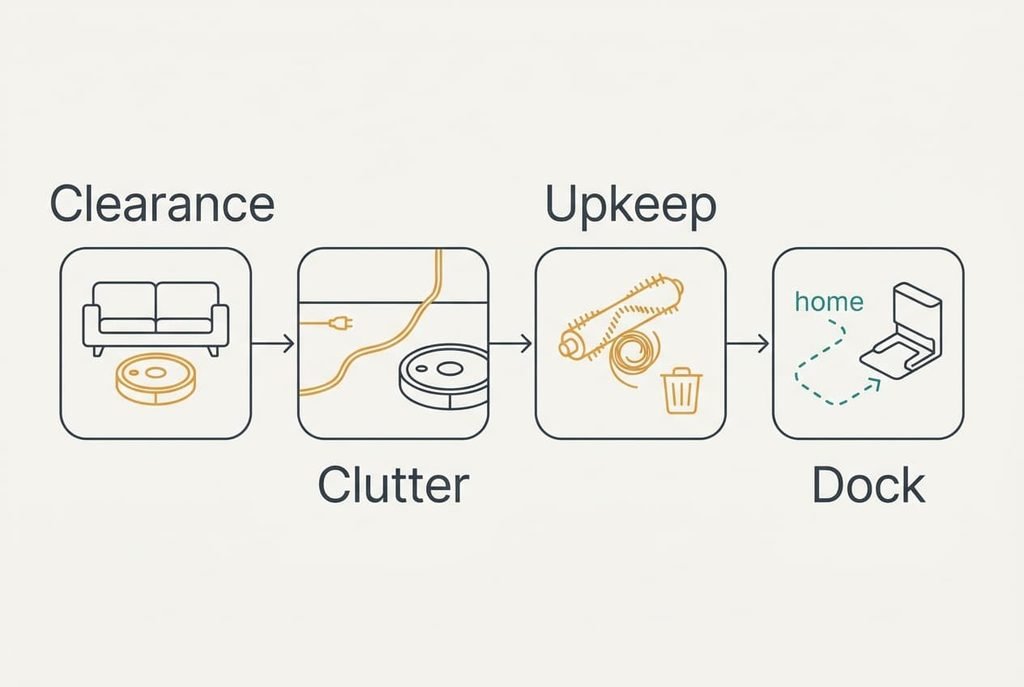
1. Clearance. Every machine has a body height and a stated climb height, and every floor has thresholds. On a normal day, whether the machine reaches the bedroom at all depends on this. Judge it by measuring the highest threshold. Then measure the lowest furniture gap and compare both with the figures the maker publishes. Rugs add a further few millimetres at their edges. Leave a margin of a few millimetres, since door seals sit higher than they look. A miss here shows up as a machine wedged under the sofa or stalled at the balcony door every second day.
2. Behaviour around clutter. Daily life leaves socks and charger leads lying about, so the machine’s response to them becomes part of your routine. Look for plain descriptions of what a model does on meeting a cable: it may steer round it or drag it along. Cables across a doorway are the worst case, since they lie exactly where the machine must pass. A test showing a real lead shows you more than a feature list. A weak result means a tidy-up before every run, and that wipes out the time saved.
3. Bin and brush upkeep. Hair wraps round a brush, and a small bin fills faster than the spec sheet suggests. Check how the brush comes out. Ask whether spares are easy to find, then work out how often the bin needs emptying and add up the minutes per week. A bin that needs emptying after every run turns the machine into one more chore. If that total tops ten, the job drifts to the weekend and the machine runs with a clogged brush.
4. The dock position. Few buyers ever check this one. The dock needs open floor beside it and a stretch more in front, and the machine needs a clear path home across the room. In a small flat that patch often lies exactly where a shoe rack or a plant stands. Put masking tape down where the dock would sit, and note what has to move. The price of skipping this is a machine that ends every run stranded halfway home.
Which Robot Vacuum Specs Are Oversold for a Small Flat?
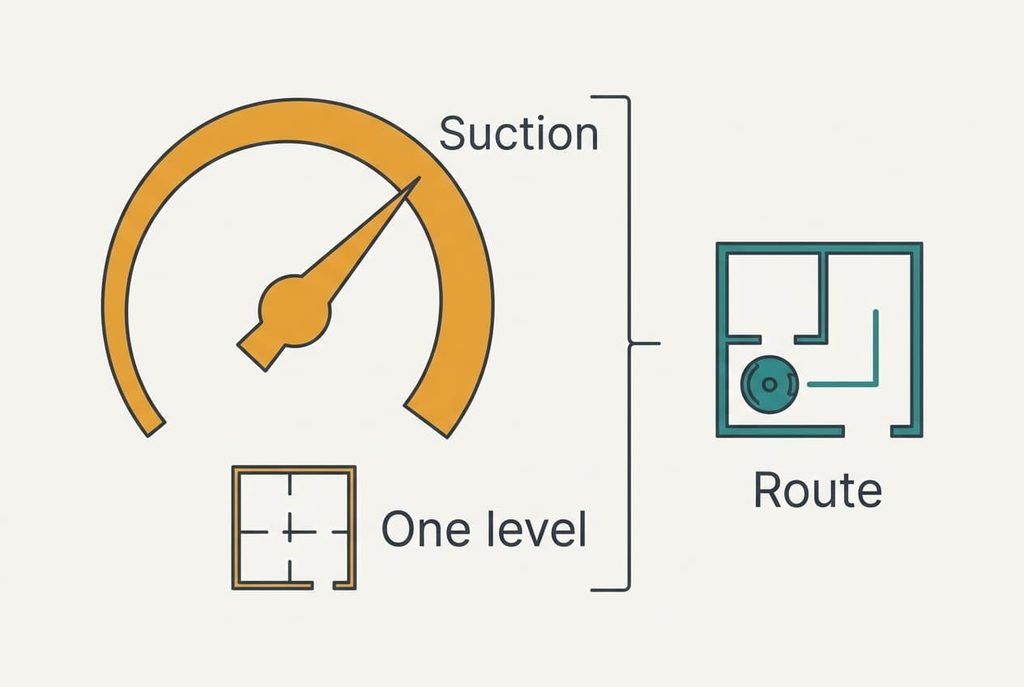
Some figures get far more space on a box than they deserve. A big suction number is promoted because it’s the easiest figure to compare, yet it says little about how the machine copes with a cable or a threshold. On bare floor, brush contact matters more than raw suction, and so does the route the machine takes.
Multi-floor maps look impressive and suit a house with a staircase. A flat on one level uses a single map, so you’d pay for a feature that never runs. A very large bin is a fair help in a big house. In 48 m² it mostly adds height, which cuts into the clearance you measured in the first check.
Voice control is the last of the oversold extras. It saves a few seconds a week, while the cost is one more thing that can lose its connection.
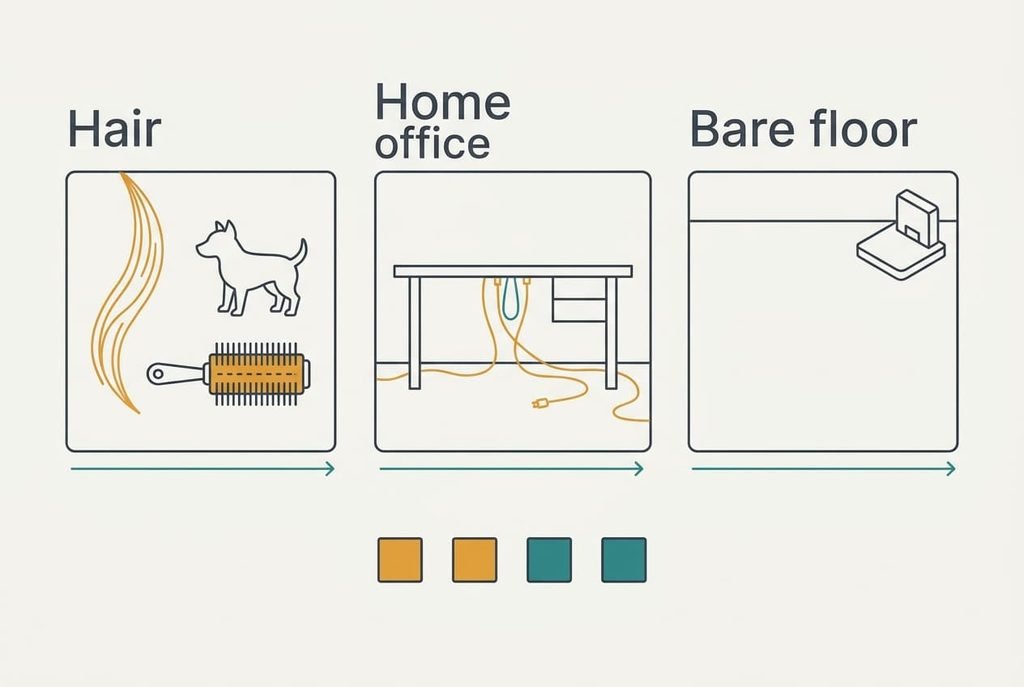
How the Order Changes From One Home to Another
Choosing a robot vacuum for a small flat changes with the household, so the four checks don’t carry equal weight for everyone. Treat the list as a ranking you re-order for your own floor. A household with long hair or a shedding dog moves bin and brush upkeep to the top, because the brush is where the daily effort lands. A home office with leads trailing from a desk puts clutter behaviour first. In a flat with toys on the floor, clutter jumps to the top as well. For these readers clearance still matters, but it ranks below the chores.
A flat with smooth floors and no thresholds can relax the clearance check. That attention is better used on the dock, since the machine will cross the floor freely and the only open question is where it rests overnight.
When to Walk Away From the Idea
Sometimes the best answer is no machine at all. If you can’t keep the floor clear, the verdict is simple: wait until you can keep loose cables off the floor, since the first fortnight will be spent rescuing the machine from them. Three raised thresholds above the stated climb height are another reason to stop. The same applies when the only space for the dock is a hall that people walk through, because the machine will be in the way every day. So is a floor where every possible dock position blocks a doorway.
A robot vacuum for a small flat also has to earn its keep against a cheaper habit. In a flat under 30 m², a stick vacuum kept by the door takes five minutes and has no dock to place. A machine that needs five minutes of rescue each week isn’t saving much against that.
Walking away is a sensible outcome, and it frees the floor space a dock would take.
A Two-Minute Check Before You Order
Grab a tape measure and walk the route the machine would follow. Write down four numbers, one for each check, since each answers a question from the list above. Measure the highest threshold first. Next comes the lowest gap under furniture. Count the loose cables on the floor after that. Finish with the width of the dock space.
Each of these measurements takes seconds using only a ruler and a pen.
Hold the numbers beside the published figures for any model you like. A margin of a few millimetres on both heights is comfortable, and fewer than five cables is a floor the machine can handle.
Whether a robot vacuum for a small flat fits your home depends on four measurements, and you can take them today. Take them before you browse any listings, because a number written on paper stops a long feature list from steering the choice. Measure first, then let the numbers write the shortlist.
Questions Readers Keep Asking
Which specification should I read first?
Start with body height and the stated climb height, then compare them with your lowest gap and highest threshold. These two figures decide whether the machine moves freely around your flat. Suction and app features come later, once you know it won’t stall or hide under furniture.
How much should I spend in relative terms?
Spend where your floor is hardest on a machine. A flat with thresholds and furniture gaps repays a model with good clearance. A flat with smooth floors needs less. Pay for the checks that apply to your home, and skip the rest of the feature list.
What do owners regret most?
They regret skipping the dock check and buying for suction. The machine then sits in an awkward place or needs rescue every second day. Owners who measured the floor first tend to keep using the machine long after the novelty fades.