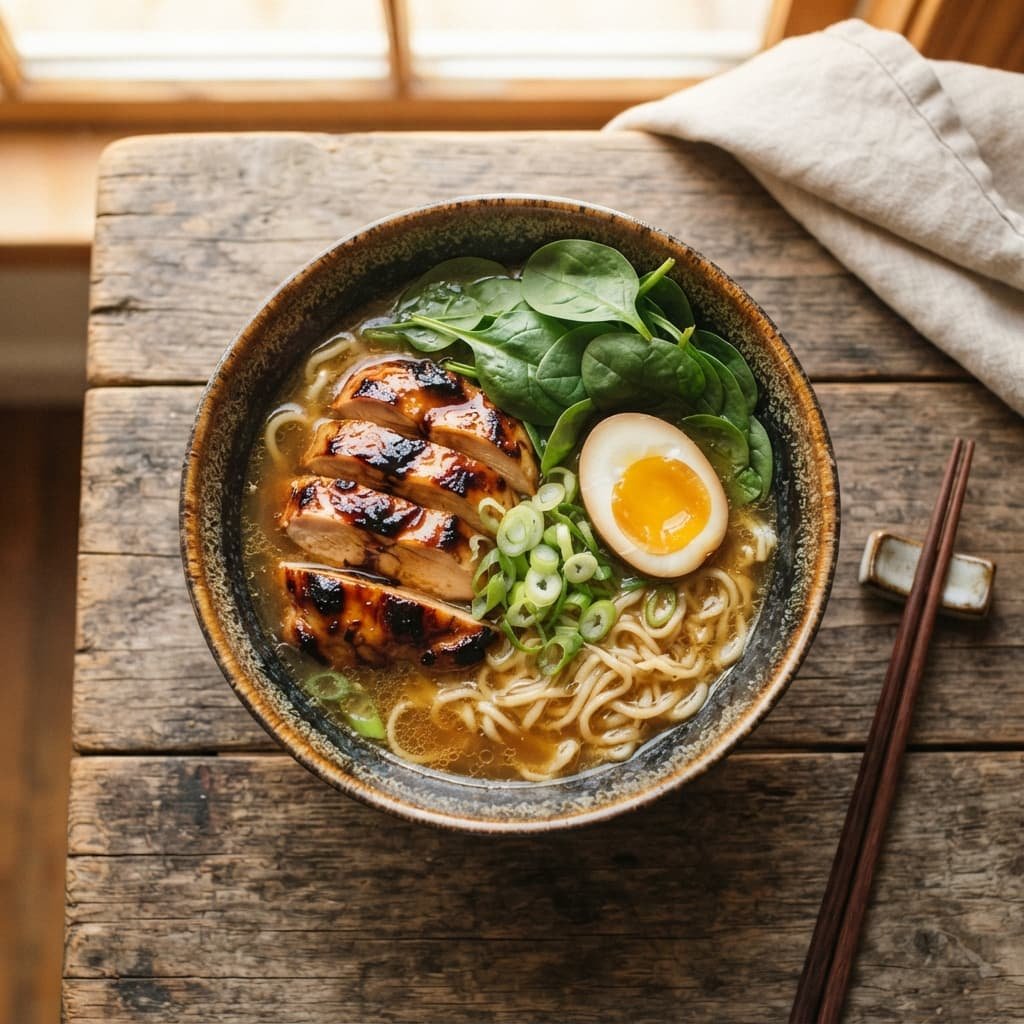
Balsamic vinegar is mostly water and acetic acid until heat starts pulling that water away, and as it evaporates, the remaining sugars concentrate and slowly caramelize into something thick, glossy, and deeply sweet-tart. That reduction is the whole engine behind Balsamic Chicken Ramen: a simple balsamic glaze brushed onto seared chicken, built entirely from evaporation and concentration rather than any added thickener, then set on top of a savory noodle bowl where its sharp sweetness cuts straight through the richness of the broth.
Balsamic-glazed chicken is a real, well-documented technique on its own, showing up constantly in quick skillet dinners where vinegar reduces alongside pan drippings into a glossy sauce. Balsamic vinaigrette dressing ramen noodles and chicken together is also a documented real pairing, appearing in dishes that combine balsamic dressing directly with ramen noodles, chicken, and vegetables. This recipe brings both threads together into one bowl, using balsamic glaze on the chicken and a light balsamic-soy broth underneath.
Key Techniques for Balsamic Chicken Ramen
This dish takes about 35 minutes total. The balsamic glaze needs 8 to 10 minutes of steady simmering to reduce and thicken properly, while the broth comes together in about 15 minutes, so both components are ready to combine right as the noodles finish cooking.
Reducing balsamic vinegar is really just controlled evaporation: a gentle, steady simmer, not a hard boil, gives the water time to escape while the sugars concentrate evenly rather than scorching at the edges of the pan. Pull it too early and the glaze stays thin and runs right off the chicken; push it too far and it turns bitter and sticky, closer to burnt sugar than a balanced glaze. The broth works on a gentler logic by comparison, needing only enough simmering time to let the aromatics infuse before the balsamic goes in at the very end, since prolonged boiling would just cook off the acidity that makes the broth work in the first place.
Ingredients
This serves 4.
For the Balsamic Chicken
- 4 boneless, skinless chicken thighs
- 1 tablespoon neutral oil
- 1/2 cup balsamic vinegar
- 1 tablespoon honey
- 1 garlic clove, minced
- Salt and black pepper, to taste
For the Broth and Noodles
- 6 cups chicken broth
- 2 tablespoons soy sauce
- 1 teaspoon fresh ginger, grated
- 2 tablespoons balsamic vinegar
- 4 portions fresh or dried ramen noodles
- 2 soft-boiled eggs, halved
- 2 scallions, sliced, for serving
- 1 cup baby spinach or bok choy, for serving
How to Make Ramen with Balsamic-Glazed Chicken
- Season the chicken thighs with salt and pepper.
- Heat the oil in a skillet over medium-high heat. Sear the chicken for 5 to 6 minutes per side, until cooked through and golden. Remove and let rest.
- In the same skillet, combine the balsamic vinegar, honey, and garlic. Bring to a gentle simmer and cook for 8 to 10 minutes, stirring occasionally, until reduced and glossy enough to coat the back of a spoon.
- Slice the rested chicken and toss it in the balsamic glaze to coat.
- While the glaze reduces, bring the chicken broth to a simmer in a separate pot. Add the soy sauce and ginger, and simmer for 10 minutes.
- Stir in the 2 tablespoons balsamic vinegar just before serving, off the heat, to preserve its brightness.
- Cook the ramen noodles according to package directions and divide among bowls.
- Ladle the broth over the noodles, then top with the balsamic-glazed chicken, spinach or bok choy, a halved soft-boiled egg, and scallions.
Good vs. Excellent: The Details That Matter
A good version of this bowl is already satisfying. An excellent one comes down to a few specific calls.
- Watch the glaze closely in its final minutes. Balsamic reduction moves from perfectly glossy to burnt surprisingly fast once most of the water has evaporated.
- Add the finishing balsamic to the broth off heat. Simmering it directly in the broth for an extended time cooks off the fresh acidity that gives the broth its lift.
- Let the chicken rest before slicing. A few minutes off the heat keeps the juices inside the meat rather than pooling out onto the cutting board.
- Cook the noodles separately from the broth. Cooking noodles directly in the broth clouds it and releases starch that changes the broth’s texture in a way most people don’t actually want.
Troubleshooting Common Problems
Why did my balsamic glaze turn bitter? It almost always means the reduction went too far, past the point of concentrated sweetness into scorched sugar territory. Pull it the moment it coats the back of a spoon rather than waiting for it to thicken further.
Why does the broth taste flat instead of bright? The finishing balsamic likely simmered too long, or wasn’t added at all. Stir it in right at the end, off the heat, so its acidity stays intact rather than cooking away.
Why did the chicken turn dry? It was probably overcooked during the initial sear. Pull it from the heat the moment it’s cooked through, since the glaze coating adds moisture back but can’t fully rescue meat that’s already gone dry.
Variations and Substitutions
Chicken breast can replace thighs for a leaner version, though it cooks slightly faster and dries out more easily, so watch the timing closely. If fresh ginger isn’t available, a half teaspoon of ground ginger stirred into the broth approximates some of its warmth, though the flavor will be less bright.
For a richer bowl of ramen with balsamic chicken, a spoonful of miso paste whisked in at the end adds depth and body. Mushrooms sautéed and added as a topping bring an earthy note that pairs well with the balsamic’s sweetness.
Serving and Pairing
This bowl is a complete meal on its own, though a simple cucumber salad on the side adds a cool, crunchy contrast. A soft-boiled egg is traditional here, but a fried egg works just as well if that’s easier to manage. Extra scallions and a drizzle of chili oil at the table let everyone adjust to their own taste. This balsamic-glazed chicken ramen also makes a great next-day lunch if the components are stored separately.
Storage and Reheating
Store the broth, chicken, and noodles separately in airtight containers in the refrigerator for up to 3 days. Reheat the broth in a pot until simmering, and warm the chicken gently in a skillet rather than the microwave, which can dry it out further. Cook fresh noodles for leftovers rather than storing them in the broth, since they absorb liquid and turn mushy if left soaking.
Nutritional Information
Values below are estimates per serving and will vary depending on exact brands and quantities used.
| Calories | 460 kcal |
| Protein | 32 g |
| Carbohydrates | 48 g |
| Fat | 14 g |
| Fiber | 2 g |
Final Thoughts
This recipe was tested and refined in the bebup.org kitchen, including a batch where the balsamic went straight into simmering broth instead of being added at the end, just to confirm how much brightness that timing actually preserves before publishing.
Balsamic Chicken Ramen rewards attention to timing more than any special equipment: a glaze reduced with patience, a broth finished with its acidity intact, and noodles cooked separately so nothing turns cloudy or starchy. Once those small choices are handled deliberately, the bowl comes together into something that tastes far more composed than the thirty-five minutes it actually takes.
Mastering the Technique
The skill that carries over from this dish to other vinegar-based glazes is understanding reduction as a visual and textural process rather than a fixed number of minutes. Balsamic, sherry, and red wine vinegar all reduce at slightly different rates depending on their starting sugar content and the size of the pan, so watching for the glaze to coat the back of a spoon, rather than trusting a stated cook time exactly, is the more reliable signal across any reduction sauce. That same instinct for reading consistency by eye, rather than by the clock, transfers directly to pan sauces, glazes, and reductions well beyond this one bowl of ramen.
Balsamic Chicken Ramen
Ingredients
Method
- Season the chicken thighs with salt and pepper.
- Heat the oil and sear the chicken 5 to 6 minutes per side, until cooked through. Remove and let rest.
- In the same skillet, combine the balsamic vinegar, honey, and garlic. Simmer 8 to 10 minutes, until reduced and glossy.
- Slice the rested chicken and toss in the balsamic glaze to coat.
- Bring the chicken broth to a simmer in a separate pot. Add the soy sauce and ginger, and simmer 10 minutes.
- Stir in the 2 tablespoons balsamic vinegar off the heat, just before serving.
- Cook the ramen noodles according to package directions and divide among bowls.
- Ladle the broth over the noodles, then top with the balsamic chicken, spinach or bok choy, egg, and scallions.