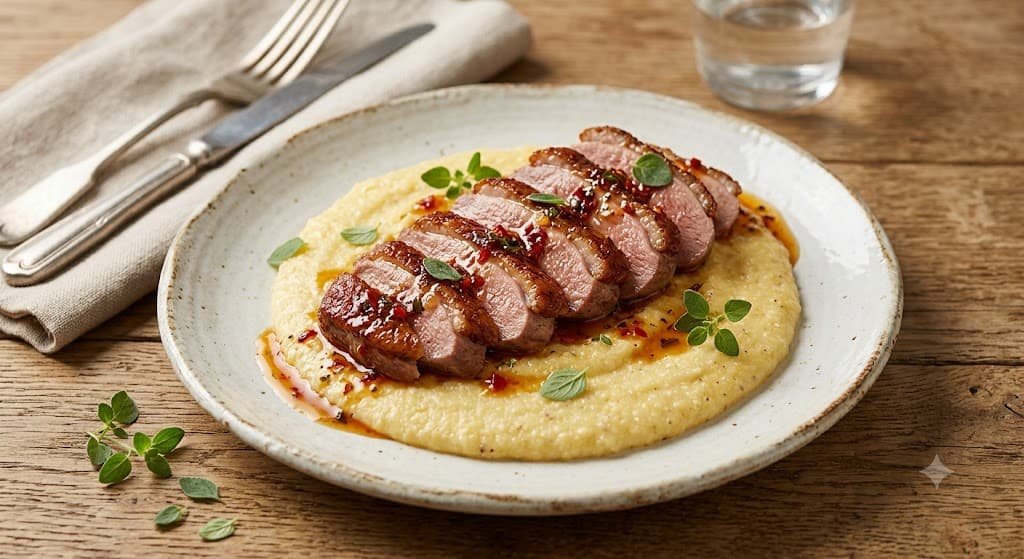
Duck breast holds a thick layer of fat directly beneath its skin, and rendering that fat properly — slowly, patiently, without rushing the heat — is the single decision that separates a genuinely crisp, lacquered skin from something chewy and half-cooked. Easy Calabrian chili duck for weeknights builds around that render, starting the duck in a cold pan rather than a hot one, then finishing with a glaze built on Calabrian chilies, whose fruity, vinegar-forward heat cuts cleanly through the richness that render leaves behind.
Despite the technique involved, this comes together in well under 30 minutes of actual cooking. The cold-start method that makes duck breast approachable at home is, somewhat counterintuitively, also the reason this qualifies as a genuine weeknight dish rather than a restaurant-only project.
Why This Easy Calabrian Chili Duck for Weeknights Recipe Works
Starting duck breast skin-side down in a completely cold, unheated pan gives the fat a gradual, controlled window to render as the pan itself heats up alongside it. Duck fat has a lower melting point than the surrounding protein needs to cook through, so beginning with high heat forces the skin to sear and darken before the fat underneath has had time to fully liquefy and drain away, trapping a layer of unrendered fat between crisp skin and cooked meat. The cold start reverses that sequence, letting the fat melt and escape slowly while the pan gradually climbs to searing temperature, producing skin that’s genuinely crisp all the way through rather than crackling on the surface over a soft, greasy layer underneath.
Calabrian chili, packed in oil and carrying a fruity, slightly vinegared heat distinct from a dried chili’s sharper burn, plays specifically against duck’s richness. Its acidity and gentle heat cut through the rendered fat’s weight in the same way a mustard-based glaze would on pork, providing contrast rather than simply adding more richness on top of what the duck already offers.
Ingredients
- 4 duck breasts (6 oz / 170g each), skin-on — score the skin in a tight crosshatch pattern before cooking, cutting through the fat layer without reaching the meat underneath, which helps the fat render more evenly and lets the skin crisp uniformly
- Salt
- 2 tablespoons Calabrian chili paste, or 4 to 5 whole Calabrian chilies in oil, finely chopped — look for it jarred near other Italian specialty ingredients; its fruity, tangy heat is milder and more rounded than a standard hot sauce
- 2 tablespoons honey
- 1 tablespoon apple cider vinegar
- 2 cloves garlic, minced
- 1 tablespoon fresh oregano, chopped, or 1 teaspoon dried
- Black pepper
| Prep Time 15 minutes | Cook Time 20 minutes |
| Servings 4 people | Difficulty Moderate |
How to Make Easy Calabrian Chili Duck for Weeknights
- Score the duck skin in a tight crosshatch pattern, spacing cuts about 1/2 inch apart, cutting through the fat but stopping short of the meat. Pat the breasts dry and season generously with salt on both sides.
- Place the duck breasts skin-side down in a completely cold, unheated skillet, ideally cast iron or stainless steel. Set the burner to medium-low and let the pan heat up gradually with the duck already in it.
- Cook undisturbed for 10 to 12 minutes, watching the fat render and pool in the pan — you’ll hear a gentle, steady sizzle build slowly rather than an immediate aggressive hiss. Periodically spoon off excess rendered fat into a separate container as it accumulates, which helps the skin crisp rather than fry in an ever-deepening pool.
- The skin is ready to flip once it’s deeply golden-brown and visibly crisp, releasing cleanly from the pan without resistance. If it still looks pale or feels soft in spots, give it another 2 to 3 minutes.
- Increase the heat to medium-high and flip the duck. Sear the meat side for 2 to 4 minutes, depending on thickness, until an instant-read thermometer reads 130°F (54°C) for medium-rare.
- Remove the duck to a cutting board and let it rest for 5 minutes, tented loosely with foil, while you build the glaze.
- Pour off all but 1 tablespoon of the rendered duck fat from the pan. Add the Calabrian chili paste, honey, apple cider vinegar, garlic, and oregano, stirring over medium heat for 1 to 2 minutes, until it thickens slightly into a glossy glaze.
- Slice the rested duck against the grain and arrange on plates. Spoon the warm glaze over each portion, finishing with a crack of black pepper.
Key Techniques
The cold-start render is the technique this dish depends on entirely. Duck skin’s fat layer needs sustained, gradual heat to liquefy and drain away fully; a hot pan sears the surface before that process completes, leaving a band of unrendered fat trapped beneath a crisp exterior. Starting cold and building heat slowly alongside the duck gives the fat the time it needs to render almost completely by the time the skin reaches full crispness, which is why this method — counterintuitive as it seems — produces a more reliably crisp result than starting hot ever does.
Scoring the skin properly supports that render directly. Cuts that reach only the fat layer, not the meat, create channels that allow rendered fat to escape more freely and let heat penetrate the fat layer more evenly across the whole breast, rather than concentrating unevenly if the skin were left unscored.
Practical Cooking Tips
- Score the skin before it comes to room temperature, while it’s still cold and firm — this makes clean, controlled cuts easier than trying to score skin that’s softened and slightly slippery.
- Reserve the rendered duck fat you spoon off during cooking; strained and refrigerated, it keeps for weeks and makes exceptional roasted potatoes.
- Let the duck rest the full 5 minutes before slicing — this redistributes juices that the resting period allows to settle back through the meat rather than running out onto the cutting board.
- Taste the Calabrian chili paste before adding the full amount specified; brands vary in both heat and salt content, and adjusting slightly to your specific jar avoids over-salting the finished glaze.
Common Mistakes and How to Avoid Them
- Starting the duck in a hot pan. This is the most common way this dish goes wrong. A hot start sears the surface too quickly, trapping unrendered fat beneath crisp skin. Always begin cold.
- Overcooked duck breast. Duck is traditionally served medium-rare to medium; pushing it further, closer to well-done, produces a noticeably tougher, less tender result. Use a thermometer and pull it at 130°F for medium-rare.
- Skin that stays soft despite a long cook. A sign excess rendered fat wasn’t being spooned off periodically, leaving the skin essentially frying in an ever-deepening pool rather than crisping in contact with the pan itself.
- A glaze that tastes flat. Usually a sign the vinegar or chili paste quantity needs adjusting for the specific brand used. Taste as you build the glaze and adjust incrementally rather than following the measurements rigidly.
Variations and Substitutions
- Swap duck for bone-in chicken thighs. The cold-start render technique applies identically, given chicken thigh skin’s similar fat structure, though chicken needs to be cooked through fully rather than left at a rare or medium-rare center.
- Add orange zest to the glaze. Its bright, floral citrus oils complement Calabrian chili’s own fruity character, echoing the classic duck à l’orange pairing without the traditional dish’s heavier sauce.
- Use fig preserves instead of honey. Their deeper, more complex sweetness shifts the glaze toward something richer, still balanced by the same vinegar and chili base.
- Finish with flaky salt instead of extra black pepper. Its coarser texture provides a textural pop against the glaze’s smooth glossiness that ground pepper alone doesn’t offer.
How to Serve Easy Calabrian Chili Duck for Weeknights
Serve the sliced duck over something that can absorb the glaze — creamy polenta or simple roasted potatoes both work well, catching the sauce rather than letting it pool uselessly on the plate. A sharply dressed arugula salad on the side cuts through the dish’s richness with its own peppery bite.
This works as a genuine weeknight dinner given its speed, though the finished presentation — crisp, lacquered skin against a glossy chili glaze — reads as considerably more special than the 30-minute timeline suggests.
Storage and Reheating
Refrigerate leftover duck and glaze separately in airtight containers for up to 3 days. The crisp skin softens noticeably during storage, a genuine trade-off of any crisp-skinned protein.
Reheat gently in a 300°F (150°C) oven for 8 to 10 minutes, which warms the duck through without pushing it toward overcooked given its already-precise doneness. Avoid the microwave, which tends to overcook duck breast unevenly and leaves the skin fully soft rather than recrisped.
Approximate Nutrition Per Serving
Values below are estimates for informational purposes only and will vary based on specific ingredients and portion sizes.
| Calories 385 kcal | Protein 32 g |
| Carbohydrates 13 g | Fat 22 g |
| Fiber 0 g |
Closing Note
Easy Calabrian chili duck for weeknights takes a technique — the cold-start render — that intimidates plenty of home cooks and proves it’s actually the more forgiving path to crisp duck skin, not the riskier one. Calabrian chili’s fruity heat does the rest, cutting cleanly through richness that would otherwise sit heavy on the plate. Trust the cold pan, and duck breast stops being restaurant-only territory.