Both a lamp for reading and a phone charger need power, yet the one socket is across the room from where you drew the sofa. Arranging a room when the only socket is on the wrong wall reduces to one measurement: how far a lead can really travel. Our test room measures 380 × 520 cm and sits in a flat in Utrecht. A double socket sits low on the right-hand wall, 140 cm from the window end. The lengths are my assumptions. Check your own. Next come the sums and four layouts. Four mistakes follow. An opinion and a string test close the article.
What Changes When the Only Socket Is on the Wrong Wall
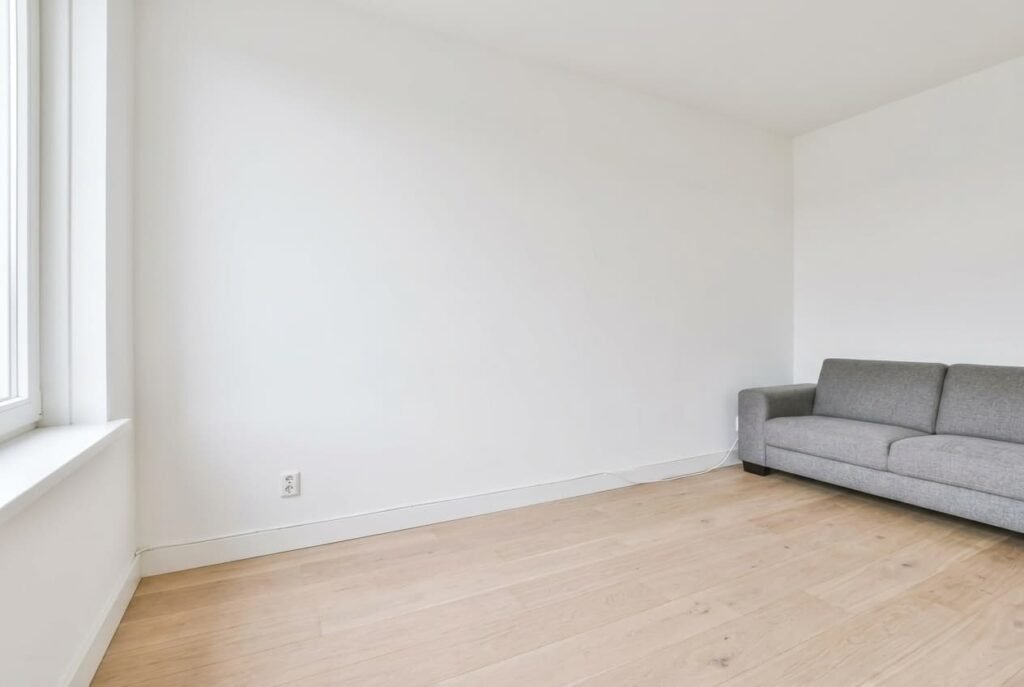
A lead can’t cross the room, because it would lie across the route people walk. It has to hug the skirting, and that’s where the trouble begins. The sofa, 210 cm long, sits midway along the left-hand wall, 260 cm from the window end. Through the air the socket is about 380 cm off. Along the walls the lead runs 140 cm to the window corner, then 380 cm across the window wall, then 260 cm down the left wall. That totals 780 cm, a little more than double.
Every lead also loses length to slack and to the drop at the plug. Assume 20 cm is lost per lead. A lamp lead of 180 cm then reaches 160 cm, a phone charger of 100 cm reaches 80 cm and an extension lead of 300 cm reaches 280 cm. Measured along the skirting, a 180 cm lead reaches only 160 cm, and each corner on the route takes a further bite.
Each device therefore has a reach zone around the socket, measured along the walls. Inside it, placing the device is easy. Outside it, the layout has to change.
That is why a room where the only socket is on the wrong wall feels harder than the plan suggests.
Four Layouts for the Wrong Wall When Only One Socket Is There
Each plan keeps every lead on the skirting and out of the 90 cm walking lane. Positions of sofa and lamp change; the socket does not.
– Sofa on the socket wall: the sofa is backed against the right-hand wall, from 165 to 375 cm along it. That puts its end 25 cm clear of the socket. The lamp stands at that end and needs a lead of about 30 cm. A charger on the arm needs 60 cm, well inside its 80 cm reach. Nothing trails across the floor.
– Sofa in the window corner: the sofa lies along the window wall and ends 140 cm from the corner on the right. The lamp stands in that corner, comfortably inside its 160 cm reach, and the socket is just along the wall. The phone charges at the socket, not the sofa.
– Extension lead along the wall: a 300 cm lead runs along the skirting from the socket to a side table 240 cm away. The usable reach is 280 cm, leaving 40 cm spare. The lamp and the charger both plug in at the table.
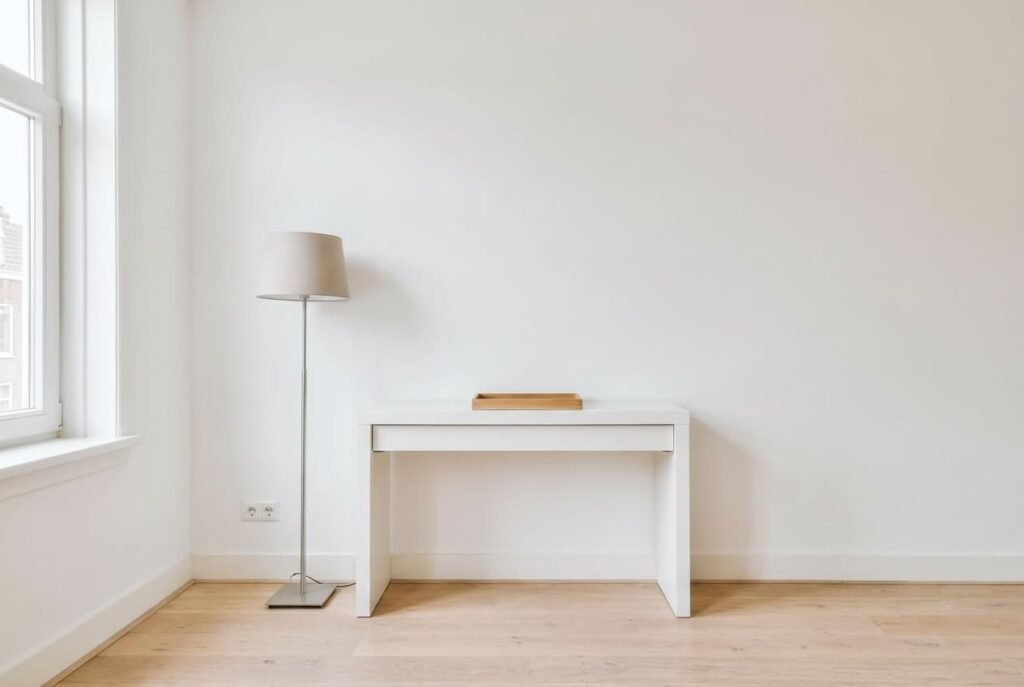
– Console as the power point: a shallow console measuring 120 × 30 cm stands against the socket wall, topped with a tray. Chargers and the lamp’s plug live there, and nobody carries a lead to the sofa.
Where a Plan Around One Socket Goes Wrong
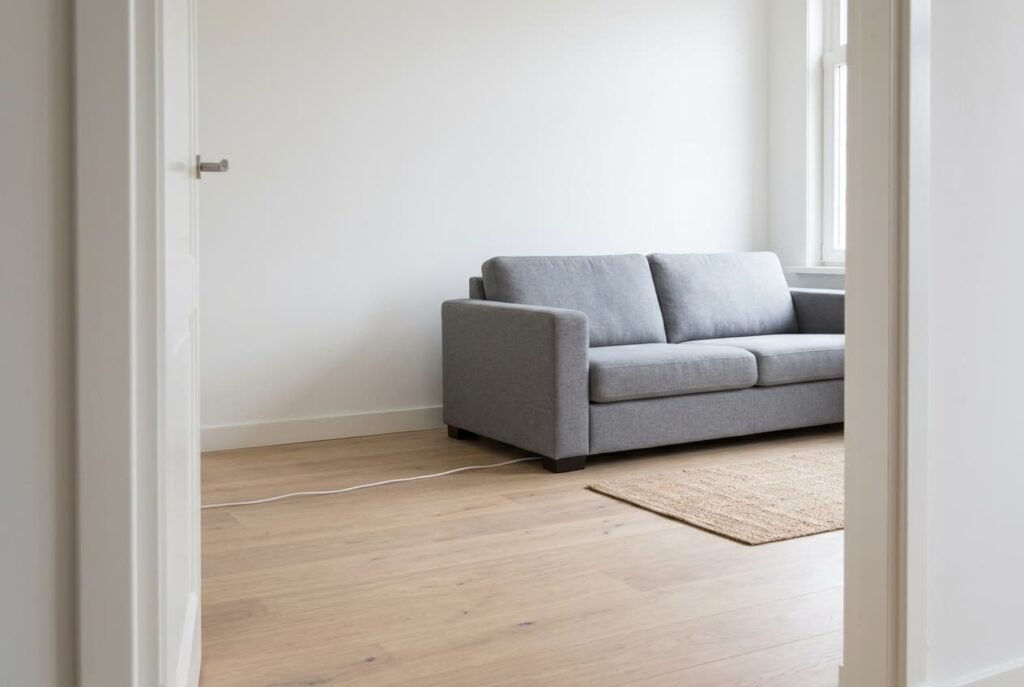
Running the lead across the walking lane invites a fall. A lead cut straight over the floor saves 400 cm of cable against the 780 cm route, yet it crosses the busiest strip of the room. Guests step over it that first night and forget it the next. A lead in the lane is a hazard for anyone carrying a tray. Keep every lead against a wall, even when the route costs extra length.
Tucking the lead under the rug looks neat and wears the cable out. The rug, 200 by 250 cm, presses on the cable at every step, and the cable raises a ridge underfoot. The rug edge also catches on it. A lead along the skirting is longer, and it lasts longer.
Joining two short leads to make one long one adds two joints in the weakest place. Each joint can be pulled apart by a vacuum cleaner or a stray foot. A single lead cut to the measured route plus 20 cm is simpler and tidier. Fewer joints also mean fewer places for dust to collect.
Parking the sofa in front of the socket turns every plug change into a project. A sofa of about 45 kg (an assumption) has to slide out 20 cm to reach the wall. People stop unplugging, and a lamp stays lit overnight because its switch is out of reach. Leave at least 60 cm clear in front of any socket you use daily. Check this early in any room where the only socket is on the wrong wall, because the first layout you sketch usually blocks it.
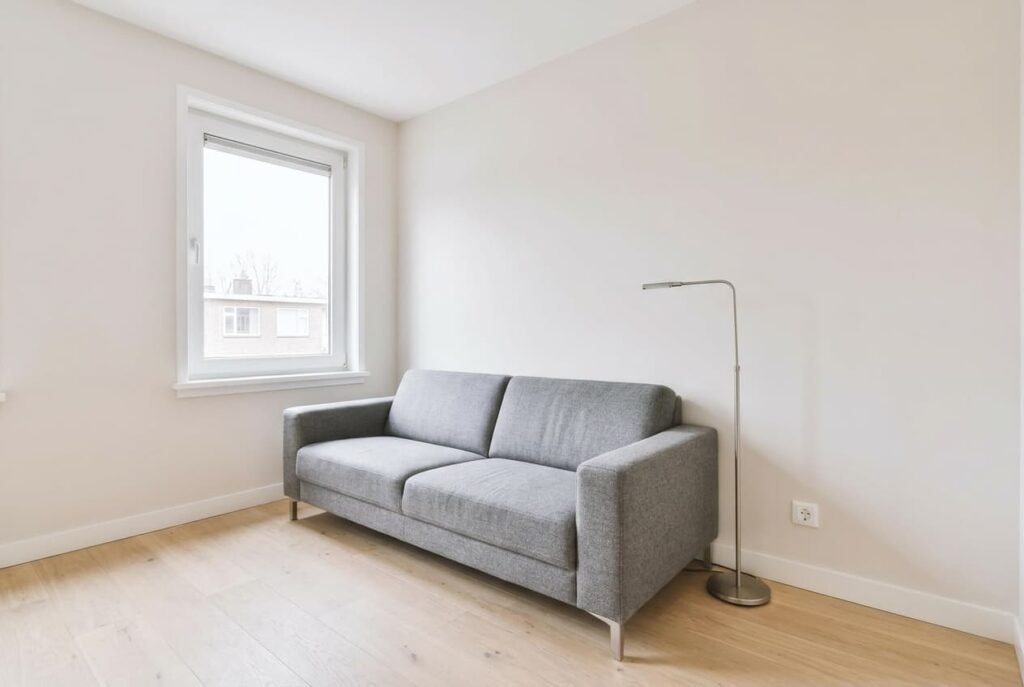
When Buying a Longer Lead Is the Wrong Plan
The usual advice when the only socket is on the wrong wall is to keep the layout you drew and buy a longer lead. I’d argue for letting the socket wall carry the sofa and the lamp, because a lead keeps costing you after the purchase. The long route needs 780 cm of cable laid around three walls, and each metre is more cable to dust and more to catch a foot. Backed against the socket wall, the sofa needs about 30 cm.
Now look at what the sums say. Shifting the sofa takes an afternoon. The 380 cm width leaves 290 cm of open floor once the 90 cm sofa depth is taken off, which is generous for a walking lane and a rug. The window end stays free, and no lead crosses the floor at all. A cable you never need to buy is also one fewer thing to hide when you move out.
One honest drawback remains. The sofa now faces the left-hand wall, which sends the best view behind it.
If you rent, ask your landlord whether a second socket can be added.
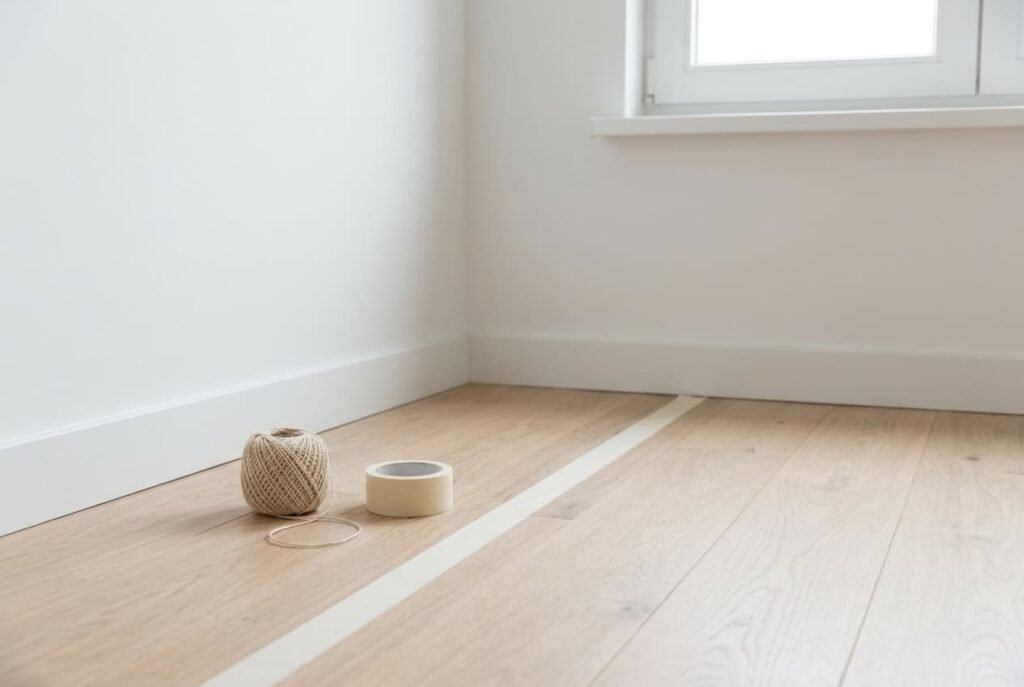
Three Things to Try With String and Tape
1. Pin a length of string to the socket and run it along the skirting to every place where a device would stand, turning each corner as the lead would. Mark the string at the device and measure it. Set that figure against the lead’s usable reach: 160 cm for the lamp and 80 cm for a charger.
2. Tape out the 90 cm lane between the doorway and the window wall, and check that no string crosses it. Walk the lane with a heavy box in your arms, because that’s the widest load you’ll carry through.
3. Tape the sofa where you want it, then stand at the socket and pretend to pull a plug. If you can’t reach it in one step, the layout needs to change.
A room works once every lead follows a wall and every device sits inside its reach. A string test shows that within an hour, while a delivered lead shows it after a week. Choose the lead last. Judge the plan at night with every lamp lit, since that’s when the sockets really get used. Redo the string test whenever a piece of furniture arrives, because a new sideboard can cut a lead’s route in two.
Questions Readers Keep Asking
How long should the extension lead be?
Measure the route along the skirting and add 20 cm for slack and the drop at each end. In our room that gives 260 cm when the side table stands 240 cm away. Choose the next length up from what you need, and avoid joining two shorter leads to reach the same spot.
Can the lamp stand away from the sofa?
Yes, if its usable reach covers the route along the walls. A lamp lead of 180 cm gives 160 cm. The base therefore has to stand within that distance, measured round the corners. Beyond that distance the lamp has to move, or the lead has to be longer.
What if the socket is behind a large wardrobe?
Then it isn’t really available. A socket you can’t reach without moving furniture won’t be used. Count it as lost. Plan the room as though no socket were there at all, and ask your landlord about adding a new one on a free wall.