A laundry room drain that genuinely backs up or drains slowly usually genuinely isn’t a fixture with no possible fix at all – it’s a system where specific, addressable blockage or capacity factors are combining to prevent water from actually moving away as it genuinely should, which is a fundamentally different problem than simply having inherently inadequate plumbing entirely. Understanding which factor is actually driving the issue determines whether the fix is simple and immediate, or genuinely requires a more substantial change.
What is actually happening
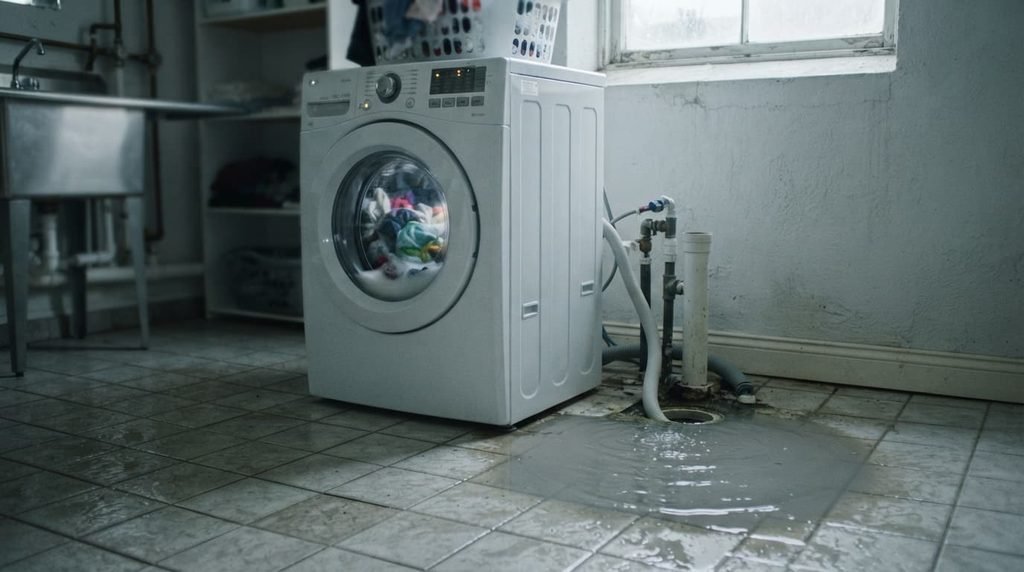
A laundry drain’s slow performance typically stems from a combination of accumulated lint and debris genuinely restricting flow within the drain line, combined with your washing machine’s actual water discharge rate sometimes exceeding what an already partially restricted drain can handle efficiently. This specific combination – gradual restriction plus a demanding discharge rate – explains why the issue often develops gradually before becoming suddenly, noticeably worse.
This genuinely matters because “the drain just doesn’t work well” often gets treated as an unavoidable property of laundry plumbing generally, when the actual issue is frequently this specific combination of factors, meaning a fix addressing only one – simply running the machine on a slower cycle, for instance – may not fully resolve the genuine underlying restriction present.
Confirm which pattern you have
Check carefully whether the slow draining happens consistently across every single wash cycle, or specifically during larger loads or faster discharge settings, since this distinguishes a genuine capacity limitation from a more general blockage affecting all use equally.
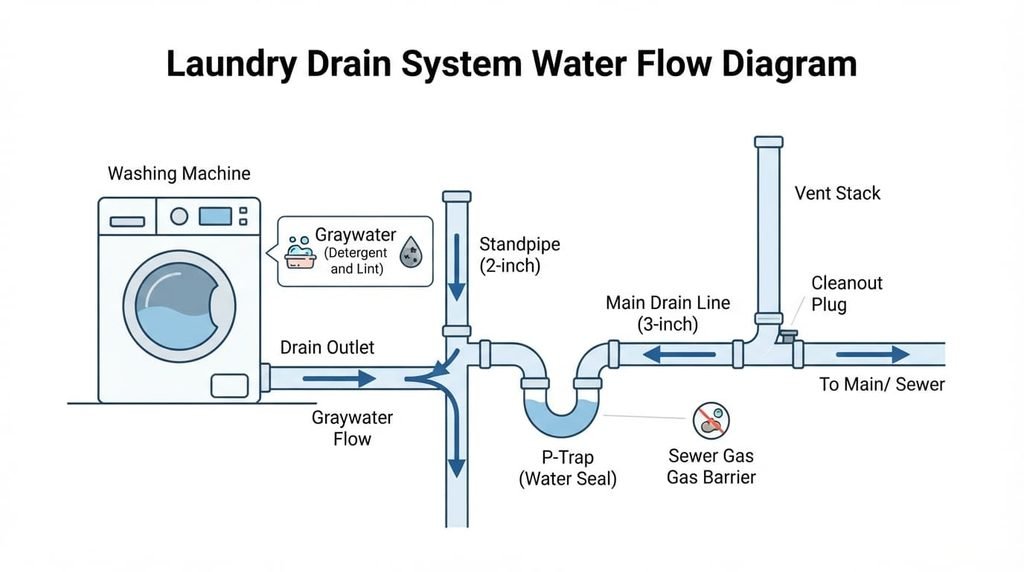
Check carefully for any visible signs of blockage specifically at accessible points – a standpipe, a floor drain – since these represent an addressable cause quite distinct from a deeper line restriction requiring more extensive attention.
The fixes, in order of cost
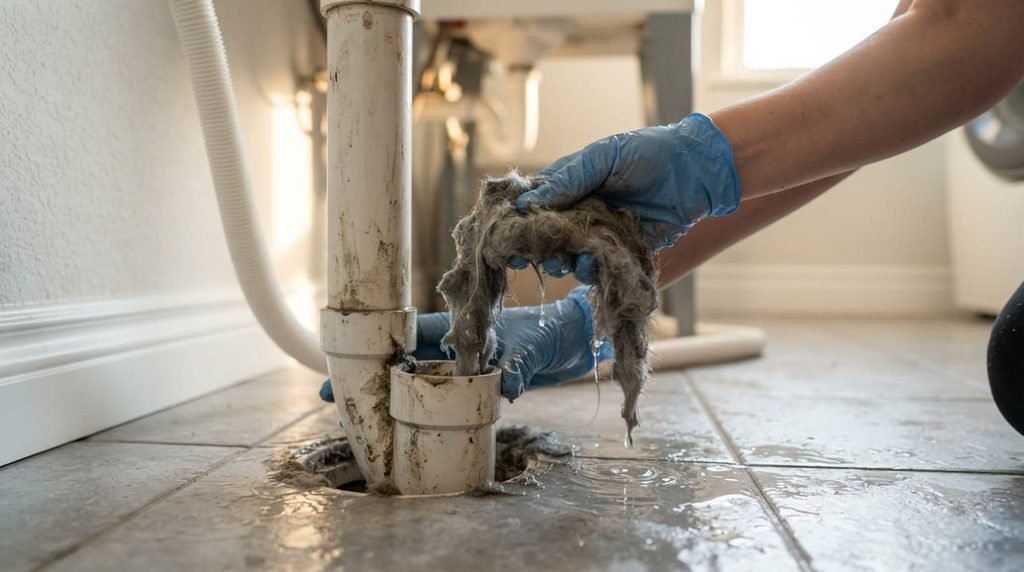
1. Clean any accessible drain components regularly, removing visible lint and debris buildup at standpipes or floor drains. This costs relatively little beyond the effort involved and directly addresses one of the most common, easily overlooked causes of gradually developing drainage problems.
2. Check and clean your washing machine’s own lint filter or trap regularly, if your specific model includes one. This is a modest addition to the total cost but directly addresses lint entering the drain system at its actual source, complementing drain-side cleaning rather than simply compensating for continued buildup.
3. Consider running a genuine drain-clearing treatment specifically designed for this purpose, following product guidance carefully. This costs more than the fixes above but directly addresses buildup within the line itself that visible cleaning at accessible points alone can’t reach.
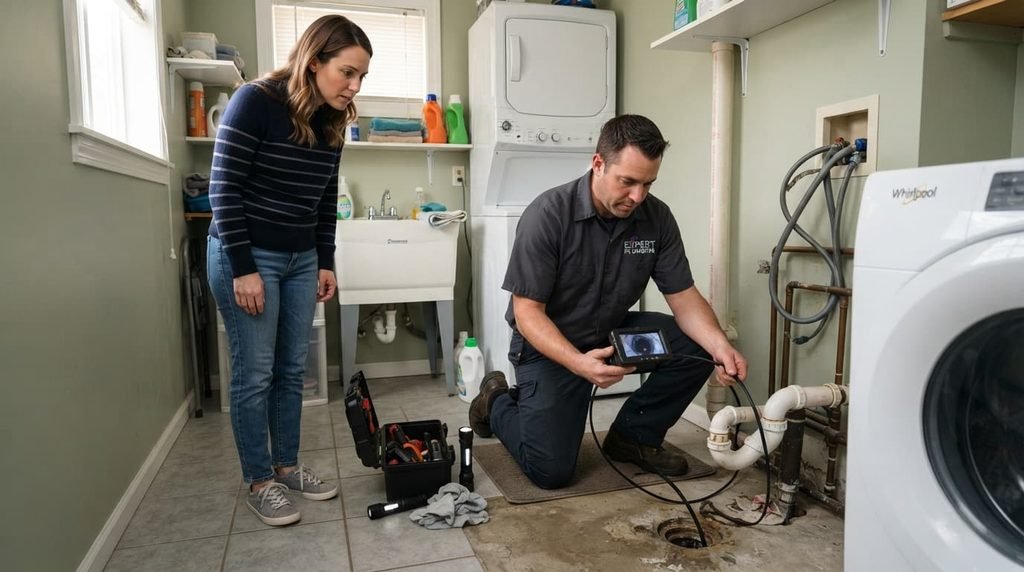
4. For a laundry drain with a genuine, persistent problem the fixes above don’t resolve, consult a licensed plumber about the line’s actual condition and capacity, since this may indicate a more substantial blockage or a line genuinely undersized for your machine’s actual discharge demands. This is a professional consultation, not a DIY project at all – genuine plumbing line issues genuinely need proper assessment before further attempts are likely to succeed.
What isn’t worth doing
Relying entirely on running smaller loads as your complete solution, without addressing genuine drain restriction or lint buildup, isn’t worth doing as an ongoing approach.
Smaller loads reduce immediate discharge demand but don’t address why the drain became restricted in the first place, meaning you continue experiencing the same underlying limitation on your actual normal laundry volume, rather than genuinely resolving it.
Washing certain fabric types repeatedly – items that shed considerable lint – also compounds this problem specifically, since these particular fabrics contribute disproportionately to lint accumulation within the drain system compared to a more genuinely varied typical laundry mix, meaning households washing these items frequently may need more regular maintenance attention than the general guidance above assumes.
What people get wrong about fixing this
The most common mistake is assuming drain issues are simply an unavoidable consequence of regular washing machine use, when the actual cause is frequently a specific, addressable combination of lint accumulation and discharge capacity rather than something inherent to laundry plumbing generally. A well-maintained drain can genuinely handle regular use without developing this issue.
A second common mistake is only addressing slow draining reactively once it’s already noticeably problematic, rather than proactively cleaning accessible components before the issue develops to that point. A brief, simple regular check, even without any current sign of a problem, genuinely prevents the more disruptive situation of dealing with a genuine backup during actual regular ongoing use.
What changes if your situation is different
If your drain issue is genuinely limited to specific larger loads rather than affecting every wash, prioritise the lint-filter and accessible-cleaning fixes specifically for that particular pattern, over a more substantial line assessment, since the actual problem may not justify additional cost and complexity for your typical smaller loads.
If you’re renting and line-level changes genuinely aren’t available to you, the regular cleaning and lint-filter maintenance fixes become your practical ceiling, and a genuinely consistent maintenance habit can meaningfully address most gradual drainage issues without requiring any structural change to the plumbing at all.
The one thing to check before you commit
If you’re pursuing the licensed plumber option specifically, confirm with them whether the issue is genuinely isolated to your laundry line or connected to a broader household drainage issue affecting other fixtures, since this determines both the scope and cost of any recommended fix.
This genuinely matters more for this specific option than for the other fixes above, since those remaining fixes are all fully reversible, genuinely low-cost, and require no professional assessment at all, while a genuine line-capacity or structural issue carries real cost and genuine complexity worth confirming clearly before any further planning proceeds forward.
Questions readers keep asking
How often should I actually clean accessible drain components as routine maintenance?
Checking every few months as a genuinely reasonable routine habit, or specifically whenever you notice any slowing in drainage at all, catches buildup before it genuinely becomes severe enough to meaningfully restrict flow during an actual regular wash cycle.
Can a drain-clearing treatment genuinely damage my washing machine or plumbing if used incorrectly?
Yes, quite potentially – using a treatment not genuinely appropriate for your own specific plumbing material, or applying it incorrectly, can genuinely cause real damage, making it genuinely worth carefully following product guidance and confirming suitability for your particular setup thoroughly before any use.
Does the age of my laundry room’s plumbing genuinely affect how likely this issue is to develop?
To some genuine degree, yes – older plumbing materials can genuinely accumulate buildup somewhat differently than more modern materials do, though genuine regular maintenance remains effective regardless of plumbing age, making consistent care genuinely worthwhile rather than assuming older plumbing is inevitably prone to this issue regardless of maintenance efforts.
When is it worth considering a full drain line inspection instead of the simpler fixes?
If you’ve genuinely and thoroughly tried regular cleaning, lint-filter maintenance, and an appropriate drain treatment, and slow draining still persists significantly, that’s precisely the point worth consulting a licensed plumber about a full line inspection, rather than starting there before genuinely trying the simpler, lower-cost fixes first entirely.