Scuffed paint low on the wall starts most of these projects, and skirting boards getting taller is the answer households reach for. We begin with the change in square metres, then turn to the reasons people give and what the move takes from you. The extreme version gets its own warning, and a short check closes the piece. All the figures come from one sample living room of 4.2 m by 3.4 m, with walls that stand 250 cm tall and a single 90 cm door. Plain white walls show every scuff. Bring your own measurements to each step.
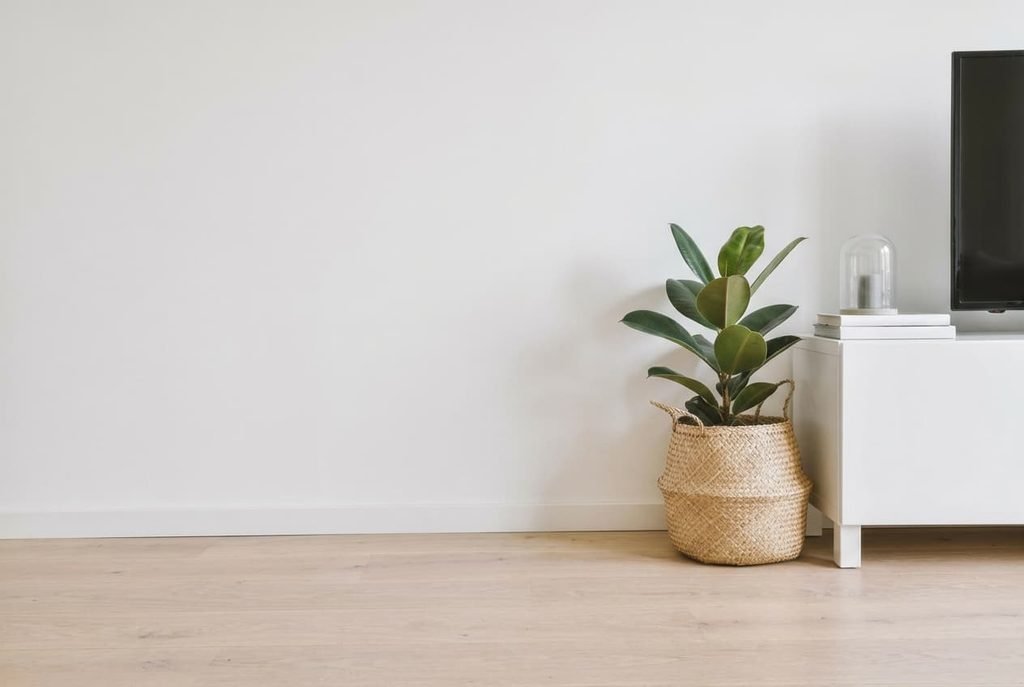
Skirting boards getting taller: the short version
A skirting board is the strip that closes the joint where wall meets floor. For decades the usual choice was a slim one, near 5 cm tall, finished in the white used on the door frames. The newer habit is a board close to 14 cm that has a flat face and no carved profile.
Two pressures drive the switch. Wear is the first. Mops and vacuum nozzles run along the wall’s lowest strip, so that band takes more knocks than any other. A board tall enough to cover it soaks up those knocks in place of the plaster. Proportion is the second. A slim strip under a tall flat wall can look like an afterthought, whereas a board near 14 cm reads as a plinth the wall stands on. When a room has little else on its walls, the foot is what you notice. It’s also a change that leaves the wiring and the wall above untouched.
The trend is about the lowest band of the room.
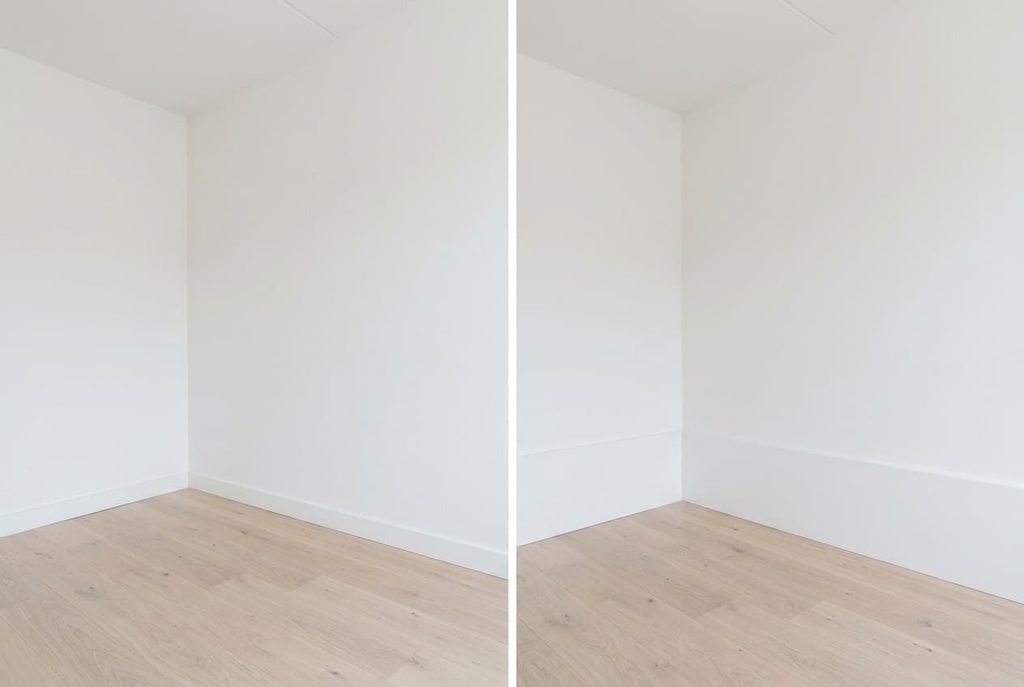
What changed, in measurable terms
In measurable terms, the covered band grows from 5 cm to 14 cm, which turns 0.72 m² of board face into 2.00 m² along the same walls. Start with the perimeter: 2 × (4.2 + 3.4) = 15.2 m. The 90 cm door breaks the run, so 14.3 m of wall actually meets the floor. A slim board gives 14.3 × 0.05 = 0.715 m² of face, while a 14 cm board gives 14.3 × 0.14 = 2.002 m². The gain is about 1.29 m².
Against the wall as a whole the change is modest. The board now takes 14 cm of the 250 cm, which is 5.6% where the slim one took 2%, and the painted wall above it shrinks from 245 cm to 236 cm. Put another way, the board protects 9 cm more of the wall at every point along the run.
Material grows with the face. Take a board 1.8 cm thick. The slim run holds 14.3 × 0.05 × 0.018 = 0.0129 m³, or 12.9 L, and the tall run holds 36.0 L. Skirting boards getting taller therefore means 2.8 times as much stock, since 14 ÷ 5 is 2.8.
Buying is simple arithmetic. Assume lengths of 2.4 m, so 14.3 ÷ 2.4 gives 5.96 and six lengths cover the run on paper. Four inside corners and both door ends eat offcuts, so order seven. The count doesn’t change from a slim board’s, because lengths follow the run and not the height.
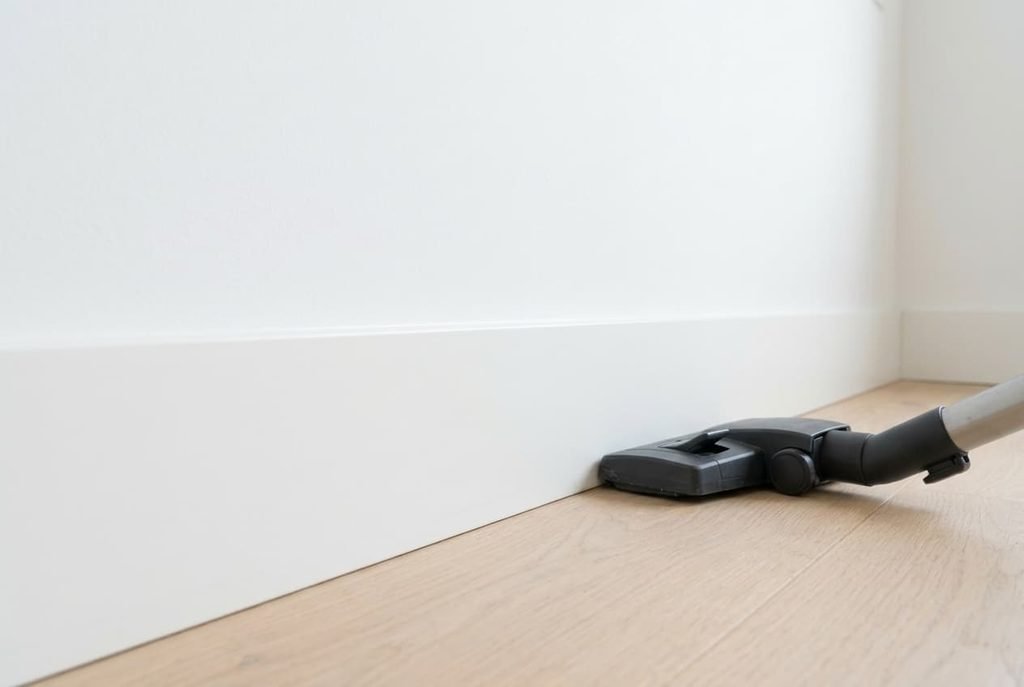
Why skirting boards keep getting taller in family living rooms
Repair work comes first. A scrape on plaster needs filling and sanding, then a repaint of the whole wall so the patch hides. The sample walls, measured above a 14 cm board, cover roughly 14.3 × 2.36 = 33.7 m². Refreshing a scuffed board face means painting 2.0 m², which is 6% of that area, so a knock lands on something you can redo in an afternoon. Over a few years the same corner gets hit again, which makes that cheap repair worth having.
Floors are the second cause. A new floor rarely ends up level with the old one. If it sits 1 cm higher, a 5 cm board shows only 4 cm of itself, and the old paint line may peek out along the wall. A taller board gives that margin back. Floating floors also need a gap at the wall, often around 1 cm by the maker’s figure, and the board has to cover it.
Timing is the third. Anyone lifting an old floor has the boards loose already, which turns the swap into a small extra job and spares you a second round of mess later.
Taste is the fourth. Plain walls with few frames put more of the room’s attention on its lower edge.
A flat, square-edged board is also easy to wipe.
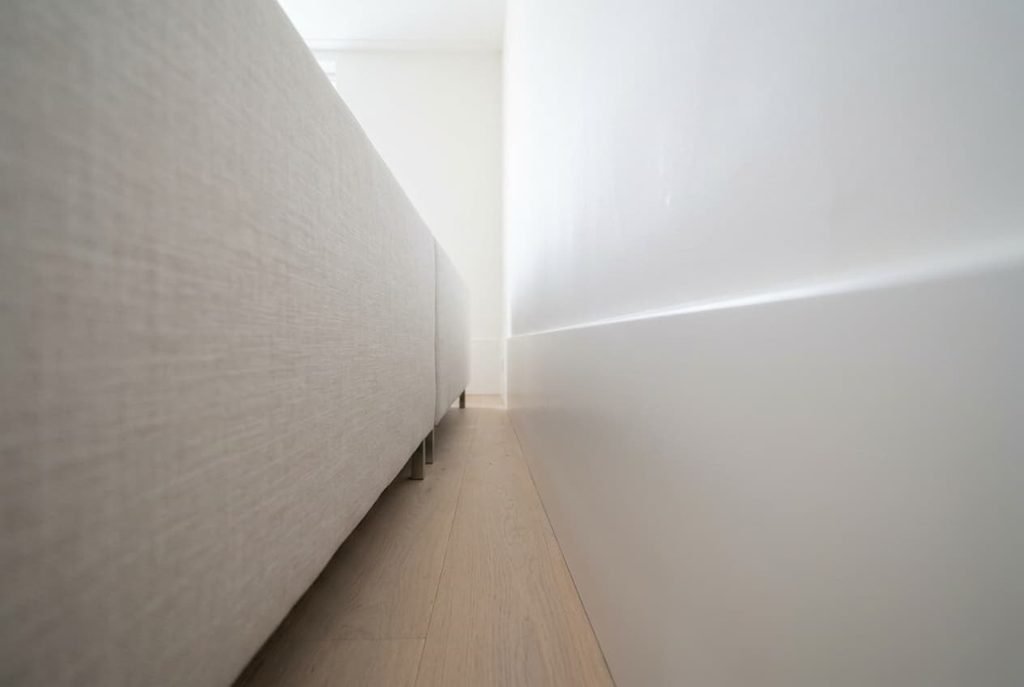
What you give up
Cleaning is the first loss, and it’s small. The top edge forms a ledge 1.8 cm deep along 14.3 m, which is 2,574 cm² of surface that collects dust. At 14 cm it sits above where a mop head travels, so a cloth joins the weekly routine.
Furniture is the second. Everything that stands against the wall sits 1.8 cm further out, since that’s the thickness of the sample board. A sofa back or bookcase that used to touch plaster now meets the board.
Tenure is the third. A fixed board is part of the building, so a rental needs the landlord’s consent. Old strips come away with some paint, and those marks need filling. Where door trim is narrower than the new board, a small plinth block makes the meeting tidy. Skirting boards getting taller also means checking that trim before you buy.
The extreme version
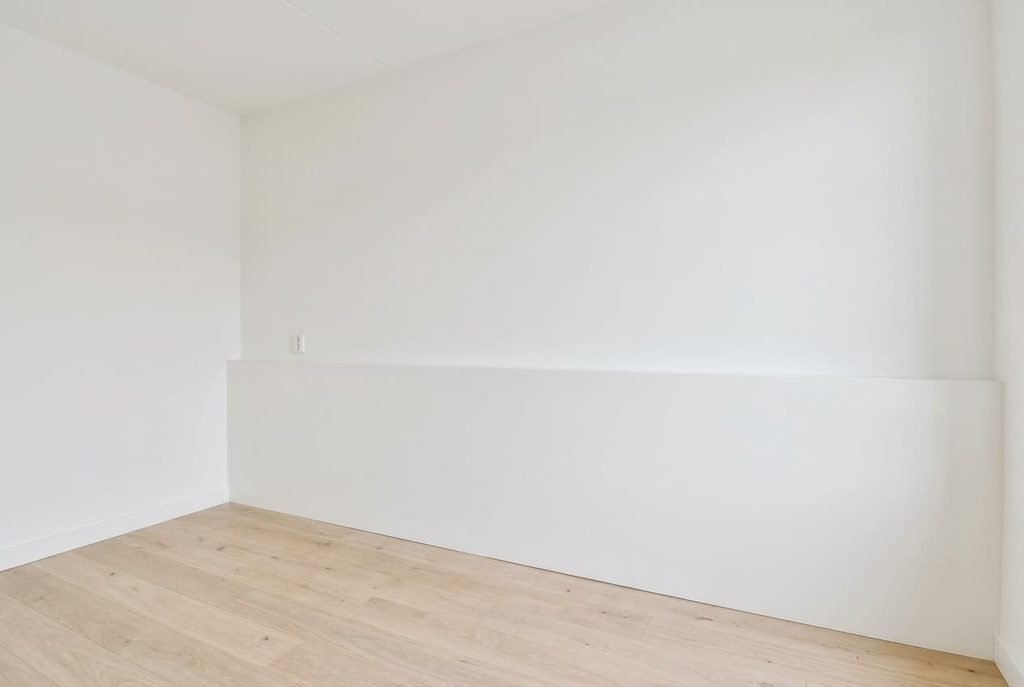
The extreme version runs a 30 cm board round the whole room. That’s 12% of the wall height gone, leaving 220 cm above it. On the sample run it means 14.3 × 0.30 = 4.29 m² of face, a little over twice the 2.00 m² of the 14 cm board. In stock terms that’s 77.2 L against 36.0 L, or 2.1 times the material for a result you’d notice mainly as lost wall.
Sockets are the next collision. Many living rooms keep theirs low down, and a board this tall either covers them or forces every outlet to move. Radiator pipes need notches too, and painting follows the same maths, with 4.29 m² of face to keep clean. By then the board has stopped being skirting and become a low panel that reads as a second wall. A sensible limit is the lowest socket: keep the top edge under it, and the wall keeps its calm.
Who it suits
Skirting boards getting taller suit households whose walls take daily knocks. They suit anyone who counts the marks on the lowest 15 cm of each wall and finds a cluster. Go round the room holding a tape and pencil, and put a dot on every scuff under that line so you can count them in one pass. A handful across all four walls says the slim board is coping, but marks on each wall say the extra height will earn its place. A level floor and a plain door frame give the cleanest result, because the board meets both without fuss.
The change pays off where the foot of the wall is busy. Measure the perimeter and subtract the doors, then multiply by the height you like. Then compare the face area with a slim board and the sums will tell you what the extra height buys you. A board with nothing to protect is just a taller strip to dust.
Questions readers keep asking
Should I replace slim boards that are still sound?
Only when the wall above them keeps getting marked or a new floor has changed their height. A sound board is free to keep. A narrow strip of tough paint on the lowest 14 cm of wall gives a band of extra protection until you next redecorate.
Which rooms suit a tall board best?
Living rooms and hallways with daily traffic suit it best, provided the walls meet a level floor. It also suits rooms where the ceiling reaches 250 cm or more, because the board takes only 5.6% of the height. In a small bathroom or a room with low sockets the gain is smaller.
How long does a tall skirting board last?
The board itself usually outlasts several coats of paint and the floor beside it. The face takes the knocks, so touch it up as needed and keep the top ledge clear of dust. Joints at the corners move first, and a flexible filler closes them when they open.