A slatted rack on two cords that you lower for loading and haul up towards the ceiling is what a ceiling pulley airer for a small Dutch flat gives you. A folding floor airer stands on its own legs and tucks against a wall. The real question is which of them costs less of your home. We compare the floor each reserves and the line each offers, then what each asks of the ceiling. A third route and a rule for picking follow. One flat supplies the sums, with a free patch of 150 × 80 cm and 250 cm of headroom. Swap in your own figures.
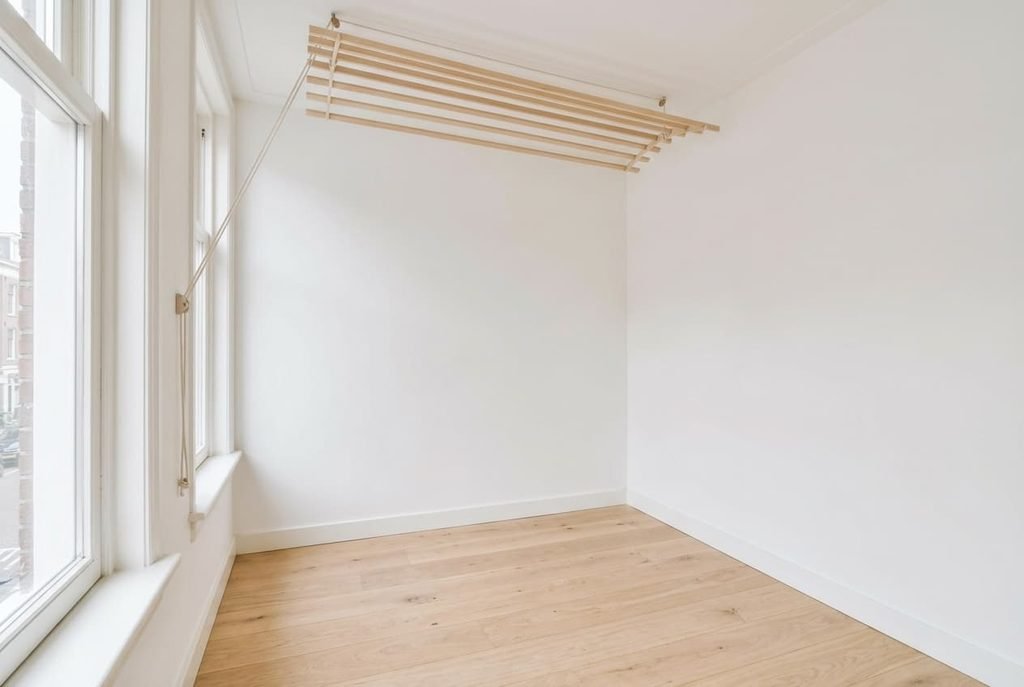
Weighing a Ceiling Pulley Airer for a Small Dutch Flat
Start with two numbers from your own flat: the floor you can spare and the line a load needs. Our spare patch is 150 × 80 cm, which makes 12,000 cm². A load of 20 garments, each taking about 0.45 m of line, needs 20 × 0.45 = 9 m. That’s roughly a 5 kg load. The 0.45 m is a working figure for a shirt or trousers, and towels take more.
The floor airer in our sample opens to 170 × 55 cm and covers 9,350 cm², which is 78% of the patch. Its frame offers 18 m of line, enough for two loads at the same time. The pulley rack has four rails of 1.8 m, so 7.2 m. That’s 0.8 of a load, or 16 garments.
The question that sorts the two is how much floor each one reserves while the washing hangs, weighed against the line you actually need. The pulley reserves no floor, though it takes the air above 135 cm. A frame on legs reserves most of the patch and gives the longer line. Neither wins before you know your own load, so the sections below test each against it.
Two Airers Side by Side
Every number in this table was worked out in the flat described above, using a 5 kg load that needs 9 m of line. Each row is a fact you can measure on the day.
| Point | Folding floor airer | Ceiling pulley airer |
|---|---|---|
| Floor reserved while drying | 9,350 cm², 78% of the patch | none, though space above 135 cm is taken |
| Floor taken when stored | folded, 105 × 8 cm = 840 cm², 7% | none, the rack is raised to the ceiling |
| Length of line | 18 m, two loads | 4 × 1.8 m = 7.2 m, 0.8 of a load |
| Fixings | none | two ceiling fixings and a cleat on the wall |
| Height of the top rail | about 105 cm, at waist height | lowered to 150 cm, raised to 235 cm |
| Moving out | folds and leaves with you | the holes stay in the ceiling |
| Setting up a load | open the frame and hang | lower it, hang the load, haul it up: about a minute more |
Measure each row yourself using a tape and bathroom scales. Look hardest at the row where your flat is most cramped, because the option that fails there will cost you most.

Where a Folding Floor Airer Wins in a Small Dutch Flat
A floor frame beats a ceiling pulley airer for a small Dutch flat when you rent or when two loads often hang together. It needs no fixings, so no landlord’s consent is asked and nothing is left in the ceiling after you move. Its 18 m of line takes a whole 5 kg load and leaves 9 m for towels or a duvet cover.
The top rail sits near 105 cm so you reach every garment without climbing, and the frame folds to 105 cm by 8 cm, so it leans against a wall and covers just 105 × 8 = 840 cm², which is 7% of the patch.
The costs are real. Opened, it claims 9,350 cm², so the corner is lost while the washing hangs. The 105 cm frame also blocks a window if it stands in front. A light frame wobbles under a lopsided load, so hang the heavy towels near the legs. The air at 105 cm is also cooler than the air at the ceiling, and a cold room slows drying.
Where a Ceiling Pulley Airer Wins for a Small Dutch Flat
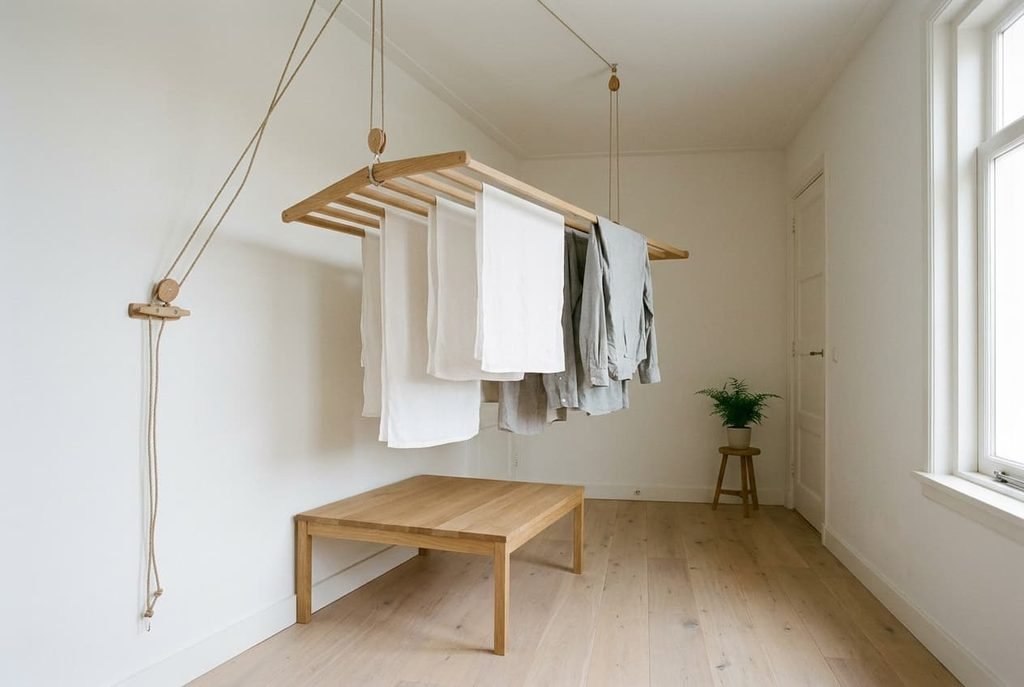
Choose the pulley when floor is the scarce thing. Raised to 235 cm, the rack lets garments drop at most 100 cm, so the lowest hem sits at 135 cm. A table 75 cm high can stand underneath. The floor stays yours while the washing hangs.
Warm air gathers near the ceiling, so the line sits in the warmest air in the flat, and one timed load against a floor frame shows what that saves in your room.
The fixings need care. A rack of 3 kg holding 4 kg of dry washing, which weighs about 6 kg when wet, carries 9 kg. That’s 9 × 9.81 = 88 N, so 44 N on each of two fixings. Choose fixings rated for four times that, which is 176 N. Match them to the ceiling material, because concrete takes different plugs from plasterboard. Cords wear, so check them every six months and cut out any cord that shows strands. The line is 7.2 m, so a full 5 kg load can’t hang at once, and that’s the main price of the floor you save.
A Third Route: A Wall Rack or the Airer You Own
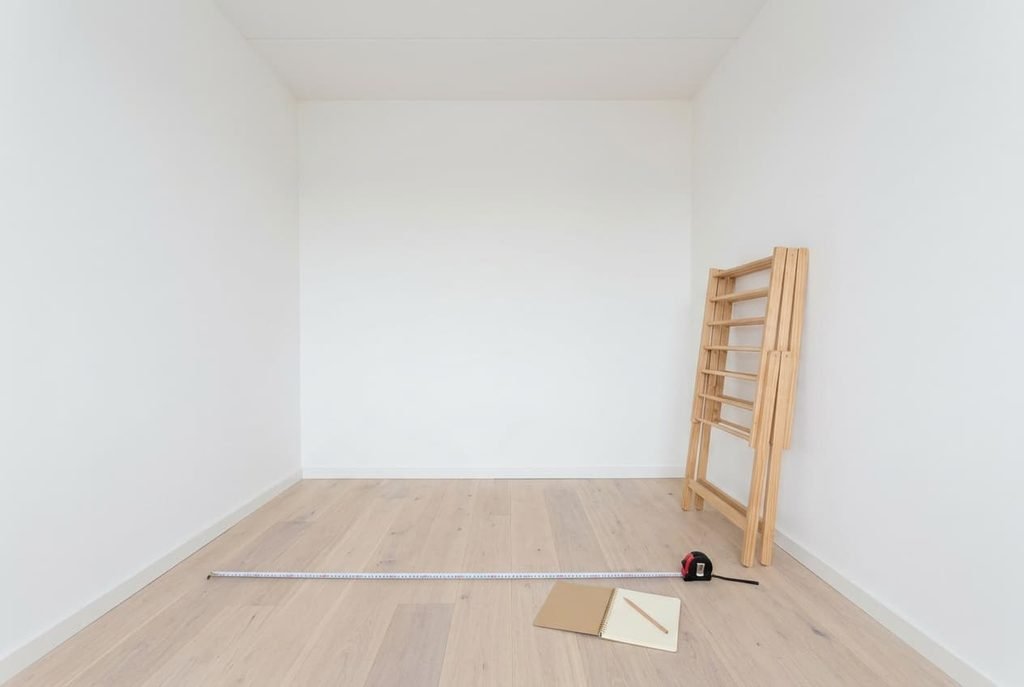
Before buying a ceiling pulley airer for a small Dutch flat or its rival, log your washing. Note each load and its dry weight, for seven days. If you hang two loads under 4 kg each, the airer you own may already be enough. The saving is the whole price of a new one. Hanging fewer, lighter loads costs nothing. Within days you’ll see whether the habit holds.
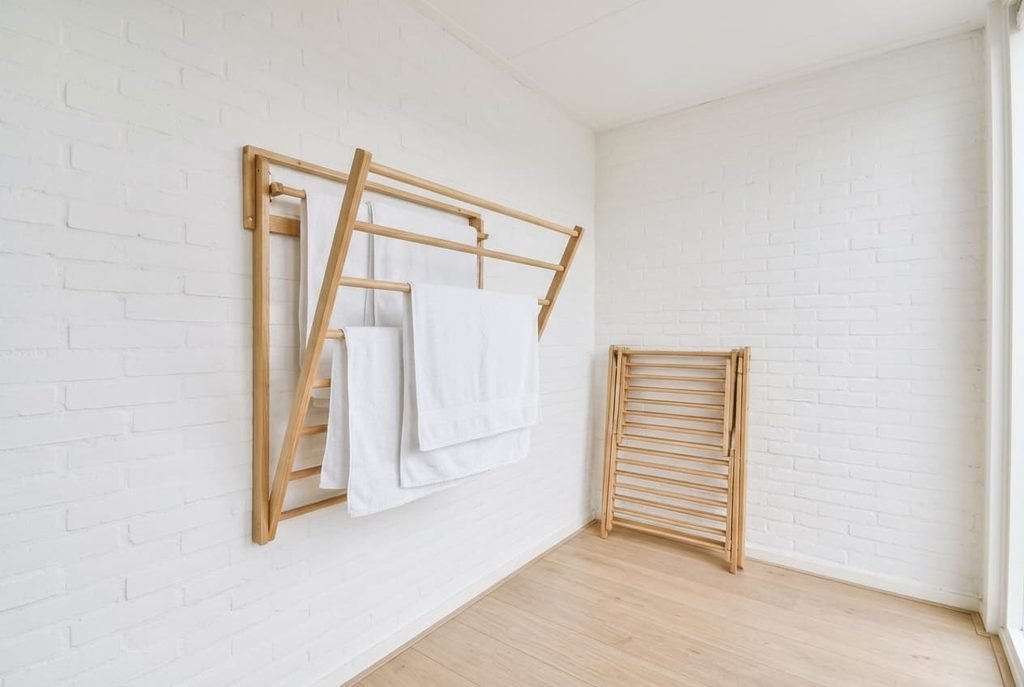
A third route is a wall rack that swings flat against the brickwork. Opened, it reaches 60 cm out across a frame 100 cm wide. It therefore reserves 60 × 100 = 6,000 cm², which is 50% of the patch. Five rails of 1 m offer 5 m of line, about 11 garments. It needs two wall fixings, so the consent question returns for renters.
A week of figures beats any opinion, because dividing your heaviest load by 5 and multiplying by 9 gives the metres of line you need.
Which One to Pick
Two situations settle it. If you rent, or two loads often hang at once, buy the floor frame. It needs no fixings, takes a full 5 kg load and folds to 7% of the patch when you move. You also keep the option to change your mind without touching the ceiling.
If you own the flat, your floor is short of space and loads stay under 4 kg, buy the pulley. It reserves no floor, and its two fixings must be rated for 176 N each. When neither line fits you, go back to the log in the section above, because the third route may suit you better than either.
Choosing between a ceiling pulley airer for a small Dutch flat and the frame beside it comes down to fixings and load. Take a tape up to the ceiling, run the log for seven days and read the table again. Live with the pick for two weeks, and if you catch yourself working around it, switch. It won’t take long to know. Your own measurements will carry most of the decision.
Questions Readers Keep Asking
How long do pulley cords last?
Cords are the wearing part, so inspect them twice a year. A cord that shows loose strands or feels stiff has reached the end of its life. Slats and pulleys usually outlast several cords. A floor frame has hinges instead, and a loose hinge is the first sign of age.
How do I look after a folding floor airer?
Open it fully before loading, because a half-open frame leans. Wipe the rails after each load and tighten a loose hinge when the frame wobbles. Fold it behind a door between wash days, where it takes only 840 cm² of floor. Keep the rubber feet clean so they grip.
Which suits a rented flat with a concrete ceiling?
The floor frame, because it needs no consent. A concrete ceiling can take pulley fixings with the right plugs, but a landlord must agree first. If consent is given, the pulley frees your floor. If it isn’t, the frame folds to 840 cm² in seconds.