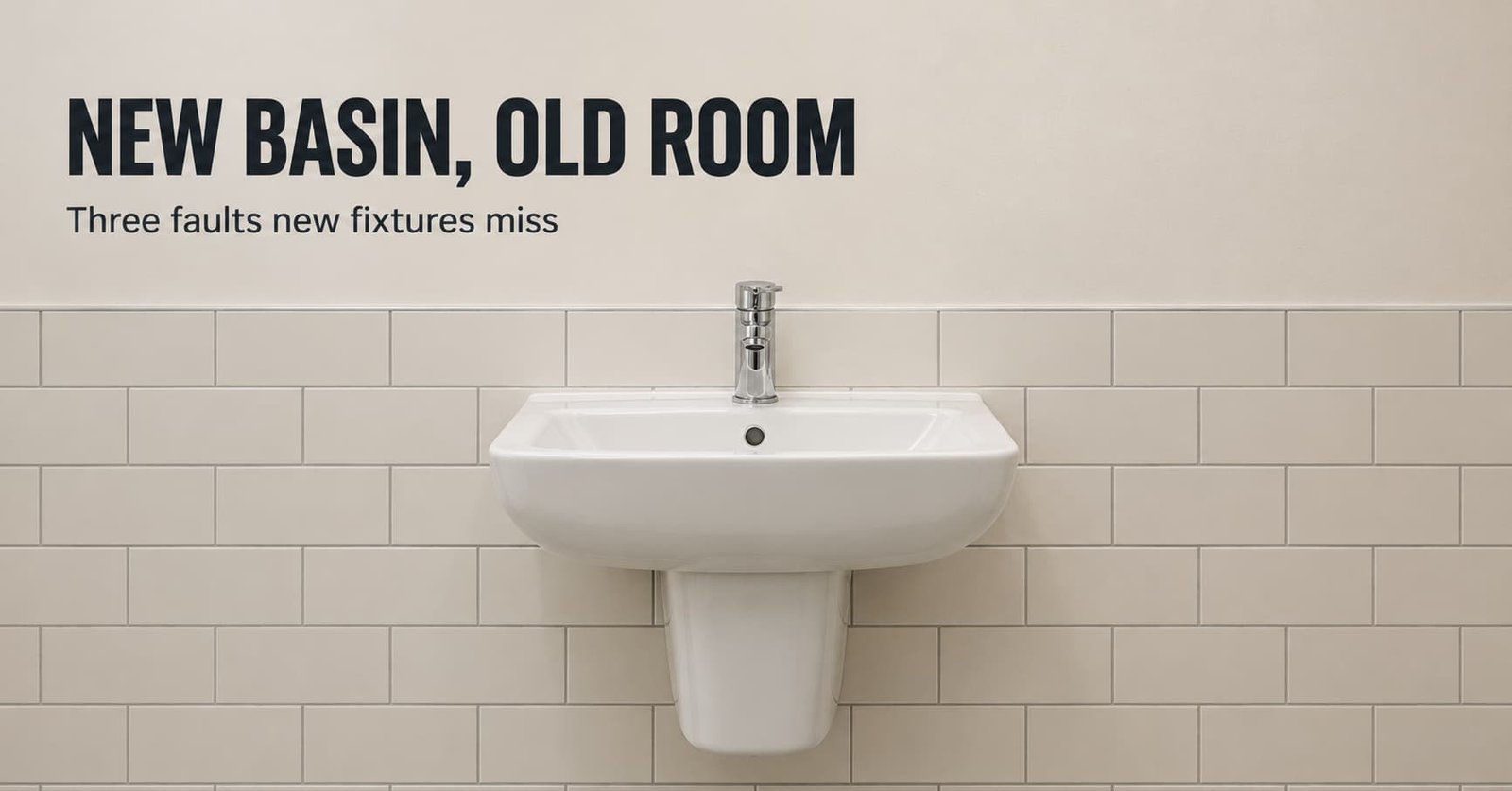
A new basin 40 cm wide is the freshest object in the room and the smallest. A powder room can look dated even after new fixtures because the eye reads age from the surfaces that stayed, and in a room this size they cover more than 95 per cent of what it shows.
That makes it a proportion problem with three specific faults behind it: the tile grid, the gap between two whites and the outline of the old fitting. Each has a one-minute check and a fix that starts at no cost or close to it. None of them depends on your taste or on what you spent.
What makes a powder room look dated even after new fixtures
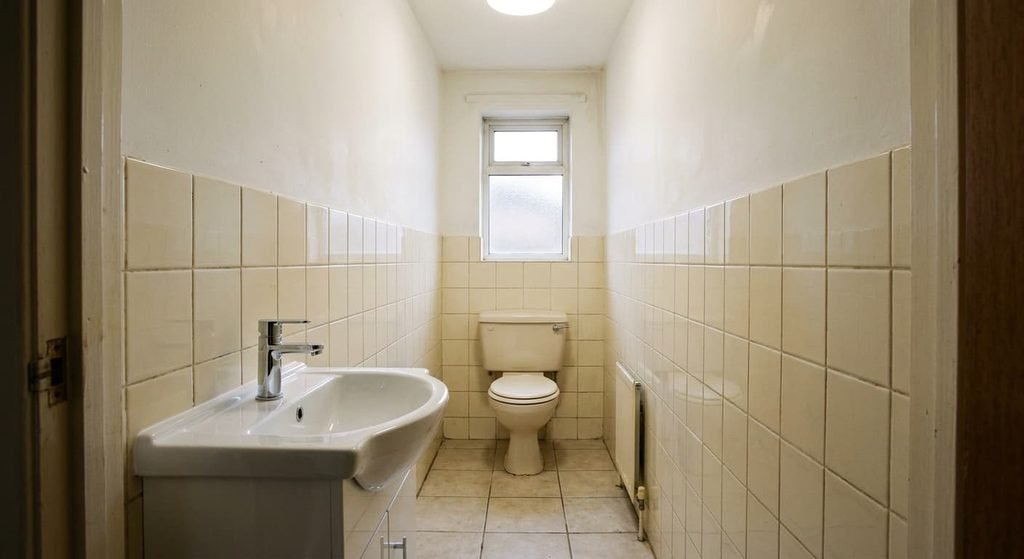
Take a room 110 cm wide and 170 cm deep with a 2.5 m ceiling. The walls come to 14 m². With the floor and ceiling added and the door excluded, about 16 m² meets the eye. A new basin and toilet with their taps show roughly 0.4 m² of that, under 3 per cent. The age is read from the finishes you kept, the part of a room its owner rarely inspects.
Three properties of those finishes carry the era. The first is grid density, the length of grout line per square metre. A wall of 10 cm tiles has about 20 m of it, while a wall of 60 by 30 cm tiles has about 5 m. At a 3 mm joint, grout makes up 5.7 per cent of the small-tile wall and 1.5 per cent of the large-tile one, and a grout darker than the tile draws every line.
The second is whiteness. New sanitary ware is made in a bright cool white. Tile or an older toilet is often a warmer off-white. Two whites side by side make the duller one look dirty. The third property is the outline: a new fixture is rarely the size of the old one, so the old footprint stays.
Three checks that show which fault you have
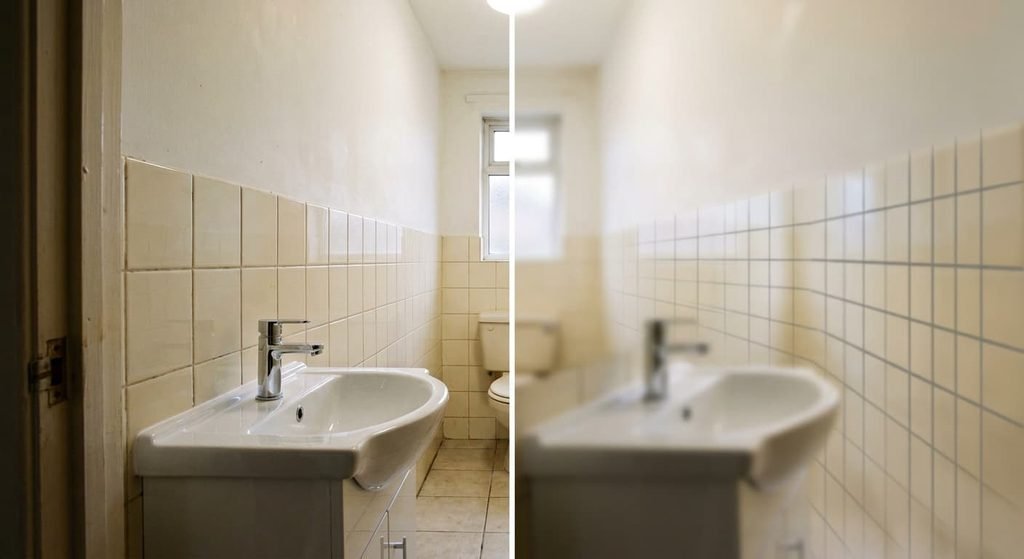
Stand 1 m from the basin wall and half-close your eyes. If a mesh of fine lines survives while the basin dissolves into a pale shape, the grid is your fault.
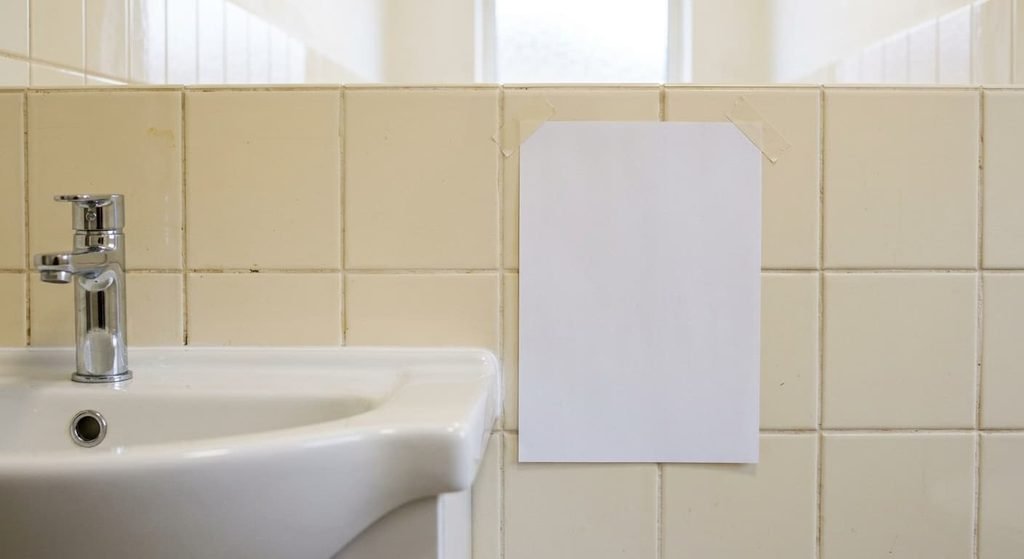
Hold a sheet of plain white paper against the basin. Then hold it against the tile or the old toilet. When the paper matches the basin and the other surface looks yellow beside it, you have a whiteness gap. Do this in daylight if the room has any, since a bulb can hide the difference.
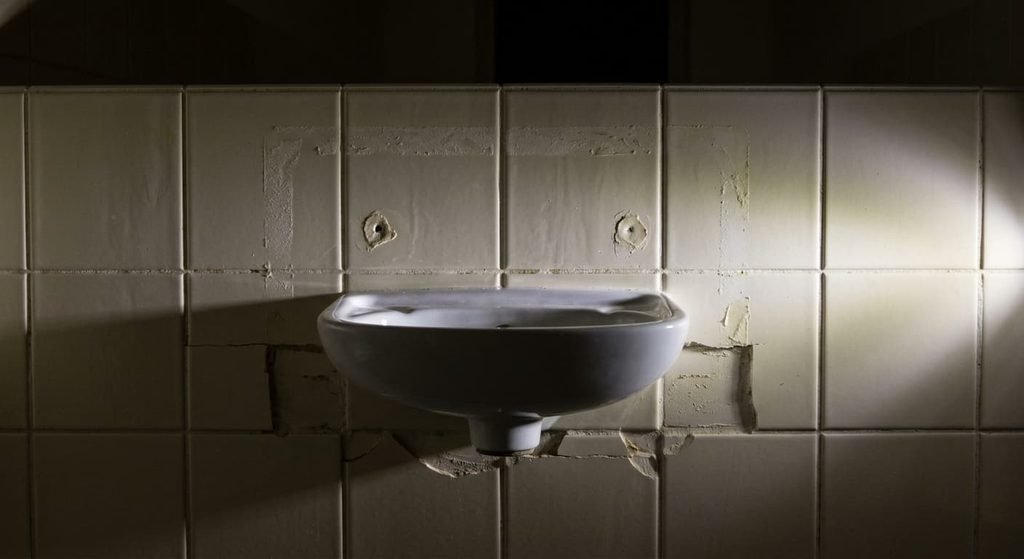
Turn the main light off, hold a phone torch flat against the wall and sweep it slowly. Pale rectangles show where the old fitting hung. Filled screw holes and cut tile edges show how it was fixed. Light raking across a surface exaggerates every change in height, so even a patch of new paint will show.
Most rooms that look dated even after new fixtures show two of the three, and that’s normal. Take the strongest first, then repeat the check after each fix.
The three faults, diagnosed
The tiles look like graph paper behind the new basin, and the cause is scale. A 10 cm tile with a visible joint puts about 20 m of line into every square metre, and the new basin is one plain form in front of it, so the eye compares smooth with busy. Start free: step back and find which single wall carries the densest grid, because that is the only wall to work on. Then tone the grout toward the tile with a grout pen, which costs a small pot and a few hours. Re-grouting a whole wall costs a day, and painting the tile needs a primer made for glazed surfaces first.
The new basin looks bright and everything around it looks grubby, and the cause is a lightness gap. The bright white of new china sits against a warmer tile, so the tile reads as aged. A new basin beside an old toilet puts two whites within a metre of each other, which is the worst case. Rearrange first: put the plastic soap dish and cup out of sight, so the room has fewer whites to compare. Then paint the wall above the tile in a warm mid-tone that picks up the tile’s undertone, which tends to make the tile look chosen. That costs a tin, and I can’t see your light, so test a sample patch first. Replacing the old toilet closes the gap at the root and is the costliest option.
There’s a pale ghost where the old basin hung, and the cause is footprint. A basin 40 cm wide fitted where a 55 cm one stood leaves 7.5 cm of uncovered surface on each side, often with old fixing holes. Start free: clean the whole tile field evenly, since part of the ghost is limescale and soap film that outlines the old shape. Then move a shelf or the towel ring so it covers the holes. A splashback cut wider than the old outline hides the rest, and a tiler can patch the cut edges if you want the wall to look untouched.
What to check so a room doesn’t look dated after new fixtures
Every check below is tied to a cause above. Carry a loose tile or a photo of the wall to the shop, so a white can be compared on the spot rather than remembered. Measure the old fitting’s width and mark it on the wall before it comes off, then pick a basin that covers that line or plan a splashback to do so.
Look at every metal finish at hand height too, from the tap to the towel ring, because a mixed set reads as a mismatch of eras. Before the next purchase, ask whether it adds a new white to the room. Then ask the same about line patterns and outlines. If the answer is yes, solve the existing one first.
Check first and buy second.
The fix that isn’t worth doing
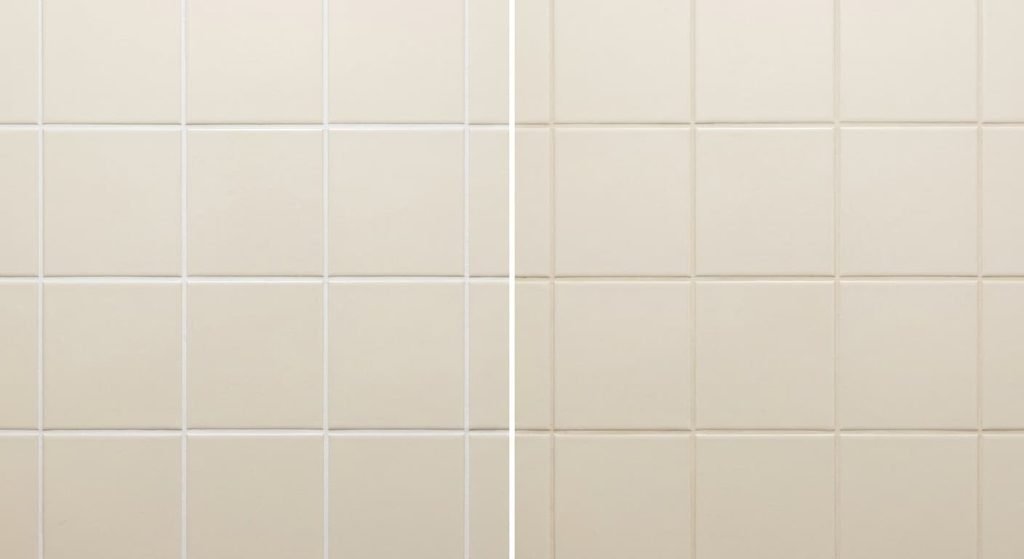
Fresh white grout looks like the obvious cure when a wall can look dated even after new fixtures. I’d argue against it on a wall of small tiles. Bright white lines against a warmer tile raise the contrast of the grid, and the grid is a large part of why a wall looks dated. The new brightness also makes the tile itself look duller beside it. Leave the grout alone or tone it toward the tile, because a lighter line only sharpens the pattern.
A second remedy has the same flaw: buying a bolder basin so the new fixture outweighs the old surfaces. At 0.4 m² against 16 m² it can’t. A basin big enough to outweigh the finishes would cover several square metres, and nobody could use it.
A grid is a contrast problem.
New fixtures cover under 3 per cent of what a powder room shows, so the age comes from what stayed: a dense grid of grout, a duller white beside a brighter one and the outline of the fitting that left. Squint at the basin wall from 1 m, because that single check separates a grid problem from the other two in seconds. Fix the faults in order of cost, and stop when the room reads as one era. A room that reads as one era looks new whatever its age, because the eye scores the whole surface at once.
Questions readers keep asking
Why does my powder room look dated even after new fixtures?
The fixtures cover under 3 per cent of what you see. Most of the age comes from grout lines, the gap between whites and old outlines on the wall. Run the three checks above to find which one is yours.
What is the quickest way to make an old tiled powder room look newer?
Tone the grout toward the tile with a grout pen, then clean the whole wall evenly. Both take an afternoon and cost little. They address the grid and the ghost, which are the two faults a quick job can reach. A whiteness gap needs paint.
Can a dated powder room be fixed without retiling?
Usually. Grout toning, a wall colour above the tile and a splashback cover all three faults without removing a tile. The limit is a tile in a pattern or colour that fights the new fixtures, and in that case painting with a primer made for glazed surfaces is the next step before retiling.