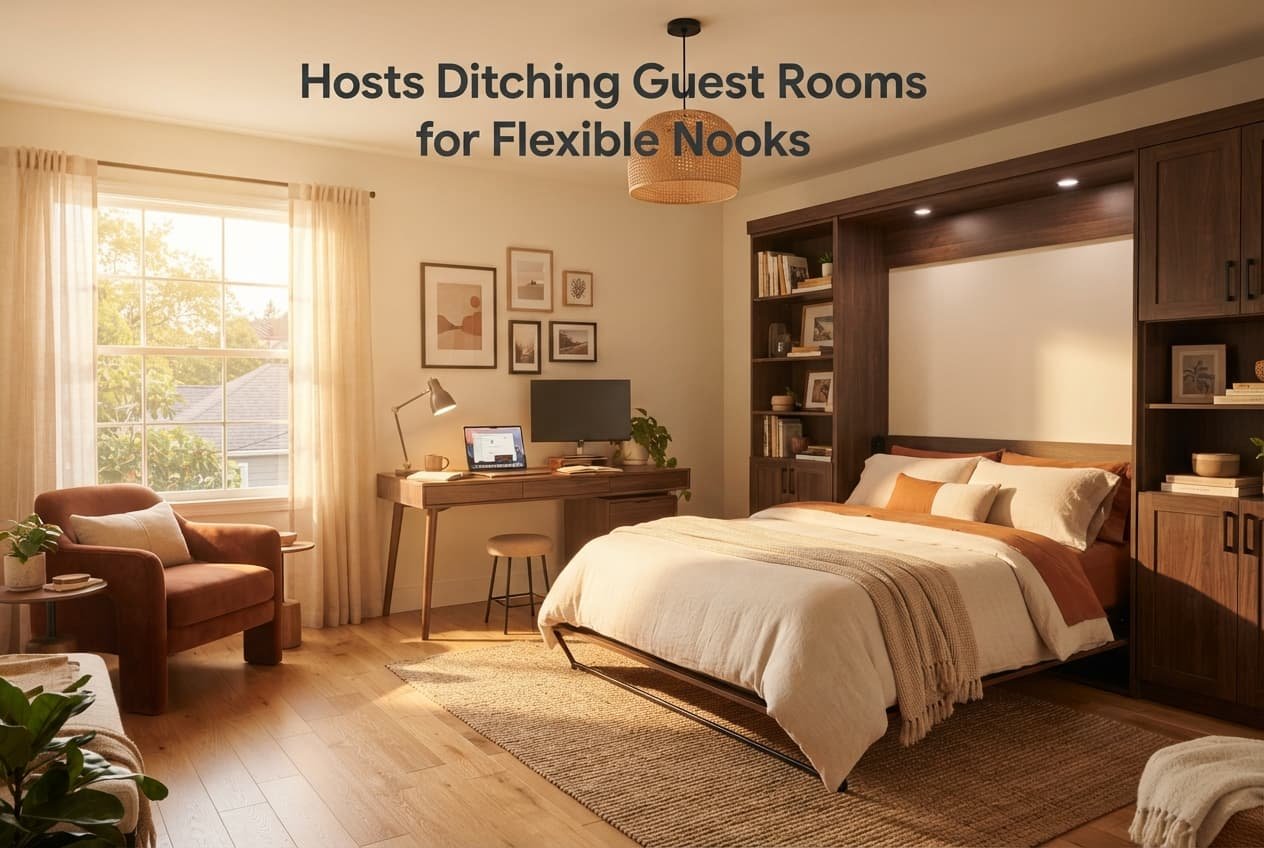
Dedicated, single-purpose guest rooms genuinely keep losing ground to flexible, multi-function spaces that convert for guest use only when actually needed, for a reason grounded in measurable space utilisation, not seasonal taste alone. Understanding that reason tells you whether it’s worth adopting or just the current version of a cycle that will pass. The shift is real and checkable in how much genuine daily value a flexible space provides compared to a room sitting empty most days of the year, not simply a matter of one hosting approach being more fashionable than another.
What actually changed
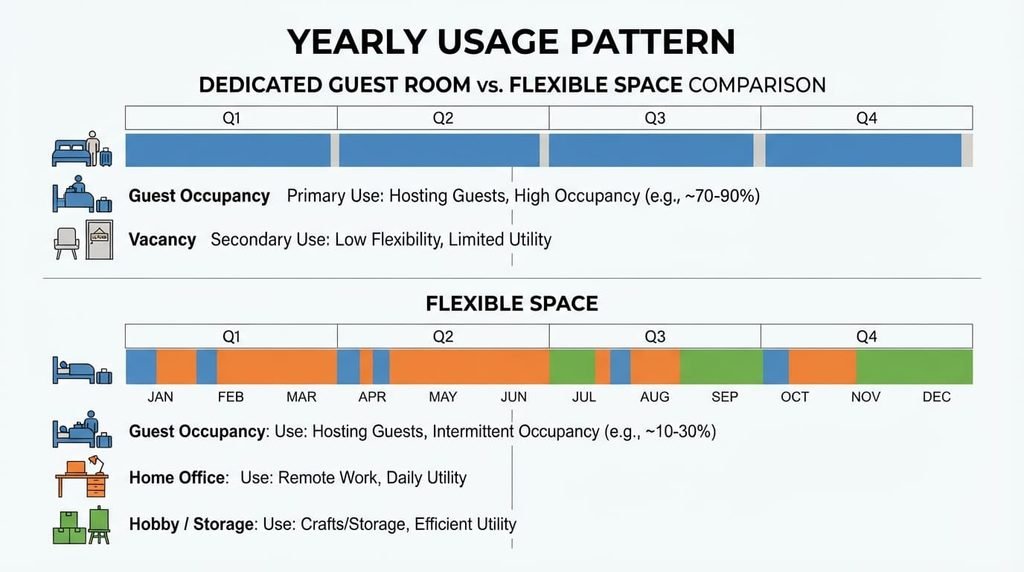
The measurable shift is a move away from reserving an entire room exclusively for occasional guest use, toward designing a flexible space – a home office, a reading nook, a hobby room – that converts to accommodate guests only during the relatively rare occasions they actually stay over. Where a dedicated guest room sits unused for the vast majority of days in a typical year, a flexible space provides genuine daily value while retaining guest capacity for when it’s actually needed.
This isn’t purely aesthetic preference – it’s connected to a straightforward space-utilisation calculation: a room used for its primary daily function considerably more often than it hosts guests simply provides more total household value than one reserved exclusively for infrequent guest use, which is why the approach recurs across different housing markets and eras rather than being tied to one particular decorating trend.
Why it keeps coming back specifically now
The continued reality that available home square footage often comes at a genuine premium has created a direct tension that flexible guest spaces specifically address: a household wanting genuine guest capacity without permanently dedicating valuable space to a function used only occasionally.
For many households specifically navigating this exact space-value tension, the appeal of extracting daily genuine use from a room that would otherwise sit largely empty has become increasingly relevant, which is a concrete structural reason this approach’s popularity tracks genuine space-value calculations rather than purely following showroom styling alone.
This distinguishes the current cycle from earlier uses of multi-purpose rooms, which were sometimes driven primarily by a particular minimalist aesthetic movement rather than by genuine space-utilisation math. The underlying mechanism is the same regardless of cause, but a technique genuinely driven by an actual value calculation tends to persist considerably longer than one driven purely by a design movement’s popularity alone.
What this actually changes in a home
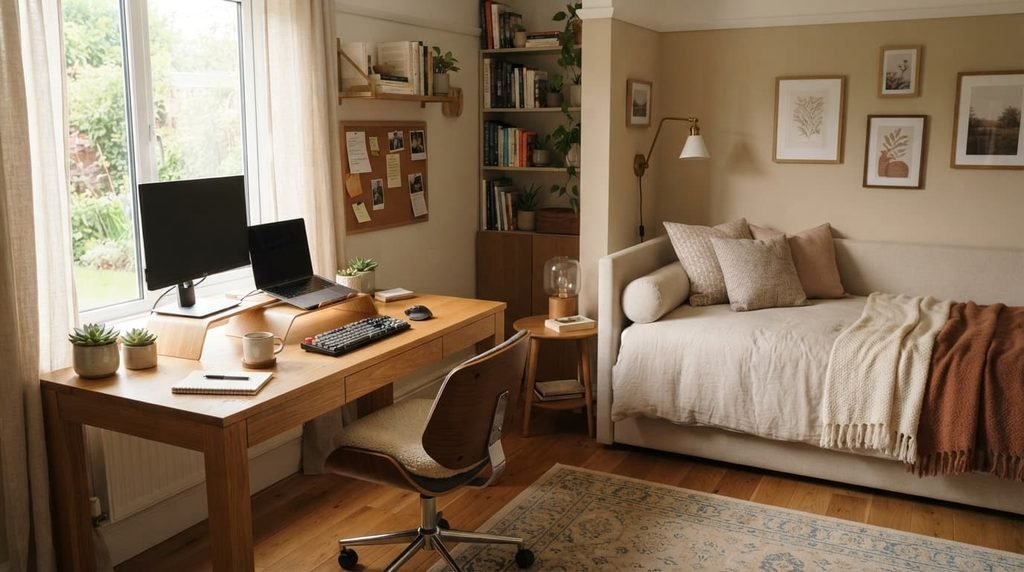
A flexible space directly provides genuine daily household value on the considerably more numerous non-guest days, which is the direct mechanism behind its efficiency advantage specifically over a dedicated guest room. This isn’t purely subjective impression – it’s the direct result of a room serving an active daily function rather than sitting in reserve for infrequent use.
This shift also changes how households think about guest hosting itself, since a flexible space requires genuine conversion effort each time guests actually stay, a trade-off some households find entirely reasonable given the daily value gained, while others find this recurring effort a genuine downside worth weighing carefully against the space efficiency benefit.
What this looks like in practice
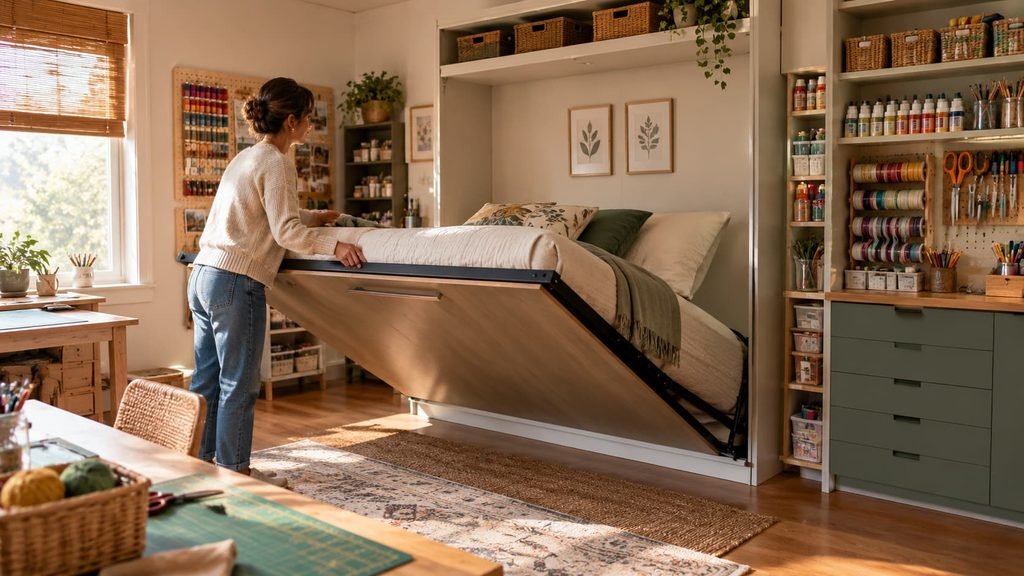
A home office with a genuinely comfortable daybed replacing a conventional desk chair, or a hobby room with a fold-down or Murphy-style bed integrated into the space, forms a common practical expression of this approach, though the specific combination genuinely varies considerably depending on each household’s actual primary daily function and available space. This underlying combination – a room genuinely serving daily function well while retaining guest capacity – is what actually delivers the space-efficiency benefit, not any single specific furniture piece alone.
Clear, genuinely simple conversion steps – rather than an elaborate, multi-stage transformation – tend to make the recurring effort feel considerably more sustainable long-term, since a conversion process that feels genuinely burdensome each time undermines the household’s actual willingness to maintain the flexible approach consistently over time.
Where this trend genuinely holds up
The space-utilisation mechanism behind flexible guest spaces doesn’t depend on current taste, which is why it’s a reasonable longer-term choice specifically for households genuinely hosting guests infrequently relative to their daily use of that same physical space. A household matching this genuine pattern benefits from this approach regardless of which decade’s aesthetic currently favours the specific flexible-space styling being used.
Where the verdict should stay negative
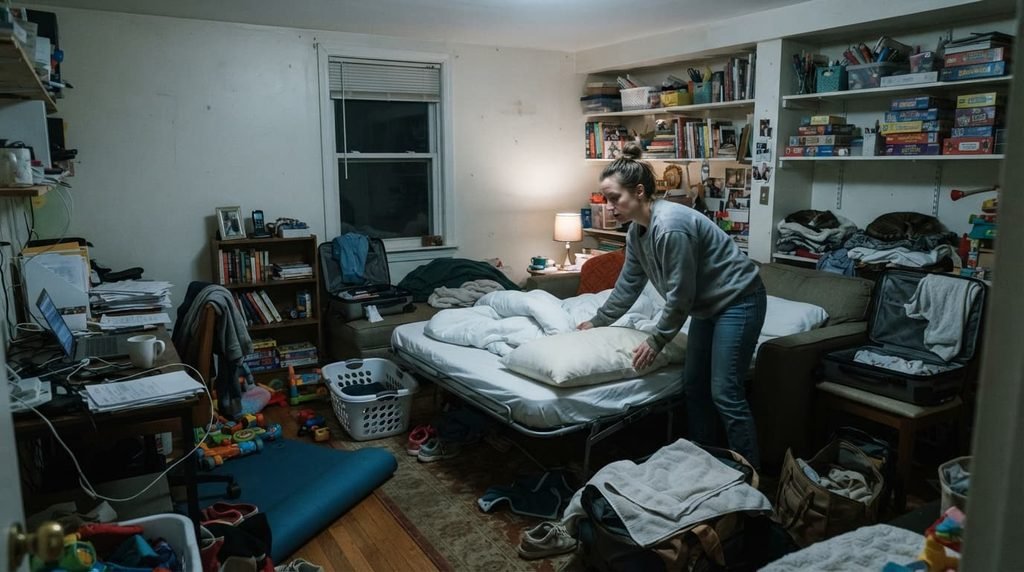
Converting your only dedicated guest space into a fully flexible room genuinely isn’t worth it for households that host guests genuinely frequently, despite how consistently this approach gets marketed as a universally smarter modern hosting solution.
For a household with guests staying over considerably more often than the flexible-space model assumes, the recurring conversion effort becomes a genuine, repeated burden rather than an occasional trade-off, meaning the space-efficiency benefit that makes this approach valuable for infrequent hosts simply doesn’t offset the accumulated friction for households whose actual guest frequency doesn’t match that underlying assumption.

What people get wrong when adopting it
The most common mistake is underestimating the genuine conversion effort a flexible space actually requires each time, assuming the transition will feel as effortless as marketing materials for convertible furniture typically suggest. A daybed or a fold-down desk genuinely simplifies conversion, but rarely eliminates the effort entirely, making realistic expectations about this recurring work important before committing to the approach.
A second common mistake is choosing furniture that compromises both functions rather than genuinely serving either one well. A desk that’s uncomfortable for actual daily work and a bed that’s uncomfortable for actual guest sleep represents the worst outcome of this approach – compromising daily function without actually delivering genuine guest comfort in return.
Questions readers keep asking
Does a flexible guest space genuinely work well for hosting guests staying multiple nights?
This depends considerably on how thoroughly the space converts specifically – a room requiring the primary daily function to remain fully displaced for several consecutive days creates more genuine disruption than a single overnight conversion, making this worth considering against your actual typical guest stay length.
Is this trend just a temporary aesthetic preference that will look dated soon?
The underlying space-utilisation mechanism it’s connected to doesn’t depend on current taste, suggesting genuine longevity specifically for households with infrequent guest hosting patterns, though specific flexible-furniture styles chosen within the broader approach can still date in the usual way any decorating choice eventually does.
Should I warn guests in advance that they’re staying in a converted, multi-purpose space rather than a dedicated guest room?
Being genuinely upfront about this specific arrangement tends to work better than letting guests discover it themselves, since most guests respond well to knowing what to expect beforehand, while an unexpected multi-purpose space can occasionally feel like a lesser accommodation if the genuine thoughtfulness behind the approach isn’t communicated clearly.
How do I know if my household’s guest pattern genuinely suits this flexible approach?
Counting your household’s actual typical guest nights per year against how often the space would otherwise serve its primary daily function provides a reasonably clear answer – genuinely infrequent guest use relative to daily function suggests this approach suits your pattern well.