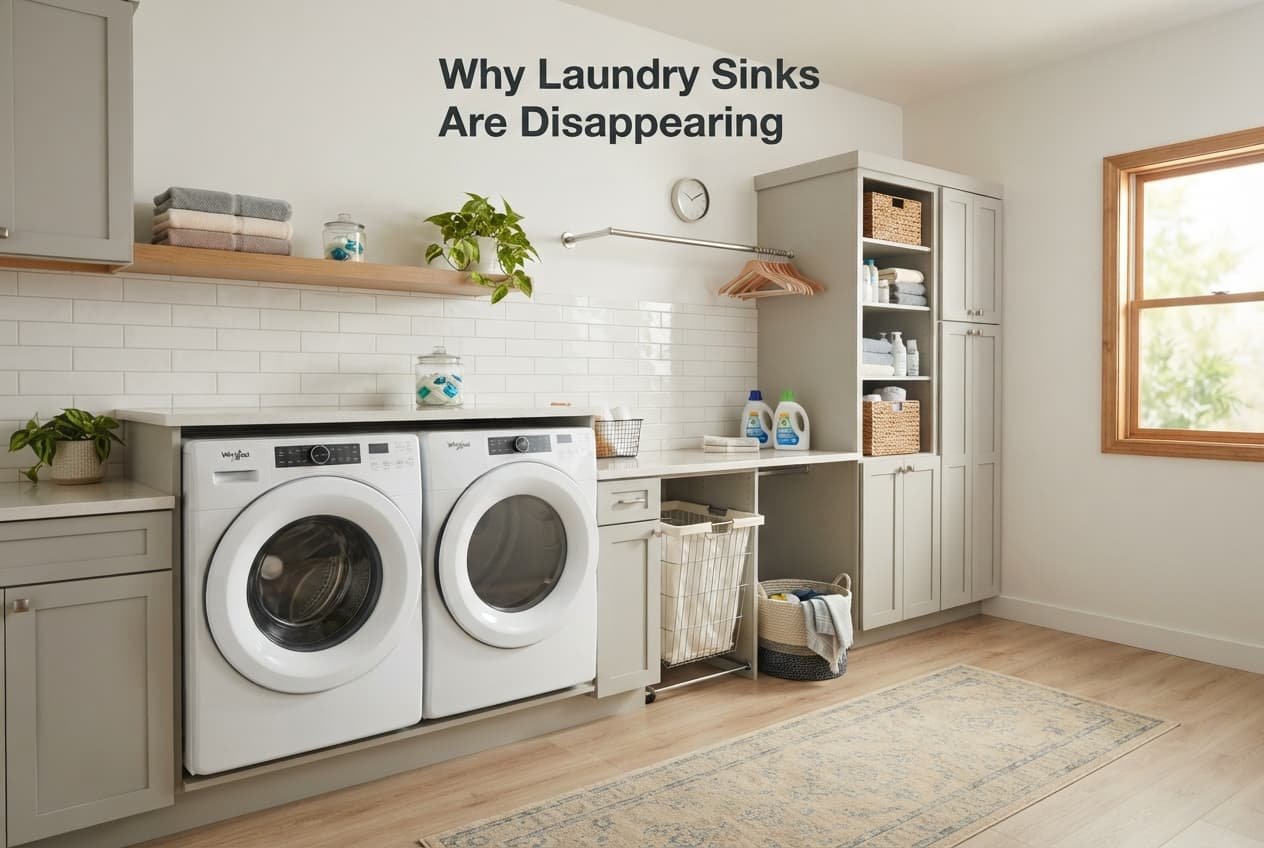
The traditional dedicated laundry sink genuinely keeps disappearing from smaller modern utility rooms specifically, for a reason grounded in measurable space efficiency, not seasonal taste alone. Understanding that reason tells you whether it’s worth following or just the current version of a cycle that will pass. The shift is real and checkable in how much genuine floor and counter space a laundry room recovers by omitting a dedicated sink, not simply a matter of one utility layout being more fashionable than another.
What actually changed
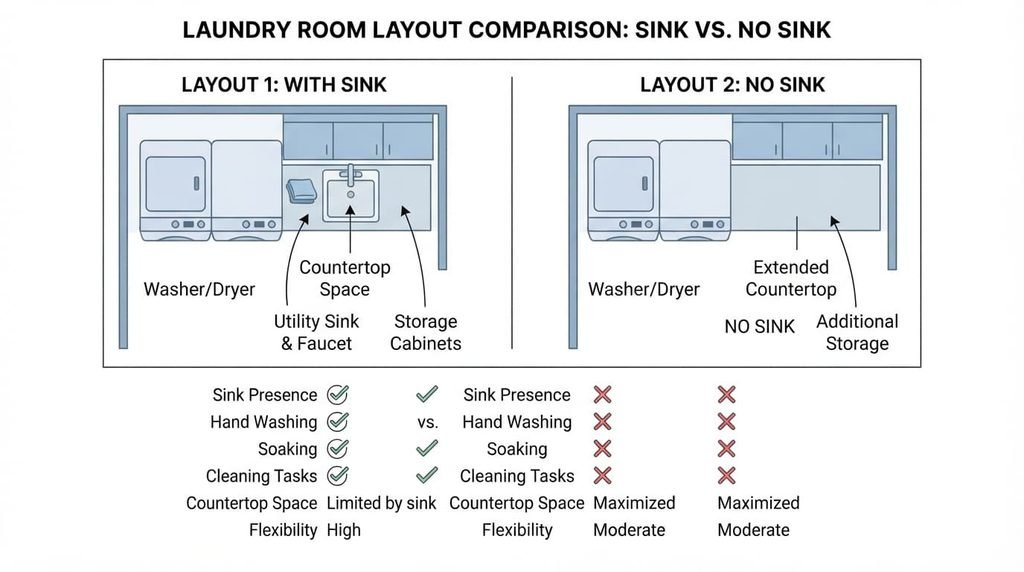
The measurable shift is a move away from including a dedicated laundry sink as a default utility room fixture, toward laundry rooms that omit this fixture entirely in favour of using kitchen or bathroom sinks for occasional pre-treatment needs. Where a dedicated laundry sink consumes both floor space for its cabinet base and counter space around it, omitting this fixture frees that same footprint for genuine workflow surfaces or storage instead.
This isn’t purely aesthetic preference – it’s connected to a straightforward space-value calculation: many households genuinely use a dedicated laundry sink only occasionally, while the workflow surface or storage that could occupy that same space gets used considerably more regularly, which is why the approach recurs across different housing markets rather than being tied to one particular decorating trend.
Why it keeps coming back specifically now
The continued reality that available home square footage often comes at a genuine premium has created a direct tension that omitting a dedicated laundry sink specifically addresses: wanting genuine workflow and storage capacity without dedicating limited utility room space to a fixture many households use only occasionally.
For many households specifically navigating this exact space-value tension, the appeal of recovering functional space that a dedicated sink would otherwise consume has become increasingly relevant, which is a concrete structural reason this approach’s popularity tracks genuine space efficiency rather than purely following showroom styling alone.
This distinguishes the current cycle from earlier eras when a dedicated laundry sink was considered an essential utility fixture regardless of actual household usage pattern. The underlying mechanism is the same regardless of cause, but a technique genuinely driven by an actual functional need tends to persist considerably longer than one driven purely by changing fixture trends alone.
What this actually changes in a utility room
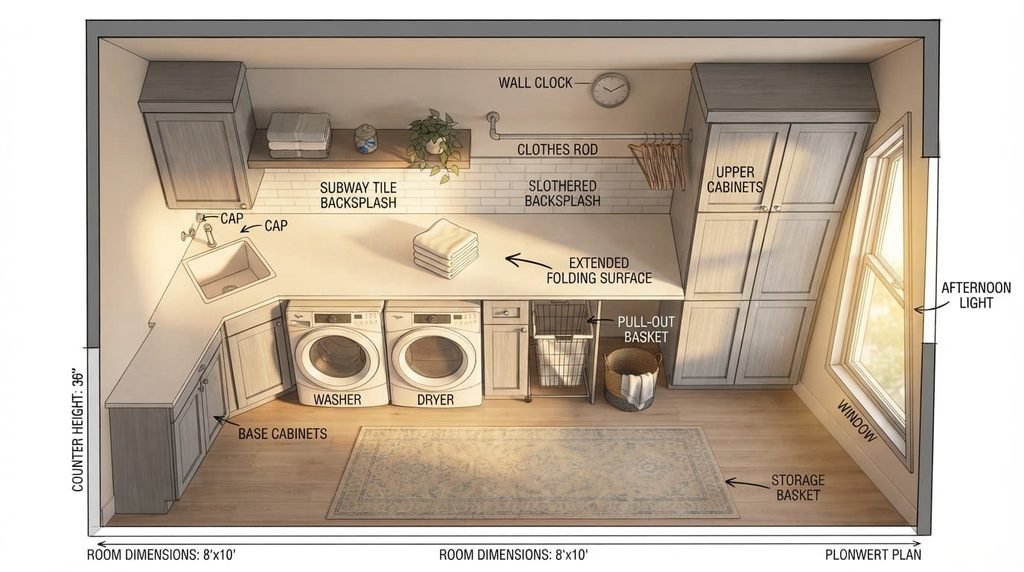
Omitting a dedicated laundry sink directly recovers floor and counter space that fixture would otherwise consume, which is the direct mechanism behind this approach’s space-efficiency advantage specifically for smaller utility rooms. This isn’t purely subjective impression – it’s the direct result of that recovered footprint becoming available for workflow surfaces or storage instead.
This space recovery also changes how a utility room’s remaining footprint can actually be used, since the area a sink and its cabinet base would have occupied becomes available for the folding surfaces and accessible storage genuinely established as core laundry room priorities elsewhere.
Where this trend genuinely holds up
The space-efficiency mechanism behind omitting a dedicated laundry sink doesn’t depend on current taste, which is why it’s a reasonable longer-term choice specifically for households genuinely using pre-treatment sinks only occasionally, relative to their more frequent workflow and storage needs. A household matching this genuine pattern benefits from this approach regardless of which decade’s aesthetic currently favours minimal utility fixtures.
What this looks like in practice
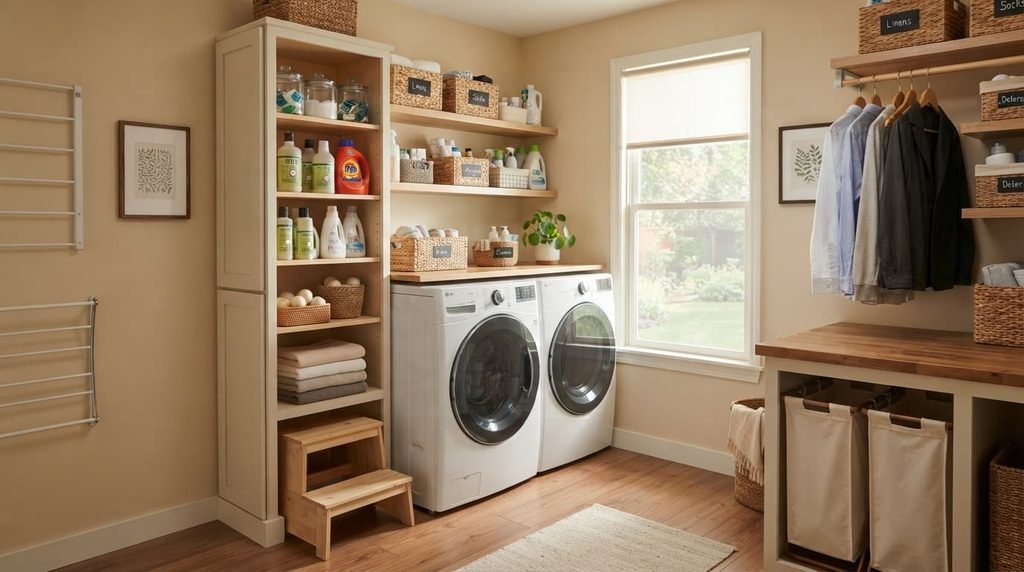
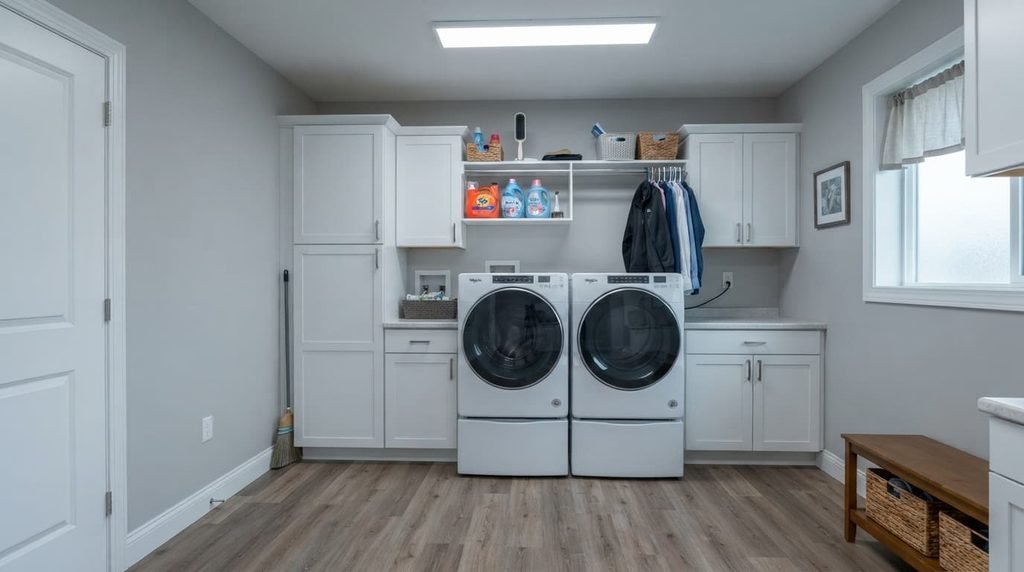
A laundry room with a genuinely well-positioned folding surface occupying the footprint a dedicated sink might otherwise have used, combined with accessible storage for supplies, forms a common practical expression of this approach, since this combination directly delivers the workflow and storage priorities established as core laundry room fundamentals elsewhere, using space a sink would have consumed instead.
Confirming genuine proximity to an alternative sink – a nearby bathroom or kitchen – before finalising this approach tends to prevent the specific regret some households experience discovering this inconvenience only after their utility room layout is already complete and difficult to meaningfully change.
Where the verdict genuinely holds up beyond aesthetics
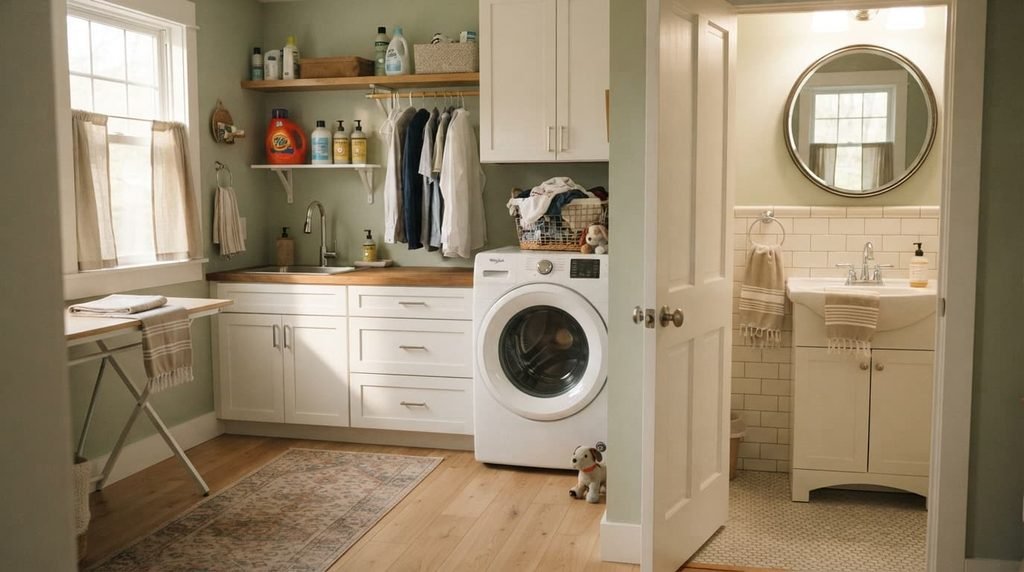
The genuine functional case for omitting a dedicated laundry sink extends specifically to households with a conveniently nearby alternative sink already accessible from the laundry area, since this proximity substantially reduces the inconvenience the sink’s absence would otherwise create, making the space-efficiency benefit considerably more likely to outweigh any occasional pre-treatment need for that particular household’s actual layout.

Where the verdict should stay negative
Omitting a dedicated laundry sink genuinely isn’t worth it for households that use pre-treatment or hand-washing sinks regularly, despite how consistently this space-saving approach gets marketed as a universally smarter modern utility room solution.
For a household with genuinely frequent sink use – regular hand-washing, frequent stain pre-treatment – the space-efficiency benefit that makes this approach valuable elsewhere simply doesn’t offset the recurring inconvenience of using a distant kitchen or bathroom sink instead. Adopting the approach purely for its current popularity, in a household that would genuinely use a dedicated sink regularly, trades away real daily convenience for a space benefit that particular household wouldn’t actually prioritise once living with the consequence.
What people get wrong when adopting it
The most common mistake is omitting a dedicated laundry sink without genuinely confirming an alternative sink is conveniently accessible from the actual laundry area, resulting in a household discovering this inconvenience only after the utility room is already finished and the sink genuinely isn’t there when needed.
A second genuinely common mistake is assuming every household’s sink usage pattern is similarly infrequent, without genuinely reflecting carefully on their own actual habits first. A household that regularly hand-washes delicate items specifically may find this fixture’s absence considerably more disruptive than general trend coverage suggests it typically is.
Questions readers keep asking
Is a utility sink genuinely necessary for households with young children or pets?
This genuinely depends considerably on your own actual specific needs – households frequently dealing with messier laundry-adjacent situations may genuinely benefit considerably more from a dedicated sink’s convenience than the general trend toward omission would suggest for their particular circumstances specifically.
Is this trend just a temporary space-saving preference that will look dated soon?
The underlying space-efficiency mechanism it’s genuinely connected to doesn’t depend on current taste, suggesting genuine longevity specifically for households with genuinely infrequent sink needs, though specific utility room layouts chosen within the broader approach can still date in the usual way any design choice eventually and inevitably does.
Does this trend genuinely apply equally to households renovating versus those buying a home with an existing laundry sink already installed?
Not necessarily equally at all – a household genuinely renovating from scratch faces a straightforward choice to include or omit the fixture entirely, while a household with an existing sink already installed faces a genuinely different calculation entirely, weighing removal cost and effort against the space benefit, which may not justify the change for every existing situation specifically encountered.
Can a smaller, more compact sink option provide a reasonable middle ground?
Yes, genuinely – some households find a genuinely compact sink option provides meaningful convenience without consuming nearly as much space as a traditional full-size laundry sink would, offering a reasonable middle ground between full omission and the traditional larger fixture entirely.