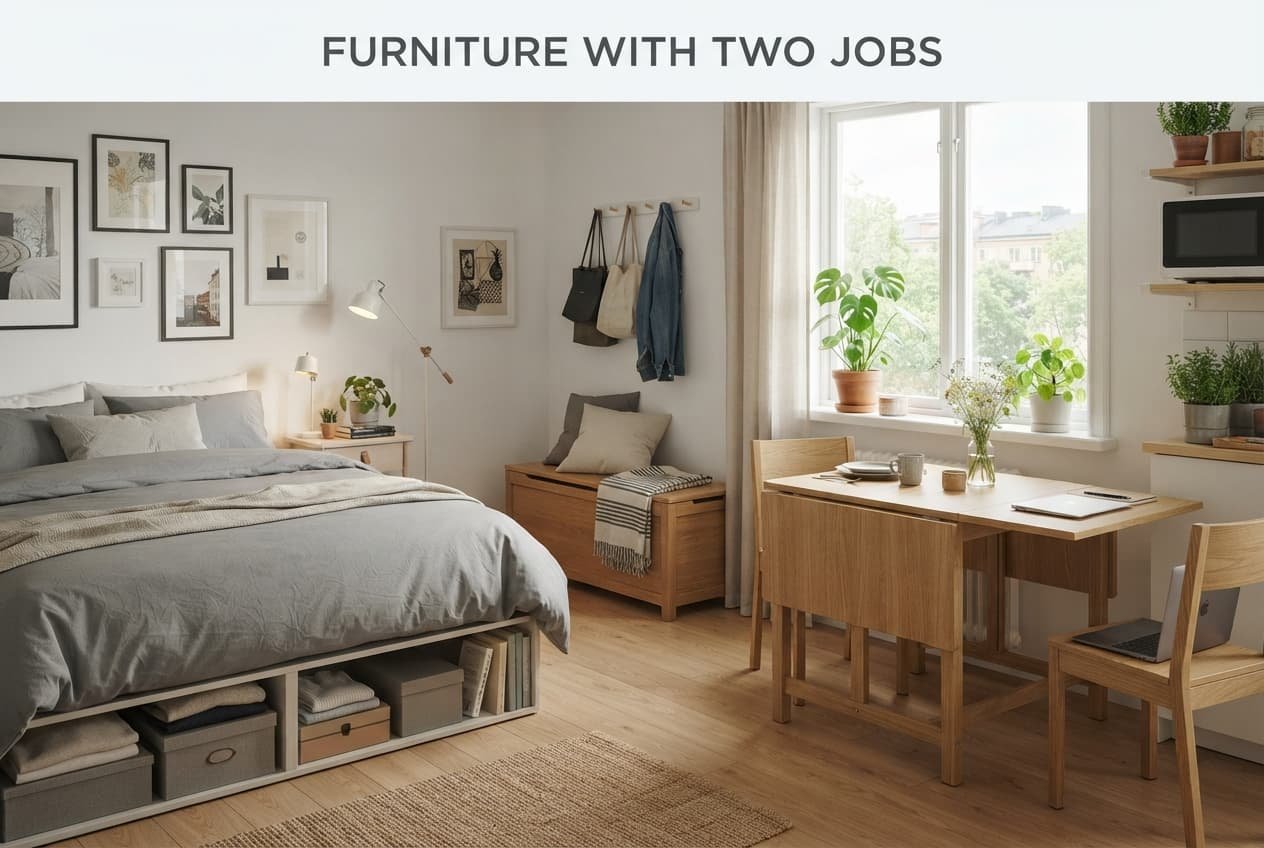
Walk through a well-organised studio and count the pieces that do only one thing. There are fewer than there used to be. The bed has drawers in it, the bench has a lid, the table stretches when friends come, and the footstool is also the side table. The trend is real, and it keeps returning for a reason that has nothing to do with fashion. It also has a rule that explains when it works and when it becomes an expensive annoyance.
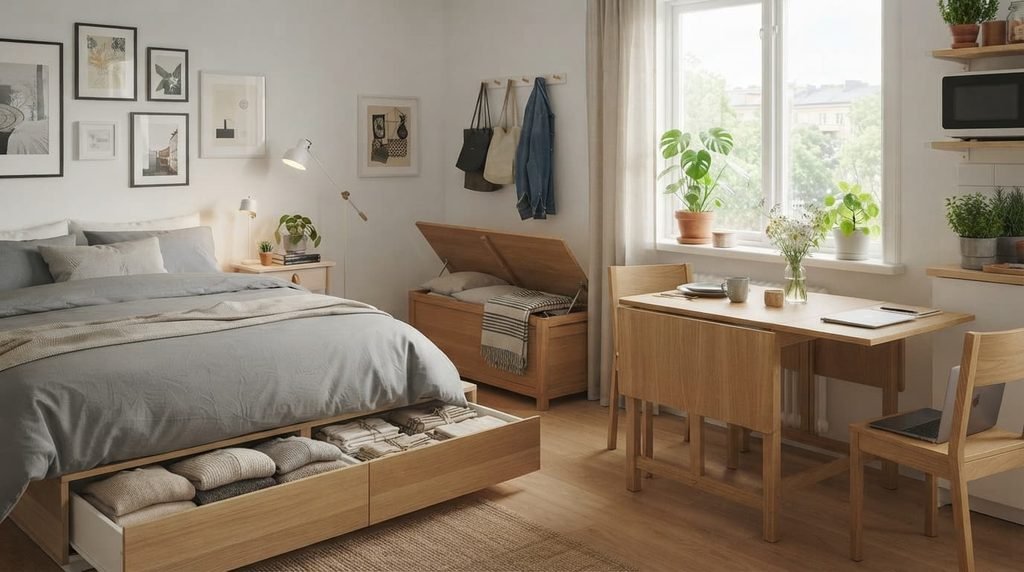
From clever hack to purpose-built double
Furniture has always been improvised into second jobs: a trunk as a coffee table, a desk as a dining table. What has changed is that pieces are now designed for two roles from the start. Bed frames come with deep storage, ottomans open to hold blankets, sofas have a hidden compartment, tables extend, and desks fold flat against a wall unit.
The shift is from the clever hack to the purpose-built double. A piece designed to do two things usually does both more reliably than a single-purpose piece pressed into a second job.
The pressure behind the trend
Floor area is the pressure. In a small home, every piece that earns its footprint twice leaves space for something else, and a studio has the least space of any home to waste. The pressure is greater now that one room often holds more activities than it used to: sleeping, working, eating, exercising and entertaining.
Renting adds a second reason. People who move often prefer furniture that adapts to a new layout over built-in pieces that stay behind, and a bench with storage fits a bedroom, a hallway or a studio equally well.
The rule that decides it
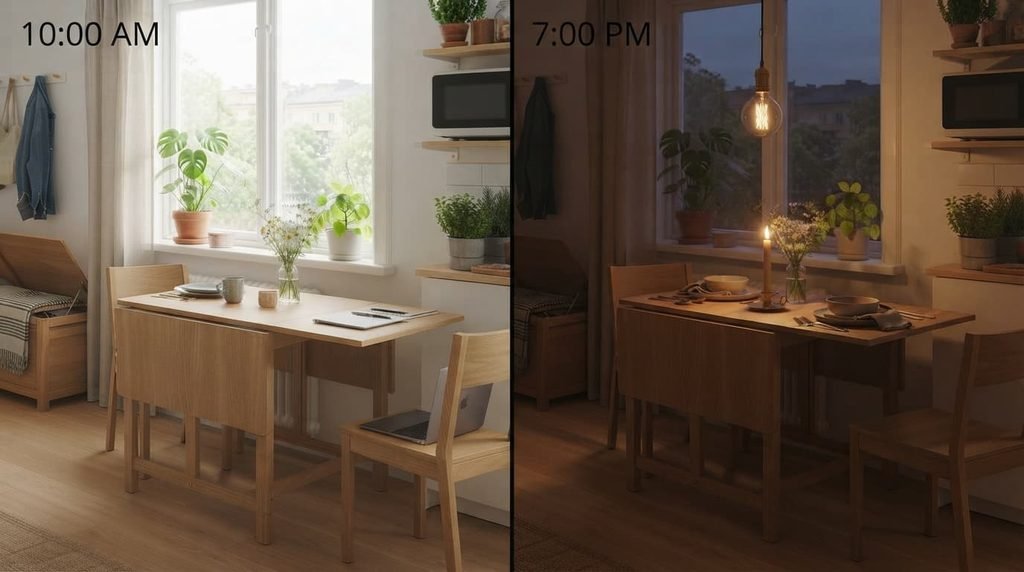
Two jobs share a piece well when they happen at different times. They fight when they happen at the same time.
A bed with drawers works because you sleep on it at night and fetch clothes from it in the day, and those jobs never collide. An ottoman works because you rest your feet on it or store blankets in it, and neither needs the other to be absent. A table that seats two on weekdays and six at weekends works because the extra seats are only needed on occasion.
The rule fails when both jobs are wanted together. A desk that is also the dining table fails at seven in the evening, when dinner needs the surface and the laptop is still open. A sofa that becomes a bed every night fails because the daily conversion is a chore, and chores get skipped.
What it looks like in practice
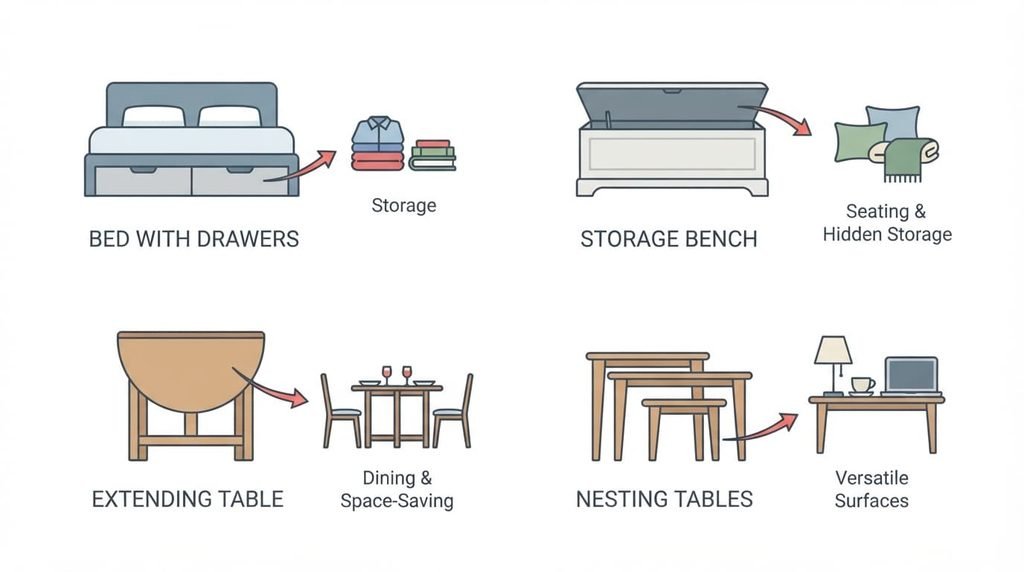
Start with the jobs a piece does in different parts of the day. A bed frame with drawers is the most efficient of all, since it adds storage without using any floor. A storage bench by the door holds shoes or bags and gives you somewhere to sit while you put them on. Nesting tables stack away when you are alone and spread out when you have visitors.
Choose the main job first. A sofa that is also a bed should be a good sofa before it is a bed, and a bench with storage should be a comfortable seat before it is a box. Then check the second job separately, and ask whether you would use it at least once a week.
A three-question test for any piece
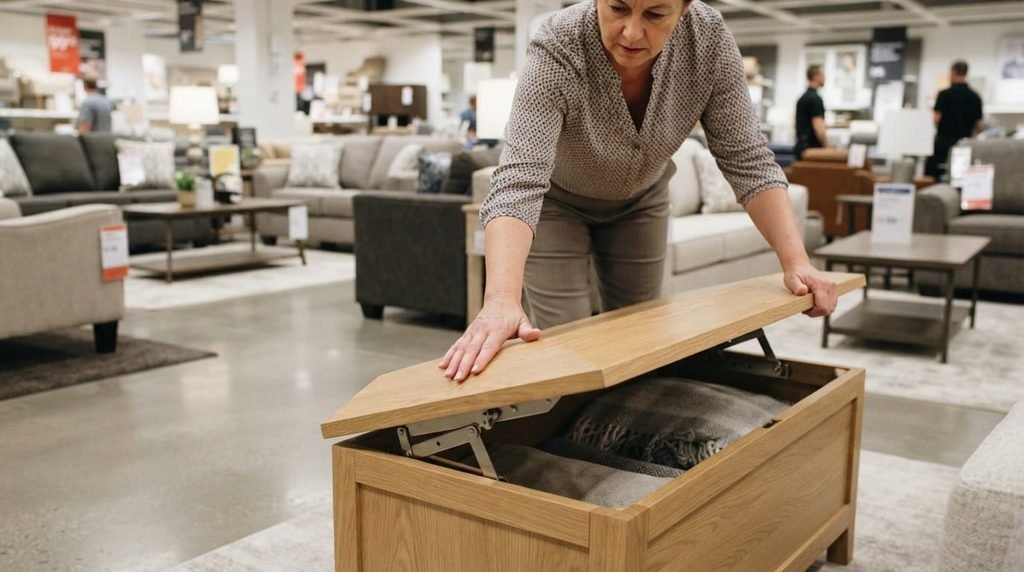
Before buying any double-duty piece, ask three things. First, do the two jobs happen at different times of the day? If they overlap, the piece will fight with itself. Second, is the mechanism simple, a lid, a drawer or a leaf, rather than a motor or a folding frame you must adjust every day? Third, would you use the second job at least once a week?
If the answer to any of them is no, buy the single-purpose version and spend the difference on something that earns its place. In a shop, open and close the mechanism twenty times and listen for play, scraping and uneven movement. A mechanism that feels loose after a few minutes will feel worse after a few months. A piece that fails the test can still be a good buy, as long as you choose it for its main job alone and treat the second job as a bonus.
Where it works
It works where the second job needs no effort. A lid, a drawer or an extending leaf is simple, and simple mechanisms last years of daily use. It also works when the second job is something you were already going to need, such as storage in a bedroom that has none.
It suits studios better than almost any other home, because the cost of an unused floor area is highest there. And it suits renters, since freestanding pieces can leave with you.
When the answer is no
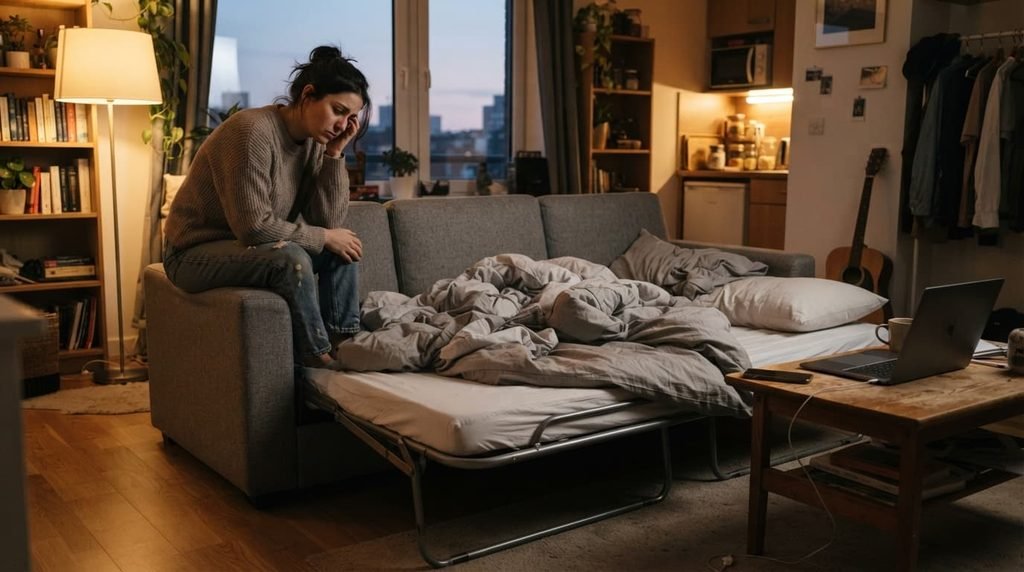
Transforming furniture isn’t worth it if you will need to transform it every day.
A mechanism that must be folded, flipped or unfolded each morning wears quickly, and more importantly it wears down the person using it. People stop doing the chore, and the piece stays stuck in one form, usually the less useful one. A piece that costs more for a feature you do not use daily is simply a more expensive version of the plain one, and it is often bigger and heavier as well.
Handling and installation
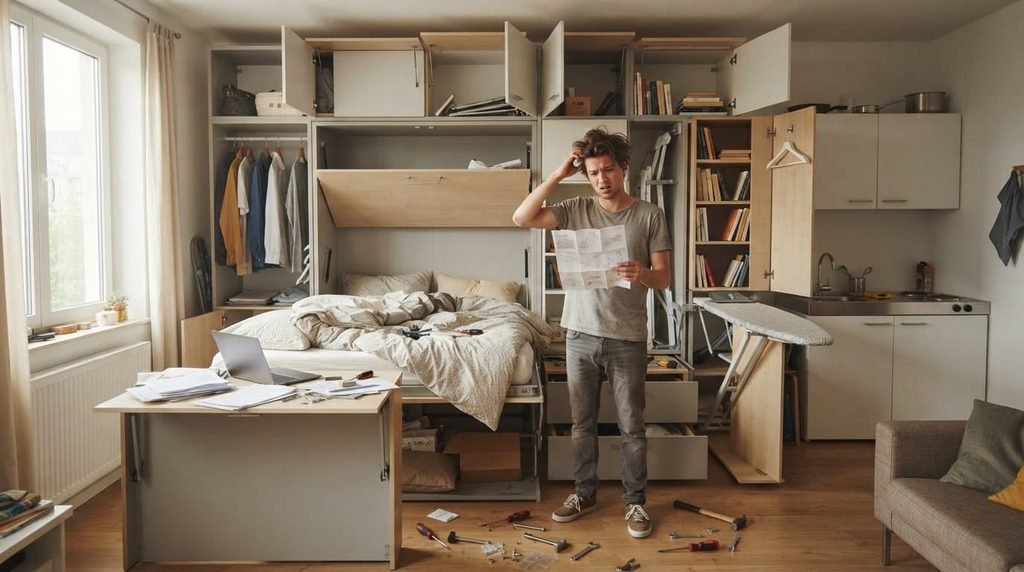
Pieces with lids and folding parts can trap fingers, so in a home with children look for soft-close hinges or lid stays. A fold-down desk or any unit attached to a wall passes its weight into that wall. Follow the fixing instructions exactly, and if you are unsure whether pipes or cables run behind the spot, ask a licensed professional to inspect it before any drilling begins.
Mistakes buyers make
The first is expecting the second job to cost nothing. A double-duty piece is usually larger, heavier or more complex than its single-purpose cousin, so measure it, and check that the route into the room allows it.
The second is choosing by the clever feature. A sofa bed with a superb mechanism and an uncomfortable seat is a poor sofa, and you will sit on it every day.
The third is buying a piece with six jobs. Every extra function adds hinges, panels and weight, and the likelihood of any one of them failing. Two jobs is the sensible limit for most homes.
Questions readers keep asking
Is storage furniture worth buying if I have plenty of cupboards?
Only if the storage solves a real problem. If you already have enough cupboard space, a plain piece is lighter, cheaper and easier to move.
Does furniture with two jobs cost more?
Often it does, because of the added mechanism, but not always, since a piece that replaces two others can cost less than buying both. Compare the total with what you would otherwise buy.
Will it make a small room look cluttered?
Usually the opposite. A piece that hides what it holds reduces the loose items on show, as long as it is closed most of the day.
What about pieces made for renters?
Freestanding pieces such as storage benches, extending tables and nesting tables move with you and need no fixing, so they suit rented homes best.