A home office that’s genuinely too hot or stuffy usually isn’t a space with no possible fix – it’s a space where specific, addressable factors are combining to trap heat and stale air, which is a fundamentally different problem than simply having a room in an inherently poor location. Understanding which factor is actually driving the discomfort determines whether the fix is simple and immediate, or genuinely requires a more substantial change.
What is actually happening
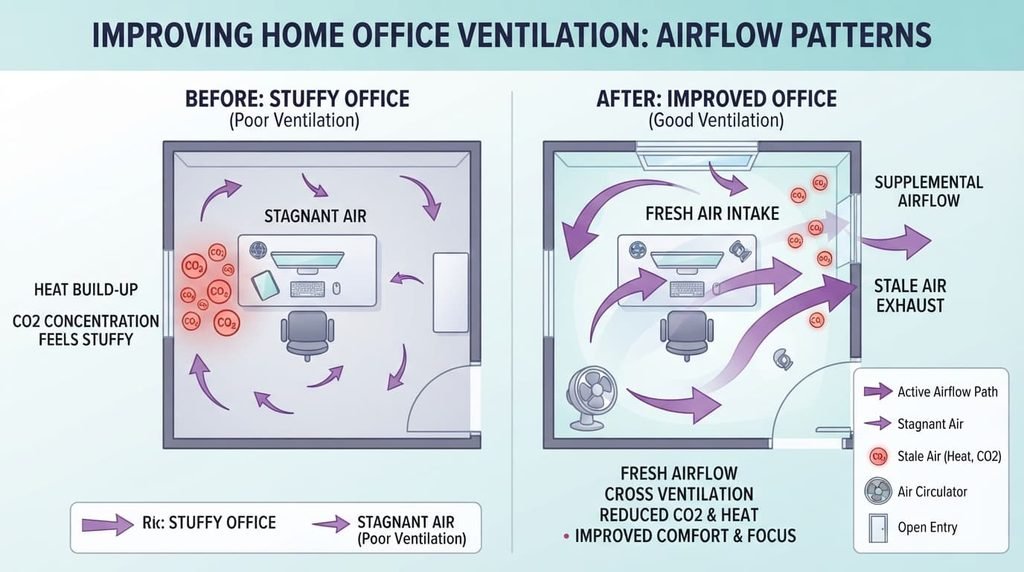
Heat and stuffiness in a home office typically stem from a combination of insufficient air circulation, heat-generating equipment running for extended periods in an enclosed space, and limited fresh air exchange with the rest of your home. A room that’s comfortable during brief visits can become genuinely stuffy during extended work sessions specifically because heat from your own body and equipment accumulates over time without adequate circulation to disperse it.
This matters because “the room is too hot” often gets treated as a fixed property of the space itself, when the actual issue is frequently this specific combination of factors compounding during extended occupation, which is a genuinely more addressable problem than the room’s basic location or size.
Confirm which pattern you have
Check whether the room feels comfortable when you first enter but becomes noticeably worse after extended work sessions specifically – this points toward heat and stale air accumulation during occupation, rather than the room being uncomfortable from the very start regardless of how long you’ve been in it.
Check whether closing the door, if your office has one, makes the stuffiness noticeably worse compared to leaving it open – this specific pattern points toward limited air exchange with the rest of your home as a meaningful contributing factor.
The fixes, in order of cost
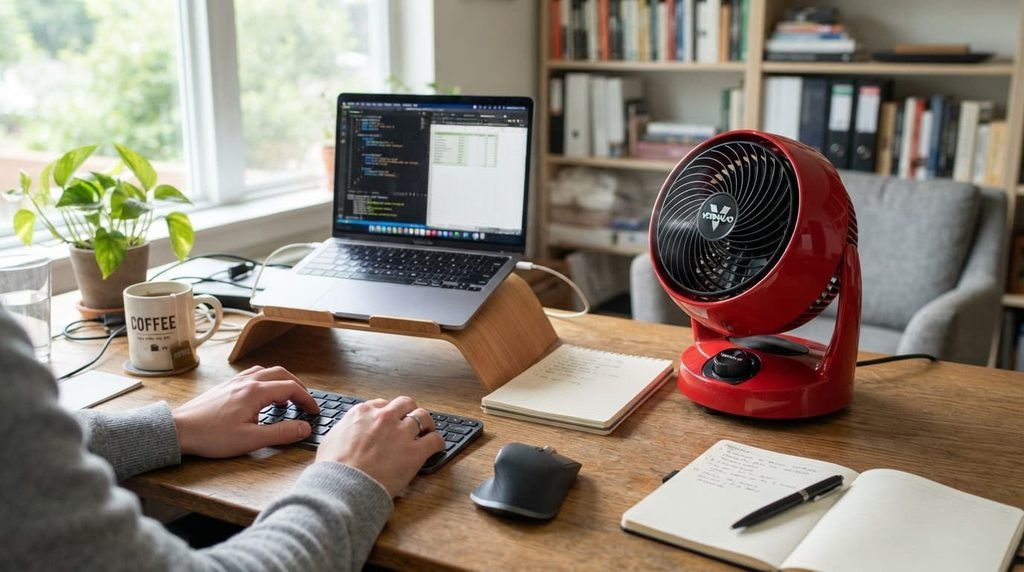
1. Improve air circulation with a simple fan, positioned to move air through the space rather than directly at yourself constantly. This costs relatively little and directly addresses stagnant air accumulation, which is often the single most immediate contributing factor to a room feeling stuffy during extended occupation.
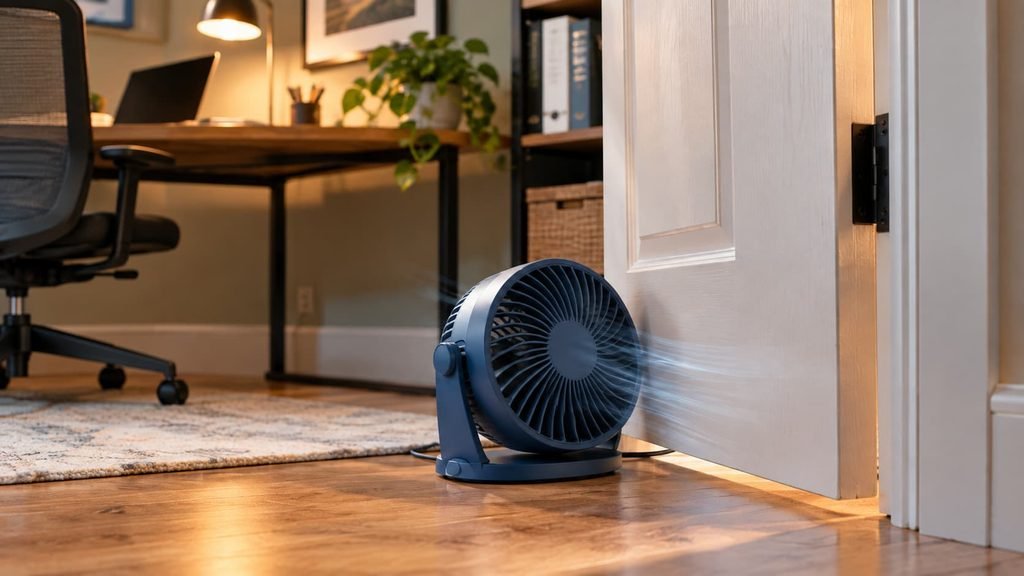
2. Leave the door open when possible, or use a door fan or simple gap to improve air exchange with the rest of your home. This is a genuinely free change that directly addresses limited fresh air exchange, provided your specific setup and privacy needs allow for it during your actual working hours.
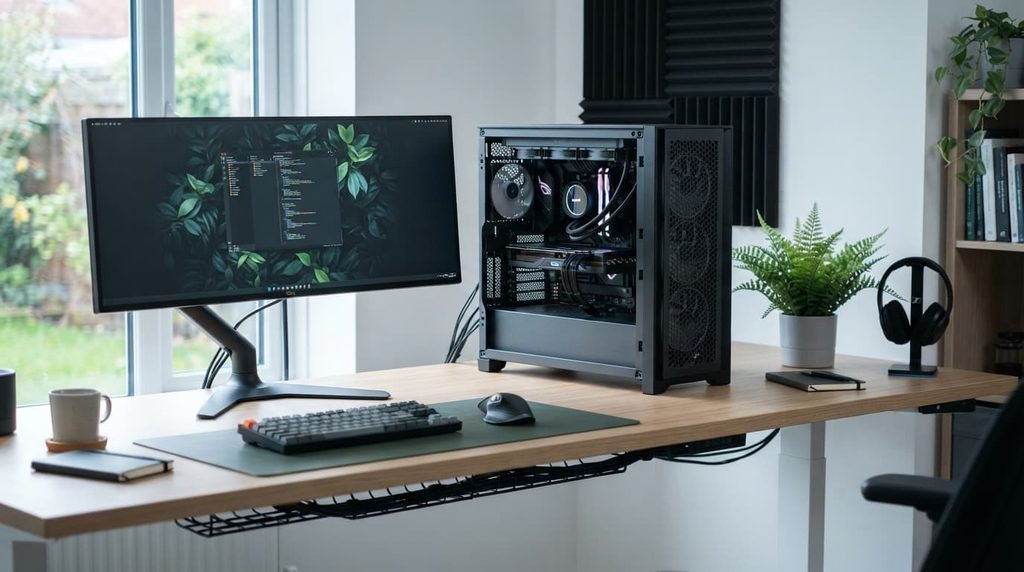
3. Reposition heat-generating equipment away from your immediate seating area, or ensure it has adequate ventilation space around it. Equipment generating heat in a confined space compounds the room’s overall temperature meaningfully over extended use, and simply improving airflow around it, or repositioning it slightly, can measurably help without requiring any equipment replacement.
4. For a room with a genuine, persistent heat or ventilation problem that the fixes above don’t resolve, consult a licensed HVAC professional about the space’s specific ventilation and cooling needs. This is a professional consultation, not a DIY project – any change to your home’s actual heating and cooling system needs proper assessment of your specific setup before being considered further.
What isn’t worth doing
Relying entirely on leaving windows open as your only cooling strategy, without addressing internal air circulation as well, isn’t worth doing as a complete solution on its own.
Open windows help with fresh air exchange specifically, but without adequate internal circulation to actually move that fresh air through the space, heat and stuffiness can persist even with a window open, particularly in a room with limited natural airflow pathways between the window and your actual working area.
Surface and window covering choices also compound this problem specifically, since dark curtains or blinds left closed during sunny hours can trap heat considerably more than lighter, more reflective window coverings would in the same room. This is worth checking specifically before assuming ventilation alone is the full solution, since window covering choice can meaningfully affect how much heat actually accumulates in the room in the first place, independent of circulation afterward.
What people get wrong about fixing this
The most common mistake is assuming a stuffy feeling is purely about temperature, when air quality and circulation specifically – not just heat – contribute meaningfully to how stuffy a room actually feels. A room can register a reasonable temperature on a thermometer while still feeling genuinely stuffy due to poor air circulation and accumulated carbon dioxide from extended occupation, meaning temperature alone doesn’t capture the full experience.
A second common mistake is addressing only the symptom during work hours, without considering whether heat has already accumulated in the room before you even started working that day. A room that’s been closed up and accumulating heat from equipment or sun exposure throughout the day benefits from proactive circulation or ventilation before your work session begins, not only once you’ve already noticed discomfort partway through.
What changes if your situation is different
If your home office’s heat problem is genuinely limited to specific hours of direct sun exposure rather than a persistent all-day issue, prioritise a simpler, targeted fix – improved circulation during those specific hours – over a more substantial ventilation change, since the actual problem window may not justify additional cost and complexity.
If you’re renting and HVAC changes genuinely aren’t available to you, the circulation and door-management fixes become your practical ceiling, and a genuinely well-positioned fan combined with improved air exchange can meaningfully address most stuffiness without requiring any structural change to the space at all.

The one thing to check before you commit
If you’re pursuing the HVAC professional option specifically, confirm with them whether your home’s existing system can genuinely support additional ventilation capacity for this specific room, since this determines both feasibility and cost in ways that aren’t visible from simply assessing the room itself.
This matters more for this specific option than for the other fixes above, since those remaining fixes are all fully reversible, low-cost, and require no professional assessment at all, while an HVAC change carries genuine cost and complexity worth confirming clearly before any further planning proceeds.
Questions readers keep asking
Is a simple fan really enough to fix a stuffy home office?
For many rooms, yes, at least partially – stagnant air accumulation is often the most immediate contributing factor to stuffiness, and improving circulation with a well-positioned fan frequently provides noticeable relief without requiring any more substantial change.
Does having a computer or other equipment running all day genuinely make a room hotter?
Yes, meaningfully – equipment generating heat continuously in an enclosed space contributes real, measurable warmth over extended periods, which compounds with limited air circulation to produce the stuffiness many home offices with equipment running all day actually experience.
Can plants genuinely help with a stuffy home office?
To a modest degree specifically for air quality, though this effect is generally secondary to the circulation and ventilation factors covered above, so plants are a reasonable complementary addition rather than a primary solution for genuinely significant stuffiness on their own.
When is it worth considering a proper HVAC solution instead of the simpler fixes?
If you’ve genuinely tried improving circulation and air exchange and the room still doesn’t achieve comfortable temperatures for your specific needs, that’s the point worth consulting a professional about a more substantial ventilation solution, rather than starting there before trying the simpler, lower-cost fixes first.