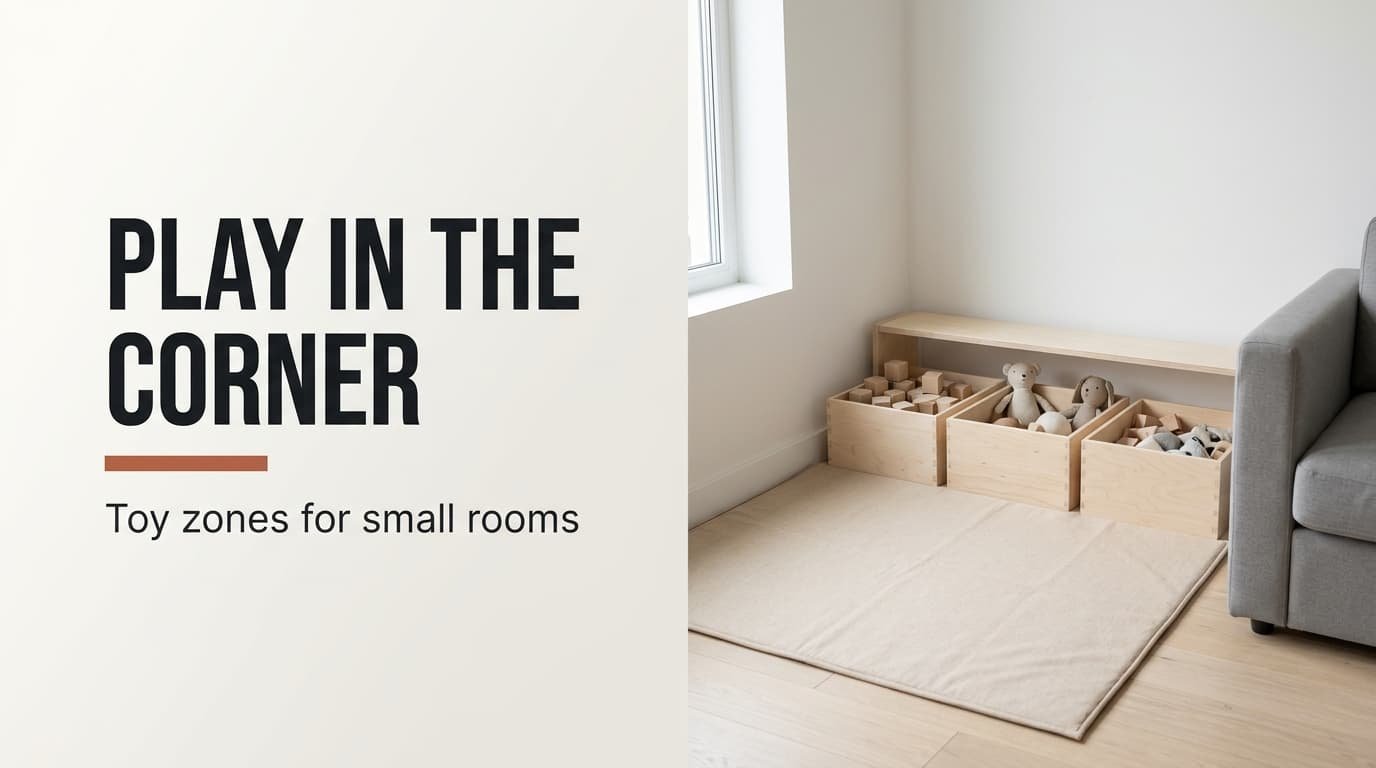
A play corner for a toddler comes down to one figure, which is the patch of floor the toys end up covering, and a corner cuts that patch to a quarter of what an open floor allows. Joris and Lotte rent a terraced house in Eindhoven with their son Sam, who is 20 months old. Their living room is 340 cm wide and 500 cm long. The window looks onto the garden from the far end, while the door opens beside the stairs at the near end. Every number below comes from one invented house, so check your own.
Why a Small Living Room Needs a Play Corner for a Toddler
Toddlers don’t play where you put the mat. They play where the adults sit, and they carry toys back and forth between the two. A 120 × 150 cm mat covers 1.8 m², yet the toys travel about 150 cm from it in every direction. A disc of that radius takes up 7.1 m² of the 17 m² floor, and that’s 42% of the whole room.
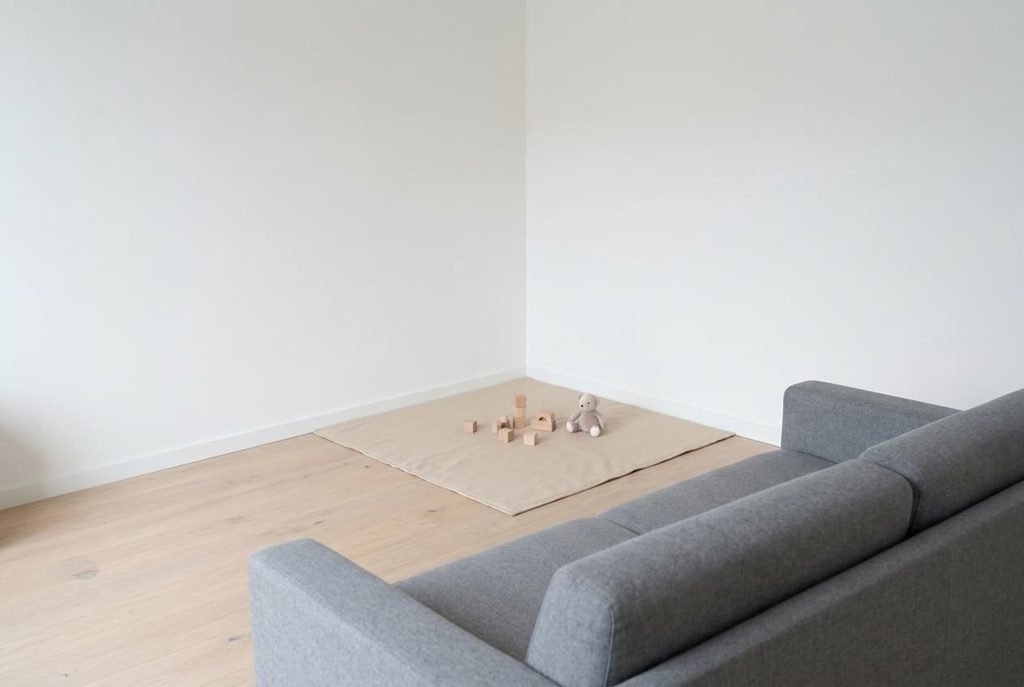
Walls change that sum. Push the mat against one wall and half the disc disappears, leaving 3.5 m². Push it into a corner and only one quarter of that disc remains, a patch of 1.8 m² that matches the mat itself. A corner turns a scatter of 7 m² into one under 2 m², because the walls stop the toys from rolling out in every direction at once.
The corner also has to sit where an adult can see it. Sam plays within 300 cm of the sofa because he checks that someone is watching. He looks up every minute or two. A corner hidden by the door or tucked in a spare room breaks that link. The toys then follow him back to the sofa anyway, and the scatter you started with returns.
Pick the corner before you pick any furniture.
Three Layouts That Give a Toddler a Play Corner
The window and the entrance stay put in all three plans. Only the sofa and the toy storage move, and each plan keeps the corner in view from the main seat.
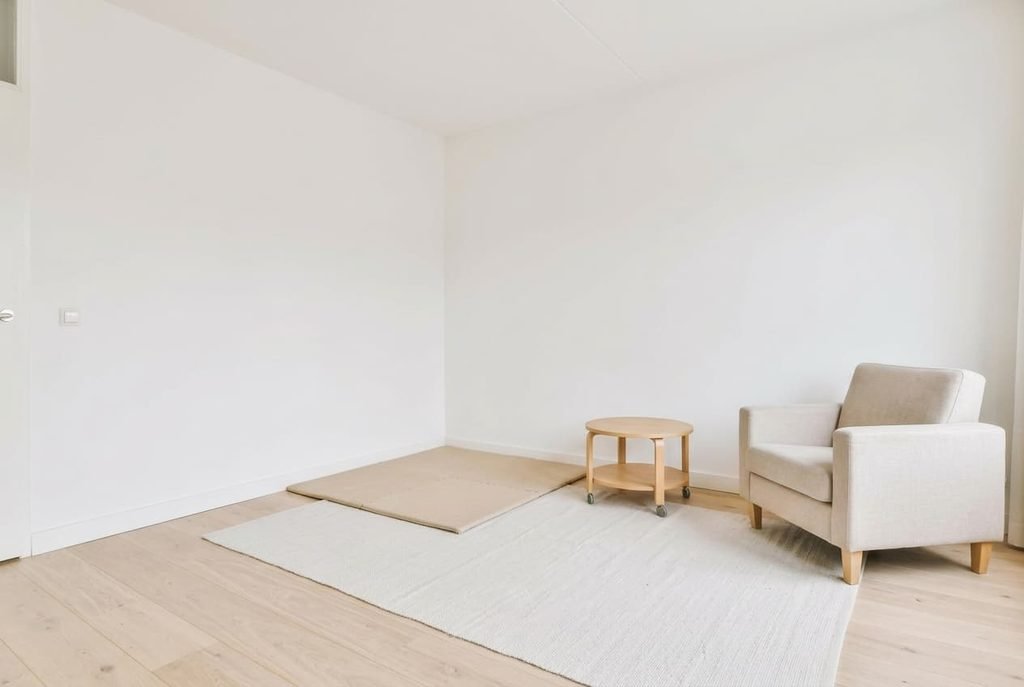
– Sofa facing the corner: the mat fills the back-left corner beside the window, and a 190 × 85 cm sofa faces it from the other long wall. The seat sits about 290 cm away from the mat’s centre. Three boxes of 40 × 30 × 25 cm line the wall beside the mat, which makes 120 cm of storage with no gaps. A play corner for a toddler in this plan is visible from every seat.
– Sofa at a right angle: the sofa backs onto the end wall, 60 cm from the mat, so a parent can reach out and touch a toy. The cost is a closer seat, and Sam may climb onto the arm. A rug under the sofa’s front legs ties the sofa and the mat into one zone, and the corner stays clear of the door.
– Shared rug: one flat-weave rug of 200 × 140 cm lies partly under a single 80 × 85 cm armchair, with the mat on top in the corner. The armchair puts a grown-up 60 cm from the toys. A coffee table of 90 × 50 cm on castors rolls out of the way at tidy time and back again for tea.
Four Mistakes That Let Toys Take Over the Floor
Putting the zone in a spare room. Toddlers follow people, so a play space 600 cm from the sofa sits empty while a pile of toys grows beside you. You’ll walk back and forth carrying a tray of cups, and the pile will win. Keep the corner inside the room that the adults use, even if a spare bedroom looks tidier on paper.
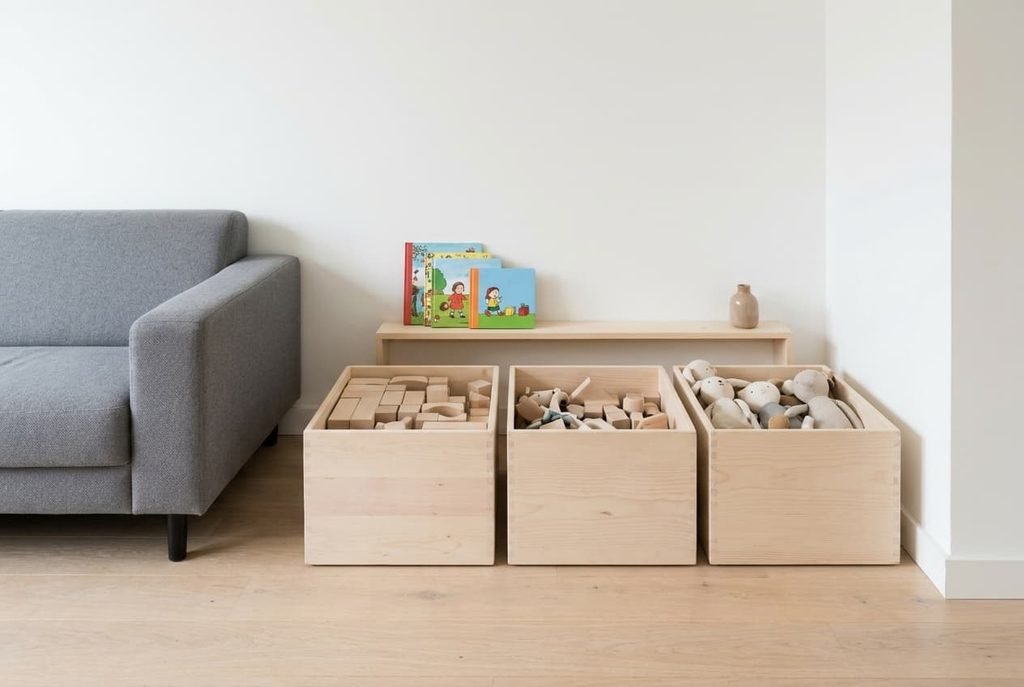
Buying one big basket. A basket 60 cm deep swallows everything, and the toy Sam wants is always at the bottom. A toddler of this age can’t reach into it, so he tips it out. Use three open boxes 25 cm tall, sorted by kind, with the heaviest toys at the front. The boxes cost more space along the wall, about 120 cm. Tidying becomes quick, and the floor clears itself.
Letting the door route cross the mat. A lane 90 cm across must link the entrance with the sofa. A mat laid down at the base of the sofa blocks it. The zone then has to be dragged aside whenever someone brings in shopping. Put the zone in the rear of the room and run the lane beside the near wall, where adults carry bags.
Using a rug as the only boundary. A toddler ignores a printed border within a minute. An 80 cm shelf makes a better wall, because it sits behind the mat and the boxes slide beneath. It closes off one side without any new building work, and it doubles as a place for picture books.
When Giving a Toddler the Whole Floor Is the Wrong Answer
The advice you’ll hear first says to clear the room and let the child have the lot. I’d argue against handing a toddler the entire floor, and the arithmetic backs this up. Sam needs 1.8 m² of mat, and a corner shrinks his scatter zone to the mat’s own footprint. A play corner for a toddler leaves about 15 m² for adults.
An open floor also invites toys to spread. They end up 400 cm from the box, and some hide behind the sofa. Tidy time stretches from three minutes to fifteen. The adult seats vanish under toys too, so you stand through the evening and the room feels smaller than it is.
Children grow out of this stage fast. Within three years the corner turns into a reading spot with a book ledge and a cushion. Plan for that day. A corner needs only the mat and the boxes now, and it asks for nothing permanent, so the room recovers without any repair or repainting. If you rent, that matters twice over.
Keep the corner small and keep everything else on the floor for people.
Three Tape Tests Before You Buy Anything
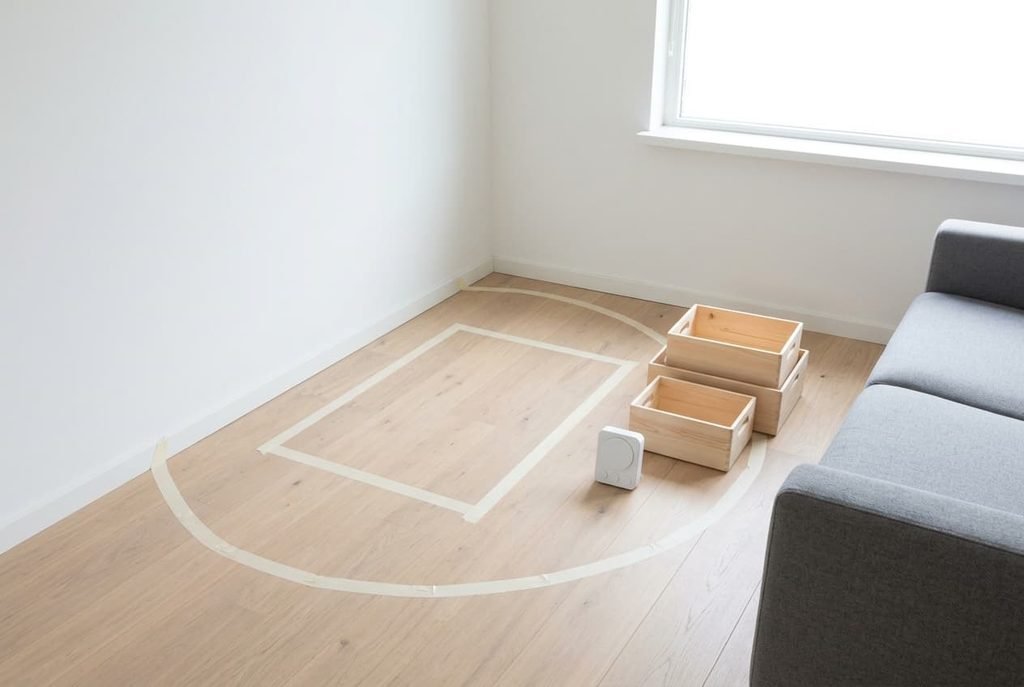
1. Tape a rectangle of 120 × 150 cm into your chosen corner and a quarter disc of 150 cm around it. Take a seat on the sofa and confirm that you can see the whole rectangle without leaning. If a lamp or a chair hides part of it, choose another corner. Then check the view from the entrance as well.
2. Walk the door route with a laundry basket. The lane needs to keep a width of 90 cm the whole way, and the tape must lie clear of it. Anything that brushes the basket needs a new position, and so does anything that makes you turn sideways.
3. Set a timer and put 30 toys back into three boxes. A good layout finishes in under three minutes. If you need more, the boxes are too far from the mat, so move them closer by half a metre, then time it once more.
A play corner for a toddler works when the tape shows a patch you can see and reach and clear in minutes. Leave the tape in place for a full week before spending on anything, and change a single thing per day. If the toys still escape, move the boxes before you move the mat. Photograph the floor each bedtime to track the scatter over the week.
Questions Readers Keep Asking
How big should the play mat be?
A mat of about 120 × 150 cm works in a room around 17 m². That leaves most of the floor for adults. In a room under 12 m², shrink the mat to 100 × 120 cm and use two boxes. A mat larger than 2 m² spreads the toys instead of holding them.
Where should the corner sit relative to the sofa?
Within 300 cm and in direct view of the seat where an adult sits most. Diagonal placement works well, because you see the mat without turning. Avoid a corner that hides behind an open door, since you’ll lose sight of the child each time someone walks in.
Does the mat colour matter?
Yes. A mid-tone mat in a calm colour such as oat or soft grey makes bright toys stand out and hides crumbs. A busy pattern hides small toys in the print. Pick a matte surface, because a shiny one bounces lamp glare around the room at night.