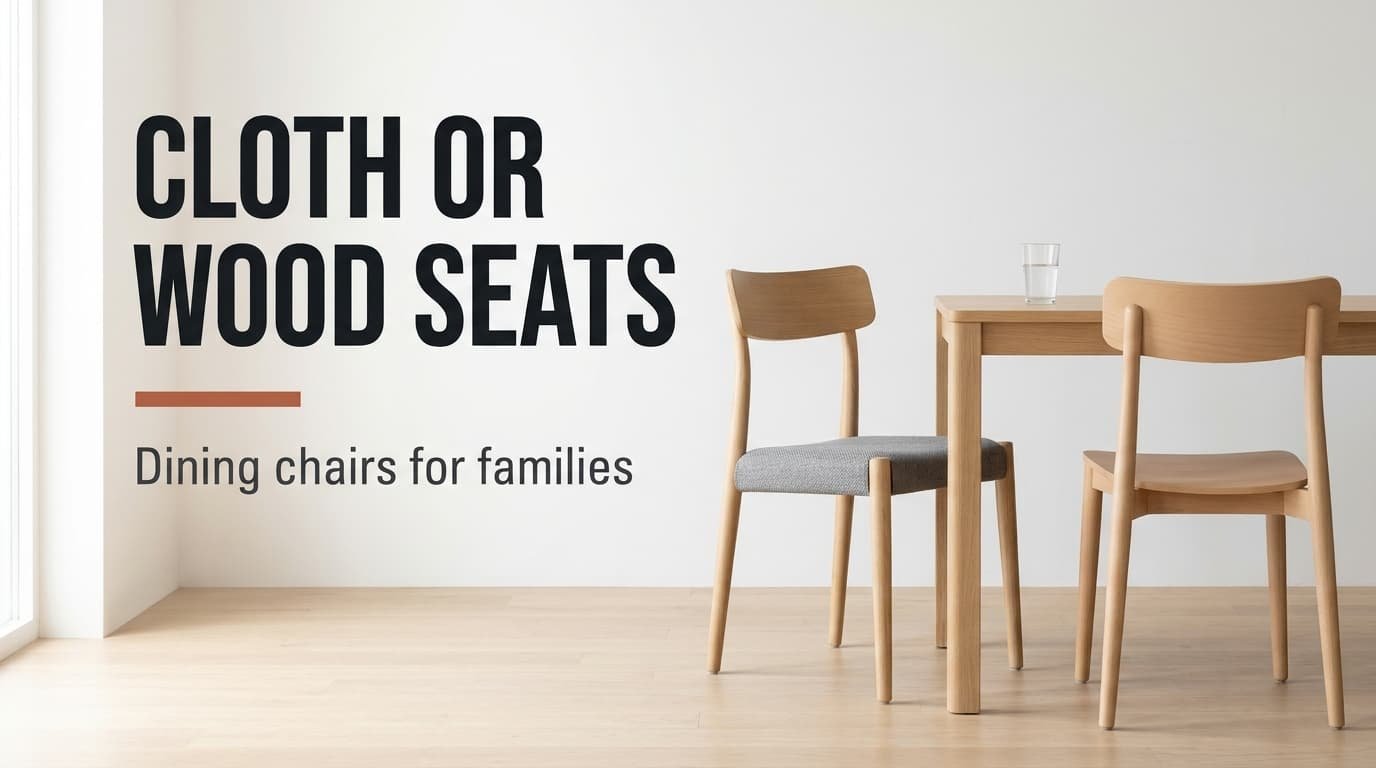
Upholstered or wooden dining chairs seem to come down to looks, yet a family table turns the choice into a test of spills and scrapes. Take a table measuring 160 by 90 cm that seats four, with two children under ten. A padded seat takes a tipped bowl of soup deep into its weave, whereas a wooden seat hands it back to a damp cloth. Below, you’ll see how the two behave day to day, how they compare in a table, and what a third route looks like if you already own chairs. A pair of short rules ends the piece. Every number assumes a hard floor and a daily dinner at this table, all in a Dutch flat.
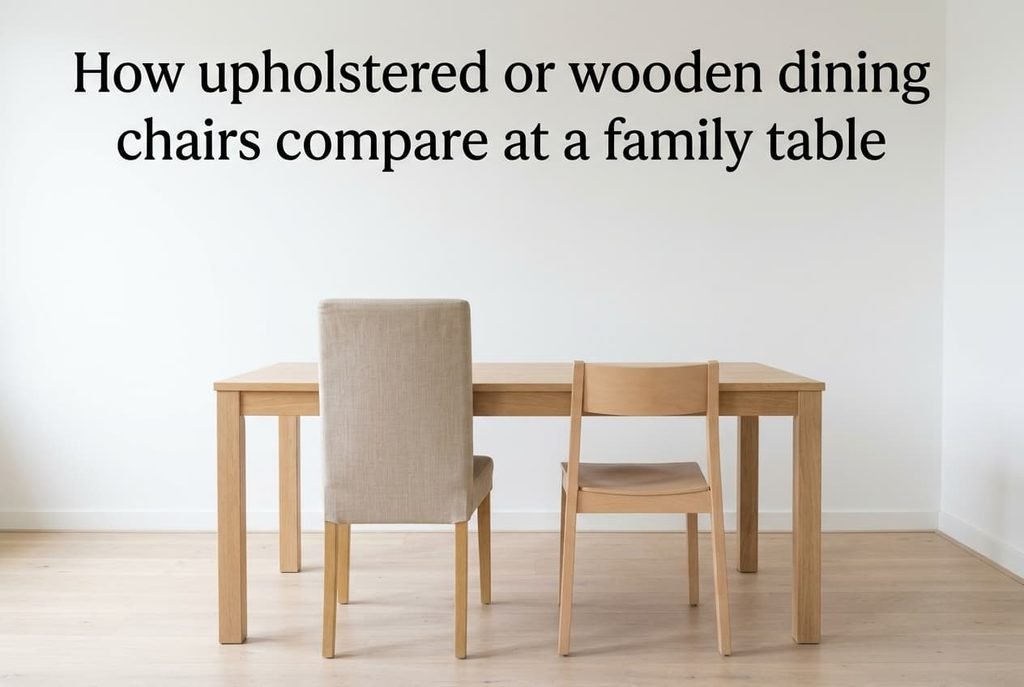
How upholstered or wooden dining chairs compare at a family table
Whatever happens at a dining table ends up on the seat. Crumbs land there, and a sleeve that trailed through the gravy leaves its mark. Take four chairs sat on 700 times a year each. That’s 2,800 sittings a year across the set, and every one rubs cloth against the seat surface. Fabric holds that wear and that dirt in its fibres, while a sealed wooden surface lets most of it slide off.
The split fits one sentence: a wooden seat wipes clean in ten seconds and can be refinished once or twice, whereas an upholstered seat is only as clean as its cover can be washed. Comfort pulls the opposite way. A padded seat with 4 cm of foam stays pleasant through a 90-minute meal, and a bare board starts to feel hard after about 30 minutes.
Weight shows up on a hard floor too. A solid wooden chair weighs around 7 kg and an upholstered one about 5 kg, so the heavier chair drags with more force each time someone pulls it back. Seat height barely separates them. Both sit near 46 cm from the floor, so a child on a booster can use either one, and the foam adds only about 3 cm once it settles.
How messy your table gets decides the rest.
The two options side by side
Six properties set the two apart, and they carry over to any cloth or finish. A table shows this more clearly than a review of a single chair. Upholstered or wooden dining chairs part ways most on cleaning. Comfort and weight go the other way. Run down the rows and the gaps trace back to the seat surface, because that surface sets how dirt and wear behave. Each row is a stable property of the build, so none of it relies on the maker or the weave, and you’ll find it easy to match a row to the mess your own table makes.
| Property | Upholstered chair | Wooden chair |
|---|---|---|
| Spilled juice | soaks in within a minute | wipes off in seconds |
| Comfort at 90 minutes | stays pleasant | turns hard after about 30 minutes |
| Cleaning | blot, or wash a removable cover | damp cloth, then dry |
| Wear after three years | shiny front edge, some pilling | scratches and pale rings |
| Repair at home | recover with a staple gun | sand and re-oil the seat |
| Weight of one chair | about 5 kg | about 7 kg |
Wood wins on cleaning and on repair, whereas upholstery wins on comfort and weight. For a table used every evening, the spill row usually settles it first.
How upholstered seats behave at a family table
The usual build is 4 cm of foam under a hard-wearing cloth. Look for a cloth rated at 30,000 rubs or more, because a weave that gives up sooner will go shiny within a few years. A tight weave in a mid tone suits a table with children. Pale plain cloth doesn’t hide a single mark, and a loose weave traps crumbs between its threads.
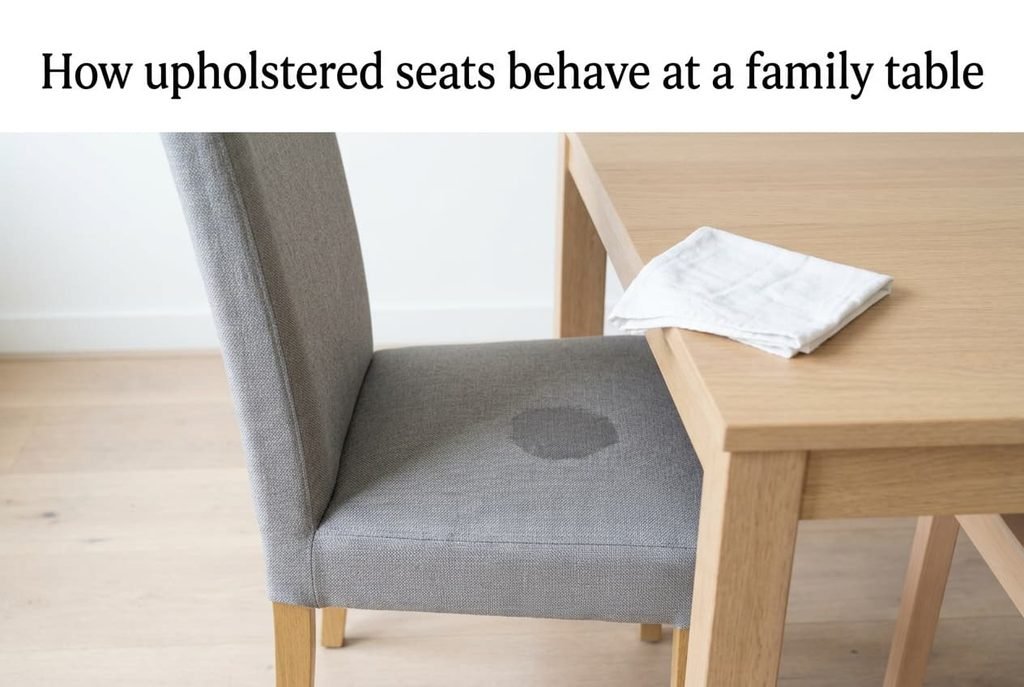
Spills are where a padded seat is least forgiving. Pour a glass of water on one and it darkens within seconds. Blot at once and most of it lifts, but a sauce left overnight stays put. A removable cover helps, since it can be washed at 30 degrees and dries flat within a day. A fixed seat stays on the frame. It’s spot cleaned, and its foam takes much longer to dry.
After three years the front edge turns shiny where legs rub it every day. Upholstered or wooden dining chairs both age, though cloth shows it sooner. Re-covering takes an hour with a staple gun and a metre of fabric, which keeps a good frame in use.
How wooden seats behave at a family table
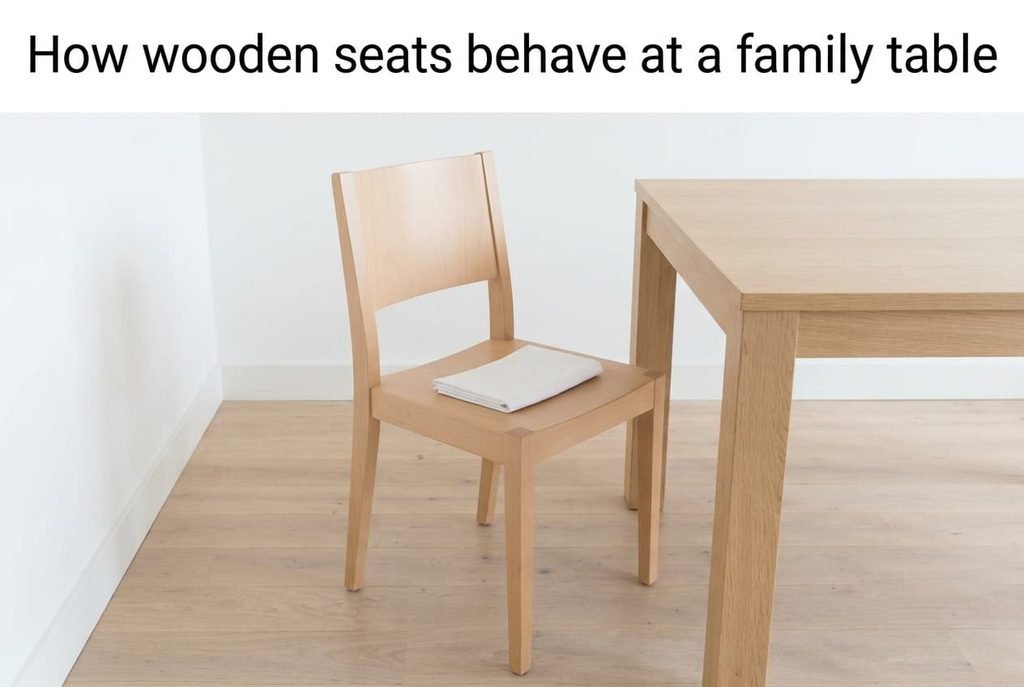
A solid seat of beech or oak is the usual build. Lacquer lets a spill sit a while, and oil needs a wipe sooner. A hot mug leaves a pale ring on an oiled seat, whereas lacquer resists it. Neither soaks anything up, so the cleaning is one damp cloth and one dry one afterwards.
Scratches come from belt buckles and the odd dropped fork. They don’t spread, and a pass with fine sandpaper (grade 240) takes them out. Re-oiling afterwards takes around an hour, with results that last years. A tired seat can be made new more than once.
The joints are the part to watch. Legs can loosen after two or three years of being tipped back, and one turn of a screw or a dab of wood glue puts that right. Felt pads about 2 cm wide on each foot keep the scraping quiet on tile.
Wood’s real strength is how easily it forgives a mess.
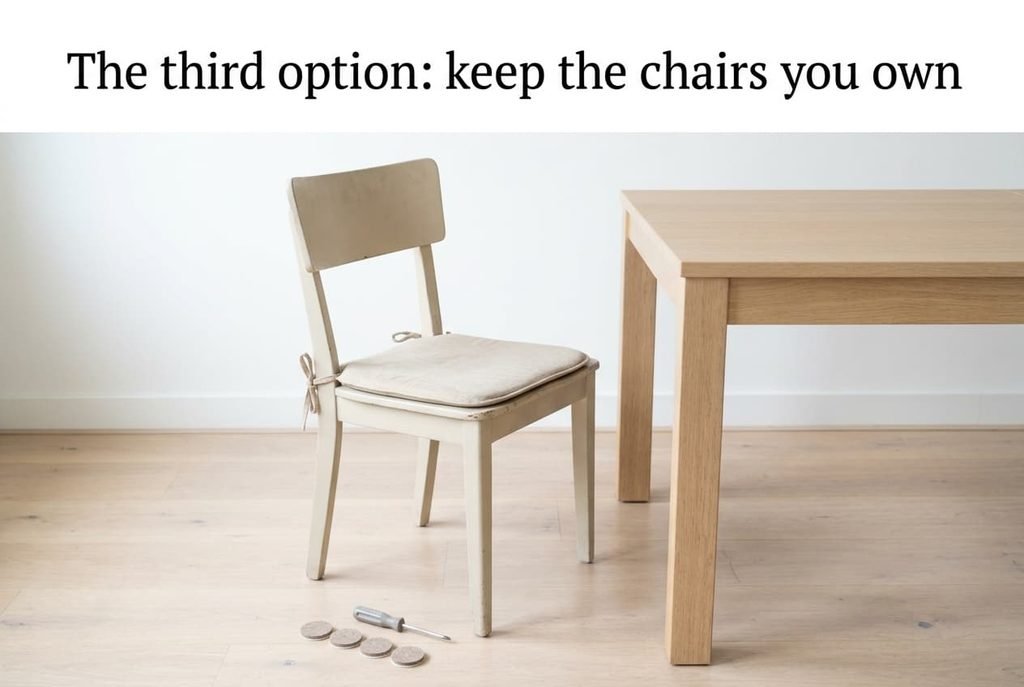
The third option: keep the chairs you own
Chairs you already own need a reason to go. A frame that stands firm and a seat that still looks decent usually earn another year, and a small fix often does the job. Tie a washable pad of 2 cm onto each seat and fit felt pads to every foot, because most complaints about a family table come from comfort and noise, and those two changes address both.
Check the legs first. Stand behind each chair and rock it. If it moves, tighten the screws under the seat before anything else. A chair that rocks under your hand is worth repairing, and one that creaks at every move is worth a look at the joints.
The idea falls down if a joint has cracked or a seat has split, because patches on a weak frame only hide the fault. Where the set is sound, an afternoon covers it. Your current set stays in service, which spares you a clear-out. Unlike buying a full set, it leaves the room as it was.
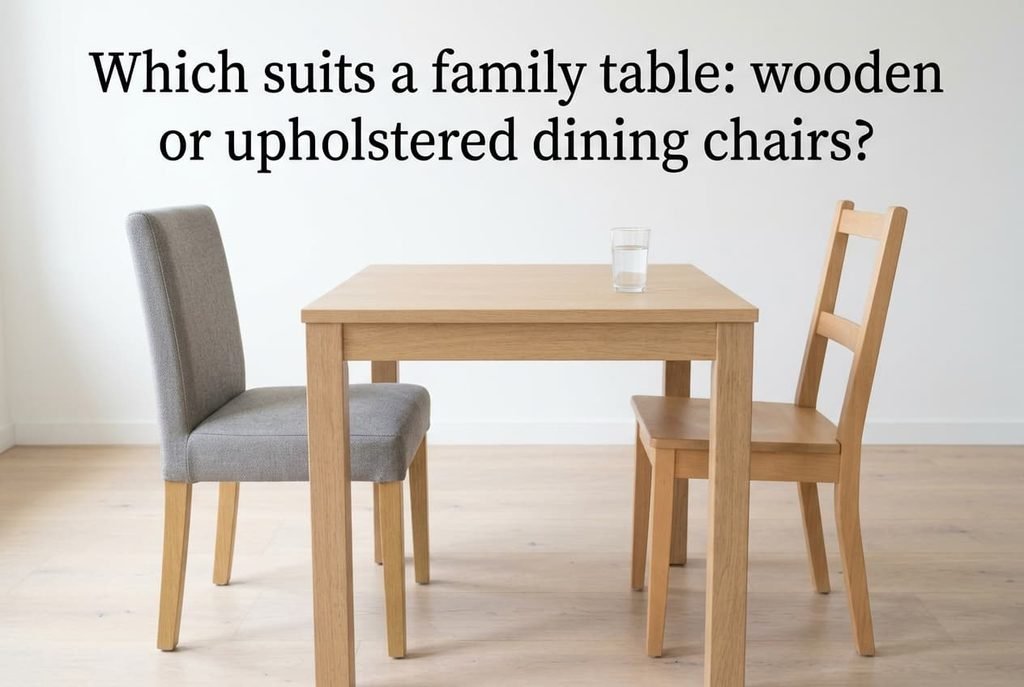
Which suits a family table: wooden or upholstered dining chairs?
If your children eat here every evening and you wipe the table after each meal, choose wooden seats. The cost is a hard feel after half an hour. You gain a seat that wipes clean in seconds and can be sanded when it marks. A thin pad takes care of long Sunday lunches, and a cloth kept by the table means no spill sits for long.
If the table doubles as a place to linger and spills are rare, choose upholstered seats with a removable cover. The cost is a wash every few months. You gain a seat that stays pleasant for 90 minutes and slides back more quietly. Wash the cover in spring and again in autumn, and it won’t look tired.
Upholstered or wooden dining chairs will both serve a family if the choice matches the mess. Press a damp finger on a sample seat in the shop and watch how long the mark stays. That one test tells you which surface suits your table, and it takes ten seconds. It also shows when you should skip both, since a set you already own may be good enough.
Questions readers keep asking
Which lasts longer under daily family use?
A wooden seat can last decades, because wear is sanded away and loose joints can be tightened. An upholstered seat is good for as long as its cloth holds up, which for a hard-wearing weave is often many years, though the foam under the front edge sags sooner. Both age slowly, so ask which one you can repair at home.
How do I clean each kind?
Wipe a wooden seat with a barely damp rag, then dry it at once, since standing water lifts the finish. Blot an upholstered seat and never rub, then work mild soap into the mark. A removable cover can be machine washed cool. Heat shrinks fabric, so skip a hot cycle.
Which suits a small Dutch flat?
A lighter upholstered chair at about 5 kg slides in and out of a narrow gap with less force. A wooden chair at 7 kg fits a home where the table never moves and the floor is hard. Felt pads under the feet of either kind keep scraping quiet, and they take a minute to fit.