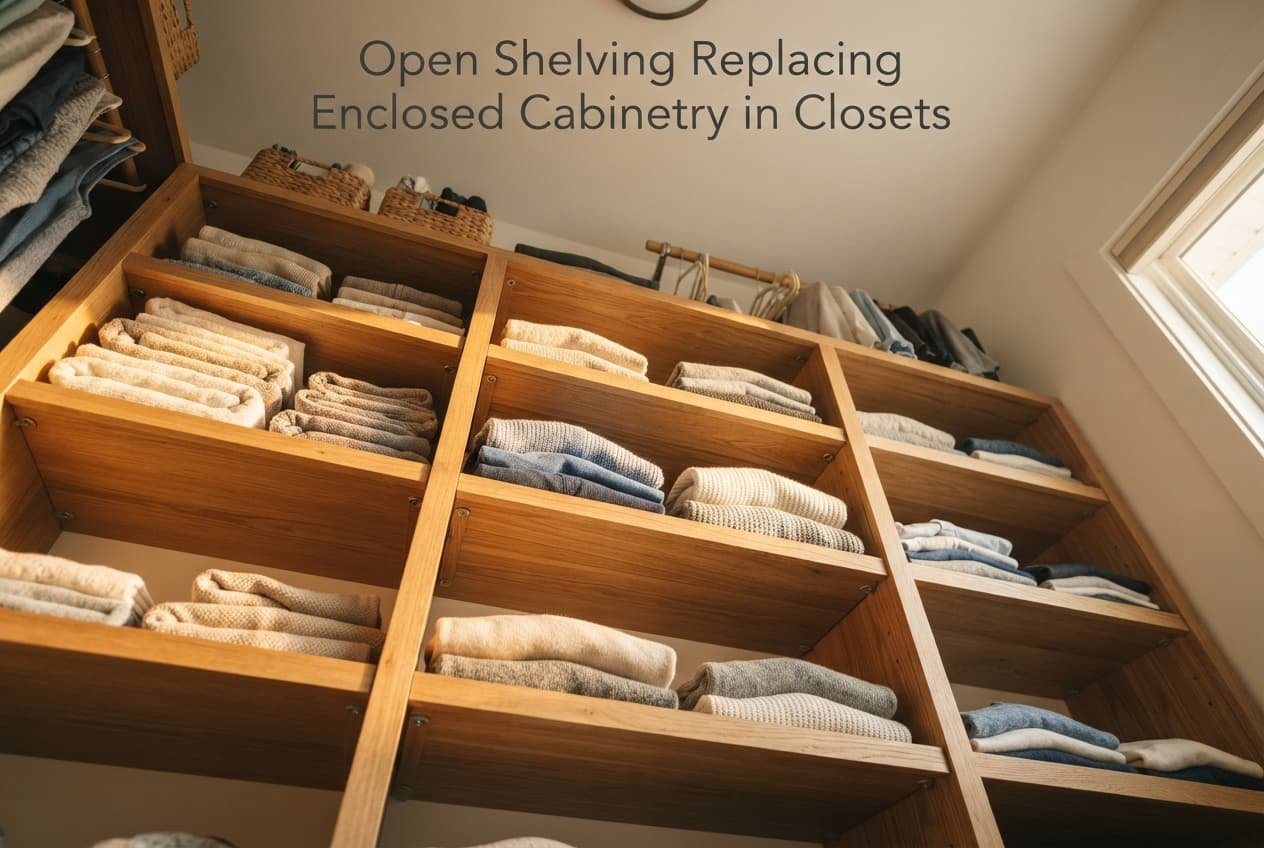
Open shelving systems keep genuinely displacing fully enclosed cabinetry for walk-in closet storage specifically, for a reason grounded in measurable retrieval speed and genuine inventory visibility, not seasonal taste alone. Understanding that reason tells you whether it’s worth adopting or just the current version of a cycle that will pass. The shift is real and checkable in how much genuine visibility open shelving provides compared to fully enclosed cabinetry, not simply a matter of one storage style being more fashionable than another.
What actually changed
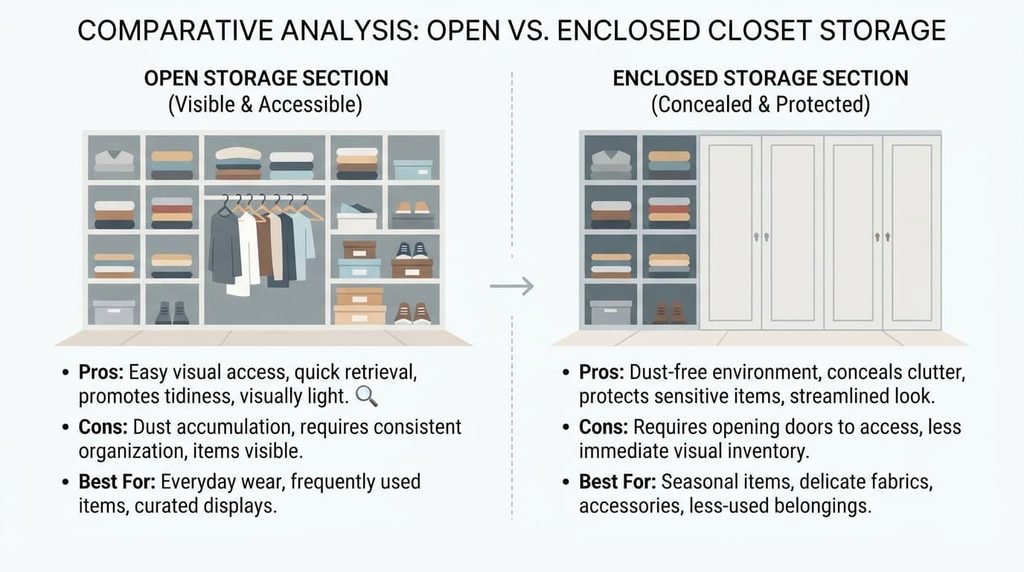
The measurable shift is a move away from storage systems that fully conceal contents behind closed doors, toward open or partially open shelving that keeps stored items genuinely visible at a glance. Where fully enclosed cabinetry requires opening each door individually to see what’s inside, open shelving allows immediate visual inventory of the entire storage system simultaneously.
This isn’t purely aesthetic preference – it’s connected to the same daily-retrieval-speed principle that determines whether a closet genuinely stays functional day to day, extended specifically to storage visibility, which is why the approach recurs across different design eras rather than being tied to one particular decorating trend alone.
Why it keeps coming back specifically now
The continued reality that households manage a genuinely large volume of stored items within limited closet space has created a direct tension that open shelving specifically addresses: fully enclosed storage requires remembering or physically checking what’s stored where, while open shelving provides this information immediately without that extra step.
For many households specifically managing larger stored item volumes, this tension between wanting a tidy, concealed appearance and needing genuine quick visibility has become increasingly relevant, which is a concrete structural reason open shelving’s popularity tracks this broader retrieval-efficiency need rather than purely following showroom styling alone.
This distinguishes the current cycle from earlier uses of open shelving, which were sometimes driven primarily by a particular aesthetic movement’s popularity rather than by genuine retrieval efficiency. The underlying mechanism is the same regardless of cause, but a technique genuinely driven by an actual functional need tends to persist considerably longer than one driven purely by a design movement’s popularity alone.
What this actually changes in a space
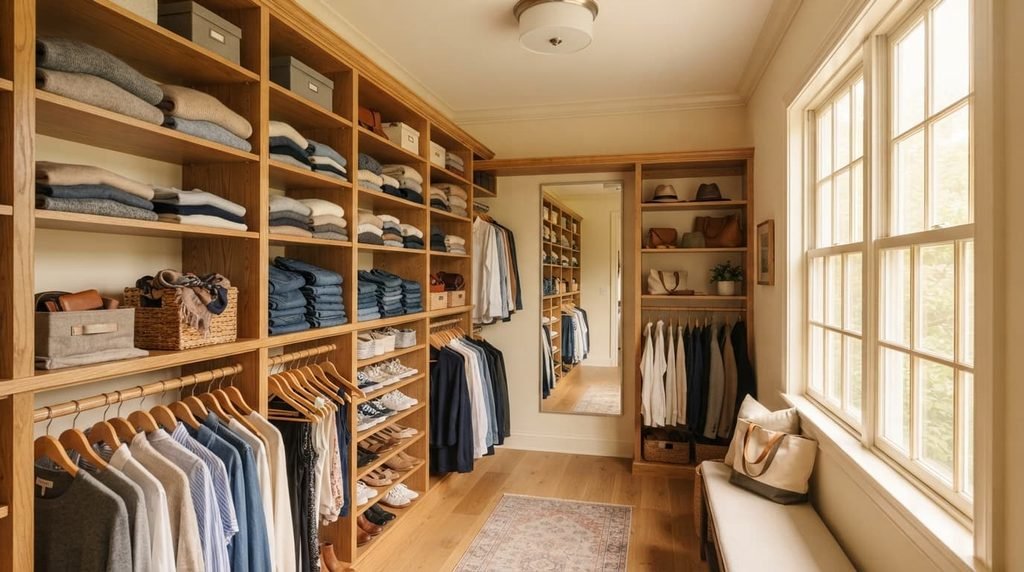
Open shelving directly provides genuine visual inventory of stored items without requiring any door to be opened first, which is the direct mechanism behind its retrieval-speed advantage specifically. This isn’t purely subjective impression – it’s the direct result of eliminating the extra step fully enclosed storage requires before contents become visible at all.
This genuine visibility also changes how households actually use their stored items, since genuinely visible storage tends to see more consistent rotation and actual use than concealed storage, where items can be more easily forgotten simply because they’re genuinely not visually present as an ongoing reminder of their continued existence.
What this looks like in practice
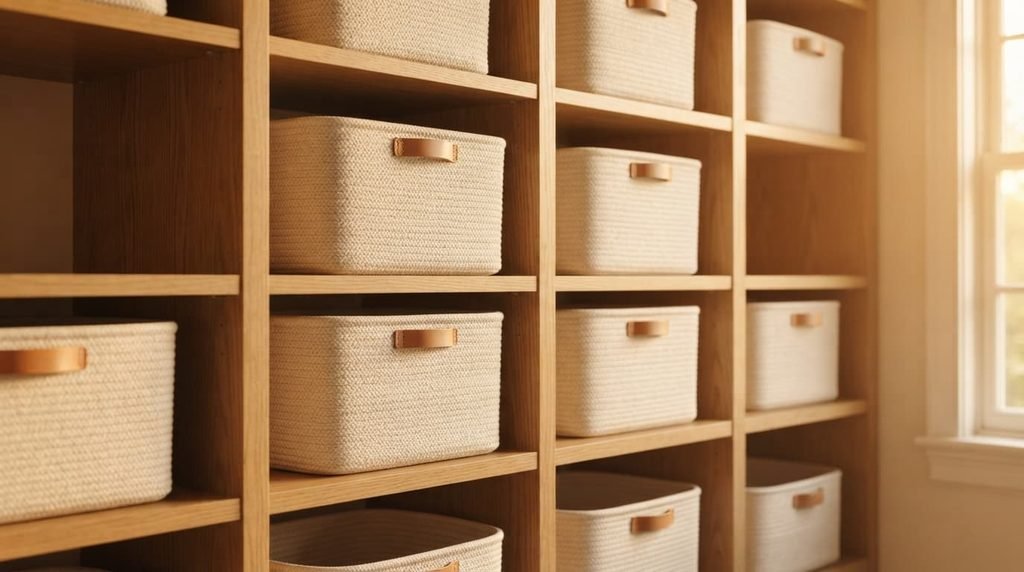
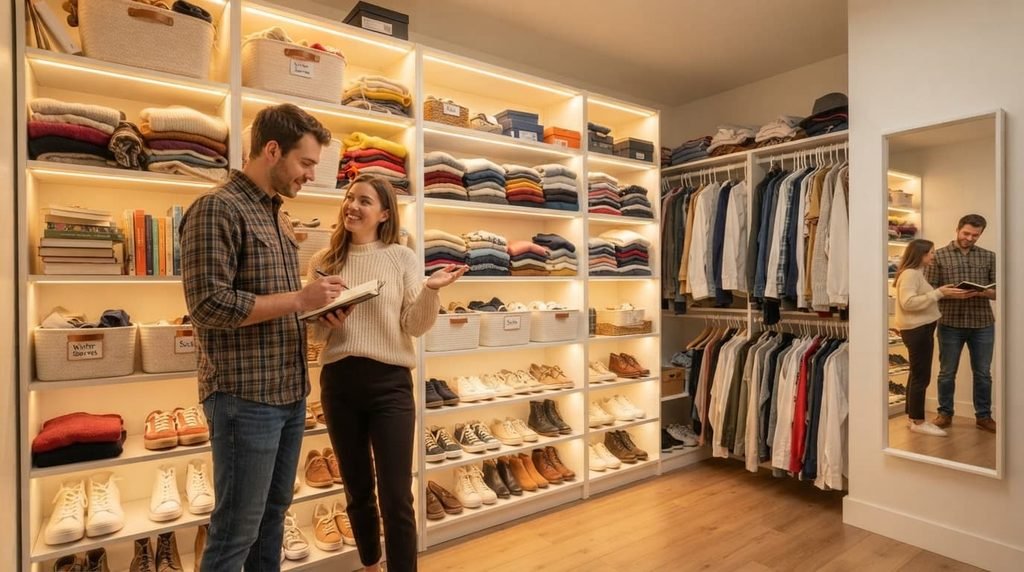
A mix of open shelving for frequently rotated items – everyday folded items, regularly used accessories – combined with a smaller enclosed section for less frequently accessed or genuinely seasonal storage forms a common practical expression of this approach, though the specific proportion of open versus enclosed storage genuinely varies considerably depending on each household’s actual comfort with visible storage and their genuine item rotation habits.
Consistent, genuinely uniform storage containers or organisation methods within open shelving specifically tend to reduce the visual density concern some households experience, since open shelving holding genuinely mismatched, disorganised items reads as considerably more visually chaotic than the same volume of items held in a more uniform, consistent presentation.
Where this trend genuinely holds up
The visibility-and-retrieval-speed mechanism behind open shelving doesn’t depend on current taste, which is why it’s a reasonable longer-term choice specifically for households genuinely managing a large volume of stored items requiring quick, frequent access. A household with this genuine need benefits from this approach regardless of which decade’s aesthetic currently favours the specific shelving style being used.
Where the verdict should stay negative
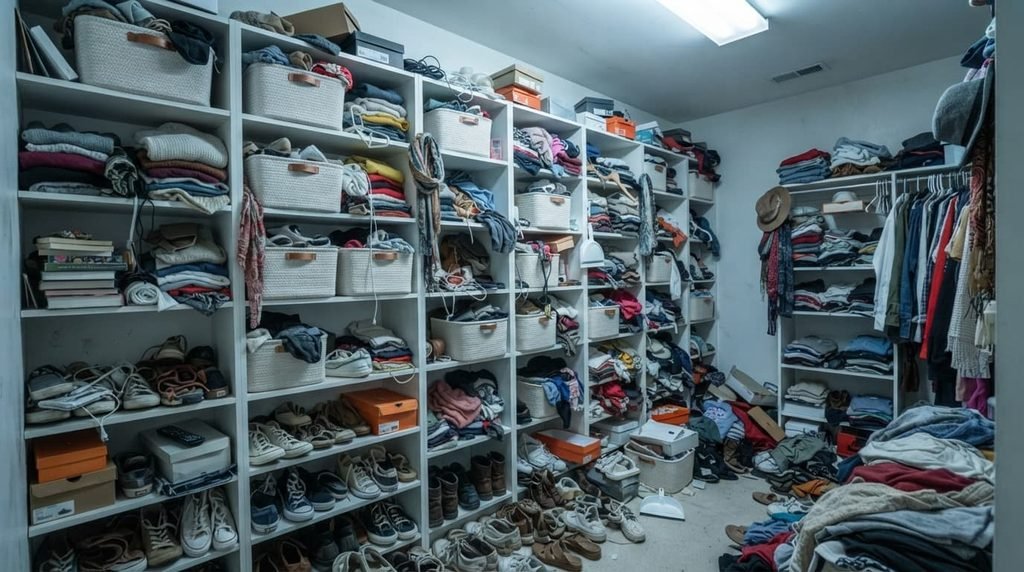
Fully open shelving throughout an entire closet genuinely isn’t worth pursuing for households that would find visible storage genuinely overwhelming or visually stressful, despite how consistently this approach gets marketed as a universally superior modern closet solution.
For some particular households, the constant visibility open shelving provides creates a genuinely different kind of daily friction – a sense of visual clutter or overwhelm from seeing everything stored at once – which the retrieval-speed benefit doesn’t meaningfully offset if the household’s actual experience of the space becomes genuinely more stressful rather than more functional as a result.
Where the verdict genuinely holds up beyond aesthetics
The genuine functional case for open shelving also extends quite specifically to households genuinely managing shared closet space among several different people, since visible storage helps everyone sharing the space see what’s already there before adding to it, reducing the genuine duplication and disorganisation that can develop more easily when storage is fully concealed and each person’s awareness of the shared space’s actual contents becomes less complete over time.
What people get wrong when adopting it
The most common mistake by far is applying fully open shelving throughout an entire closet without any genuinely concealed storage at all, even for items that genuinely don’t benefit from constant visibility – out-of-season items, for instance – resulting in visual density that undermines rather than supports the intended retrieval-speed benefit.
A second genuinely common mistake is assuming open shelving automatically stays organised without genuinely requiring the same daily-return habits fully enclosed storage also genuinely depends on equally. Open shelving makes disorganisation more immediately visible, but doesn’t inherently prevent it any more than enclosed storage does without genuine consistent habits supporting it.
Questions readers keep asking
Does open shelving require more frequent tidying than enclosed cabinetry?
In a genuine sense, yes – since disorganisation is more immediately visible with open shelving specifically, there’s genuinely more visual incentive to maintain tidiness regularly, though this doesn’t necessarily mean genuinely more actual tidying effort is truly required overall compared to enclosed storage.
Is this trend just a temporary aesthetic preference that will look dated soon?
The underlying retrieval-speed mechanism it’s connected to doesn’t depend on current taste, suggesting genuine longevity specifically for households with a genuine need for quick storage visibility, though specific shelving styles chosen within the broader open approach can still date in the usual way any decorating choice eventually does.
How do I know if I’m genuinely a good fit for open shelving, or would find it overwhelming?
Reflecting honestly on how you’ve personally responded to visible storage or clutter in other parts of your own home previously offers a reasonable indication – someone who finds visible items generally quite stressful in other rooms is likely to genuinely experience this same response in a closet too, while someone genuinely comfortable with visible storage elsewhere will likely find that same genuine comfort here as well.
Can open and enclosed storage genuinely be combined within the same closet?
Yes, and this combination often serves households well – using open shelving specifically for frequently accessed items while reserving enclosed storage for items benefiting less from constant visibility can combine both approaches’ genuine advantages within one system.