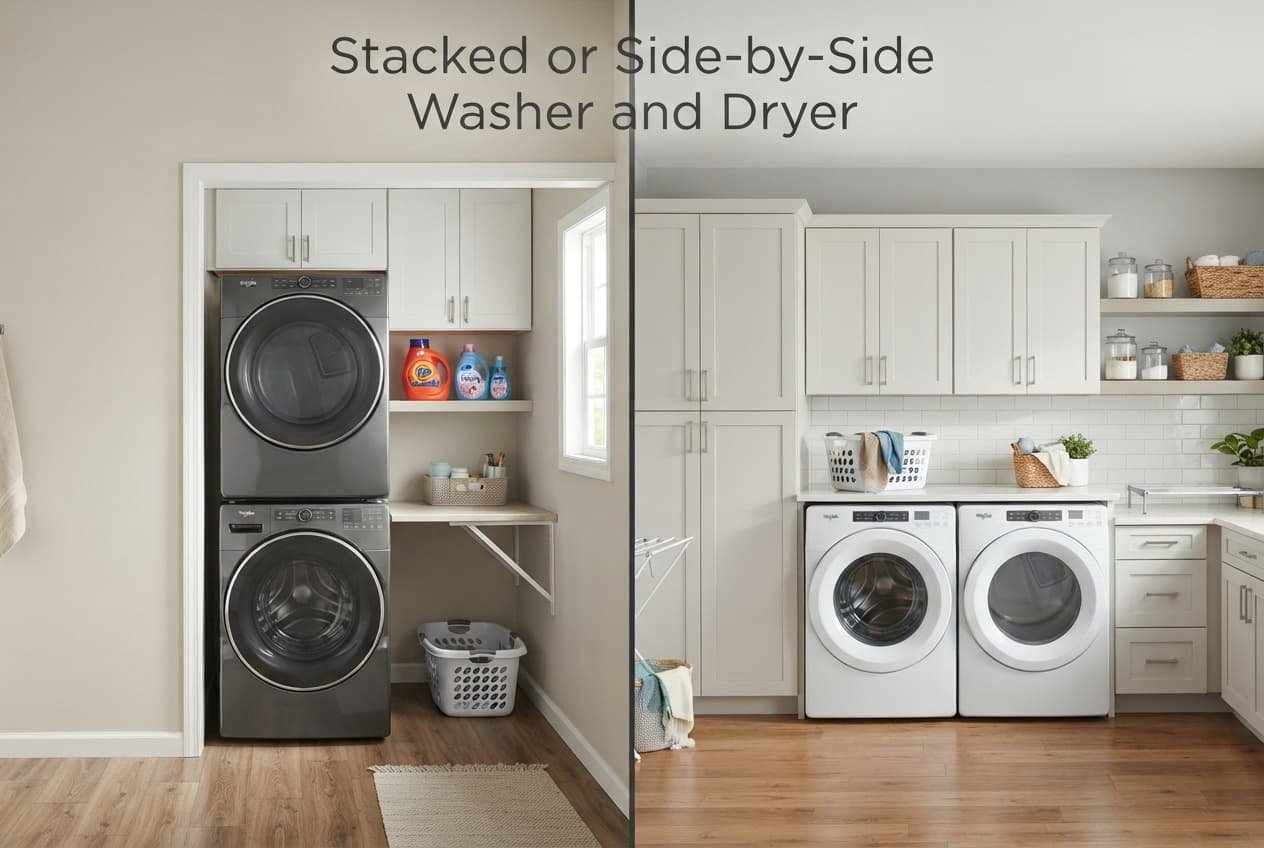
The right choice for a genuinely small laundry space isn’t decided by which one looks more impressive in a renovation photo specifically – it’s decided by how much genuine floor space you actually have and whether you’ll genuinely benefit more from a counter surface or from independent, simultaneous use of both your machines. A stacked and a side-by-side configuration solve genuinely different practical needs, and choosing based on trend alone misses what actually determines whether either one works well for your specific space.
The one property that decides it
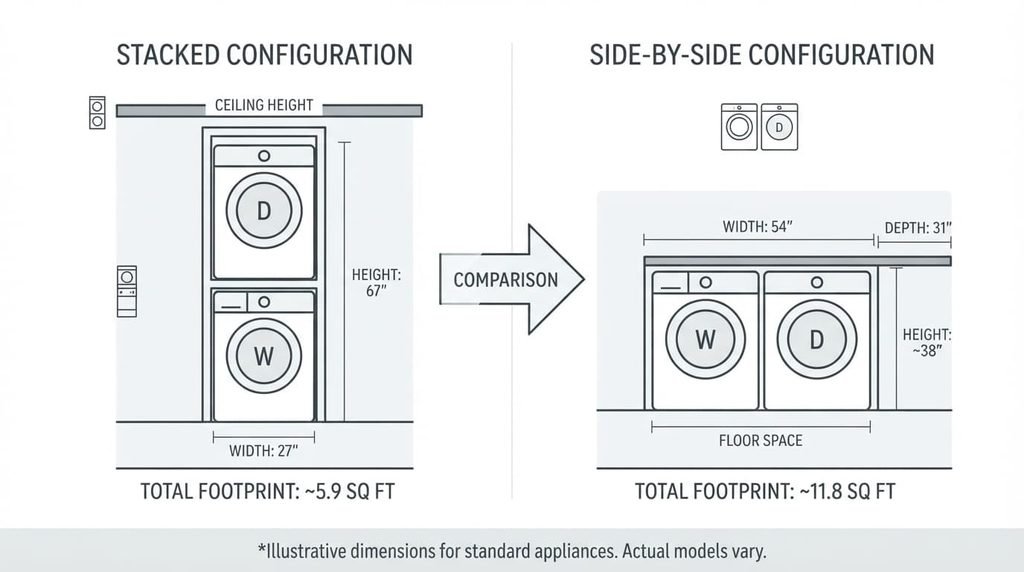
The deciding factor is whether your genuine priority is recovering floor space or having independent, simultaneous access to both machines, not simply which configuration looks more modern. A stacked configuration directly recovers floor space by building vertically, while a side-by-side configuration prioritises genuine independent access, letting you use one machine while the other runs separately.
This genuinely matters because your actual space constraints and household laundry pattern together determine which configuration’s core characteristic genuinely serves you better, rather than either option being universally superior regardless of your specific situation.
Head to head
| Stacked | Side-by-Side | |
|---|---|---|
| Floor space used | Less | More |
| Use both at once | Limited | Full |
| Usable counter surface on top | No | Often yes |
| Ease of loading top unit | Can be awkward | Comfortable |
| Easy to install | More constrained | More flexible |
| Repair access | Can be more involved | Easier |
The single row that surprises people most is repair access specifically. Many genuinely assume this is a minor consideration, but a stacked configuration’s more involved disassembly for repairs can genuinely mean considerably longer downtime and higher service costs compared to a side-by-side setup’s more straightforward individual machine access overall.
Where stacked wins
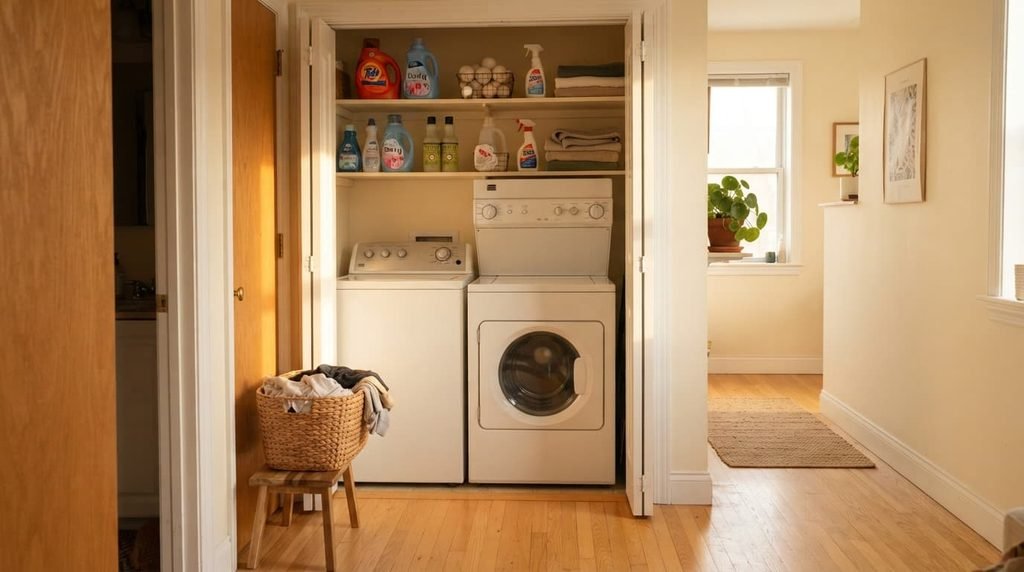
Anyone who genuinely has limited floor space benefits from a stacked configuration’s vertical footprint, since this directly addresses a small laundry area’s core constraint in a way a side-by-side configuration’s wider footprint structurally can’t match regardless of how efficiently that side-by-side setup is otherwise arranged. The unglamorous reason: a stacked configuration also frees up floor space for other functions entirely, which matters more than it might initially seem for a laundry area doubling as storage or a mudroom transition space.
Anyone genuinely renovating within a fixed, narrow footprint also benefits from a stacked configuration’s specific compatibility with tighter spaces in a related way, since a stacked setup’s narrower overall width can fit locations a side-by-side configuration’s wider footprint simply can’t accommodate at all.
Where side-by-side wins
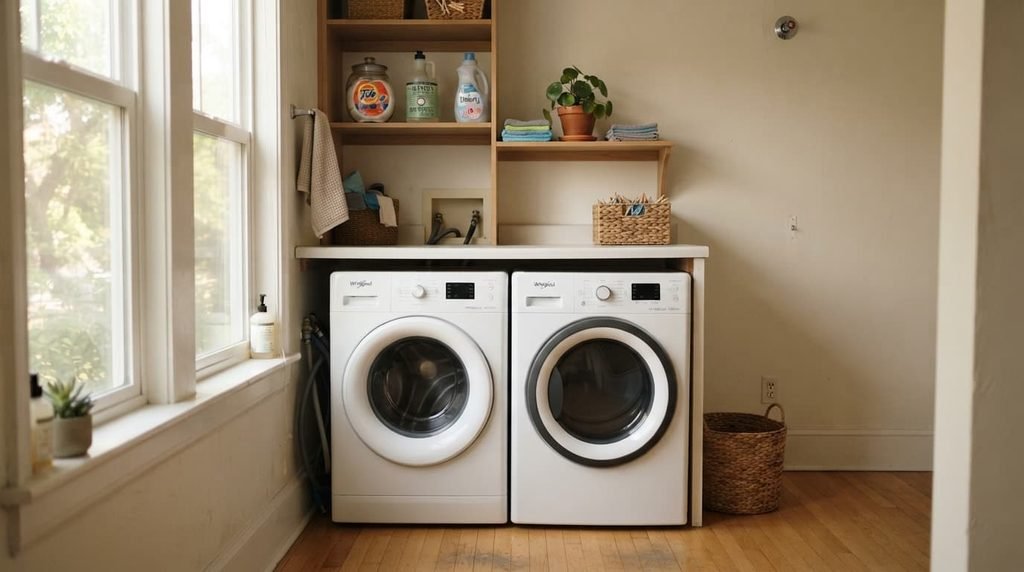
Anyone who genuinely values independent, simultaneous machine access benefits from a side-by-side configuration’s full accessibility, since this directly addresses households wanting to run a wash and dry cycle independently without waiting for sequential access a stacked configuration’s top unit sometimes complicates. The unglamorous reason: a side-by-side configuration also typically provides a genuinely usable counter surface on top of both machines, which matters more than it might initially seem for a household wanting this additional surface for folding or sorting.
Anyone genuinely prioritising easier long-term repair access also benefits from side-by-side’s more straightforward individual machine servicing in a related way, since a technician can typically access either machine directly without the additional disassembly a stacked configuration’s vertical arrangement sometimes requires.
When neither is right
Choosing based purely on which configuration is currently more popular in renovation content, without genuinely considering your own actual floor space and household laundry pattern, is worth ruling out regardless of which option you’d otherwise prefer.
A side-by-side configuration installed in a genuinely space-constrained area sacrifices floor space a stacked setup would have comfortably recovered, while a stacked configuration chosen in a household genuinely needing frequent simultaneous machine access misses the specific convenience a side-by-side setup would have provided.
How to decide in thirty seconds
If you genuinely have limited floor space, choose stacked. Its vertical footprint directly addresses this specific constraint in a way a side-by-side configuration’s wider footprint doesn’t match.
If you genuinely value independent simultaneous access and have adequate floor space, choose side-by-side. Its full accessibility and counter surface directly address these specific priorities in a way a stacked configuration doesn’t fully provide.
What changes the answer later
Your household’s actual floor space genuinely becoming more constrained – a household size change affecting your available space allocation, for instance – is worth reconsidering the choice at, since this specific shift may favour stacked’s space efficiency more than your previous situation required.
Your genuine laundry volume or pattern changing – needing considerably more frequent simultaneous machine use, for instance – is also worth reconsidering the choice at, since this shift favours side-by-side’s independent access over stacked’s more sequential, space-efficient approach.
What people get wrong when making this choice
The most common mistake is assuming a stacked configuration is automatically the more “space-saving,” universally correct choice for any small laundry area, without genuinely confirming whether independent simultaneous access actually matters for your household’s specific laundry pattern. A household that would genuinely benefit from running both machines together loses real convenience by defaulting to stacked purely because the space happens to be modest.
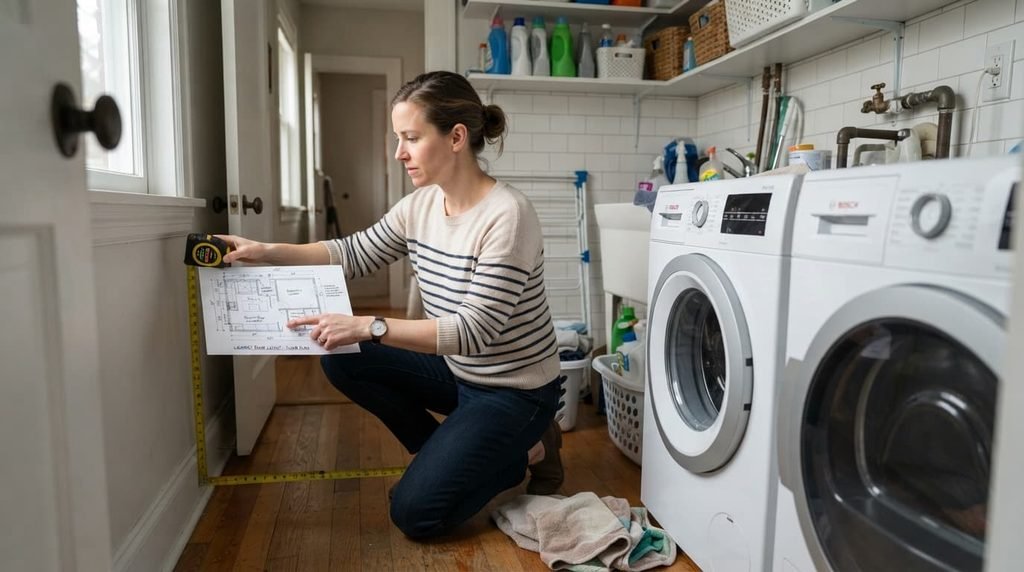
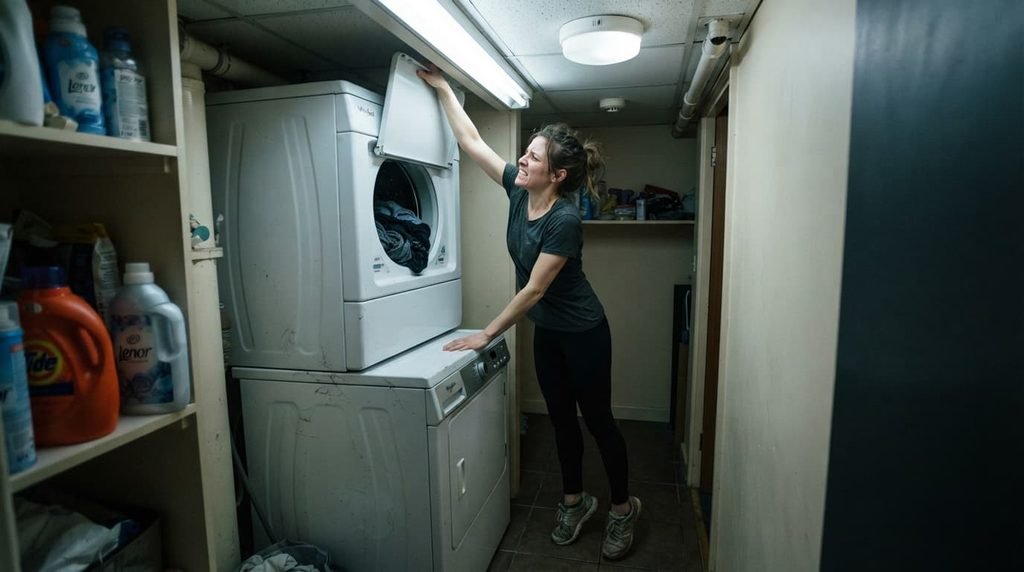
A second common mistake is not confirming ceiling height and top-unit accessibility before committing to a stacked configuration specifically, resulting in a top unit that’s genuinely uncomfortable or difficult to load regularly. Measuring carefully and physically testing the actual reach required before genuinely committing prevents this recurring daily frustration entirely, saving considerable regret later.
What changes if you’re genuinely renting rather than owning
If you’re renting your space specifically, confirm whether your specific lease permits the structural changes a stacked configuration sometimes requires – additional bracket installation, venting adjustments – since a side-by-side configuration typically involves less structural modification, making it a more straightforward choice for some rental situations regardless of your own underlying space preference between the two options.
Questions readers keep asking
Is a stacked configuration genuinely more difficult to load than a side-by-side setup?
The top unit specifically can genuinely be somewhat less comfortable to load for people of shorter stature or with mobility considerations, making this genuinely worth testing directly yourself if this factor truly matters to your particular household’s actual needs specifically.
Can I convert between stacked and side-by-side configurations later if my needs change?
This genuinely depends considerably on your own specific machines and available space – some units are genuinely designed to support either configuration flexibly, while others are considerably more limited, making it genuinely worth confirming your specific machines’ actual flexibility before assuming easy future conversion is genuinely possible.
Is it worth choosing stacked purely for the aesthetic of a cleaner, more minimal-looking laundry area?
Aesthetic preference alone is genuinely a valid personal consideration, though it’s worth weighing honestly against the genuine functional trade-offs covered above – independent access, counter surface, repair convenience – rather than letting visual preference alone override practical factors that affect your actual daily experience using the space regularly.
Does a stacked configuration genuinely cost more than side-by-side due to the stacking hardware required?
Often yes, quite somewhat – the additional stacking kit or bracket typically adds modest cost beyond the machines themselves, though this additional cost is usually modest relative to the overall investment in the machines and remains worth weighing against the space benefit gained.