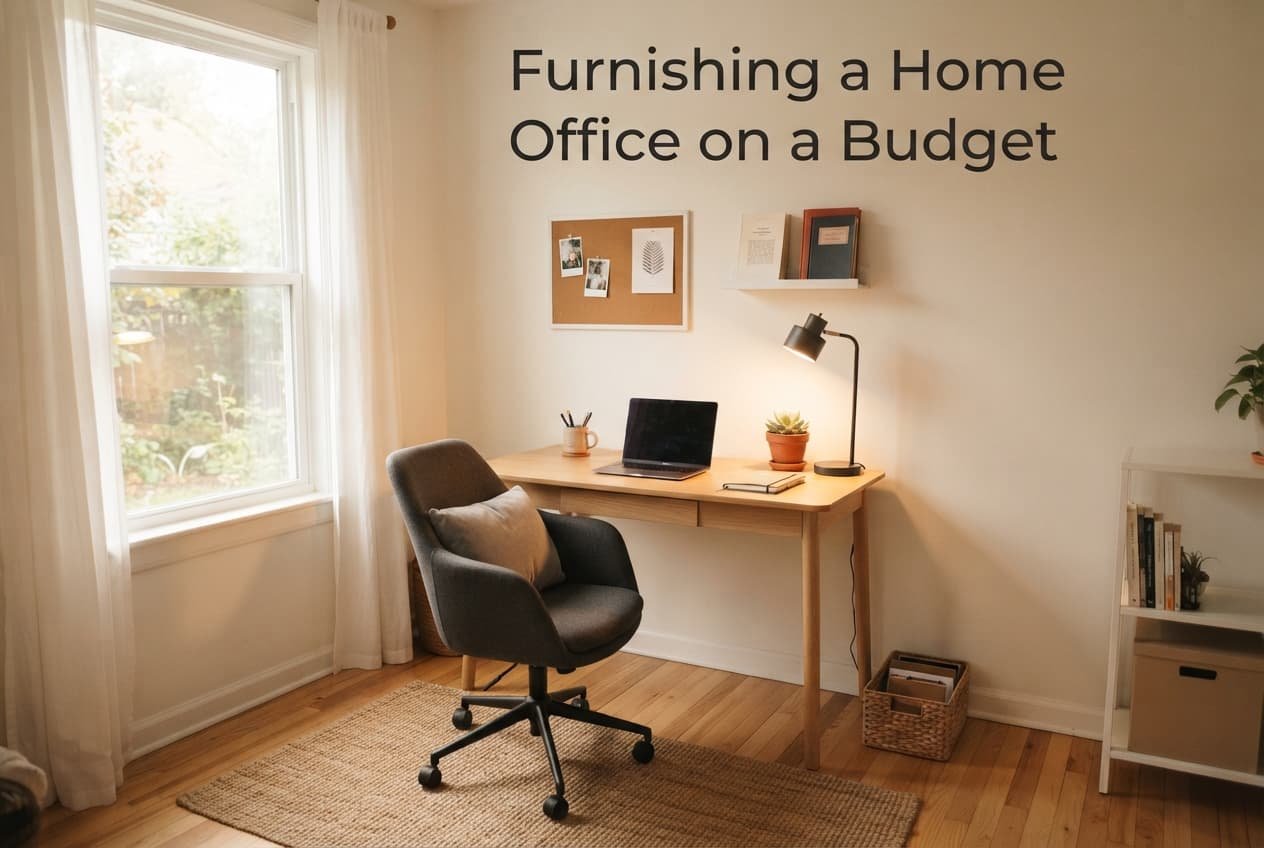
Furnishing a home office on a tight budget isn’t about finding the cheapest version of every item – it’s about identifying which single element genuinely deserves most of your spending, and which pieces can be genuinely modest without affecting your actual daily work. A home office with a limited budget spread evenly across every category often produces a weaker result than one built around a single deliberate investment.
What actually decides this
The deciding factor is which specific element most directly affects your physical comfort and ability to focus during actual extended work, not simply how much visible change any given purchase produces. A genuinely comfortable chair and adequate lighting directly determine whether you can work productively for hours, in a way decorative elements or an elaborate desk simply don’t.
This single distinction should guide nearly every purchase decision below: spend where daily physical comfort and focus actually depend on it, and treat everything else as a place to keep modest without meaningful compromise to how the space actually functions.
What to prioritise, in order
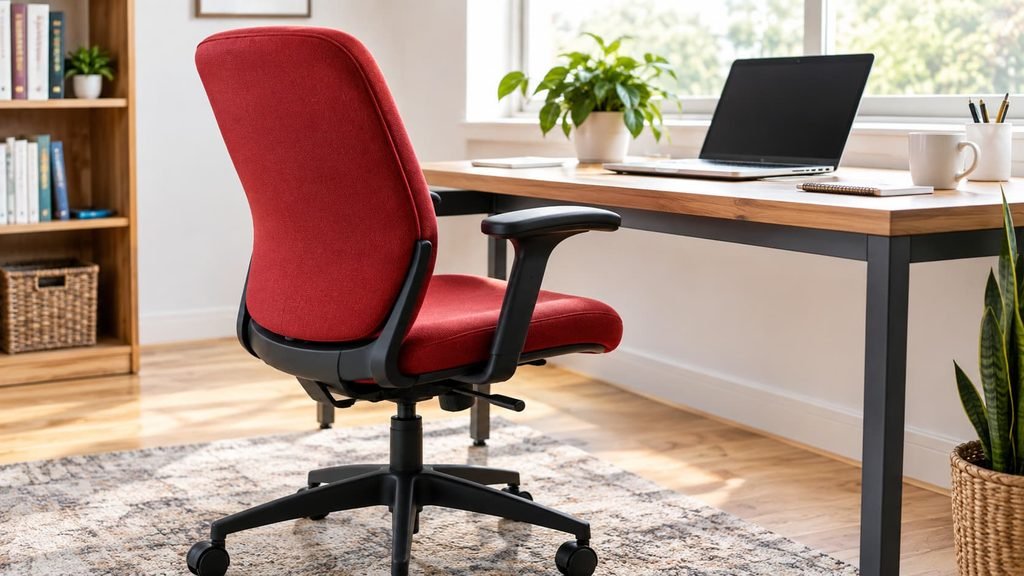
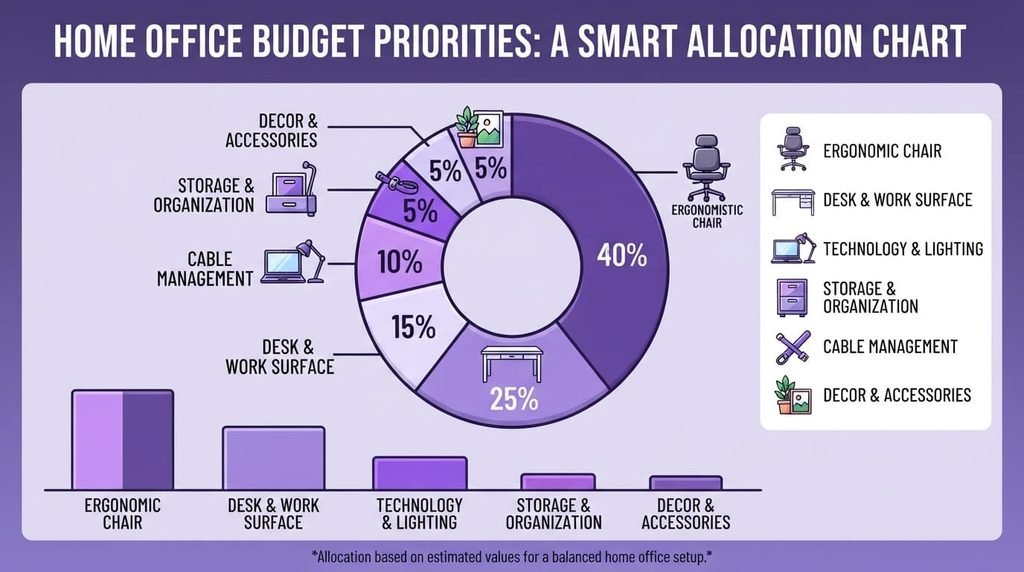
1. A genuinely comfortable, properly adjustable chair. This deserves the largest share of a limited budget, since you’ll spend more continuous hours in direct physical contact with this single item than with anything else in the room, and discomfort here compounds considerably across a full working day in a way no other purchase can offset.
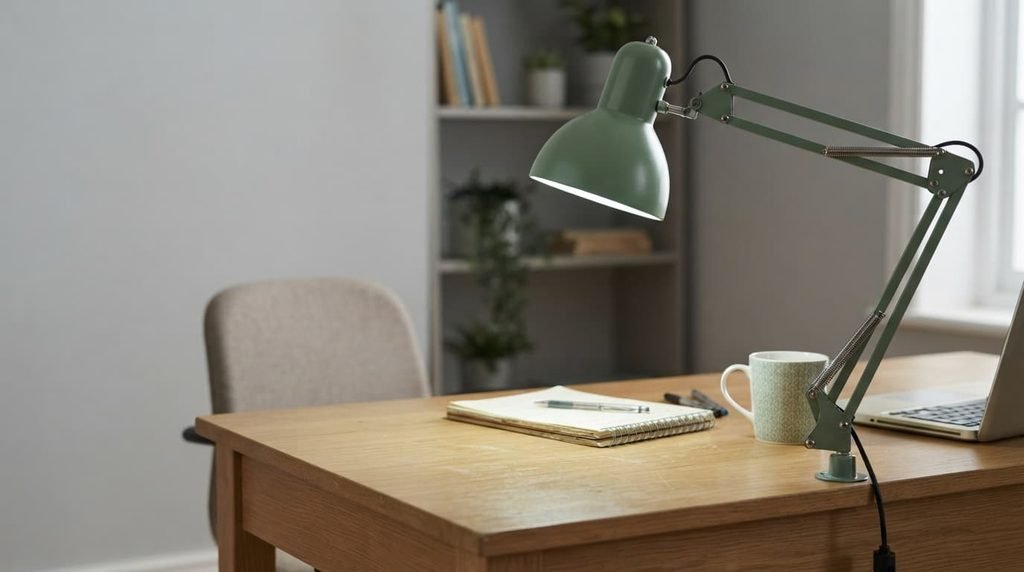
2. Adequate task lighting positioned specifically for your work surface. This is the second-largest justified expense, since proper lighting directly affects eye strain and alertness during extended screen or close work, mattering more for daily functionality than decorative lighting choices elsewhere in the room.
3. A desk surface genuinely sized for your actual equipment and tasks. A desk too small for your real daily needs creates ongoing friction regardless of how attractive it looks, so prioritising adequate size over an elaborate finish or premium material serves your actual daily use better for comparable spending.
4. Basic cable management to reduce visual clutter. A modest addition to the total budget that meaningfully reduces the subtle daily friction tangled cables in your direct line of sight can create, extending the calm, functional environment the space is meant to support.
5. Purely decorative elements – artwork, ornamental objects with no functional role. These belong last specifically because they carry the least weight in determining whether the space actually supports focused daily work; a modest option performs nearly as well as an expensive one here, making this the easiest category to genuinely economise on.
Where secondhand genuinely makes sense
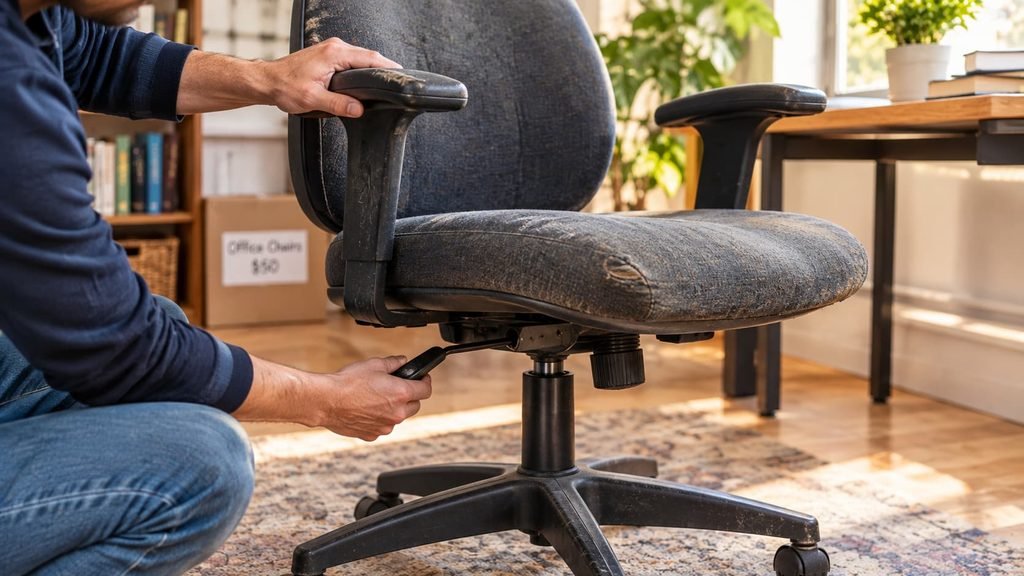
A solid, well-built office chair is a genuinely reasonable category to consider secondhand, since well-made frame and mechanism construction doesn’t meaningfully degrade with age the way cushion foam eventually does, and quality office chairs in particular are often available secondhand at considerably reduced cost. Checking the adjustability mechanisms and any visible wear on cushioning before committing covers most of the risk this specific category presents.
A desk is similarly a reasonable secondhand category, since a sturdy desk surface and frame typically show their condition clearly upon inspection, with little hidden risk compared to items where wear isn’t immediately visible. Task lighting is a weaker secondhand candidate specifically, since older lighting fixtures may not offer the same energy efficiency or bulb compatibility as current options, making the potential saving less clearly worthwhile relative to buying new.
What doesn’t matter as much as it’s made out to
A complete matched office furniture set – desk, shelving, and storage from the same collection – is oversold for budget furnishing specifically, and it’s one of the first things furniture guides recommend. A matched set often costs considerably more in total than assembling equivalent-quality individual pieces separately, since set pricing assumes you want and will use every included piece, when a modest home office frequently doesn’t need all of them.
An elaborate, visually striking desk gets far more budget attention than it deserves relative to the chair and lighting priorities above. A beautiful desk paired with an uncomfortable chair or inadequate lighting still produces a space that undermines focused work, while a plain desk paired with genuinely good seating and lighting supports daily productivity considerably better for comparable overall spending.
Matching the choice to your situation
If you’re furnishing entirely from scratch, prioritise the chair and lighting first and treat everything else as genuinely optional initially – a bare desk surface costs you nothing functionally, while an uncomfortable chair or poor lighting affects whether you can work productively from the very beginning.
If you already own a desk but the space still feels uncomfortable to work in, prioritise the chair and lighting changes specifically before replacing the desk itself, since these two elements often address the actual barrier to comfortable, productive work more directly and affordably than a desk replacement would.
What to walk away from
Any office chair you cannot test for genuine comfort before buying, or that offers no meaningful return option, should end your interest immediately regardless of how favourable the price seems.
Comfort is genuinely difficult to judge from a photograph alone, and an uncomfortable chair is one of the more expensive mistakes to make in this category, since it typically undermines your actual daily work despite the money spent, rather than the modest saving the initial low price seemed to offer actually paying off in practice.

The check before you commit
Before finalising any chair purchase, sit in it for the genuine length of time a typical work session actually takes, rather than judging comfort from a brief moment of sitting down in a shop or from product photographs alone.
This single check reveals actual comfort far more reliably than a brief impression does, since genuine discomfort often only becomes apparent after extended sitting, which is precisely the timeframe that determines whether the chair actually supports your real daily work.
Questions readers keep asking
What’s the single most impactful budget purchase for a home office?
A genuinely comfortable, properly adjustable chair deserves the largest share of your available budget, since it directly determines whether you can work comfortably for extended periods in a way almost nothing else in the room affects to the same degree.
Is it worth buying a matched furniture set to save money overall?
Not necessarily – matched sets often cost more in total than assembling equivalent-quality individual pieces, particularly if the set includes storage or shelving your specific space doesn’t actually need or have room for.
Should I prioritise the chair or the desk if I can only afford one right now?
The chair, in almost every case – it directly determines whether you’d actually be able to sit and work comfortably at all, while a temporary flat surface or even a makeshift arrangement can serve adequately in the short term for actual work. A comfortable chair with an improvised desk still supports functional work, while an uncomfortable chair with a beautifully chosen desk often doesn’t.
How can I tell if an office chair is genuinely comfortable before committing to buy it?
Test it for a genuinely extended period in your typical working position rather than relying on a brief impression or the price alone, since real discomfort often only becomes apparent after several minutes of actual, sustained use.