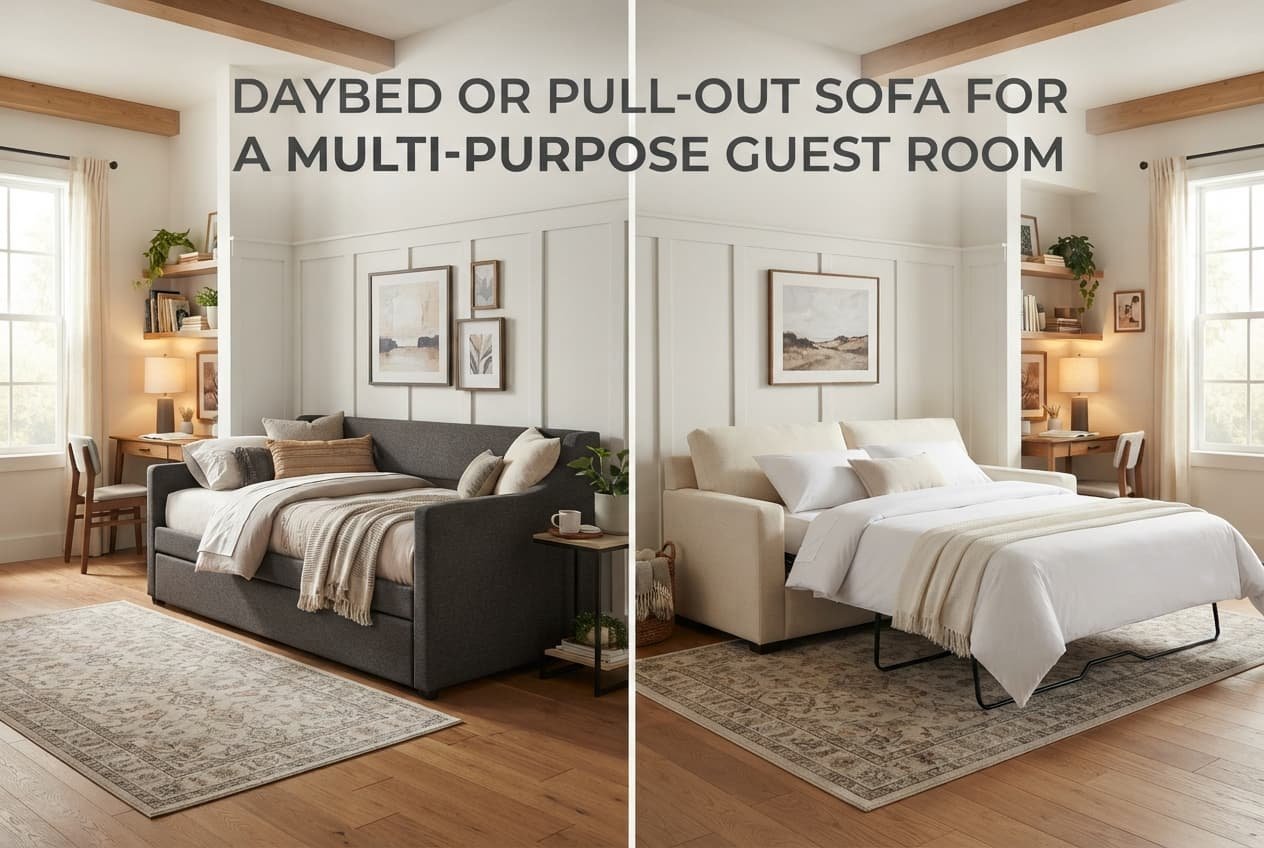
The right choice for a room genuinely serving double duty isn’t decided by which one looks more polished in a catalogue photo – it’s decided by how each one actually fits your space’s daily non-guest function and your own genuine guest frequency once it’s fully part of the routine. A daybed and a pull-out sofa solve genuinely different practical needs, and choosing based on trend alone misses what actually determines whether either one works well in a room that isn’t exclusively a guest room.
The one property that decides it
The deciding factor is how the room functions on the considerably more common days when nobody’s actually staying over, not simply which option sleeps a guest more comfortably in isolation. A daybed reads as genuine seating or a lounging spot during its non-guest daily life, while a pull-out sofa reads as a full sofa, serving a room’s primary function more convincingly when it isn’t currently doubling as a bed.
This genuinely matters because a room’s daily function matters considerably more than its occasional guest function for most multi-purpose spaces – the furniture genuinely sits in its non-bed state far more often than guests actually stay, making that daily state the considerably more consequential consideration for most typical households.
Head to head
| Daybed | Pull-Out Sofa | |
|---|---|---|
| Daily seating comfort | Casual, lounging-style | Full sofa seating |
| Sleep surface for guests | Single-width typically | Often double-width |
| Setup effort for guests | Minimal | Requires unfolding |
| Visual bulk in the room | Lower | Higher |
| Suited to a home office | Often better | Can feel bulkier |
| Typical guest comfort | Varies by mattress | Varies by mechanism |
The row that surprises people most is guest comfort specifically. Many assume a proper sofa bed mechanism automatically sleeps better since it’s marketed as a genuine bed, but pull-out mattresses are often notably thinner and firmer than a daybed’s own dedicated mattress, meaning the “real bed” option doesn’t always sleep better in practice.
Where a daybed wins
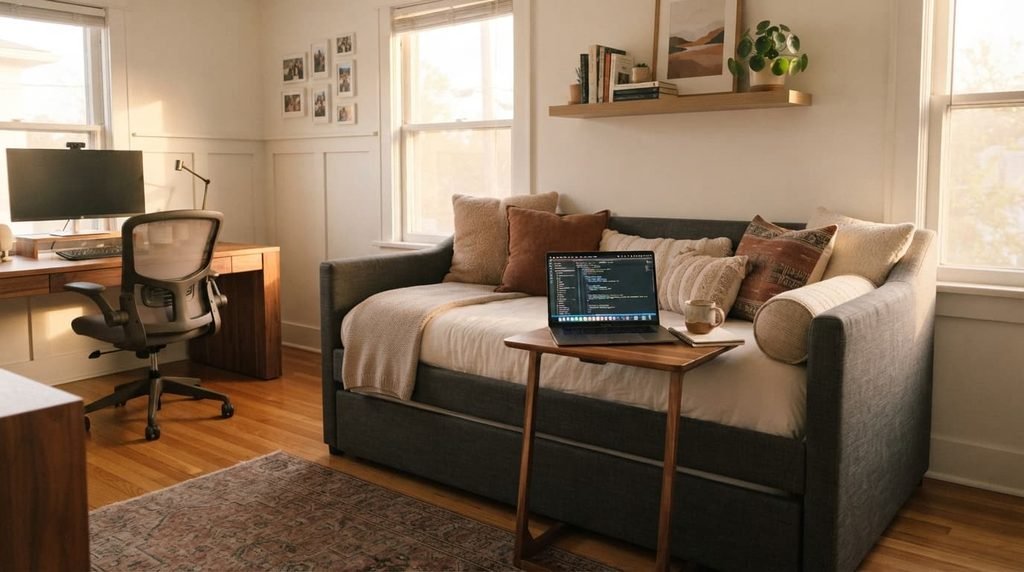
Anyone whose room genuinely serves as a home office, reading nook, or similar daily-use space benefits from a daybed’s more casual, lower-bulk presence, since this directly addresses daily function in a way a bulkier pull-out sofa’s mechanism-heavy frame doesn’t match as comfortably. The unglamorous reason: a daybed also requires no setup effort for guests specifically, since it’s already a genuine sleep surface without needing to be unfolded, which matters more than it might initially seem for spontaneous or last-minute guest situations.
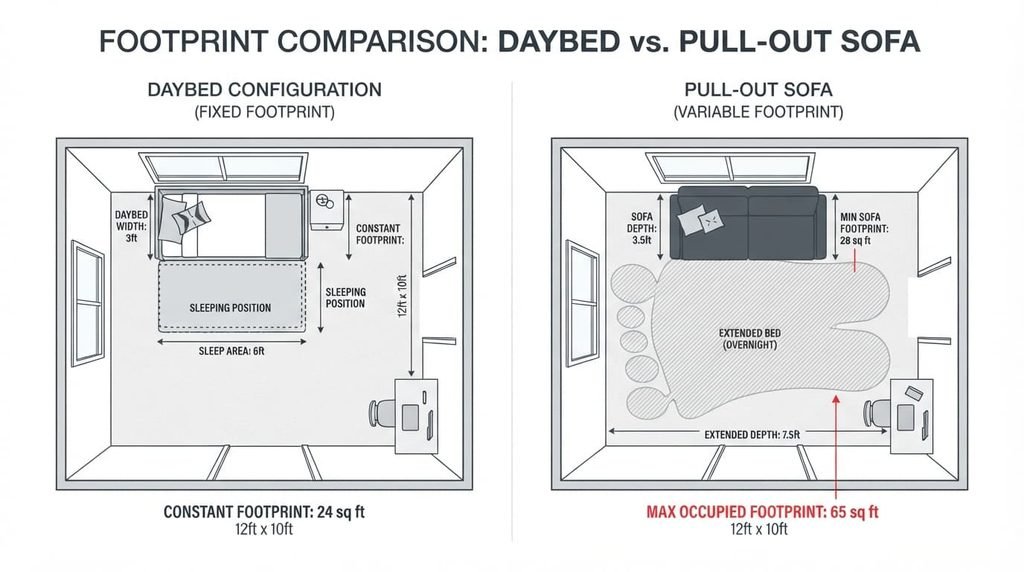
Anyone genuinely limited on floor space also benefits from a daybed’s typically more compact footprint in a related way, since a pull-out sofa’s mechanism generally requires more overall depth than a daybed’s simpler frame, mattering more in a genuinely tight multi-purpose room than in a more spacious one.
Where a pull-out sofa wins
Anyone whose room genuinely needs to read as a proper, comfortable sofa during its considerably more frequent non-guest daily life benefits from a pull-out’s authentic sofa seating, since this directly addresses daily comfort in a way a daybed’s narrower, more casual seating format doesn’t match as fully for genuine lounging or entertaining. The unglamorous reason: a pull-out sofa also typically sleeps two guests on a double-width surface, which matters more than it might initially seem for households genuinely hosting couples rather than single guests regularly.
Anyone genuinely prioritising the room looking convincingly like a real sofa when guests aren’t present also benefits from this same authenticity in a related way, since a pull-out sofa’s cushion arrangement and back support read more like conventional seating furniture than a daybed’s more distinctly bed-like silhouette typically does.
When neither is right
Choosing based purely on which option looks more impressive when guests actually arrive, without genuinely weighing the room’s considerably more frequent daily, non-guest function, is worth ruling out regardless of which option you’d otherwise prefer.
A pull-out sofa that photographs beautifully made up as a bed for guests but feels genuinely bulky and uncomfortable as everyday seating sacrifices daily function for an occasional guest impression, while a daybed chosen purely for its daily seating appeal without confirming its actual sleep comfort disappoints guests specifically on the considerably rarer occasions the room’s guest function actually matters.
How to decide in thirty seconds
If your room genuinely serves daily non-guest function most of the time, choose a daybed. Its lower bulk and casual comfort directly address daily use in a way a pull-out’s bulkier frame doesn’t match as comfortably.
If your room genuinely needs to read as a proper sofa and you regularly host couples, choose a pull-out sofa. Its authentic seating comfort and double-width sleep surface directly address both priorities in a way a daybed’s narrower, more casual format doesn’t fully cover.
What changes the answer later
Your room’s daily function genuinely shifting – from a home office to a considerably more social, entertaining-focused space, for instance – is worth reconsidering the choice at, since the daily-use priority driving your original decision may no longer apply once the room’s actual daily function changes.
Your guest frequency or typical guest composition genuinely changing – hosting couples considerably more often than previously, for instance – is also worth reconsidering the choice at, since a daybed’s single-width sleep surface may no longer adequately serve a guest pattern that’s shifted toward pairs rather than individuals.
What people get wrong when making this choice
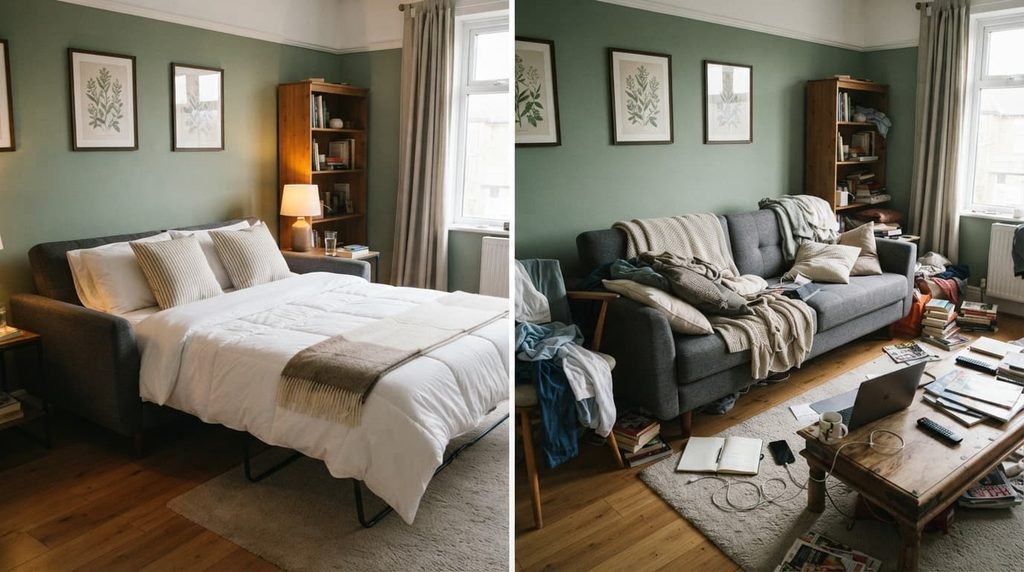
The most common mistake is prioritising how impressive the furniture looks specifically during the rare moments guests are actually present, over how it genuinely functions during the room’s considerably more frequent daily use. Since most rooms spend far more days serving their primary daily function than hosting guests, weighting the decision toward daily comfort and appearance usually serves a household better long-term than optimising purely for occasional guest impressions.
Questions readers keep asking
Is a daybed genuinely comfortable enough for a full night’s sleep, or only brief lounging?
A daybed with a genuinely proper mattress, rather than a thin decorative cushion, can provide comfortable full-night sleep for most guests, though checking the specific mattress quality matters more here than simply assuming the daybed format alone guarantees adequate comfort.
Do pull-out sofa mechanisms genuinely wear out or become uncomfortable over time?
Mechanisms can genuinely develop noise or stiffness with age and repeated use over time, and mattress thinness is often a genuine, ongoing comfort limitation rather than something that specifically worsens with age alone, making mattress quality genuinely worth checking carefully at the actual time of purchase.
How do I know if my room’s daily function genuinely outweighs its guest function in importance?
Counting the actual number of days per typical month the room serves its daily function versus hosting an actual guest typically makes this comparison genuinely clear – for most households, daily use vastly and consistently outnumbers actual guest nights, making daily function the more consequential factor to weight more heavily in this particular decision.
Is it worth adding a trundle option instead of either a daybed or pull-out sofa?
For rooms genuinely needing to occasionally sleep two separate guests without the double-width footprint a pull-out sofa genuinely requires, a trundle addition to a daybed can combine some genuine benefits of both approaches within a comparable overall footprint size.