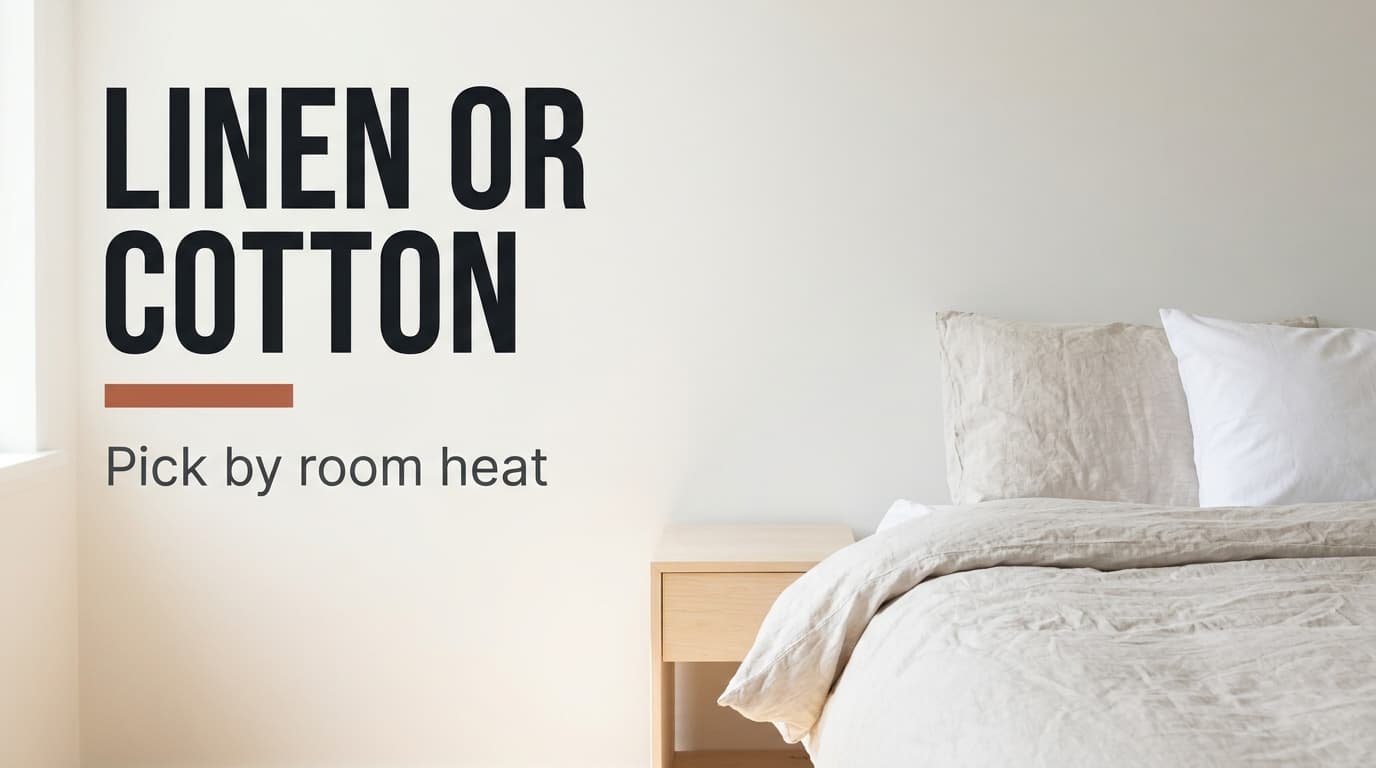
Linen or cotton bedding is mostly a choice between airflow and neatness. Linen is woven loosely from uneven yarn. Air moves through it, and it crumples whenever you touch it. Cotton percale is woven tight and even. That makes it smooth and crisp. The comparison below weighs both against one bedroom: a Zwolle terrace with a roof that holds the day’s heat and the main bed, with a width of 140 cm and a length of 200 cm. We begin with what each set weighs and end with a quick rule to pick by. All figures are assumed. Run the sums again for your own bed and room.
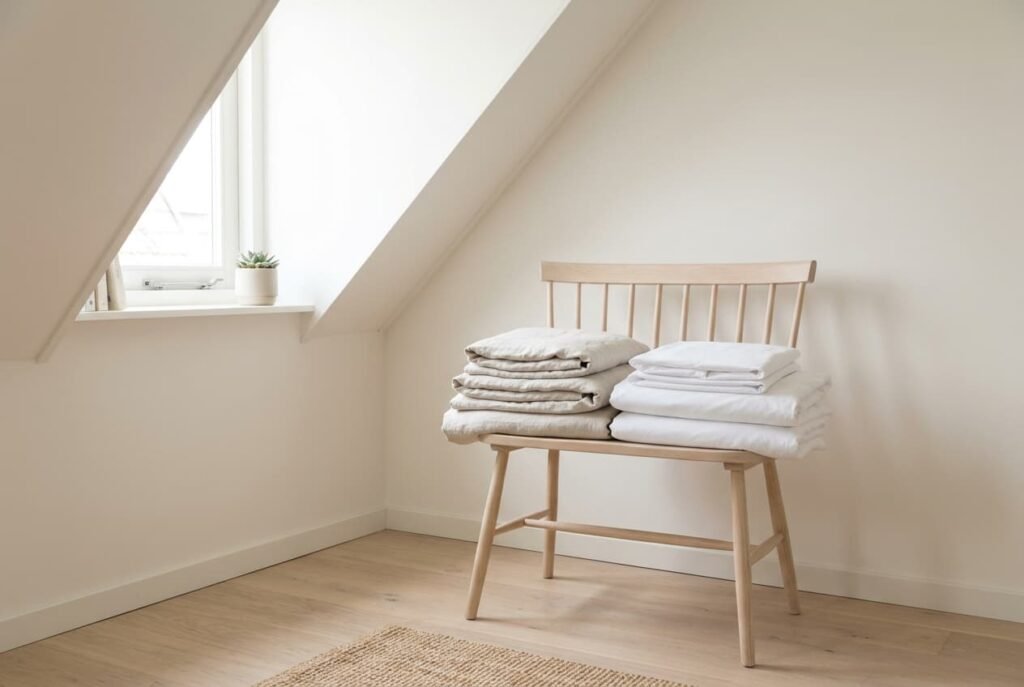
Weighing Linen or Cotton Bedding for a Warm Dutch Bedroom
Weight is the easiest place to begin, and it affects drying time and ironing effort as well as the hang on the line. The duvet cover measures 200 by 200 cm. It has two faces and uses 2 × 2.0 × 2.0 = 8 m² of cloth. A fitted sheet adds about 3.6 m², and two pillowcases at 0.75 m² each add 1.5 m². One set therefore covers 13.1 m².
Take 150 g/m² for linen and 110 g/m² for cotton percale. The linen set weighs 13.1 × 0.150 = 1.97 kg and the cotton set 13.1 × 0.110 = 1.44 kg. That leaves linen 0.53 kg heavier, or 37% more.
Weight says nothing about comfort, though.
What matters is the spacing of the yarns. Linen thread is thick in places and thin in others. It leaves small channels that air and moisture travel through. Percale yarn is even and packed, which keeps the channels narrow.
The question that decides it is how hot the room gets set against how much creasing you’ll tolerate. A hot room points to the loose weave. A fussy eye points to the flat cloth. Both are fair, and the next sections put each to the test.
Two Fabrics Side by Side
Each line below applies to the room above. You can test every one with a set of scales or a thermometer, and a hand pressed on the cloth settles the rest. Take ten seconds with each fabric and watch what the cloth does when you lift your palm away. Linen holds the print of your hand, while percale springs back almost flat.
| Point | Linen | Cotton percale |
|---|---|---|
| Weight of one set (13.1 m²) | 1.97 kg | 1.44 kg |
| First touch | slightly rough, loosens as it’s washed | smooth and crisp from the start |
| Air through the weave | open, passes more | tight, passes less |
| Creasing | crumples at once and stays crumpled | creases lightly and presses flat |
| Drying on a line | usually quicker | usually slower |
| Ironing | optional, the rumpled look is the point | a quick press gives a crisp finish |
| Lint in the first washes | some, then it settles | very little |
Judge by the line that affects you most. A single feature that irritates you each morning counts for more than six that you never notice. Cross out the rows that don’t matter in your home and the answer is often already visible. The remaining rows then show which fabric fits the household you actually have.
Where Linen Wins in a Warm Upstairs Bedroom
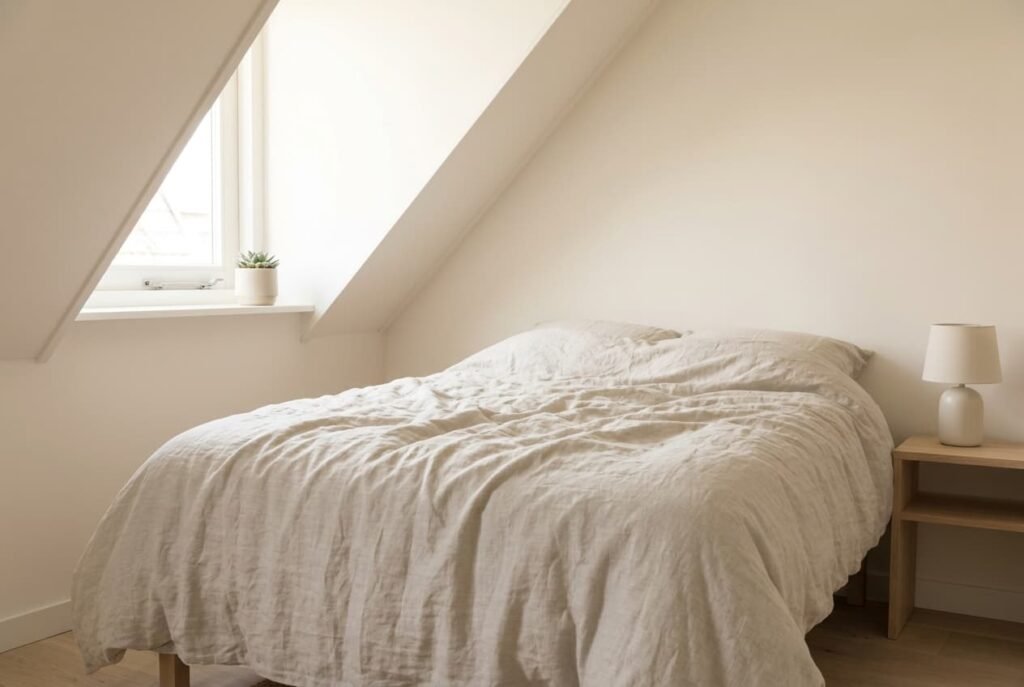
Linen belongs in a room beneath a roof that stays warm after dark. A choice of linen or cotton bedding matters most there. Say a thermometer reads 26 °C at bedtime in July. The open weave lets air pass through the cloth and carries moisture off the skin. A bed made with linen then feels less clinging than one made with tight cotton cloth at that temperature.
It also tends to outlast cotton. Changing the set every 14 days means 26 changes a year, and with two sets each one meets the machine 13 times a year, or 65 times in five years. Linen fibres are long and strong, and the cloth softens with those washes instead of thinning.
The drawbacks are practical. At 1.97 kg a set is heavier to lift onto the line. It crumples as soon as you handle it, and some households never warm to that look. The first washes can feel rough and shed a little lint into the drum. Give the fabric several before you judge it.
Where Cotton Bedding Beats Linen
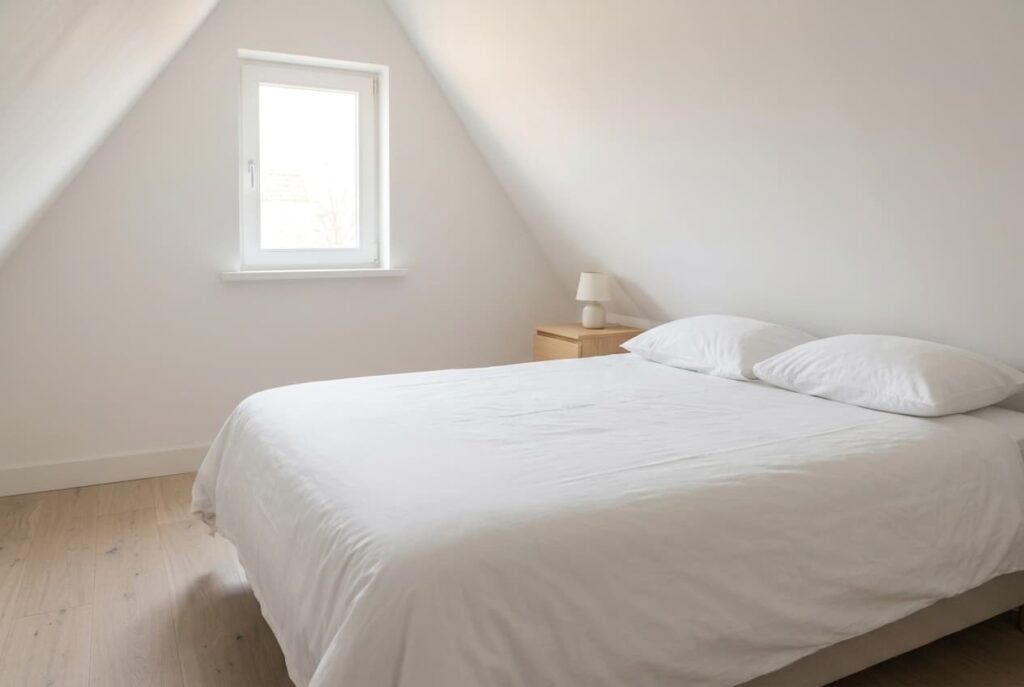
Within linen or cotton bedding, cotton suits a cool room and a person who likes a neat, flat bed. The plain tight weave lies smooth and feels crisp on the skin. A set of 1.44 kg is lighter to wash and hang, and two sets add up to 2.88 kg in a drum that holds 7 kg.
Familiarity helps too. Most households already know how cotton behaves in the machine and on the line. The first week brings no surprises. It also presses easily. A few minutes with an iron turns a creased pillowcase smooth, and that counts if the bed is the first thing guests see through the door. A plain white set goes with nearly any wall colour as well.
The cost is airflow. The tight weave passes less air. At 26 °C the same bed feels closer and warmer. Thin percale can also pill after many washes, with tiny balls of fibre forming where the cloth rubs. Run a hand over an old pillowcase to see whether yours has started.

A Third Route: Keep the Bedding You Already Own
Before buying linen or cotton bedding, log the bedroom temperature at bedtime for seven nights. If it never rises above 22 °C, the cotton you have may be quite adequate, and you save the full cost of a new set. A cooler wash costs nothing and reveals whether the cloth still feels fresh. Swapping a thick winter duvet for a light summer one also changes the heat of a bed far more than the cover does.
If the room does run hot, trial the fabric on a small scale. Two pillowcases make up 1.5 m² of the 13.1 m² set, about 11% of the cloth. Two pillowcases test the fabric using about one ninth of the cloth, and seven nights of your own warm weather teach more than any product description.
The fitted sheet gives a second trial.
It takes 3.6 m², that’s 27% of the whole set, and it touches the body all night. Try it only if the pillowcases have won you over.

Which One to Pick
Your thermometer settles it. If the room passes 24 °C on summer nights and creases don’t bother you, choose linen. It passes more air and survives 65 washes. No iron is needed once you accept the look. A rumpled bed beats a hot one. Expect to fold the sheets loosely and leave them be.
If the room stays cool and you want a flat, crisp bed, choose cotton percale. It weighs 1.44 kg against 1.97 kg and presses flat in minutes. The bed will look tidy every morning for the effort of one quick press, and the lighter set makes laundry day shorter. Airing the room on dry days keeps either fabric smelling clean.
Whichever you pick, buy one pair of pillowcases first and use them for a fortnight. Judge the cloth at the temperature your room really reaches, not the one you hope for. A fabric that feels pleasant at 20 °C in the shop can behave quite differently at 26 °C under your roof. If you find yourself dodging the iron or kicking the cover off, change the fabric. The room and your routine will settle most of it.
Questions Readers Keep Asking
Which one lasts longer?
Linen usually lasts longer because its fibres are long and strong, and it softens with washing. Cotton percale lasts well too, though thin cloth can pill. Rotating two sets spreads the wear to 13 washes each a year, which helps either fabric reach its full life.
How should I wash and dry it?
Wash at a moderate temperature and fill the drum no more than two-thirds, which lets the cloth move freely. Linen dries fast on a line and is best taken in slightly soft and shaken out. Percale dries a little slower and presses flat if you iron it while still faintly wet.
Which suits a hot loft room or a child’s room?
A hot loft room suits linen because the open weave passes more air. A child’s room usually calls for the opposite: percale that washes often. It dries flat on an airer without fuss. Pick by temperature first and by your washing routine second.