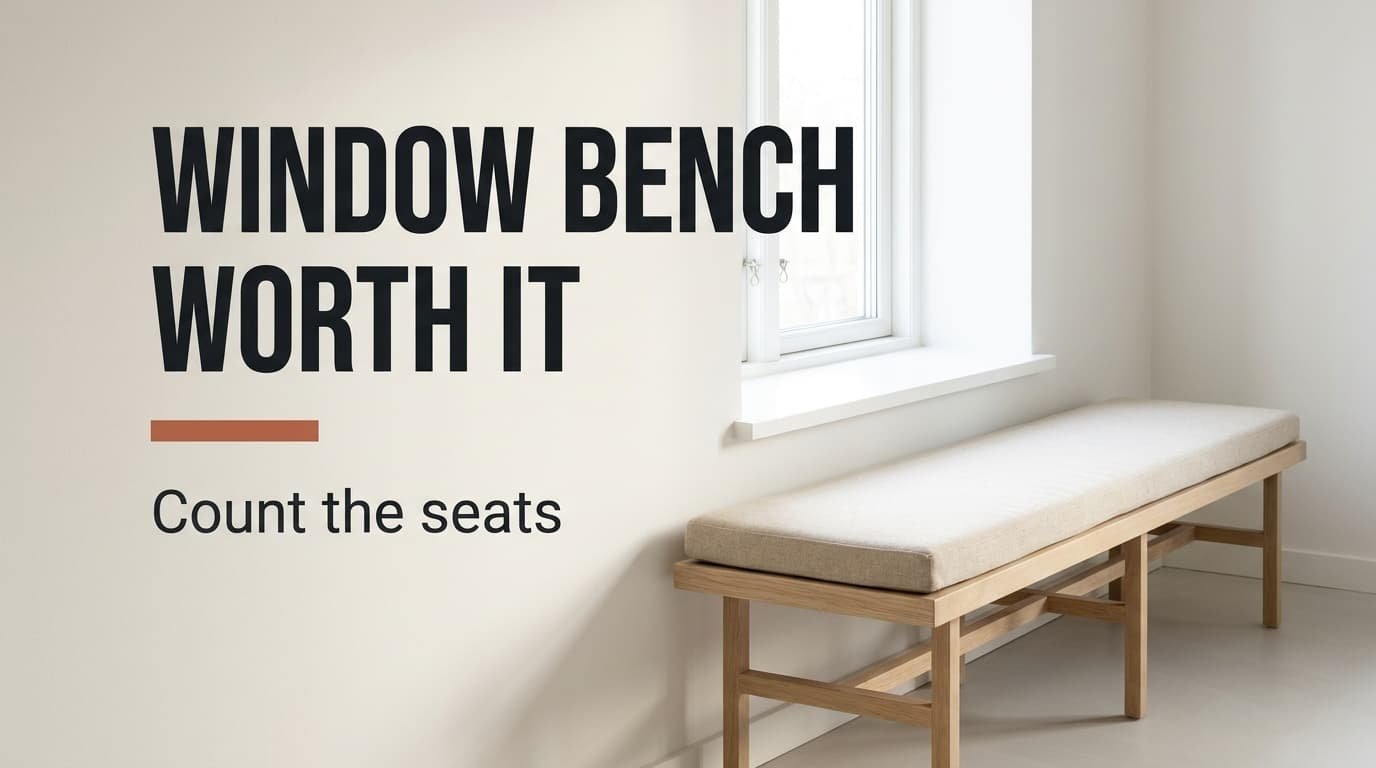
A window bench in a small Dutch lounge is a low seat that runs along the glass where an armchair used to stand. More rented flats seem to have one these days, although this page holds no sales figures to size the trend. It argues with measurements only, counting the seats the bench adds against the floor it spends. Our sample lounge is 3.4 m by 4.3 m, which makes 14.62 m². Its window is 220 cm wide and sits above a radiator. All numbers are assumed round figures, and your own tape measure is the final test.
Where a Window Bench in a Small Dutch Lounge Came From
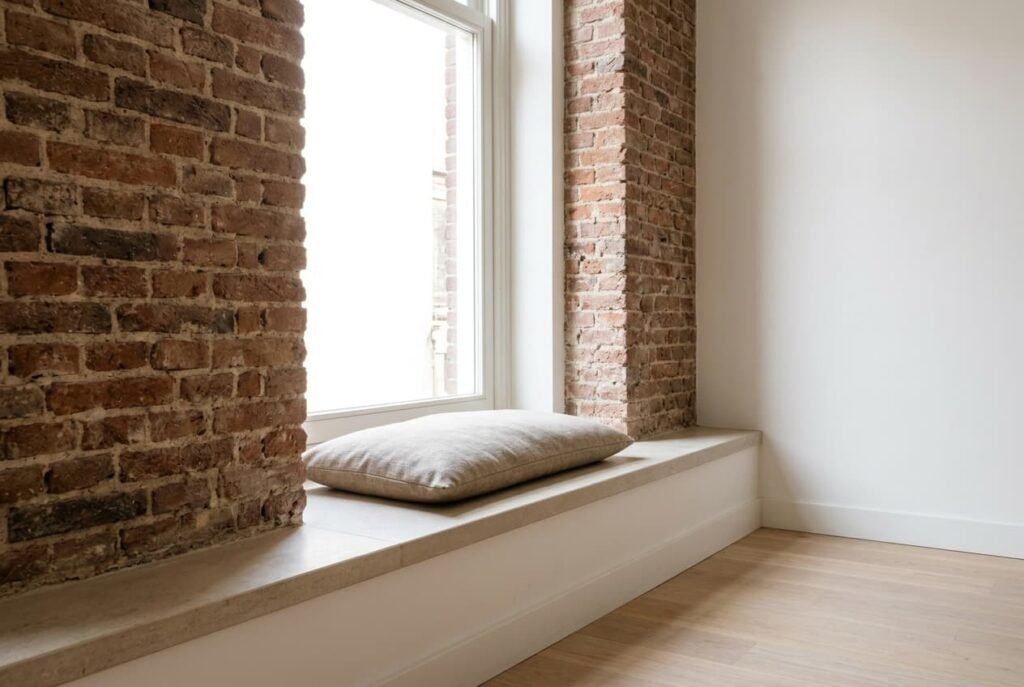
Older Dutch brickwork was thick. A wall of 30 cm or more left a recess deep enough to sit in, and a cushion on the sill turned it into a seat. Nobody designed it; the masonry produced it.
Thin modern walls removed the recess. A sill 10 cm deep carries a plant and nothing more, and the seat survived only as furniture placed against the wall beneath the glass. Radiators moved under the same window for another reason, because they met the cold air that slides down a pane. In many flats the pipes still run to that spot, and the radiator can’t move far.
The bench and the radiator now compete for one strip of wall.
Three pressures keep the idea alive. Lounges are smaller. Each piece of furniture must therefore do two jobs. The window wall is usually the only empty one. People also like daylight where they read or drink coffee. A bench answers all three, and it asks for something back in return. The sections below count that cost.
What Changes in a Small Dutch Lounge With a Window Bench
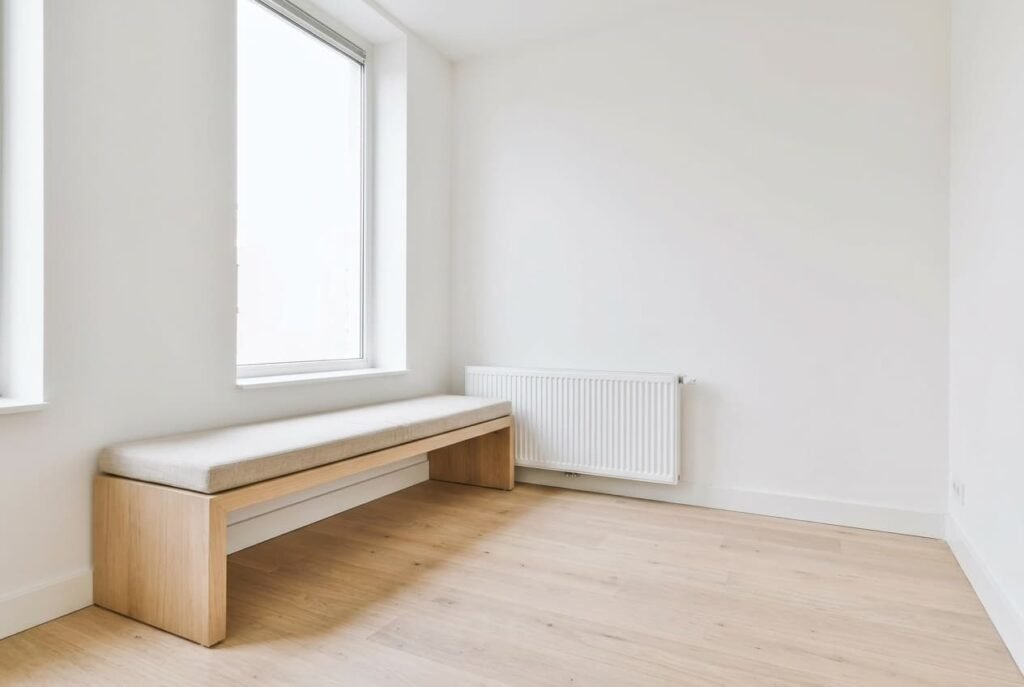
Swap the window armchair for a bench of 40 × 220 cm, its seat set 45 cm up. Three things change for a window bench in a small Dutch lounge, and each can be measured.
Seating moves first. The armchair occupies 80 × 85 cm, which is 0.68 m², and seats one person. That is 1 ÷ 0.68 = 1.5 seats for every square metre. The bench occupies 0.40 × 2.20 = 0.88 m² and seats four people at 55 cm each. That gives 4 ÷ 0.88 = 4.5 seats per square metre. The same floor now offers three times as many seats, 4.5 against 1.5, though only the armchair has a back.
Floor moves second. The bench claims 6% of the lounge and the armchair 4.7%, a difference of 0.20 m². Our window wall of 340 cm still keeps 120 cm free beside the bench, and the 430 cm length leaves 390 cm in front of it for walking.
View moves third. Eye level for a seated adult is roughly 75 cm above the seat, giving 120 cm on the bench. The sill stands 85 cm up and so lies 35 cm below your eyes and brings the street into sight over it.
Reaching the window gets harder as well. A handle at 105 cm ends up 40 cm further from you once the bench stands in front. Opening it means kneeling on the seat or leaning across.
The bench has no back and no arms. Sixty minutes on it is less comfortable than sixty in an armchair, and cushions only soften the seat a little.
Who a Window Bench Suits, and Who Should Keep the Armchair
Households that sit together gain most. Four places in a row serve children doing homework or two adults with a laptop each. A bench also helps a lounge where the sofa seats three and visitors often make five.
Anyone with stiff knees should think twice as well, because rising from 45 cm takes more effort than rising from 50 cm, and a firm cushion adds only a few centimetres. A reader living alone gets little from it. Anyone who reads by the window for long stretches wants a back and arms, and an armchair provides both on 0.68 m². The bench offers four seats you may never fill.
The radiator decides a lot. Ours is 60 cm tall and sits flush with the wall. Placing the 45 cm seat in front of it hides 45 cm of the panel and blocks the warm stream rising from it. The seat must stand clear of the panel, with a slatted front that is at least half open and a gap behind it. Otherwise the bench takes heat from the room and the glass above stays cold.
Windows that open inward need clearance too. A casement leaf swings out above the seat. Keep cushions and plants low there. Where you rent, the landlord must agree to any fixing, which makes a bench on its own legs the safer option.
Is the Switch Worth Making in Your Room
Our verdict: choose a window bench in a small Dutch lounge only when at least three people will sit there regularly. In our room that happens on evenings with guests and not on quiet ones, which makes it a mild yes. The room gains three seats for 0.20 m² and loses nothing beside the bench.
With fewer than three regular sitters, the bench becomes an oversized shelf. Keep a chair that already works. Put your effort into something you’d use every day, and don’t buy furniture for guests who rarely come.
A short count settles it. Note how many times in a month four people end up in the window.
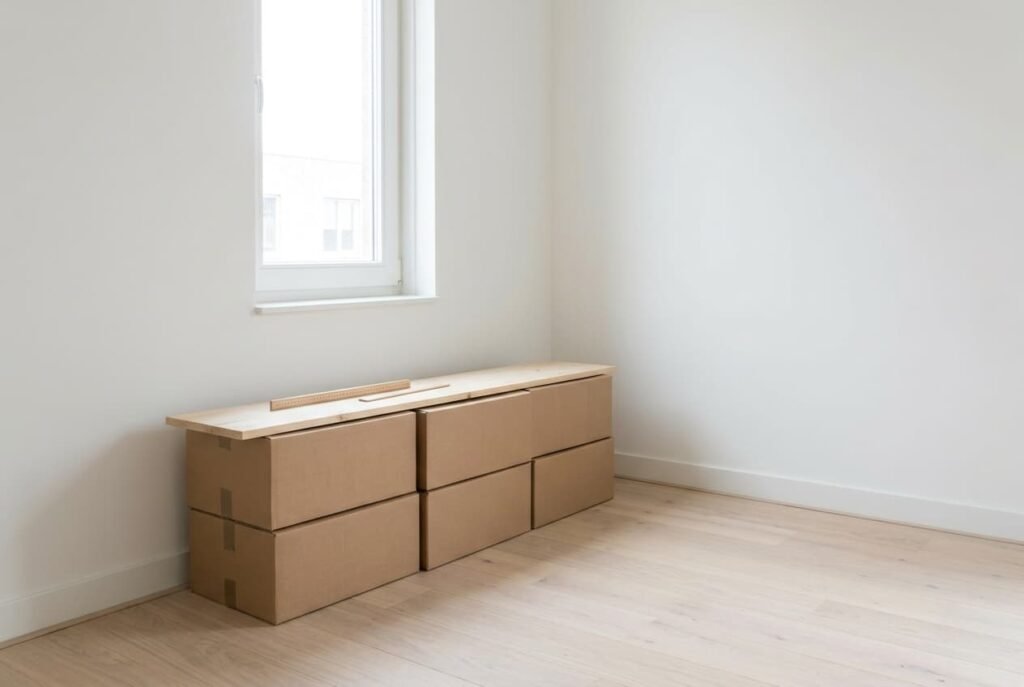
Twice or fewer means the floor is better left alone, while weekly use means the bench has earned its place. Between those lies a judgement call, and a trial with boxes costs little.
The Version That Will Date Fastest
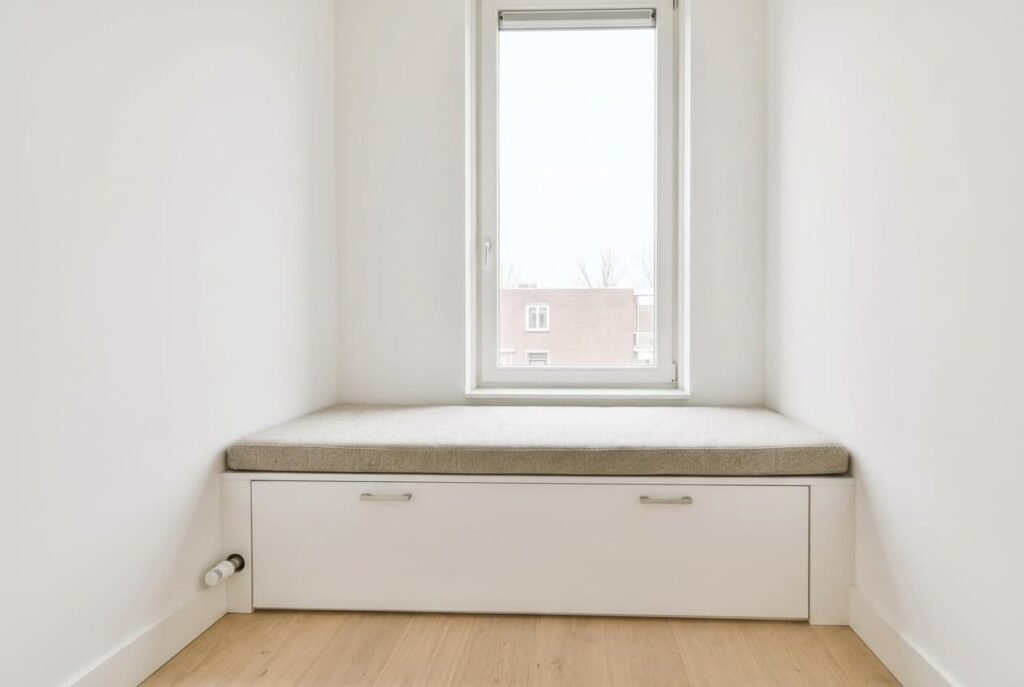
The extreme form is a built-in box with a 50 × 45 cm cross-section, running wall to wall above the radiator with a solid top and drawers. It claims 0.50 × 2.20 = 1.10 m², or 7.5% of the lounge. The solid top traps the radiator’s heat under the cushion, and the closed front hides the valve. Nobody can bleed the panel without lifting the box.
It also fixes the wall for good. Rearranging the lounge later means working around a unit that can’t be moved, and a later tenant gets a repair job.
The gentler version stands on legs and keeps its front open, with the valve in reach. It costs less floor and travels with you. An armchair can replace it in an afternoon. A built-in unit also hides the skirting and any slow leak from the radiator pipe, which makes small faults expensive.
Dust gathers under drawers and behind a closed front.
How to Try It Without Committing
Stack boxes or lay a spare plank across two crates to reach a seat height of 45 cm, and place the stack where the bench would go. Use it for a week at the times you’d really sit there. Notice whether you lean back, whether the window still opens and whether you can reach the radiator valve.
Test the heat too. Hold a hand above the radiator with the stack in place, then compare with the same spot when the stack is moved away. If the warm air feels weaker, widen the gap first. Buying comes later, and 5 cm behind the seat is a fair starting figure.
A window bench in a small Dutch lounge is a trend with a sound reason behind it. Keep the seat count and the floor taken on one sheet, with the gap behind the seat. Try the stack first. If three people use it, the idea earns its floor. If it turns into a coat stand within days, the armchair stays.
Questions Readers Keep Asking
Should I replace my armchair with a bench?
Only if three or more people often sit at the window. A working armchair has years left and gives support to your back and arms that a bench can’t. With fewer sitters, keep the armchair. The effort can go elsewhere in the room.
Does a window bench suit a family with young children?
Often, yes. Children like a low seat with a view, and four places in a row suit homework or a game. A slatted front also keeps small hands away from the radiator valve. Keep the front slats close enough that small fingers can’t get stuck, and avoid sharp corners on a seat at 45 cm.
How long will a window bench last?
The frame can last for decades if it is solid timber or good board and stays away from wet. The cushion wears first and can be replaced without touching the frame. Taste in shapes may shift, but a plain bench on legs still works as a seat.