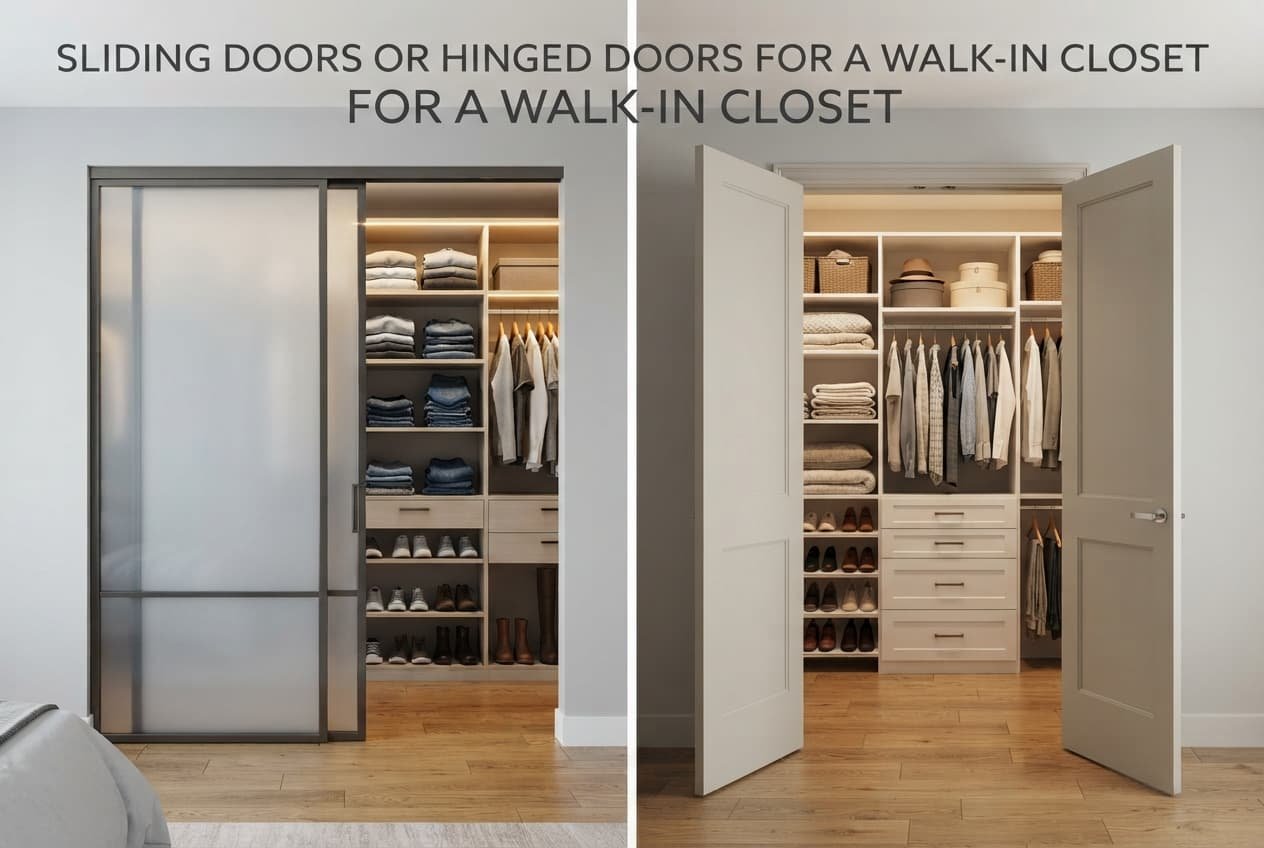
The right choice for a genuinely walk-in closet isn’t decided by which one looks more impressive in a showroom – it’s decided by how each one actually fits your specific room’s own dimensions and your household’s genuine daily access habits once it’s genuinely part of the routine. Sliding doors and hinged doors solve genuinely different practical needs, and choosing based on trend alone misses what actually determines whether either one works well in your specific space.
The one property that decides it
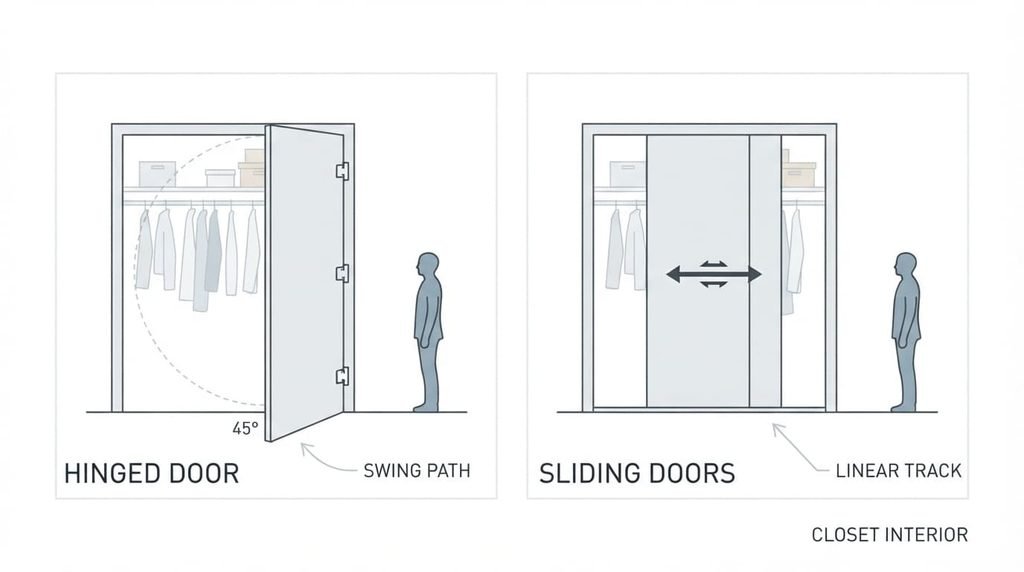
The deciding factor is genuinely how much floor clearance your closet’s surrounding space actually has available, not simply which door style is currently more popular overall. Sliding doors genuinely require absolutely no swing clearance at all, while hinged doors need a genuine arc of open floor space to swing freely through, which a tight surrounding area may not comfortably accommodate at all.
This genuinely matters because a genuinely tight closet surrounding area makes this particular trade-off considerably more consequential than it would ever be in a spacious one – choosing hinged doors in a constrained space can create genuine daily friction navigating around the swing path, while sliding doors genuinely sacrifice full simultaneous access to the entire closet opening that hinged doors otherwise genuinely provide in comparison.
Head to head
| Sliding Doors | Hinged Doors | |
|---|---|---|
| Floor clearance needed | None | Genuine swing arc required |
| Full opening access at once | No, partial | Yes, full opening |
| Typical visual weight | Lower | Varies by design |
| Ease of adding a mirror | Often easier | Also straightforward |
| Sound when closing | Generally quieter | Can be louder |
| Upkeep needed | Track needs occasional cleaning | Hinges need occasional care |
The single row that surprises most people the most is full opening access specifically. Many assume sliding doors are simply the modern upgrade with no real trade-off, but a sliding door only ever exposes part of the closet opening at any given moment, while a hinged door swung fully open reveals the entire space simultaneously, which genuinely matters more than it might initially seem when actually searching for a specific item.
Where sliding doors win
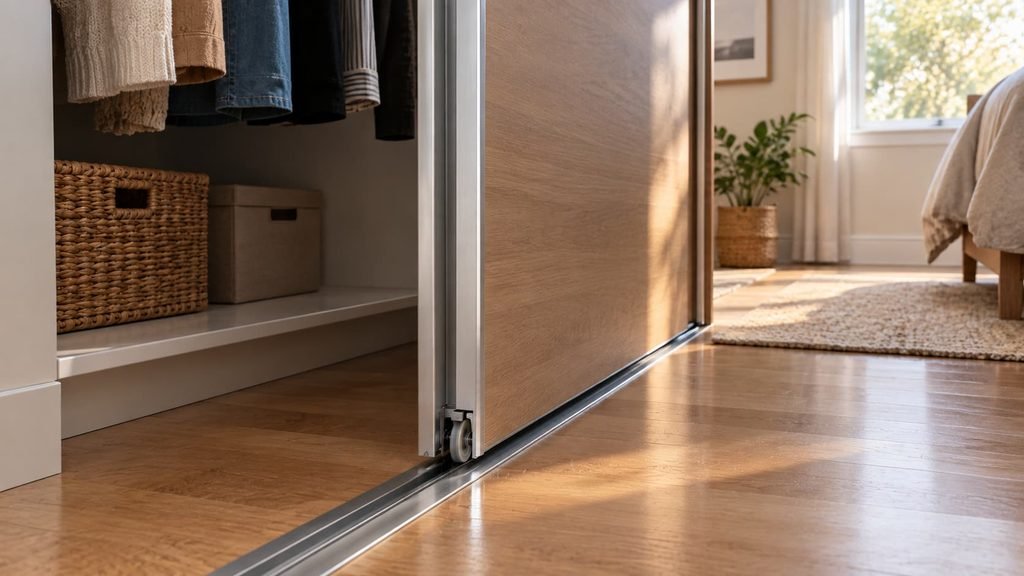
Anyone with a genuinely tight surrounding floor area benefits from sliding doors’ complete lack of swing clearance requirement, since this directly addresses a spatial constraint hinged doors structurally can’t accommodate as comfortably in a confined space. The unglamorous reason: sliding doors also tend to close more quietly, which matters more than it might initially seem for a closet located near a bedroom where a loud door closing could genuinely disturb someone sleeping nearby.
Anyone genuinely prioritising a more minimal, streamlined visual look also benefits from this same quality in a related way, since sliding doors typically present a flatter, less visually intrusive profile than a hinged door’s swung-open state, which can meaningfully affect how the surrounding room feels day to day.
Where hinged doors win
Anyone who genuinely values seeing their entire closet’s contents simultaneously benefits from hinged doors’ full-opening access, since this directly addresses the practical need for a complete view when searching for a specific item, in a way sliding doors’ partial-opening format structurally can’t match. The unglamorous reason: hinged doors also tend to offer more straightforward mirror mounting options on the door’s actual face, which matters more than it might initially seem for a closet where a full-length mirror serves genuine daily function.
Anyone who finds sliding door tracks genuinely bothersome to maintain also benefits from this same simplicity in a related way, since hinged doors avoid the track-cleaning upkeep sliding doors specifically require, relying instead on straightforward hinge mechanisms many people find more familiar and less fussy to maintain over time.
When neither is right
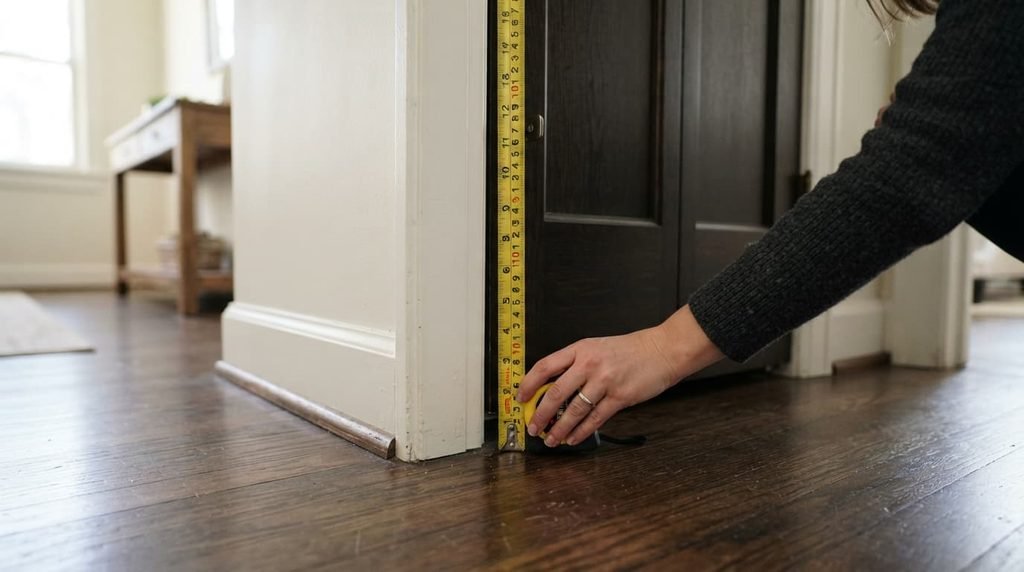
Choosing a door style purely because it’s currently trending, without measuring your closet’s actual surrounding floor clearance first, is worth ruling out regardless of which style you’d otherwise prefer.
A hinged door that technically fits the closet opening but leaves genuinely insufficient swing clearance in the surrounding room creates genuine daily friction regardless of how attractive the style itself is, while a sliding door chosen in a genuinely spacious room sacrifices the full-access benefit hinged doors would have comfortably provided without any real spatial constraint to actually justify that particular trade-off.
How to decide in thirty seconds
If your closet’s surrounding floor space is genuinely tight, choose sliding doors. Their lack of swing clearance directly addresses a spatial constraint hinged doors structurally can’t accommodate as comfortably.
If your closet’s surrounding space is genuinely spacious and you value full simultaneous access, choose hinged doors. Their complete opening directly addresses a practical searching need sliding doors’ partial access doesn’t match as fully.
What changes the answer later
A genuine room renovation changing your closet’s surrounding floor clearance is worth reconsidering the choice at, since the spatial constraint that originally favoured one specific style may no longer genuinely apply once the surrounding space itself actually changes.
Genuinely struggling with a sliding door’s partial access during daily searching, despite the original space constraint that genuinely justified it, is also worth reconsidering the choice at, since ongoing daily friction may indicate the trade-off isn’t genuinely serving your actual daily habits well despite the space itself genuinely being tight.

What people get wrong when making this choice
The most common mistake by far is choosing a door style purely for its current design appeal without genuinely and properly measuring the surrounding room’s actual floor clearance beforehand. A visually striking hinged door installed in a space genuinely too tight for its own swing arc creates real daily friction that no amount of aesthetic appeal ever fully compensates for, making this measurement step considerably more important than the actual style decision itself in practice.
Questions readers keep asking
Do sliding doors genuinely save meaningful floor space compared to hinged doors?
Yes, quite genuinely – the entire swing arc a hinged door genuinely requires becomes usable floor space with sliding doors instead, which can be a genuinely meaningful practical gain specifically in a closet with limited surrounding room available.
Is it possible to combine both styles within one closet system?
In some genuine layouts, yes – a larger closet might genuinely use sliding doors for one section and a hinged door for another separate section, though this depends considerably on your specific closet’s actual overall layout and whether combining styles genuinely serves a genuine practical purpose for that particular space.
Do sliding doors work well for a genuinely wide closet opening, or only narrower ones?
Sliding doors can genuinely work for wider openings too, though this typically requires either multiple sliding panels or a genuinely longer track allowing the door enough room to travel freely, so confirming your specific space genuinely accommodates this particular requirement is worth checking before assuming sliding doors automatically suit any opening width equally well regardless.
Do sliding doors require more maintenance than hinged doors over time?
Generally quite comparable overall, though the specific maintenance type genuinely differs – sliding doors need their track kept genuinely clear of debris for smooth operation, while hinged doors need their hinges checked periodically for wear, so the type of upkeep differs rather than one style clearly requiring meaningfully more overall attention than the other.