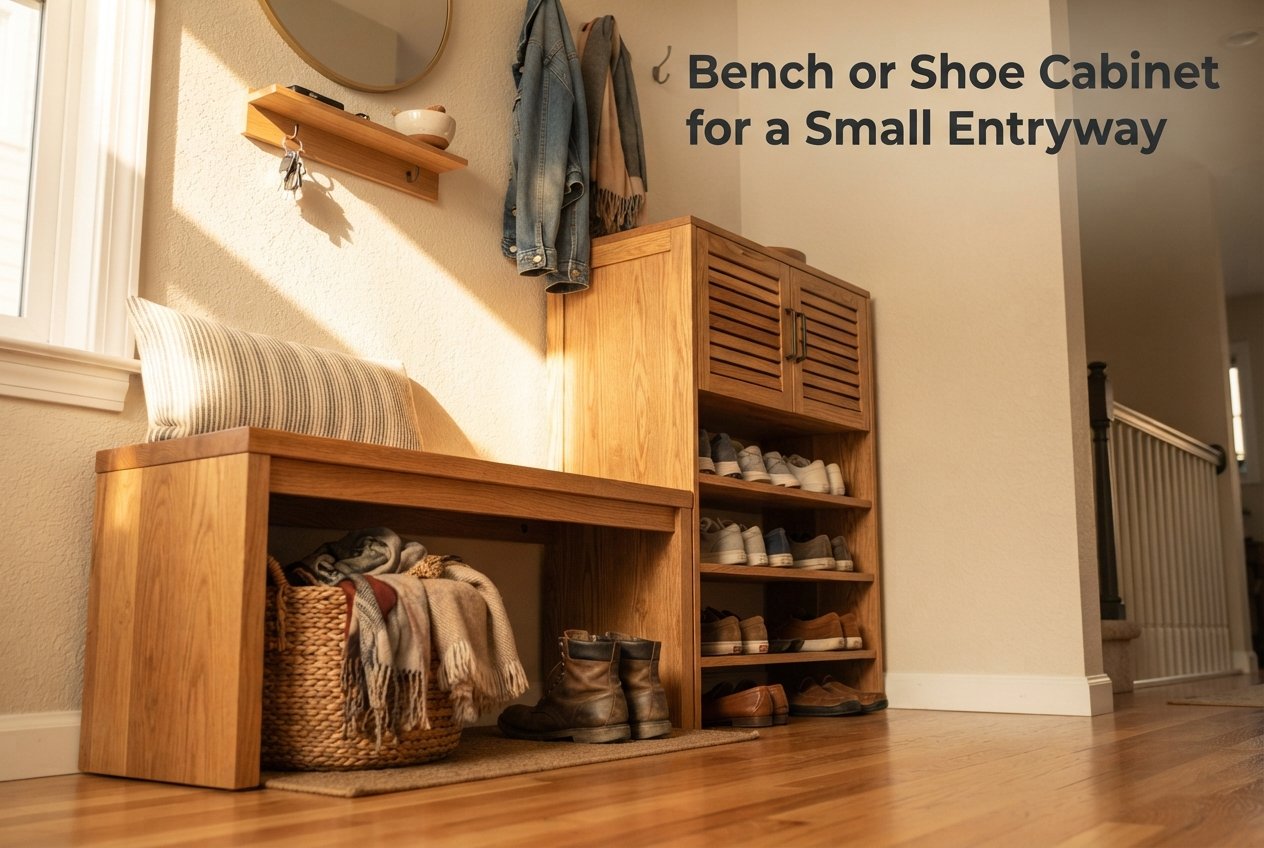
The right choice for a genuinely small entryway isn’t decided by which one looks more inviting in a catalogue photo – it’s decided by how each one actually fits your specific space and your household’s genuine daily habits once it’s part of the actual daily routine. A bench and a shoe cabinet solve genuinely different practical needs, and choosing based on trend alone misses what actually determines whether either one works well in a genuinely small space.
The one property that decides it
The deciding factor is whether your household genuinely needs somewhere to sit while putting on or removing shoes, not simply which option looks more visually appealing. A bench genuinely directly serves this specific seated function, while a shoe cabinet prioritises maximum enclosed storage capacity within that same general footprint, without providing this particular seated function a bench structurally and genuinely offers.
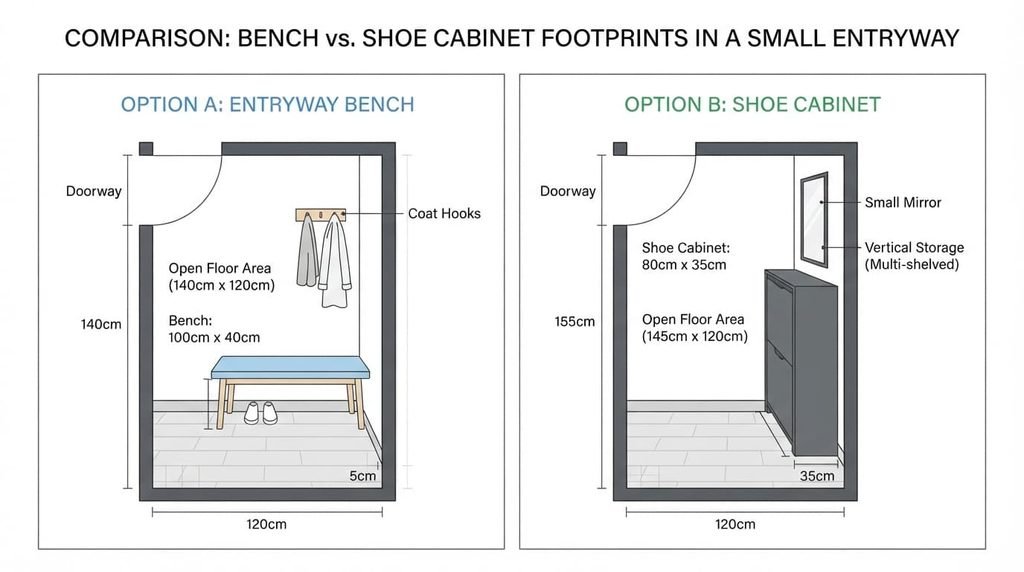
This genuinely matters because a genuinely small entryway makes this trade-off considerably more consequential than it would ever be in a spacious one – choosing a bench in a tight space sacrifices meaningful enclosed storage capacity that a shoe cabinet would otherwise provide, while choosing a cabinet sacrifices the seated function a bench specifically serves.
Head to head
| Bench | Shoe Cabinet | |
|---|---|---|
| Seated function | Yes | No |
| Enclosed storage capacity | Lower | Higher |
| Hides visual clutter | Lower | Higher |
| Space used well | Moderate | Often more efficient |
| Ease of quick access | Higher | Varies by design |
| Typical cost | Varies | Varies |
The row that surprises people most is ease of quick access specifically. Many assume a cabinet’s concealed storage is always more convenient since it looks tidier, but a bench with open storage underneath often provides faster, lower-effort access during a quick daily moment than a cabinet requiring you to open a door or drawer each time.
Where a bench wins
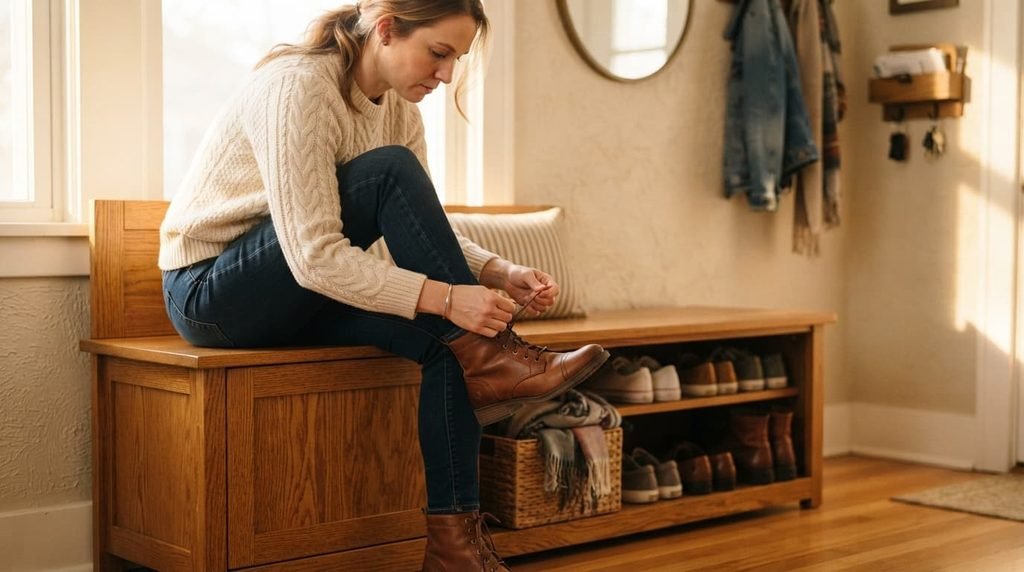
Anyone whose household genuinely sits to put on or remove shoes regularly benefits from a bench’s direct seated function, since this specific daily habit is one a shoe cabinet structurally can’t accommodate regardless of how well-designed its storage capacity is. The unglamorous reason: a bench with open storage underneath also tends to get used more consistently for genuine daily shoe storage specifically, since the low-effort, visible access encourages the habit more reliably than storage requiring an extra step to open each time.
Anyone with young children or older household members who genuinely benefit from a seated option while managing shoes also benefits from this same function in a related way, since standing balance while putting on shoes can be genuinely more difficult for these specific household members than it is for others.
Where a shoe cabinet wins
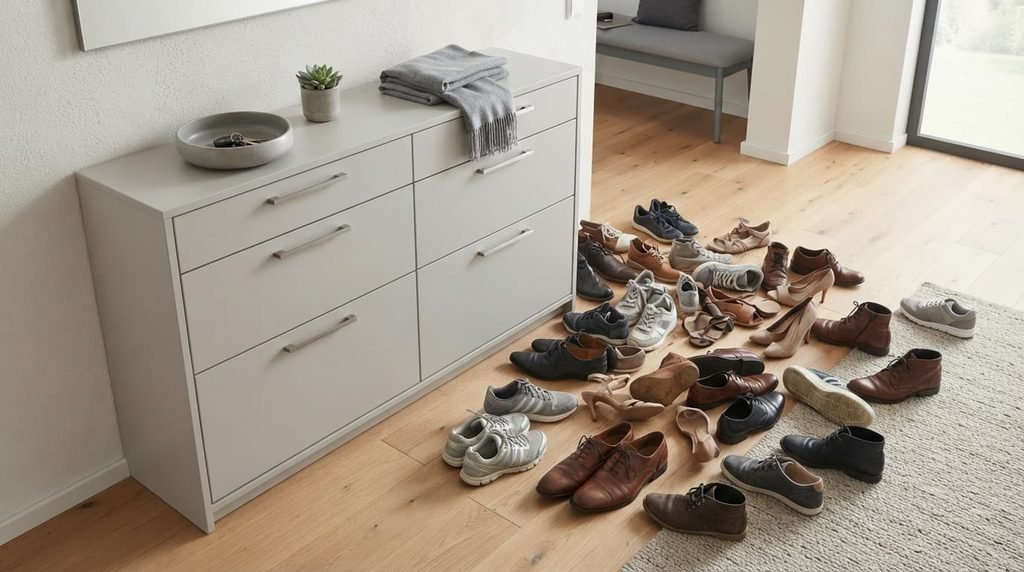
Anyone with a household generating a genuinely large volume of shoes needing storage benefits from a cabinet’s typically higher enclosed capacity within the same general footprint, since this directly addresses a storage volume need a bench’s more modest capacity often can’t fully accommodate. The unglamorous reason: a cabinet also conceals visual clutter more effectively, which matters more than it might initially seem for a household that specifically prioritises the entryway looking consistently tidy over the seated convenience a bench provides.
Anyone genuinely short on entryway floor space specifically also benefits from a cabinet’s typically more vertical storage arrangement in a related way, since a cabinet’s design often makes more efficient use of available height than a bench’s more horizontally-oriented footprint typically allows.
When neither is right
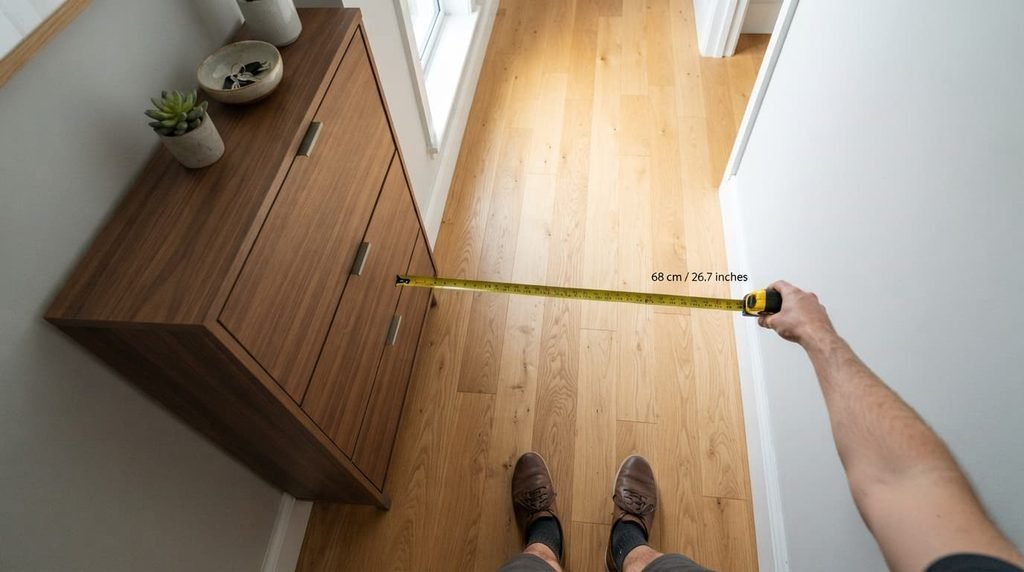
Choosing a large, elaborate piece of furniture purely because it looks impressive, without confirming it genuinely fits your actual small entryway’s available space and walking clearance, is worth ruling out regardless of which option you’d otherwise prefer.
A piece of furniture that technically fits the room’s floor area but leaves insufficient clearance for comfortably passing through creates genuine daily friction regardless of how well-suited its function seems on paper, since genuine clearance for actually moving through the space matters just as much as the furniture’s own individual features do.
How to decide in thirty seconds
If your household genuinely sits to manage shoes regularly, choose a bench. Its direct seated function addresses a daily habit a cabinet structurally can’t accommodate.
If your household generates a genuinely large shoe volume and prioritises concealed tidiness, choose a shoe cabinet. Its higher enclosed capacity directly addresses a storage volume need a bench’s more modest capacity often can’t fully cover.
What changes the answer later
A household member developing a genuine mobility consideration that makes a seated option more valuable is worth reconsidering the choice at, since a bench’s seated function becomes more relevant once this specific need actually develops.
A household’s shoe volume growing considerably – through additional household members or simply accumulating more footwear over time – is also worth reconsidering the choice at, since a bench’s more modest storage capacity may no longer adequately serve a genuinely larger volume than it did originally.
What people get wrong when making this choice
The most common mistake is choosing based purely on which option looks more coordinated with a broader decorating scheme, without genuinely considering the household’s actual daily shoe-management habits. A beautifully coordinated cabinet that goes largely unused because the household genuinely prefers sitting to manage shoes provides less actual daily value than a plainer bench that matches real habits, regardless of how the two options compare visually.
Questions readers keep asking
Can I get both a seated function and enclosed storage in one single piece?
Yes, some benches include enclosed storage built into the seat itself, combining both functions within roughly the same footprint, though this hybrid option typically doesn’t match either a dedicated bench’s most comfortable seating or a dedicated cabinet’s maximum storage capacity as closely as a single-purpose piece would.
Does a bench or a cabinet typically take up less visual space in a small entryway?
This genuinely varies considerably by specific design more than by category alone, so comparing the actual dimensions and visual weight of the specific pieces you’re considering, rather than assuming one category is inherently more compact, is worth doing directly before deciding.
A second common mistake is underestimating how quickly shoe volume actually grows within a household, choosing storage sized precisely for the current number of shoes without any margin for genuine future accumulation. A modest amount of extra capacity beyond your household’s exact current count tends to serve better long-term than storage sized exactly to today’s specific volume, since shoe collections genuinely rarely shrink over time for most typical households.
Should I measure my entryway’s clearance before choosing between these two options?
Yes, genuinely worth doing before committing to either option – measuring the actual walking clearance a specific piece would leave, not just whether it technically fits the wall space, helps confirm the piece won’t create the exact daily friction the “when neither is right” section above specifically warns against.
Is it worth choosing based on resale or future home value rather than genuine current daily use?
Generally not as the primary deciding factor – entryway furniture is typically among the more easily replaceable pieces in a home, making your household’s genuine current daily use pattern a considerably more reasonable basis for this specific decision than a hypothetical future consideration entirely.