A small living room doesn’t feel cluttered because you own too much furniture — it feels cluttered when your eye can’t travel far before hitting an obstruction. Two rooms with the identical amount of furniture can read as spacious or chaotic depending entirely on where the longest uninterrupted sightline actually falls.
This single constraint — sightline depth — should shape nearly every decision below, more than any rule about furniture quantity or room size in square metres. It’s also the reason generic decluttering advice so often fails: removing items without addressing the sightline itself can leave a genuinely emptier room that still somehow feels just as cramped as before.
The one decision that shapes this room
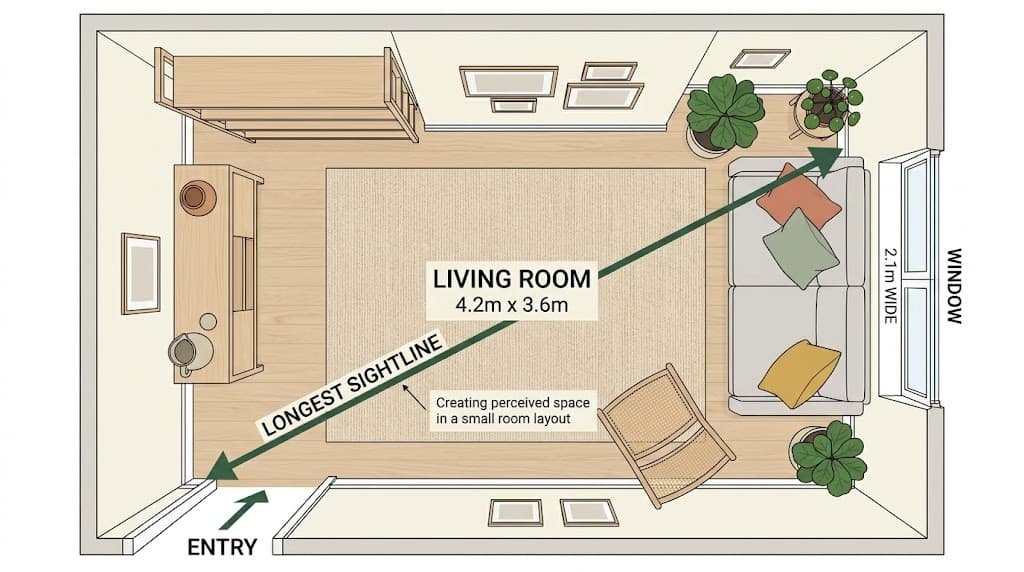
In a small living room, the eye’s longest unobstructed path — usually diagonally, from one corner to the opposite wall — determines how spacious the room feels far more than its actual floor area does. Furniture placed directly in that sightline, even a single low piece, breaks the visual continuity that makes a small room read as open.
This is why pulling furniture even slightly away from walls, at a diagonal angle, often makes a small room feel larger than pushing everything flush against the perimeter — the angle redirects the eye along a longer uninterrupted path than a straight wall-hugging arrangement allows.
This mechanism explains a pattern many people notice but genuinely can’t quite name: two rooms of identical square footage, furnished with nearly identical pieces, can feel completely different in person. The room that feels larger almost always has its longest sightline genuinely clear, while the room that feels cramped has that same line interrupted somewhere — often by something as small as a side table or a floor lamp positioned without this principle in mind. Once you know to look for the sightline specifically, the difference becomes obvious in almost any room you walk into.
The layout that respects it
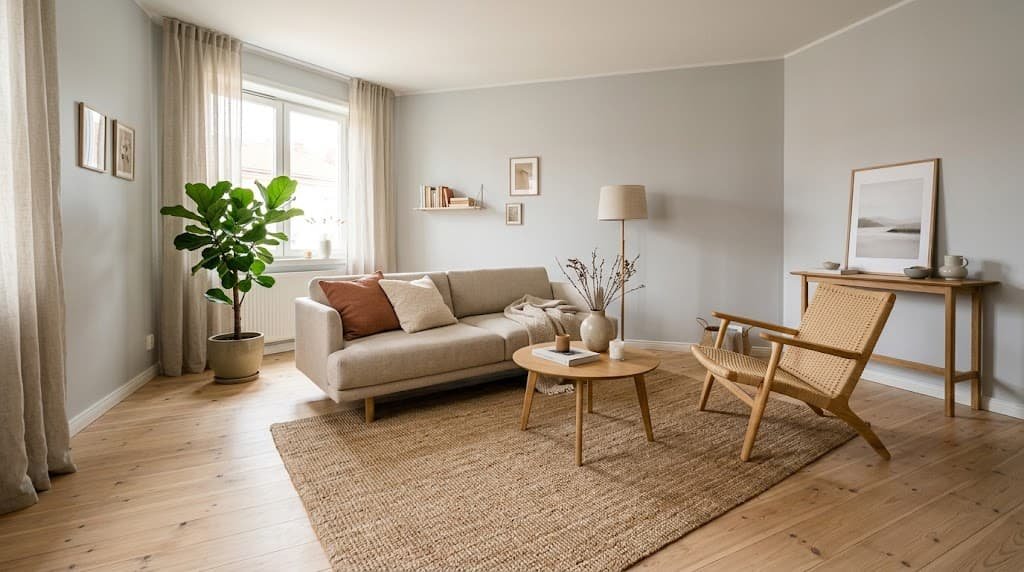
Identify your room’s longest natural diagonal sightline first — typically from the entry point to the farthest corner — before placing even a single piece of furniture. Keep this line as clear as physically possible; even a narrow side table intruding on it will register as clutter regardless of the table’s actual footprint.
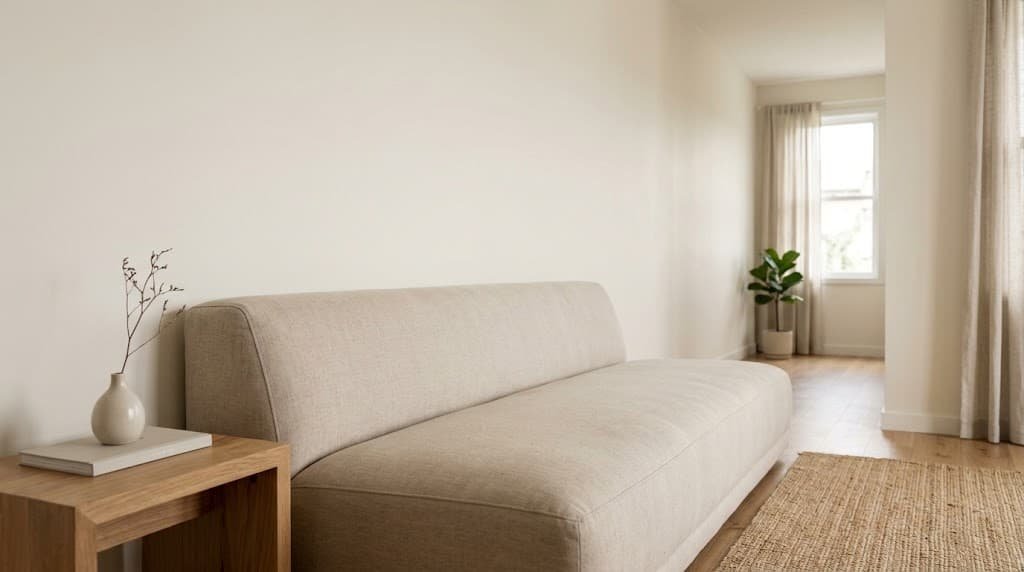
Choose a low-profile sofa or seating arrangement over a boxy, high-backed one specifically for sightline reasons: furniture that sits lower allows the eye to travel over it toward the far wall, rather than stopping at its silhouette. Look for a kiln-dried hardwood frame construction with a low seat height, since low-profile seating genuinely depends on sturdy joinery to avoid feeling flimsy at that reduced height.
Position the largest remaining piece — typically the sofa — perpendicular to, not blocking, your identified sightline, even if this means an asymmetric layout that feels less “centred” than convention suggests.
Rugs deserve the same sightline logic as furniture, even though they sit flat on the floor. A rug that stops abruptly partway through your identified sightline creates a visual break almost as disruptive as a piece of furniture would, because the eye still registers the change in surface as a stopping point. Sizing a rug to run the full length of the sightline, or choosing a low-pile style that doesn’t visually interrupt the floor plane, preserves the same sense of depth the furniture arrangement is working to create.
Lighting placement matters here too, though it’s easy to overlook entirely when focused on furniture alone. A floor lamp positioned directly in the sightline competes with furniture for the same limited visual space, while the same lamp moved to one side — outside the identified line — adds warmth to the room without costing any of the openness the layout is genuinely built around.
What isn’t worth the space
A single oversized statement piece — chosen to “anchor” a small room — isn’t worth the sightline cost, regardless of how striking it looks in isolation.
A statement piece scaled for a larger room does anchor a room, but in a small living room specifically, its bulk sits directly in the sightline that keeps the space feeling open, undoing far more spaciousness than its visual impact adds back. Construction quality matters more than scale here — a smaller, well-built piece with genuine dowelled joinery holds a room’s attention just as effectively without the sightline cost.
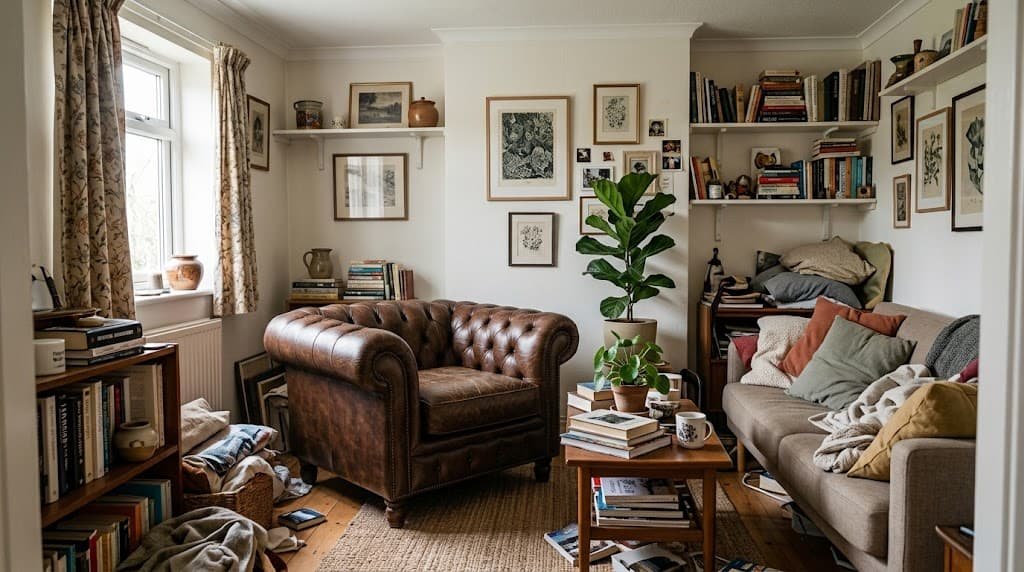
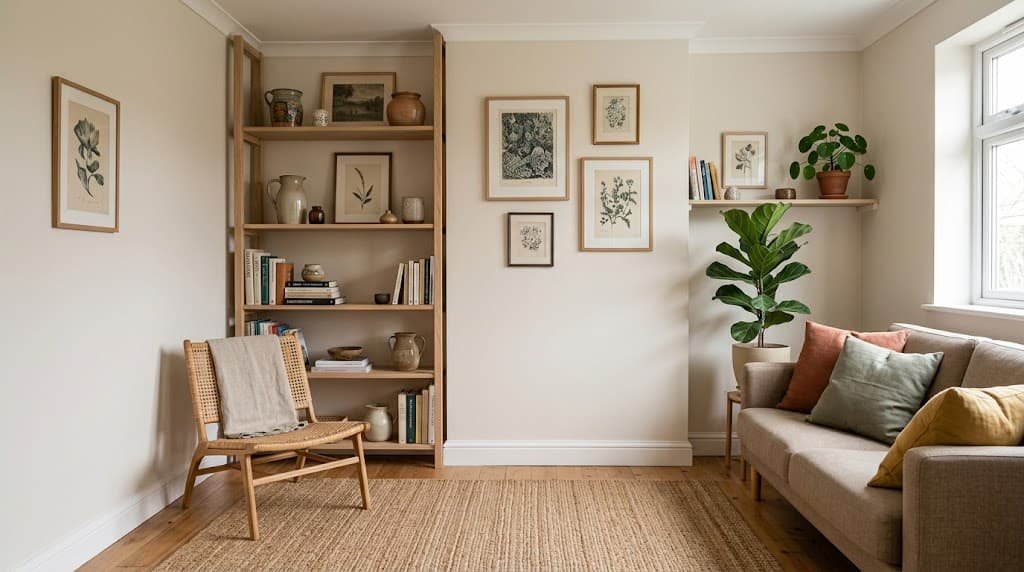
This applies just as much to decorative clusters as it does to single large pieces. A gallery wall or a grouped display, however visually pleasing on its own, adds the same kind of interruption if it sits within the sightline rather than along a wall the eye naturally passes over rather than through. The test isn’t whether something looks good in a photograph — it’s whether it sits inside the specific line of sight identified earlier.
What changes if your situation is different
If you’re renting and can’t reposition major furniture due to fixed outlet or radiator placement, prioritise clearing the sightline with smaller, movable items first — rugs, floor lamps, side tables — since these often intrude on sightlines more than fixed large furniture does anyway.
If you’re working with a genuinely irregular room shape rather than a simple rectangle, identify the sightline separately for each usable seating zone, since an irregular room may not have one single dominant diagonal the way a rectangular room typically does.
If you’re sharing the room with a dining area or a home office corner, treat each function as having its own sightline requirement rather than trying to force a single diagonal to serve the whole space. A room doing double duty as living and dining space often has two genuinely separate sightlines — one across the seating area, one across the dining zone — and clearing both matters more than optimising either one in isolation. Furniture that sits at the boundary between the two zones is usually the biggest offender, since it tends to intrude on whichever sightline runs closest to it.
How this ages
A layout built around sightline depth doesn’t go out of style the way a specific colour palette or furniture trend eventually does, because it’s based on the room’s fixed geometry rather than current taste. The entry point and the room’s longest wall don’t change; the sightline calculated from them stays valid regardless of what furniture style is popular in a given year.
What does change is your own furniture inventory over time. If you replace the low-profile sofa identified earlier with a taller, boxier piece down the line, revisit the sightline check specifically for that new piece — the underlying principle doesn’t expire, but a new piece of furniture needs to be checked against it just as the original one was, regardless of how many years separate the two purchases.
Questions readers keep asking
Does furniture size matter more than furniture quantity in a small room?
Neither matters as much as placement relative to sightlines. A room with fewer but poorly placed pieces can feel more cluttered than one with more furniture arranged to preserve a clear diagonal sightline across the space.
Should I push all my furniture against the walls in a small living room?
Not necessarily — angling furniture slightly away from walls often preserves a longer sightline than a straight wall-hugging arrangement, even though it looks less conventional. Test both against your room’s natural diagonal before deciding, since the right answer genuinely depends on where your specific sightline runs rather than on a universal rule that applies to every layout equally.
Does low furniture actually make a small room look bigger?
Yes, specifically because it lets the eye travel over it toward the far wall rather than stopping at its silhouette. This matters more for sightline depth than the furniture’s actual floor footprint does — a wide but low piece often preserves more openness than a narrow but tall one, which runs counter to how most people instinctively judge furniture size when shopping.

