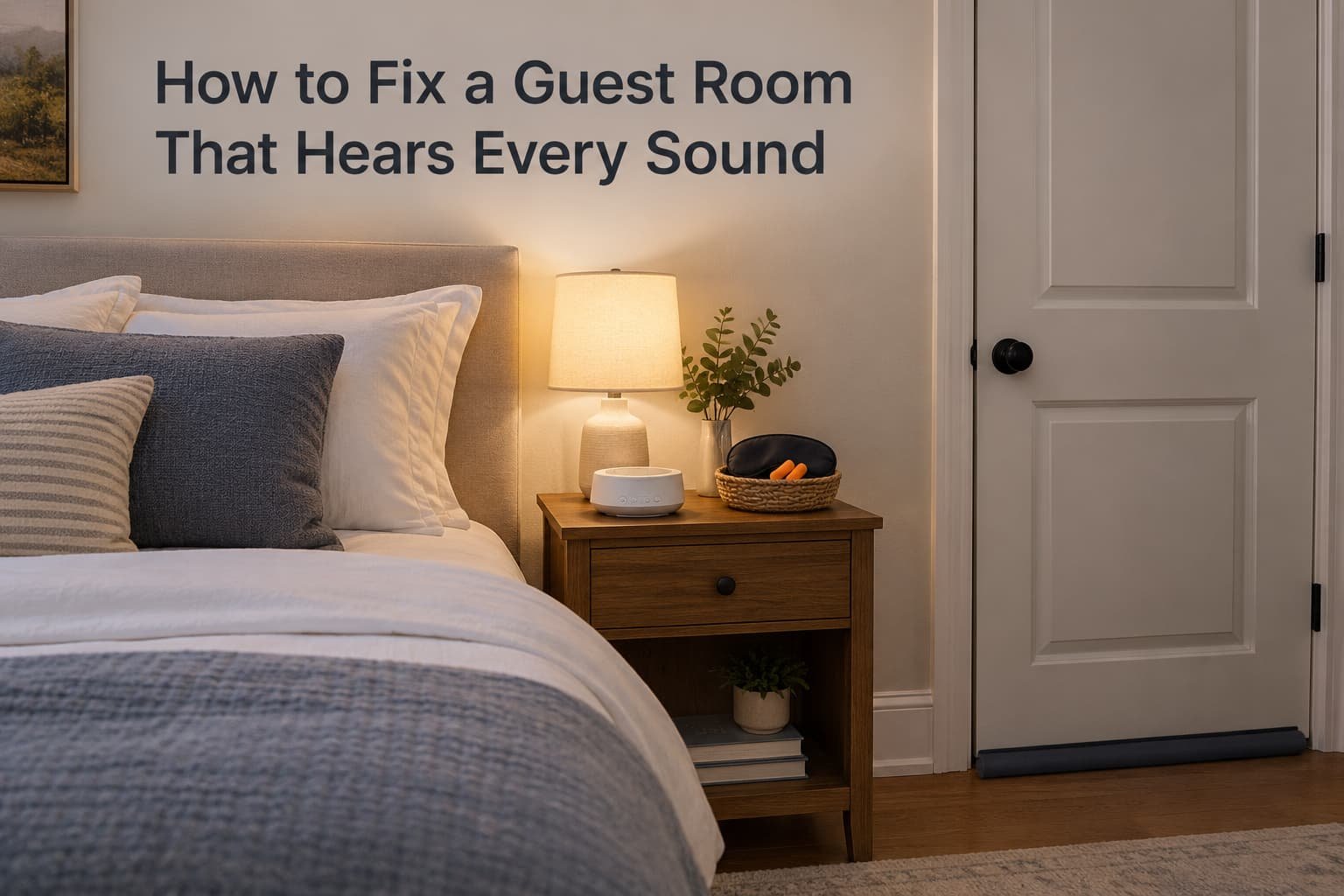
Guests are polite. That is exactly why nobody tells you they heard the dishwasher at six in the morning, the television at eleven at night, and every footstep on the stairs. A guest room can be beautifully furnished and still fail at its one real job, which is to let someone sleep. The good news is that most of the problem comes from a few specific leaks, and the cheapest fixes target those leaks rather than the walls as a whole.
What is actually happening
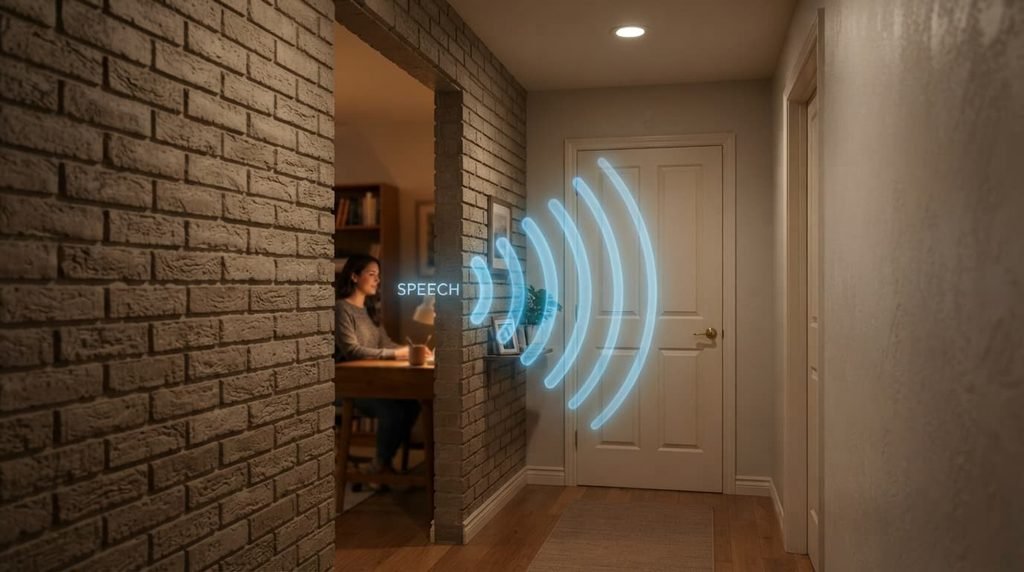
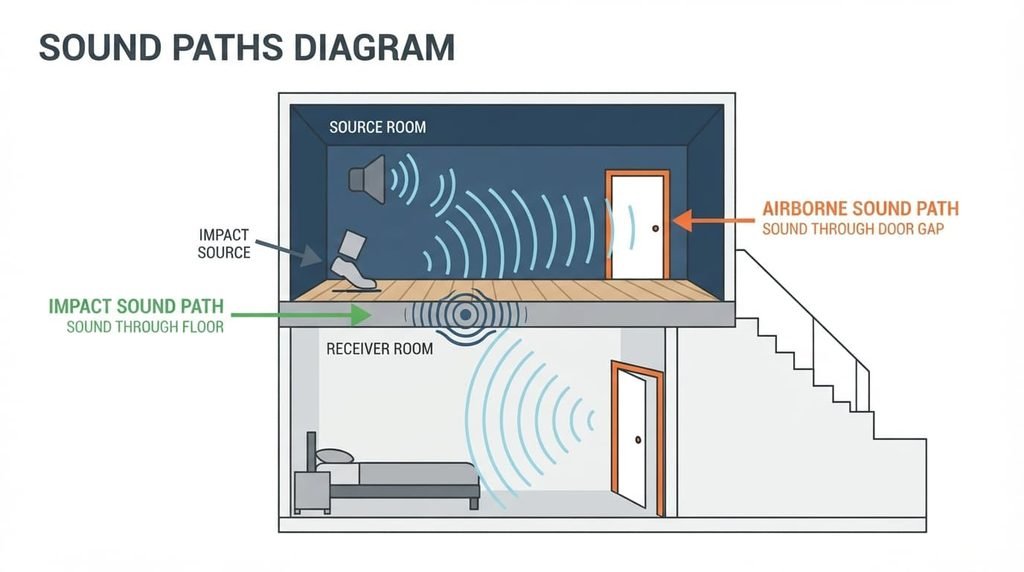
Sound reaches a room in two different ways. Airborne sound, such as voices, television and music, travels through the air and slips through any gap, thin door or light wall. Impact sound, such as footsteps, a dropped pan or a closing cupboard, travels through the structure itself, through floors, joists and walls, and re-emerges as a thud. The two need different fixes, and mixing them up is why so many soundproofing attempts disappoint.
Sound goes wherever air goes. A door that closes but leaves a gap at the bottom is, acoustically, a hole in the wall. A hollow interior door is light, so it vibrates easily and passes sound through. A guest room beside the kitchen, the stairs or the living room usually collects both kinds at once.
This also explains why the most common advice, to add acoustic foam, so often fails. Foam treats the echo inside a room. It does very little about the sound arriving from outside it.
Work out which kind you have
Three quick checks tell you where to start.
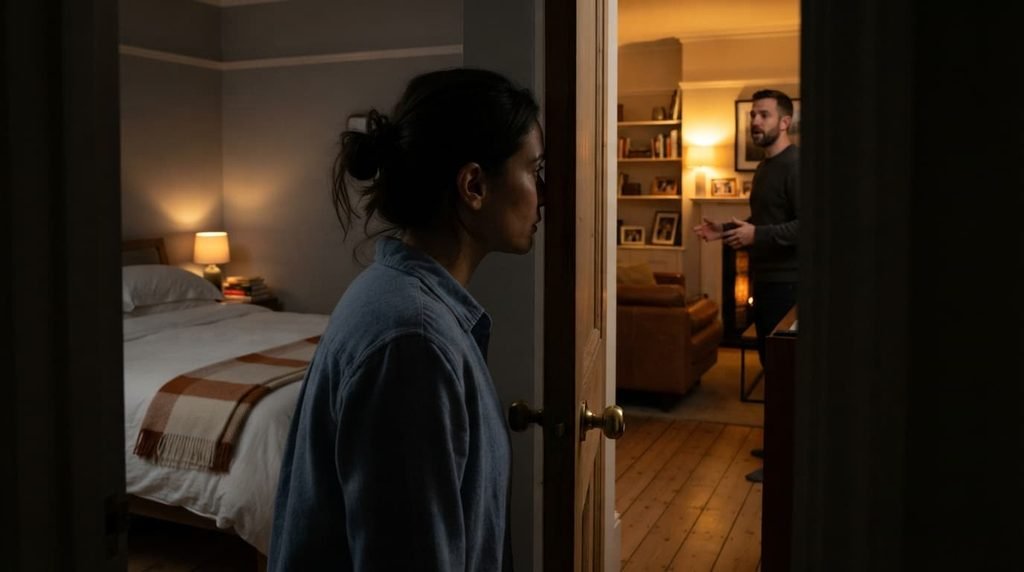
The door test. Have someone talk at normal volume in the living room. Stand in the guest room with the door closed, then open it by a hand’s width. If the difference is dramatic, the door and its gaps are your main leak.
The clap test. Clap once in the empty room. A ringing echo means hard, bare surfaces. That makes the room sound harsh, but it is not the reason noise is getting in.
The thud test. Listen for what actually bothers you. If it is mostly footsteps, cupboards and pipes rather than voices, you are dealing with impact noise, and soft furnishings inside the guest room will not solve it.
The fixes, in order of cost
1. Close the gaps around the door. Fit a drop seal or door sweep along the bottom and adhesive seals around the frame. Because sound follows air, this is usually the best return for the least money, and it takes about an hour.
2. Add steady background sound in the room. A small fan or sound machine fills the silence that makes stray noise stand out. It does not block sound, it masks it, and masking is often what a light sleeper actually needs. Put it on the bedside surface, away from the shared wall, and give guests an easy way to switch it off.
3. Put soft mass against the shared wall. Heavy curtains, a thick rug and a bookcase packed with books against the wall that faces the noisy room all absorb some sound and calm the echo. Anchor any tall bookcase to the wall, because an unanchored one is a tipping hazard.
4. Replace a hollow door with a solid one. Mass blocks airborne sound, and a solid-core door does far better than a hollow one, especially once it is fitted with the seals from the first step. A heavier door needs sturdy hinges and a well-fitted frame, so ask a carpenter if you are not confident hanging it yourself.
5. For noise that survives all of the above, consult a licensed contractor or an acoustic consultant about the structure itself. That means adding mass to walls or ceilings, separating layers so vibration cannot pass through, or upgrading windows. This is a professional job, not a DIY project, because work inside walls and ceilings can involve wiring, ventilation and fire protection.
What isn’t worth doing
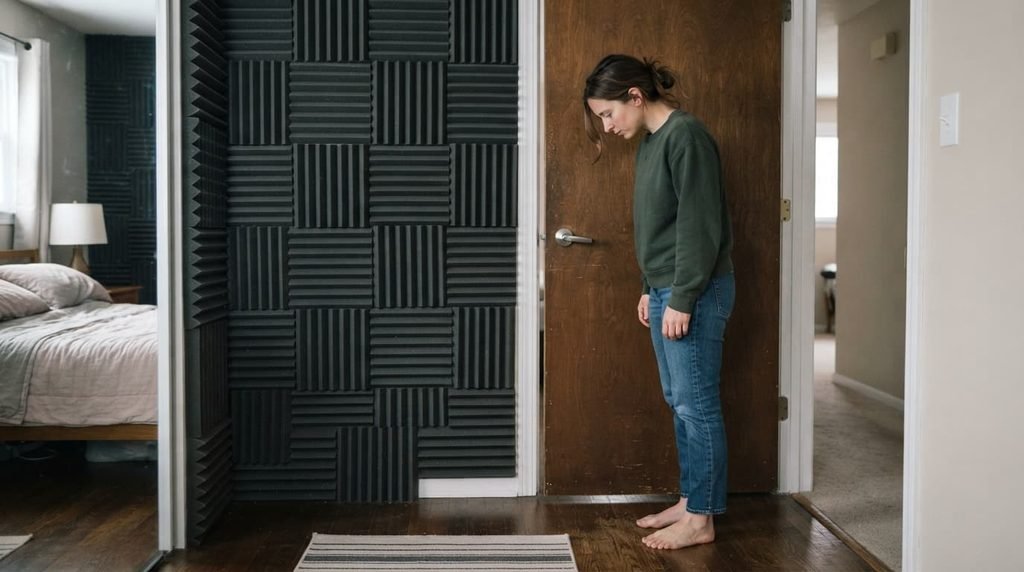
Covering the walls with acoustic foam or egg boxes isn’t worth the effort.
Foam is thin and light. It absorbs echo inside the room, but sound passes through a wall or door as easily as before. You end up with a room that sounds drier and hears exactly as much. The same money spent on gap seals and a better door changes what a guest actually hears.
The cheapest fix may be at the source
Before spending anything, consider the noise itself. A dishwasher with a delayed start, a television placed on a rug rather than against a shared wall, and a household habit of quiet hours when guests stay all cost almost nothing. Houses are shared spaces, and one short conversation with the people living in yours often does more than any product.
What people get wrong
The first mistake is treating the walls when the door is the weak point. A solid wall with a gappy, hollow door lets in most of the sound that the wall would have blocked.
The second is aiming for silence. Realistic soundproofing reduces what reaches the room and makes the rest easier to ignore. It rarely makes a house silent, and promising yourself silence leads to overspending.
The third is fixing the room when the problem is impact noise. If footsteps from above are the issue, the cause is in the structure, and the effective solutions sit with the professional step rather than in the guest room’s furnishings.
What changes if your situation is different
If you rent, focus on the first three steps. Door seals and furnishings are removable, while a new door or any work on walls needs your landlord’s permission.
If the noise comes from neighbours above, soft furnishings in your room will not help. A polite conversation about rugs and underlay on their floor, or a professional assessment of the ceiling, is where the improvement lies.
If guests only visit a few times a year, stop after the cheap steps. Place a small basket on the nightstand with foam earplugs and a sleep mask, which costs little and shows care, and save the structural work for a room that is used more often.
The one thing to check before you commit
After you seal the door gaps, repeat the door test. If the result is already good, you have avoided a bigger purchase. If it is not, you now know the sound is coming through the door itself or the wall, and that is exactly what a professional will ask you, so you can describe the problem precisely instead of paying for a general assessment.
Questions readers keep asking
Do heavy curtains block sound from the other side of a wall?
They soften echo and help a little at windows, but they do little against a wall shared with a noisy room. Treat them as a supplement to the door and gap fixes, not a replacement.
Does a white noise machine genuinely help?
For many light sleepers it does, because it masks the sudden sounds that wake people. Some guests find the steady hum intrusive, so offer it as an option with a clear off switch.
Is it worth soundproofing a guest room used a few times a year?
Start with the cheap steps: gaps, background sound and soft mass. Structural work is rarely justified for occasional use unless the room doubles as an office or a regular bedroom.
Will earplugs solve the problem on their own?
They are a courtesy, not a fix. They help a guest who sleeps lightly, but the room should still be quieter than it was before you started.