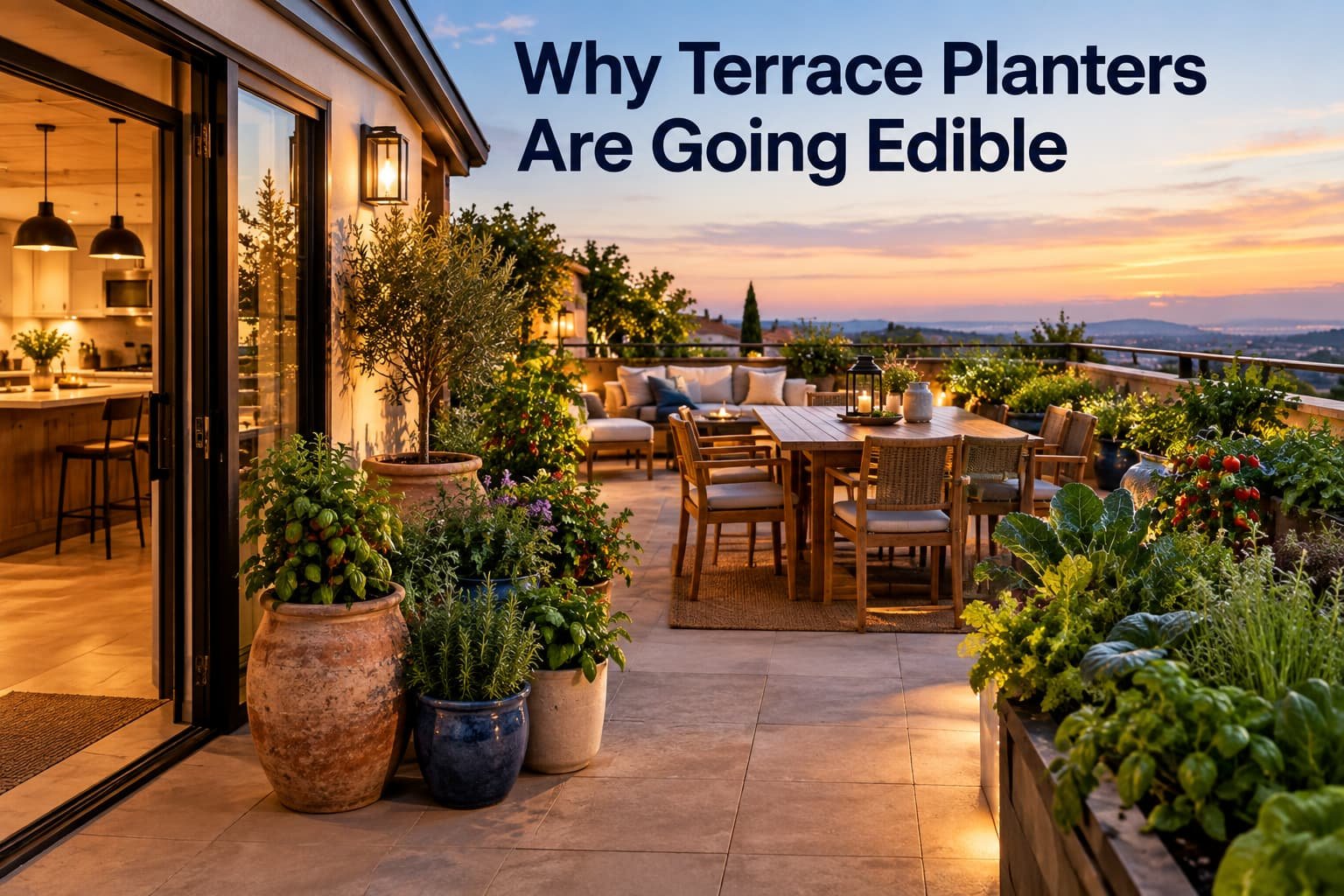
Walk onto a large terrace that was planted a few years ago and you will often find the same scene: handsome pots, a couple of tidy shrubs, and nobody looking at them. The newer scene is a row of herb pots a metre from the kitchen door, a tomato leaning on a cane, and someone standing there at dusk with a pair of scissors. The plants changed, but the real change is what the planting is for. It now has a daily job, and that job explains why the trend keeps returning instead of fading like most styling fashions.
What actually changed
Ornamental planting asks very little of you after the first weekend. You buy the pots, arrange them, and they hold their shape for months. Edible planting asks for attention in small, frequent doses: pick, water, pinch back, taste. The shift is from planting that is looked at to planting that is used.
That changes where the plants go. Ornamental pots tend to sit at the edges of a terrace, framing the view. Herb and vegetable containers move toward the routes people actually walk: beside the door, at the end of the dining table, along the path between kitchen and seating. The planting stops being scenery and becomes part of how the terrace is lived in.
Why it keeps coming back
The mechanism is simple and does not depend on fashion. A plant that produces something gets visited. A visit means a person is standing on the terrace for two minutes, and two minutes tends to become five. Ornamental pots rarely create that pull, so a large terrace can go whole weeks without anyone stepping onto it for no particular reason.
There is a practical loop as well. Fresh herbs are usually sold in small packets that wilt before they are used, and the difference is obvious the first time you cook with a handful instead of a pinch. That small, repeated benefit is what keeps people watering in week twelve, when the novelty has gone. Trends built on a repeated benefit last longer than trends built on an arrangement.
What this changes on a large terrace
Three things shift in practice.
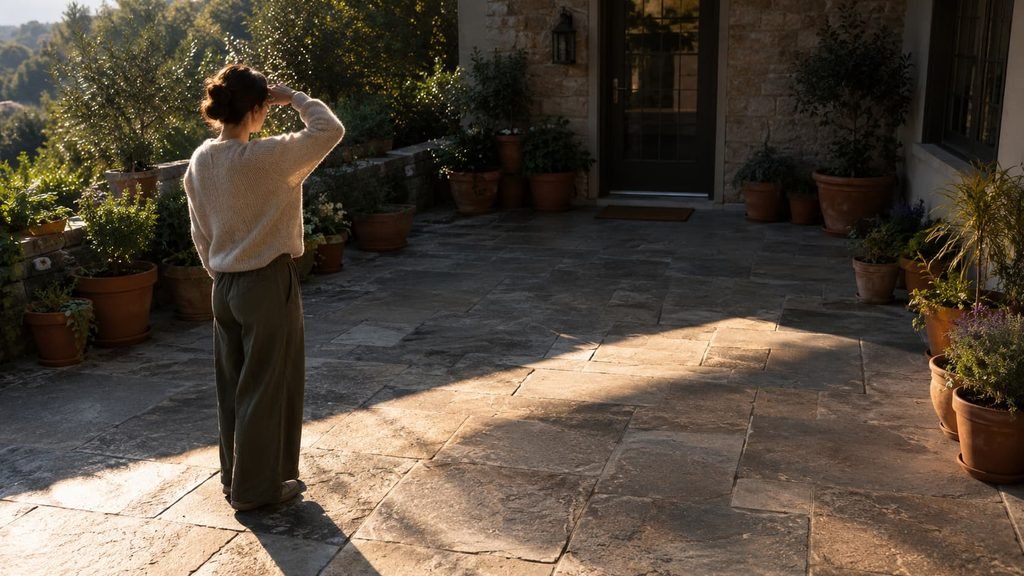
Layout follows the sun. Containers have to sit where the light is, not where the styling wants them. Before placing anything, watch the terrace across a day and note which spots get direct sun. Most fruiting plants, such as tomatoes and peppers, want roughly six hours of it, while many leafy herbs, such as parsley, chives and mint, cope with considerably less.
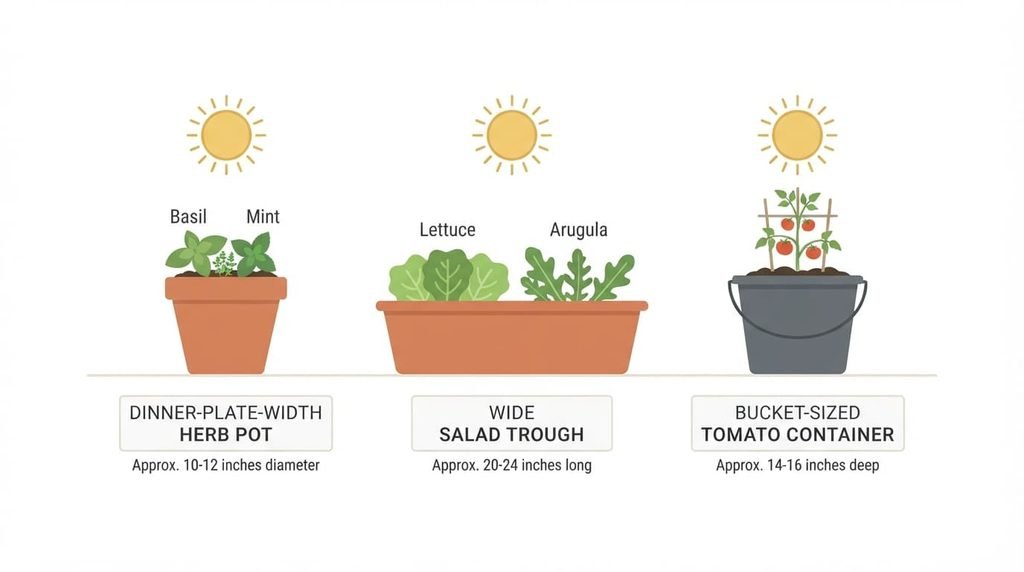
Containers need depth. A decorative pot can be shallow because the plant is mostly for show. Food plants need root room: most herbs are comfortable in a pot about the width of a dinner plate, while tomatoes and courgettes want something closer to a large bucket. Small containers dry out fast in summer, which is the most common reason edible planting fails.
The terrace gets a rhythm. Water in the morning, pick and pinch back in the evening. That routine is the real cost of the trend, and the later sections are honest about who it suits and who it does not.
What to grow first, and what to leave for later
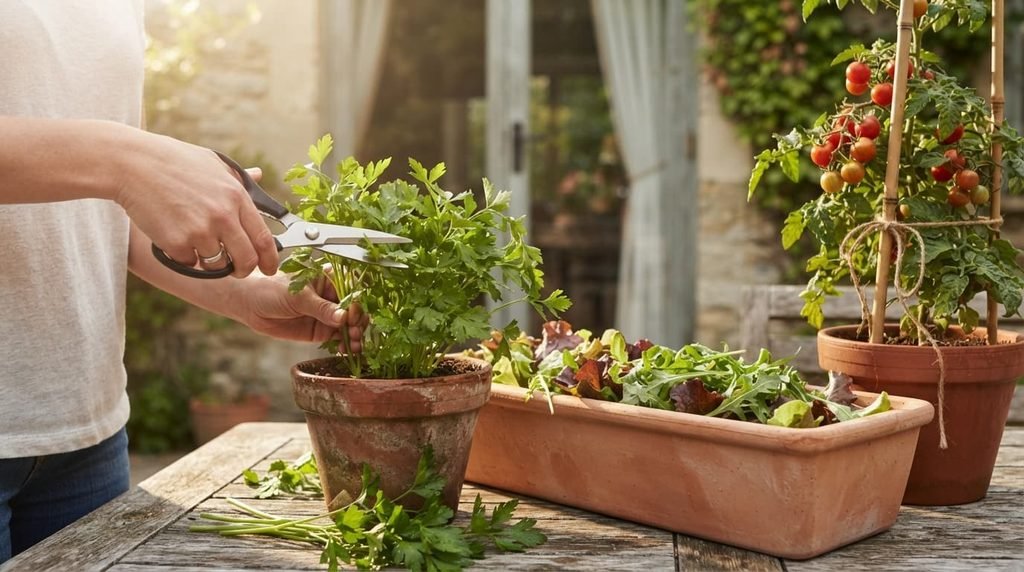
Start with plants that forgive mistakes. Chives, parsley and mint are hard to kill and give a harvest quickly. Rosemary and thyme prefer a sunny spot and dry out between waterings, which suits a busy household. Salad leaves can be cut repeatedly and grow well in a wide, shallow trough. A single cherry tomato plant is the best first fruiting crop, because it keeps producing and teaches you how much water a container really needs.
Leave the demanding plants for later. Aubergines, melons and large squashes want heat, space and steady feeding, and they punish uneven watering. They are rewarding once you have a month of container experience behind you and frustrating before that.
What it looks like in practice
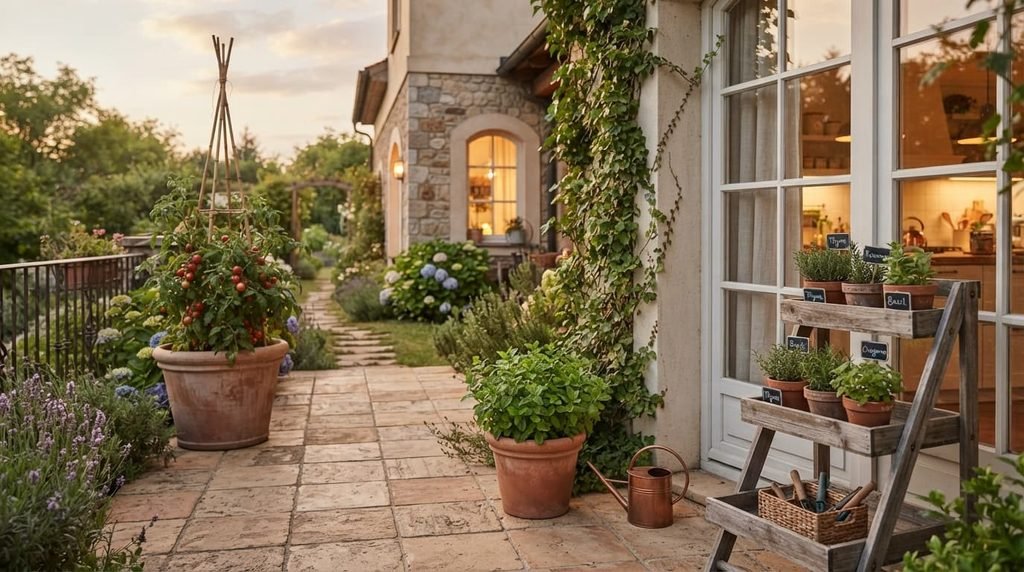
A workable first version is small. Put three or four herb pots on a low table or a tiered stand beside the kitchen door: one soft herb such as basil or parsley, one hardy herb such as rosemary or thyme, and a mint in its own pot, because mint spreads aggressively and crowds out anything that shares its container. Add one larger container holding a single productive plant, such as the tomato on a cane, and give it the longest sun on the terrace.
Then keep the ornamental plants you already have. The trend is not about replacing everything with vegetables. The strongest terraces mix a few handsome, structural pots with the edible ones, so the space still reads as designed. Grouping the edible containers together also turns watering into one short trip instead of a tour of the whole terrace.
Terraces are exposed places, and that matters. Wind dries containers faster than a sheltered garden, so put the thirstiest pots in the calmest corner. Dark pots in strong sun can overheat the roots, so choose pale colours or sit a dark pot inside a lighter outer one. Use containers made for growing food, and be cautious with reclaimed timber for raised boxes: you cannot tell what it was treated with, so line it or choose new, food-safe material.
Where this trend genuinely holds up
It holds up wherever the repeated benefit is real. A household that cooks often, eats on the terrace and passes the herbs several times a day will keep using them. It also suits people who like a small task with a visible result: pinching back a basil plant and watching it bush out is oddly satisfying, and the terrace gains a reason to be visited that no cushion or lantern can supply.
It holds up for a practical reason too: containers are movable. If a spot turns out to be too shady or too windy, you move the pot. That forgiveness is why this is a sensible thing to try at small scale before committing a whole terrace to it.
Where the verdict should stay negative
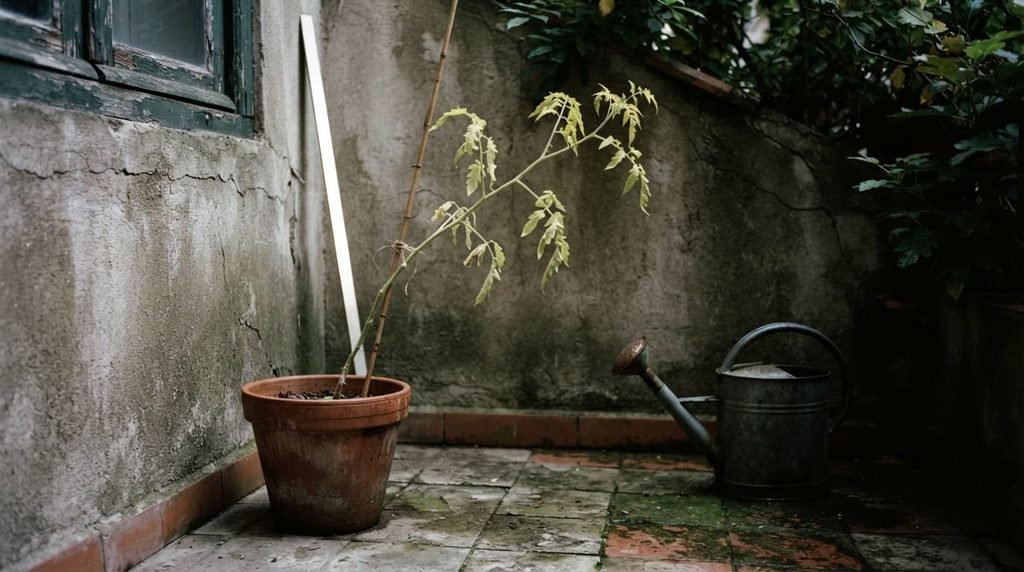
Edible planting is not worth it on a terrace that gets little direct sun, or in a household that is often away with nobody to water.
Both failures are common and predictable. Fruiting vegetables in shade produce leaves and little else, and containers left unwatered through a few hot days are often beyond saving. In those situations an ornamental scheme built from plants that tolerate shade and neglect will look better and cost less in disappointment. Adopting the trend because it is popular, on a terrace that cannot support it, trades a handsome space for a row of struggling pots.
What people get wrong when adopting it
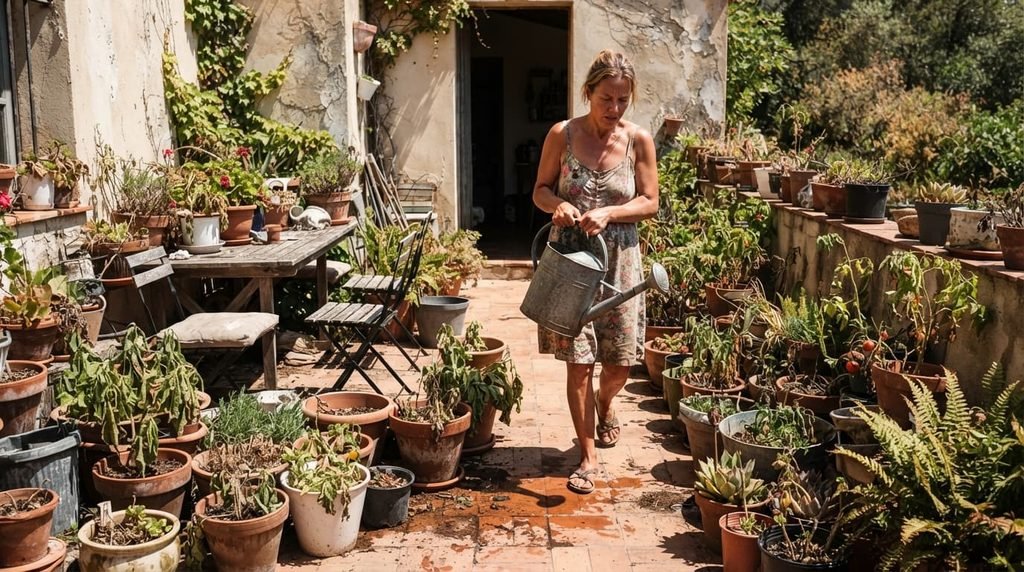
The first mistake is starting too big. A dozen containers sounds generous in spring and becomes a daily chore by midsummer. Four pots, kept alive through a hot month, is a better foundation than twelve pots abandoned in July.
The second is ignoring the sun. People place pots where they look good and then wonder why nothing thrives. A day spent noting where the light falls saves a whole summer of guesswork.
The third is using one size of pot for everything. Mixing shallow herb pots with deep tomato containers matches each plant’s needs and, as a bonus, gives the arrangement natural height variation without any extra furniture.
Questions readers keep asking
Do herbs and vegetables look untidy on a designed terrace?
They can, if the containers are mismatched. Choosing one or two container materials and repeating them keeps the group coherent, and the plants are decorative in their own right: silvery rosemary, ruffled basil, glossy chard.
How much time does it genuinely take?
A small group of pots needs a few minutes a day in warm weather, mostly for watering. The time grows with the number of containers, which is exactly why starting small matters.
Can a shaded terrace still grow anything edible?
Some leafy herbs and salad leaves tolerate part shade, so a modest harvest is possible. If direct sun is very limited, though, an ornamental scheme is the better use of the space.
What happens to the plants when the weather turns cold?
Tender plants such as basil and tomatoes finish when the cold arrives, while hardy herbs like rosemary, thyme and chives may carry on depending on your climate. Moving pots to a sheltered spot extends the harvest, and checking each plant’s hardiness before you buy avoids surprises.