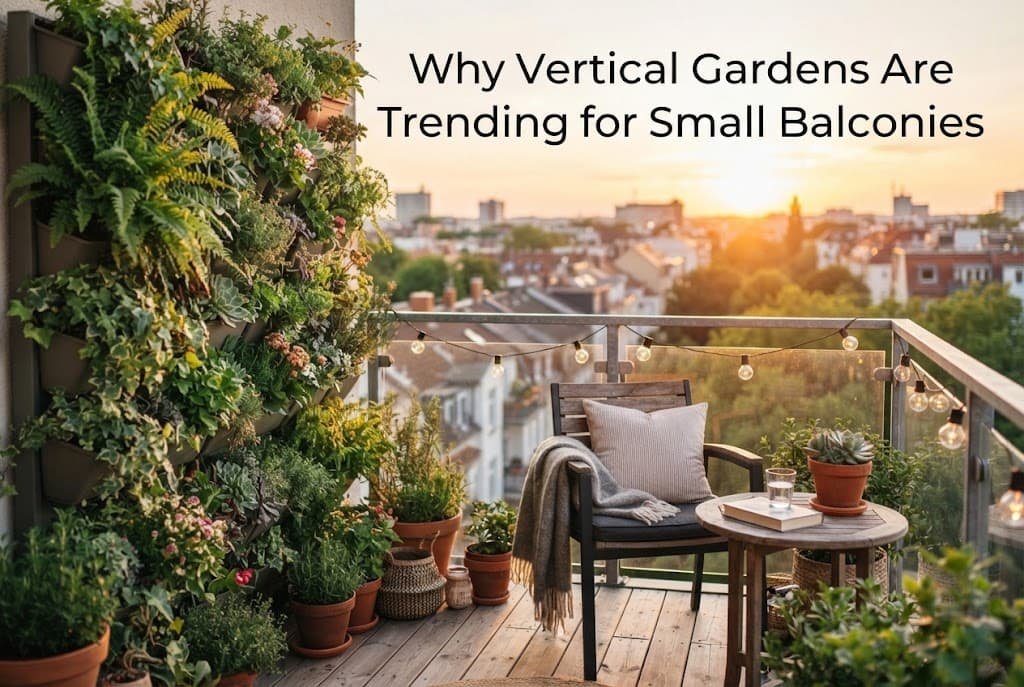
Vertical gardens keep steadily displacing traditional ground-level planting arrangements on small balconies, for a reason grounded in measurable floor-space mathematics, not seasonal taste alone – and understanding that specific reason tells you whether it’s genuinely worth adopting or just the current version of a cycle that will eventually pass entirely. The shift is real and checkable in how much usable floor space a vertical arrangement actually preserves compared to traditional planters, not simply a matter of one gardening style being more fashionable than another.
What actually changed
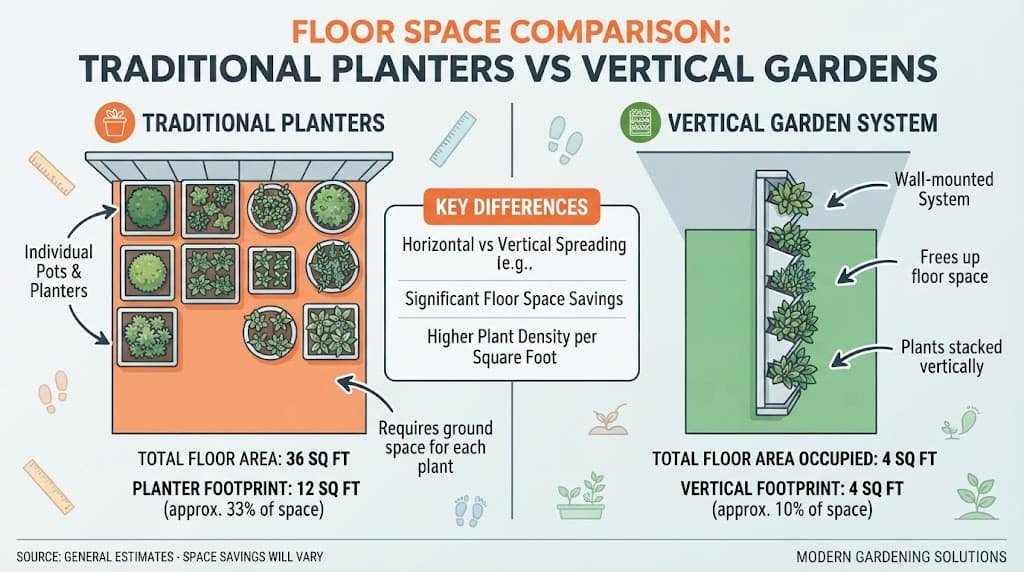
The measurable shift is a move away from multiple ground-level planters arranged across a balcony’s floor toward wall-mounted or stacked vertical planting systems that occupy minimal floor footprint while still supporting a comparable number of plants. Where traditional planters compete directly with the floor space needed for seating and movement, a vertical arrangement redirects that same planting capacity onto wall space that would otherwise go entirely unused.
This isn’t purely aesthetic preference – it’s a direct property of how floor space and wall space represent genuinely different, non-competing resources on a small balcony, which is why the technique keeps recurring across different design eras rather than being tied to one particular decorating trend alone.
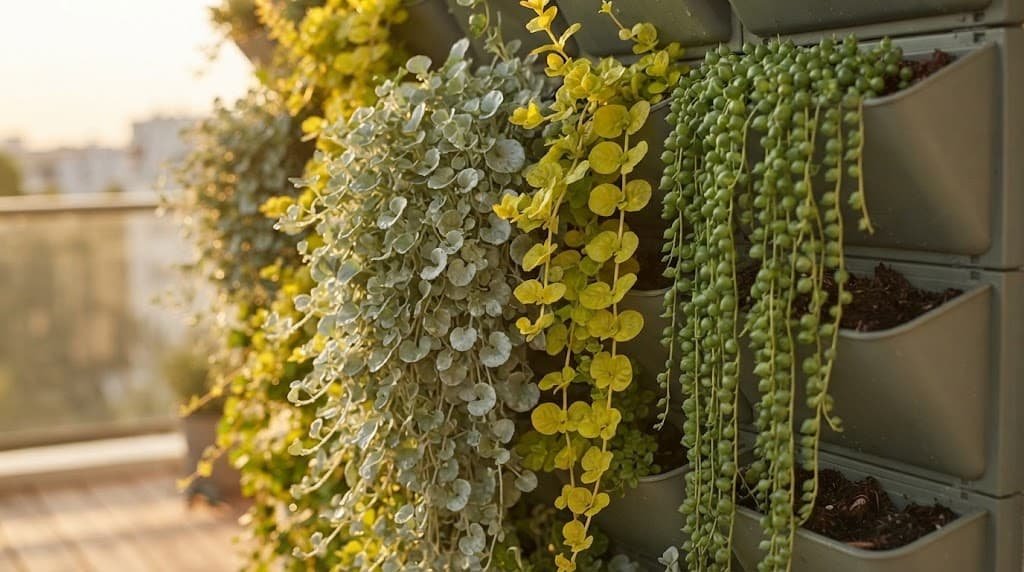
Plant selection has shifted alongside the structural change specifically, with trailing and compact varieties becoming more common than the larger, spreading plants traditional ground planters could more easily accommodate. This compounds the same space-saving mechanism further – a plant genuinely suited to a vertical arrangement’s constrained root space and orientation thrives in a way a plant selected without this consideration often doesn’t, regardless of how well-designed the physical system itself happens to be.
Why it keeps coming back specifically now
The continued popularity of prioritising genuine seating comfort and usable floor space on small balconies – covered elsewhere as its own priority – has created a direct tension with traditional planting arrangements that vertical gardens specifically resolve: wanting meaningful greenery without sacrificing the floor space a comfortable seat and its surrounding walking area actually require.
For most of the last several years, this specific tension between wanting genuine greenery and needing genuine floor space has been increasingly common as balcony sizes in newer housing have generally not grown to match this same desire for both, which is a concrete structural reason vertical gardening’s popularity tracks the broader small-space living trend rather than purely following gardening publication styling alone.
This distinguishes the current cycle from earlier vertical planting trends, which were often driven primarily by a particular gardening aesthetic’s popularity rather than by an actual structural floor-space constraint. The underlying mechanism is the same regardless of cause, but a technique genuinely driven by an actual spatial limitation tends to persist considerably longer than one driven purely by a gardening trend’s popularity, since the underlying floor-space constraint doesn’t simply disappear once the associated aesthetic eventually falls out of favour.
What this actually changes on a balcony
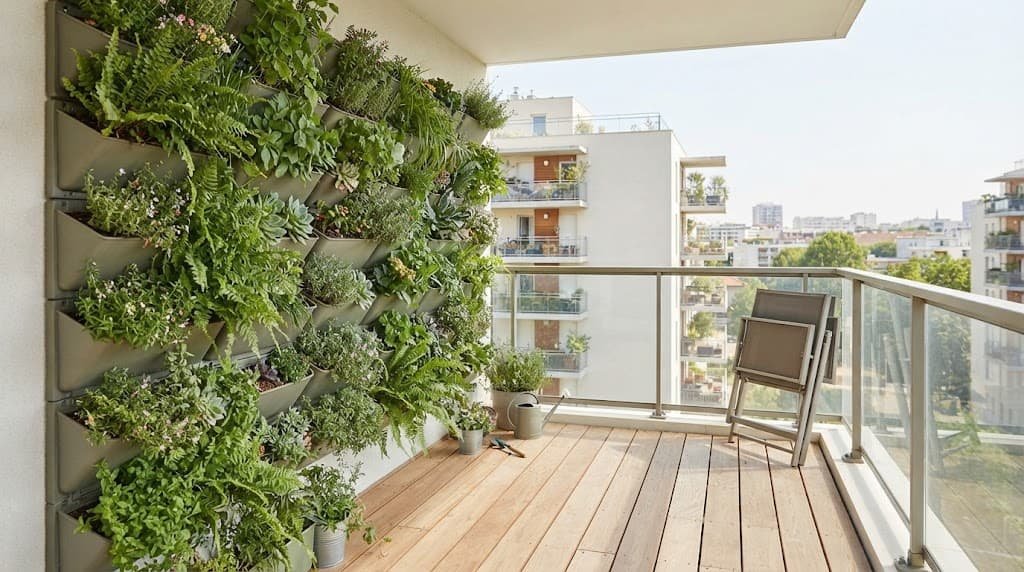
A vertical arrangement genuinely redirects planting capacity onto vertical wall space specifically, which is the direct measurable mechanism behind preserving genuine floor space that would otherwise be consumed by traditional ground-level planters entirely. This isn’t a subjective impression – it’s the direct result of plants occupying a genuinely different physical plane than the floor-level seating and walking area a small balcony’s actual function depends on.
Watering and general maintenance logistics also genuinely shift specifically with vertical arrangements, since gravity affects how water moves through a stacked or wall-mounted system quite differently than it does through individual ground-level planters entirely. This compounds directly with the space-saving mechanism itself – a genuinely well-designed vertical system often distributes water considerably more efficiently across multiple plants than manually watering several separate ground planters individually ever would.
Where this trend genuinely holds up
The floor-space mechanism behind vertical gardening’s effectiveness doesn’t depend on current taste, which is why it’s a reasonable longer-term choice specifically for balconies where floor space is the primary constraint on comfortable use. A balcony genuinely limited by floor area benefits from this approach regardless of which decade’s aesthetic currently favours the specific vertical planting style being used.
This is a genuinely different situation from most gardening trends specifically because the mechanism is measurable rather than purely stylistic. A trend based purely on which specific plant variety happens to be popular shifts in and out of favour without changing anything structural about the balcony’s actual usable space; the floor-space-preservation effect itself remains constant regardless of whether the broader aesthetic built around it happens to be currently fashionable.
Where the verdict should stay negative
Vertical gardening genuinely isn’t worth adopting on a balcony where floor space was never the actual limiting factor, despite how consistently it’s marketed as a universal small-space gardening solution.
On a balcony with genuinely quite ample floor space relative to your actual seating and movement needs, the floor-space-preservation mechanism that makes vertical gardening genuinely valuable elsewhere simply doesn’t address a constraint that doesn’t actually exist in that specific scenario at all. Adopting the approach purely for its current popularity, on a balcony where the underlying space problem genuinely doesn’t apply, adds unnecessary maintenance complexity without producing the practical benefit people actually and reasonably expect to get from it.
What people get wrong when adopting it
The most common mistake is choosing a vertical system based primarily on its visual appeal in photographs while ignoring the specific wall’s actual sun exposure and structural capacity to support it. A vertical arrangement mounted on a wall that receives genuinely insufficient light for the chosen plants fails regardless of how attractive the system itself looks, since the mechanism specifically depends on the plants actually thriving in their assigned position, not simply occupying it visually.
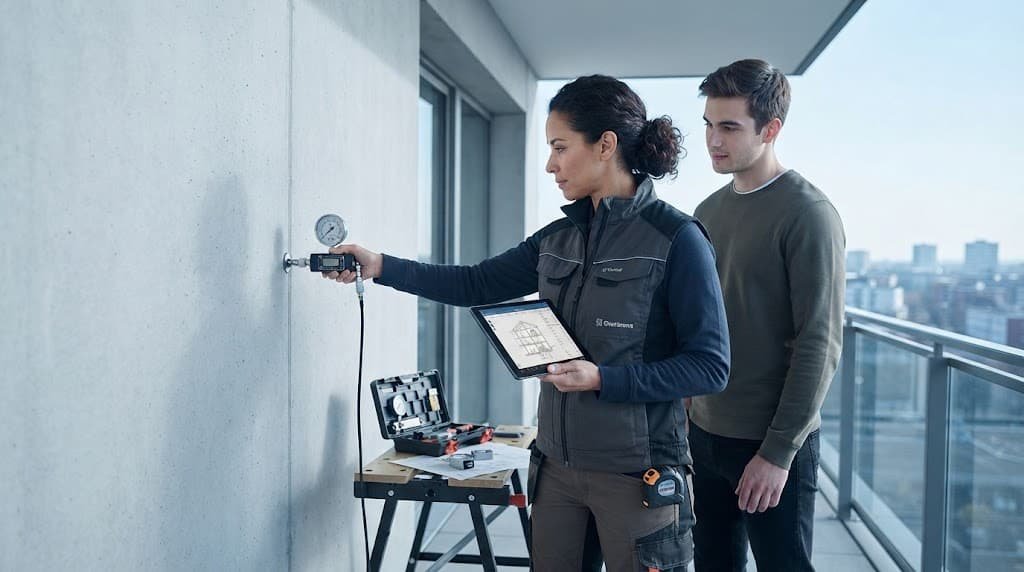
A second common mistake is underestimating the weight a fully-grown, well-watered vertical system actually reaches over time, and mounting it without confirming the wall or railing can genuinely support that eventual weight safely. Consulting a professional about load capacity before installing anything genuinely substantial is worth doing specifically for this exact reason, rather than simply assuming a system’s advertised capacity accounts for your particular wall’s actual real condition.
A third genuine mistake is positioning the vertical system directly above the seating area itself, without properly accounting for water runoff or falling leaves and debris during entirely normal maintenance and watering. A system mounted where drips or debris regularly land directly on the one seat you actually use undermines the exact daily comfort the balcony’s seating priority genuinely depends on, regardless of how well the planting itself is otherwise genuinely thriving overall.
Questions readers keep asking
Does a vertical garden actually save meaningful floor space compared to regular planters?
Yes, genuinely and quite measurably – redirecting planting capacity onto wall space that would otherwise go entirely unused directly preserves valuable floor area for seating and movement, which is the genuine core mechanism that makes this approach specifically valuable for floor-space-constrained balconies overall.
Is vertical gardening just a temporary trend that will look dated soon?
The underlying floor-space mechanism it addresses doesn’t depend on current taste, which suggests genuine longevity specifically for space-constrained balconies – though specific vertical system styles chosen within the broader approach can still date in the usual way any gardening trend eventually does over time.
Do vertical gardens require more watering effort than traditional planters?
It depends considerably on the specific system’s design – some genuinely distribute water efficiently across multiple plants with minimal added effort, while poorly designed systems can require more frequent individual attention than a comparable number of traditional ground-level planters would.
Can I convert an existing traditional planter setup into a vertical arrangement gradually?
Yes, genuinely, and this is often considerably more practical than replacing everything at once – moving just one or two plants into a small wall-mounted system first lets you confirm the specific wall’s actual light conditions and your own watering routine genuinely work before committing further floor space and budget to a fuller vertical conversion overall.