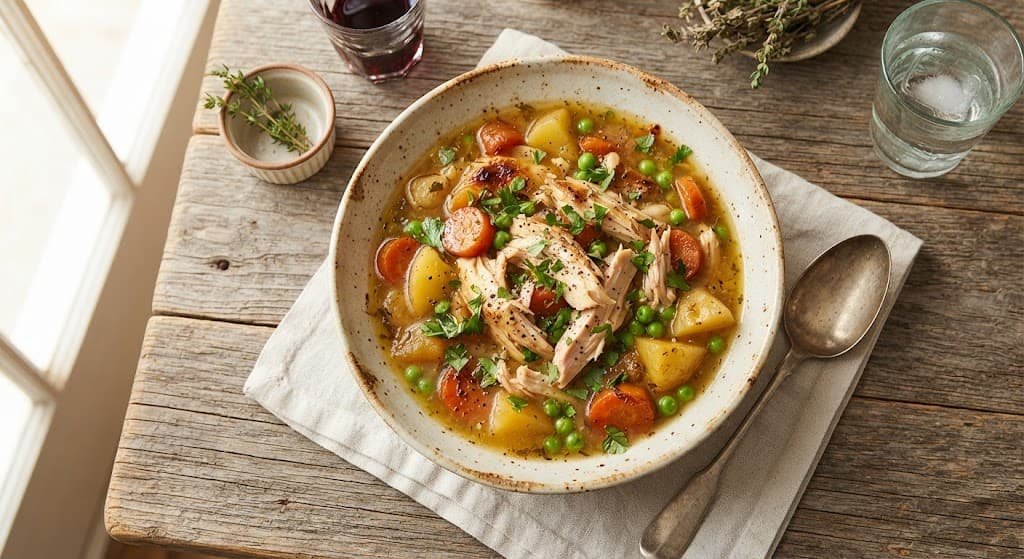
Two completely different chemical processes are responsible for a great bowl of chicken stew, and most recipes only ever trigger one of them. Dry, intense heat browns the outside of meat through the Maillard reaction, building hundreds of new flavor compounds in a matter of minutes; slow, moist heat breaks tough collagen down into gelatin over a much longer stretch of time, which is what makes braised meat fall-apart tender. Stovetop searing followed by a simmer is the usual way to get both. This version uses the broiler instead of a skillet for that first step, and the difference in the finished bowl is bigger than the swap sounds like it should be.
Two Kinds of Heat, One Pot of Winter Stew
Winter broiled chicken stew takes about 1 hour 15 minutes total, split fairly evenly between browning the chicken under the broiler and simmering it with vegetables until tender. That first step matters more than its short time suggests, since it gives the whole pot real depth rather than a thin broth.
A stovetop sear browns chicken skin from direct contact with a hot pan, one side at a time, which means flipping and managing multiple pieces in a crowded skillet. A broiler applies intense, even radiant heat from above, browning several pieces of skin-side-up chicken simultaneously without any flipping, while rendering out fat in the process. The result is skin that’s deeply browned and a layer of rendered fat left behind that can go straight into building the base of the stew, carrying real chicken flavor into the vegetables and broth from the very first step rather than starting from plain butter or oil.
Ingredients
For the Chicken
- 2 lbs bone-in, skin-on chicken thighs
- 1 tbsp olive oil
- Salt and black pepper, to taste
For the Stew
- 2 tbsp unsalted butter
- 1 onion, diced
- 2 carrots, diced
- 2 celery stalks, diced
- 2 cloves garlic, minced
- 3 tbsp all-purpose flour
- 4 cups chicken stock
- 2 medium potatoes, cubed
- 1 tsp dried thyme
- 1 bay leaf
- 1 cup frozen peas
- Fresh parsley, chopped, for garnish
Method
- Preheat the broiler. Pat the chicken thighs dry, rub with olive oil, and season with salt and pepper. Arrange skin-side up on a broiler-safe pan.
- Broil 4 to 6 inches from the heat for 8 to 10 minutes, until the skin is deeply browned and crisp. The chicken won’t be fully cooked through yet; that’s expected, since it finishes in the pot. Set aside, reserving any rendered fat left in the pan.
- Melt the butter in a large pot over medium heat. Add the onion, carrot, and celery, and cook for 6 to 8 minutes, until softened.
- Stir in the garlic and cook for 30 seconds, until fragrant.
- Sprinkle the flour over the vegetables and stir constantly for 1 to 2 minutes, cooking it into a light roux.
- Gradually whisk in the chicken stock, a little at a time, until smooth.
- Add the potatoes, thyme, bay leaf, and the broiled chicken, along with any reserved fat, to the pot. Bring to a gentle simmer, cover, and cook for 30 to 35 minutes, until the chicken is tender and the potatoes are cooked through.
- Remove the chicken, pull the meat into large pieces, and discard the bones. Return the meat to the pot.
- Stir in the peas and simmer for 3 to 5 minutes, just until warmed through. Season with salt and pepper, remove the bay leaf, and garnish with parsley before serving.
What Separates Fine From Excellent Winter Broiled Chicken Stew
A fine version has tender chicken and a decent broth. An excellent one has visible, deep browning on the chicken that carries through into the final broth as real depth, not just seasoning sitting on top of a thin base. That depends on not rushing the broiler step; pale, barely-colored skin under the broiler means the fond and rendered fat left behind will be weak, and the whole pot inherits that thinness. The other detail worth chasing is pulling the chicken into larger, more rustic pieces rather than shredding it fine, since bigger pieces hold their texture through the reheat and don’t disappear into the vegetables.
Troubleshooting
Why didn’t my chicken skin brown properly under the broiler?
Cause: the chicken was placed too far from the heat source, or it wasn’t patted dry enough beforehand, leaving surface moisture that has to evaporate before browning can start. Fix: position the pan 4 to 6 inches from the broiler element, and dry the skin thoroughly with paper towels before seasoning.
Why is my stew thin instead of rich and coating?
Cause: either the roux wasn’t cooked long enough to fully incorporate, or the rendered chicken fat from broiling was left behind and never made it into the pot. Fix: cook the flour with the vegetables until it smells toasted rather than raw, and be sure to scrape any fat and browned bits from the broiler pan into the stew.
Why did my chicken turn out dry despite the long simmer?
Cause: chicken breast was used instead of bone-in thighs, and breast meat has far less fat and connective tissue to protect it through a long braise. Fix: stick with bone-in, skin-on thighs, which are built to handle this kind of extended cooking without drying out.
Variations and Substitutes
Drumsticks work just as well as thighs and follow the same broil-then-braise approach, since both cuts have enough fat and connective tissue to hold up through the simmer. Parsnips or turnips can stand in for some of the potatoes for a more distinctly winter flavor profile. A splash of apple cider vinegar stirred in at the end brightens the broth if it tastes flat after a long simmer, cutting through the richness the same way a squeeze of citrus might in a lighter dish. For a thicker, more rustic stew, mash a few of the potato pieces against the side of the pot before serving.
Serving and Pairing
Crusty bread or warm biscuits are the obvious pairing, mostly for the broth left at the bottom of the bowl. A simple green salad with a sharp vinaigrette on the side balances the richness of the stew without adding much extra work, and this holds up well as a make-ahead meal for a cold week, since winter broiled chicken stew tastes just as good, if not better, reheated the next day.
Storage and Reheating
Store in an airtight container in the fridge for up to 4 days. Reheat gently on the stovetop over medium-low heat, adding a splash of stock or water if the stew has thickened too much overnight. This freezes well for up to 3 months; thaw overnight in the fridge before reheating for the best texture.
Nutrition (Per Serving, Serves 6)
These are estimated values per serving. Actual numbers will vary depending on the exact chicken and stock used.
| Calories | 385 kcal |
| Protein | 27 g |
| Carbohydrates | 25 g |
| Fat | 19 g |
| Fiber | 3 g |
This recipe was tested and refined in bebup.org’s kitchen before publishing, with particular attention paid to the broiler timing described above.
A Stew Built on Two Kinds of Heat
Most stews ask you to choose between speed and depth, but browning under the broiler while the pot comes together underneath splits the difference in a way that’s genuinely efficient rather than a compromise. The result tastes like it took longer than it did, which is really the best outcome any winter dinner can ask for, and it’s exactly why winter broiled chicken stew earns a spot in cold-weather rotation over a version that skips the broiler step entirely.
Mastering the Broil-Then-Braise Technique
The Maillard reaction that browns the chicken skin under the broiler happens fast, typically starting above 285°F at the meat’s surface, and it’s entirely different from the collagen-to-gelatin conversion that tenderizes the meat later in the pot. Collagen begins breaking down around 160°F, but the process is slow and depends on time at temperature rather than peak heat, which is why the stew needs a genuine 30-plus-minute simmer even after the chicken is already browned and technically edible. Trying to rush this second stage by cranking the heat higher doesn’t speed up the collagen conversion meaningfully; it just risks drying out the muscle fibers before the connective tissue has had its chance to soften. The broiler and the simmering pot are doing two completely separate jobs, and neither one can substitute for the other.
Winter Broiled Chicken Stew
Ingredients
Method
- Broil chicken thighs, skin-side up, 4 to 6 inches from heat for 8 to 10 minutes until deeply browned. Set aside with any rendered fat.
- Cook onion, carrot, and celery in butter for 6 to 8 minutes until softened.
- Stir in garlic for 30 seconds.
- Sprinkle in flour and cook 1 to 2 minutes to form a roux.
- Gradually whisk in chicken stock.
- Add potatoes, thyme, bay leaf, and broiled chicken with its fat. Simmer covered 30 to 35 minutes until tender.
- Remove chicken, pull into large pieces discarding bones, and return to the pot.
- Stir in peas, warm 3 to 5 minutes. Season, remove bay leaf, and garnish with parsley.