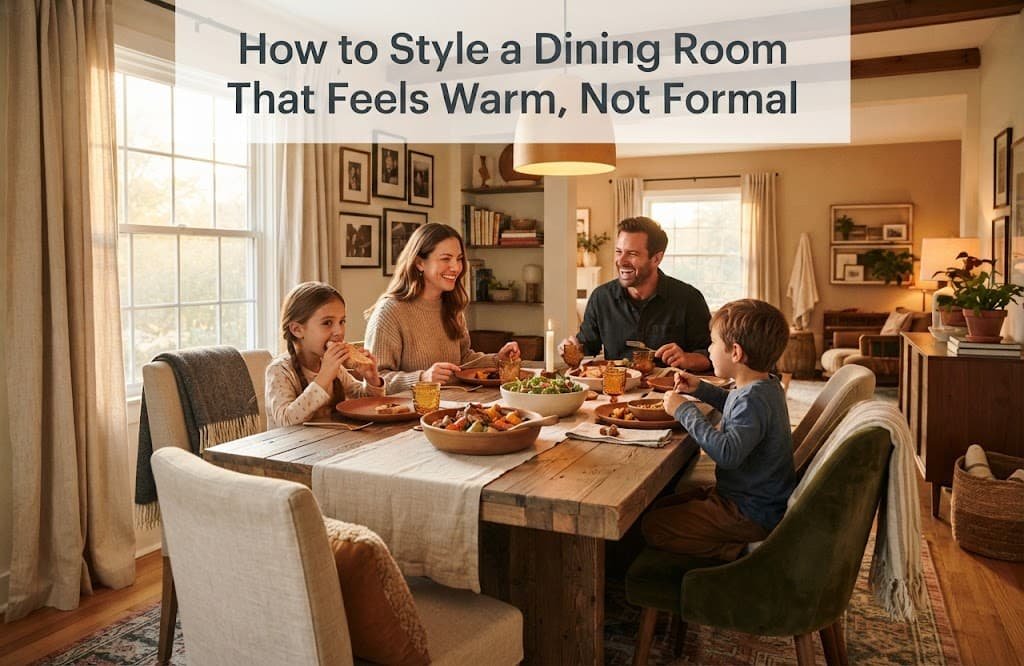
A dining room styled purely around formal tradition often ends up feeling like a space genuinely reserved for rare occasions only, rather than somewhere the household actually gathers regularly and comfortably. Styling a dining room to feel genuinely warm rather than formal means carefully prioritising the specific elements that invite genuine everyday use, not just the elements that photograph well for a single special-occasion table setting.
The one decision that shapes this room
The deciding factor is whether the room’s lighting and material choices signal “everyday gathering space” or “reserved formal room,” not simply how expensive or coordinated the furniture is. A dining room with a single harsh overhead light and genuinely minimal warmth in its overall material palette reads as formal and occasion-only, regardless of how attractive the table itself happens to be, while a room with genuinely layered, warmer lighting invites lingering in a way a single bright fixture simply doesn’t.
This single core distinction – lighting warmth and material softness, not furniture cost – should genuinely guide nearly every choice made below, considerably more than any specific style trend or table-setting convention could.
This is precisely why two separate dining rooms with genuinely similar furniture quality can feel quite completely different in actual daily use. The room with layered, adjustable lighting and some textile softness becomes a place the household actually lingers in after a meal; the room styled primarily around a striking formal table setting, lit only by a single stark overhead fixture, tends to get used quite briefly and left quickly, regardless of how much the furniture itself genuinely cost.
Choosing seating that invites lingering
Choose dining chairs with at least some genuine upholstery or cushioning over entirely hard wood or metal seating, if comfort during a longer meal or conversation genuinely matters to your household, since chairs people actually want to remain seated in directly support the lingering, everyday use a warm dining room is specifically meant to encourage.
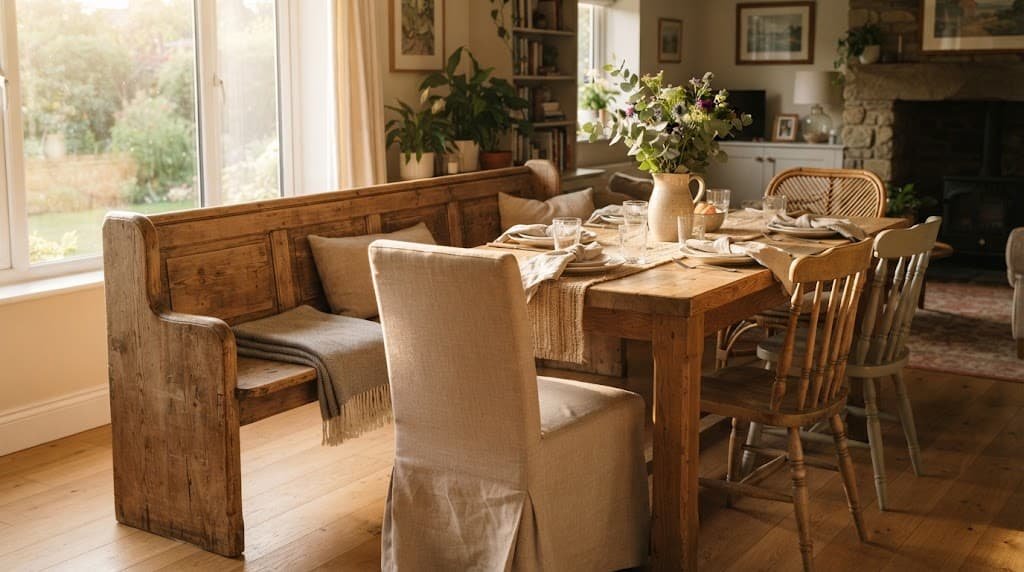
Consider a bench or a genuine mix of seating types along one side of the table rather than perfectly uniform chairs throughout, since this arrangement tends to feel considerably more casual and genuinely inviting than a perfectly matched set, while still comfortably accommodating the exact same number of people.
Getting the lighting genuinely warm
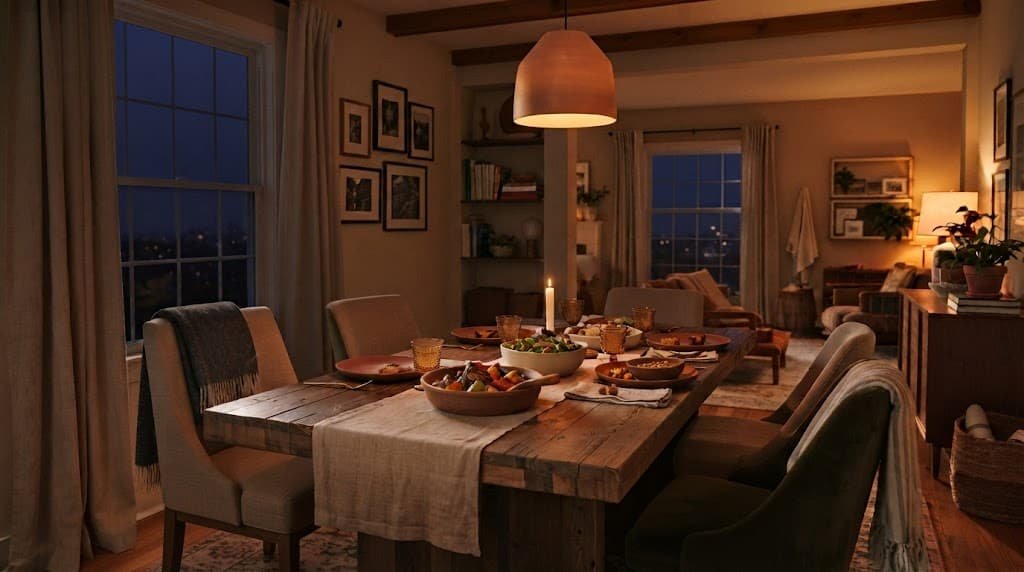
Choose a genuinely dimmable light source positioned over the table specifically, rather than relying on a single fixed-brightness fixture, since the ability to lower light levels for a casual weeknight dinner versus a brighter setting for homework or daytime use is what actually makes one single room serve both formal and everyday purposes well simultaneously.
Add at least one genuine secondary light source in the room beyond the main fixture – a sideboard lamp, a wall sconce – since a room lit entirely from directly above the table tends to feel quite starkly functional rather than genuinely inviting, regardless of how warm the main fixture’s bulb colour actually happens to be.
Choose a genuinely warmer bulb colour temperature specifically for this room over a cooler, more clinical-feeling option, since colour temperature affects perceived overall warmth just as much as actual brightness level does, and a cooler light can genuinely undermine an otherwise warm material palette elsewhere throughout the room.
What the materials are actually doing
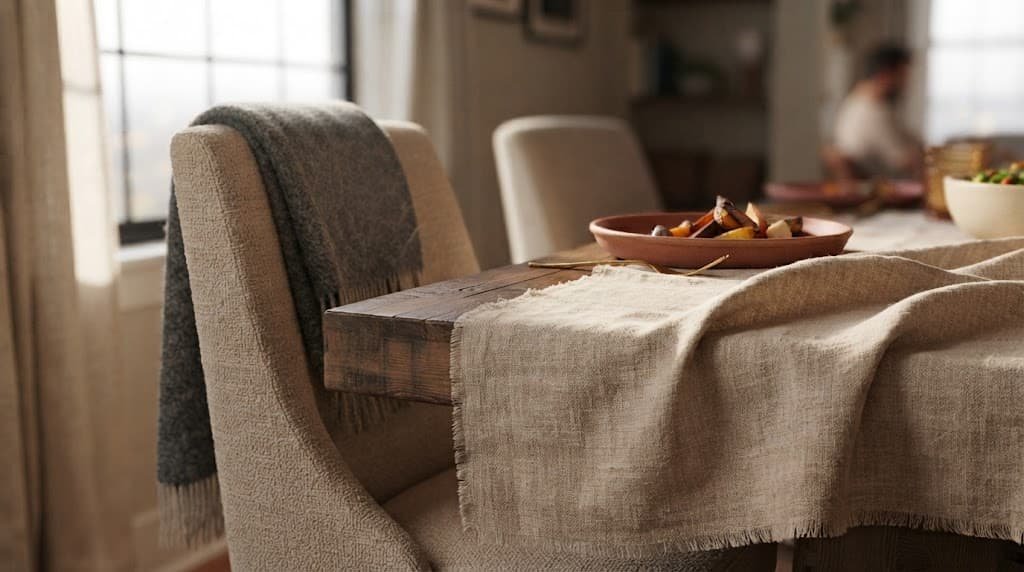
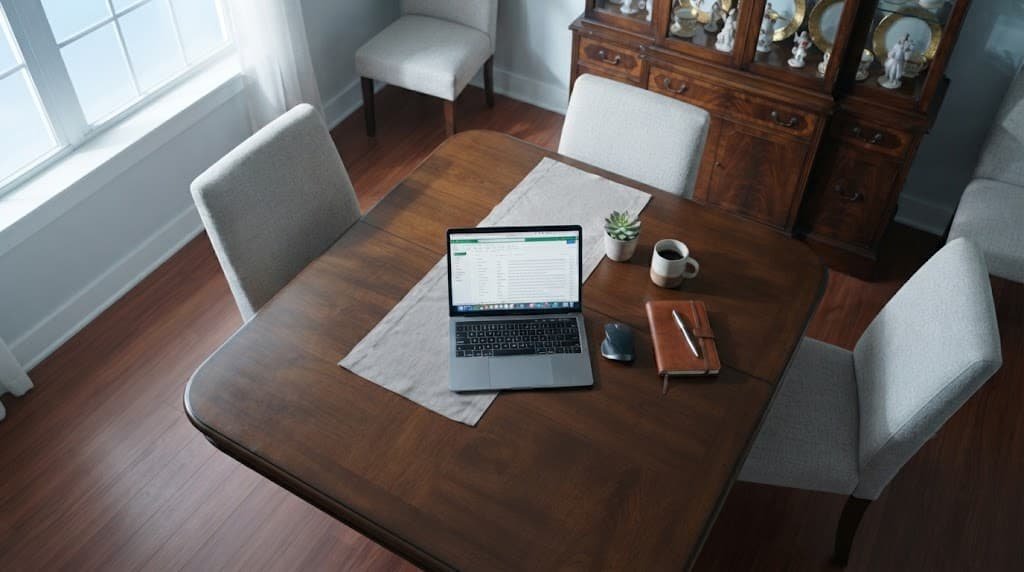
Introduce at least one genuinely soft, tactile element into the room – a table runner, seat cushions, curtains – since a dining room built entirely from hard surfaces (wood table, wood chairs, wood floor) reads as considerably more formal than one with some textile softness breaking up that hardness.
Choose a table surface and chair material that can handle genuine daily wear without requiring careful treatment, rather than selecting purely for how pristine it looks initially, since a table you’re anxious about scratching or staining discourages the relaxed, everyday use a warm dining room is meant to support.
Repeat at least one genuine material or colour note between the dining room and an adjacent space, if the two are visually connected in any way, since this same connection principle that applies to open-plan kitchens also genuinely helps a separate but visible dining room feel like a natural extension of the home rather than an isolated, entirely formal set piece.
What isn’t worth prioritising here
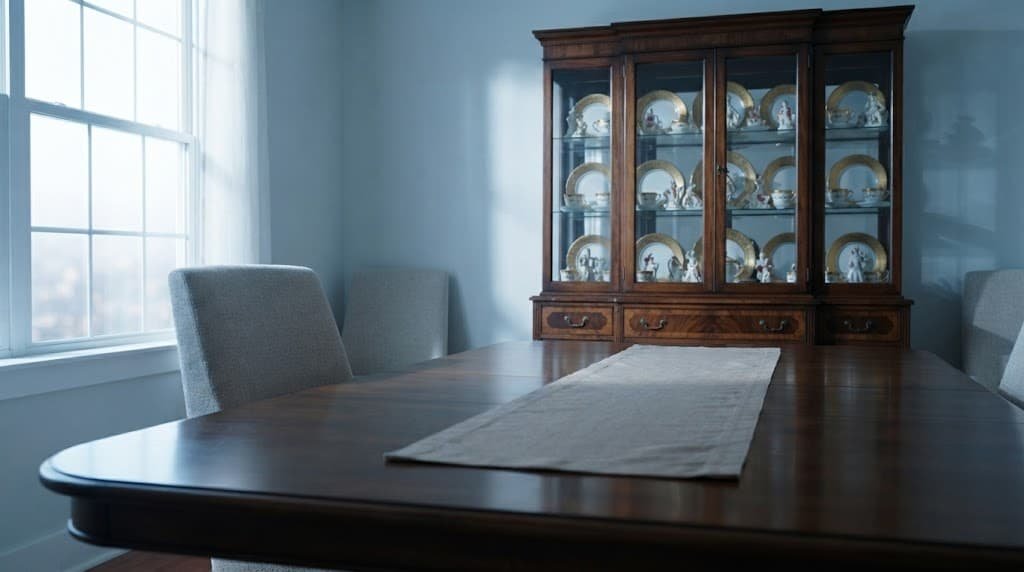
An elaborate, matched formal dinnerware display in a glass cabinet isn’t worth prioritising over the lighting and material choices above, despite how commonly this gets recommended for dining room styling.
A beautifully displayed formal china collection genuinely does little to address whether the room itself feels inviting for a regular Tuesday dinner, and can even reinforce the sense that the room is reserved for special occasions specifically, working directly against the everyday warmth the space actually benefits from genuinely cultivating over time.
Matching the approach to your situation
If your dining room is currently used primarily for special occasions, prioritise the lighting flexibility change first and foremost, since a dimmable, layered lighting setup allows the same single room to genuinely shift between an elevated occasion feel and a casual everyday one, without ever requiring separate furniture for each distinct purpose.
If your dining room genuinely doubles as a workspace or homework area during the day, prioritise durable, easy-to-clean material choices over purely decorative textile softness, since the room’s practical daily function in this specific case genuinely matters more than achieving maximum textile warmth purely for its own sake.
Questions readers keep asking
Does a warm dining room need to avoid formal elements entirely?
No, not at all – a genuinely warm dining room can still include some formal touches, like a nicer table or coordinated chairs, provided the lighting and material softness genuinely prevent those formal elements from making the room feel reserved for special occasions only.
What’s the cheapest way to make a dining room feel less formal?
Adding a genuine dimmer switch or simply switching to warmer bulbs in the existing fixture is often the single most cost-effective change available, since lighting warmth genuinely affects the room’s overall feel more than most furniture or decor purchases ever do.
Is it worth having a separate everyday table and a formal one if space allows?
For some households, yes, though for most a single well-chosen table with flexible lighting and layered textiles achieves both purposes without the expense and space commitment of maintaining two separate dining setups.
Does the table shape affect how warm or formal a dining room feels?
To some genuine degree – rounder or oval tables tend to feel slightly more casual and conversational than a large rectangular table, though this effect is generally quite secondary to lighting and material choices, which affect the room’s overall feel considerably more consistently across many different table shapes.
How often should lighting be adjusted between formal and casual settings?
As often as the room’s actual use genuinely and naturally changes – a dimmer switch makes this effectively instant, so there’s genuinely no need to choose between formal and casual permanently at all. The room can shift naturally and easily between the two as genuinely needed, which is the entire actual point of prioritising lighting flexibility in the first place.
What changes if you rarely host but eat there daily
If your dining room is genuinely used almost exclusively for daily household meals rather than hosting, prioritise comfort and durability over any formal considerations entirely – a table and chairs that hold up well to genuine daily use and truly comfortable seating matter considerably more here than any special-occasion styling ever would.
What changes if you host often but eat elsewhere daily
If your household genuinely eats most daily meals somewhere other than the dining room – a kitchen island, informal nook – but hosts more formal gatherings there regularly, the room can genuinely lean slightly more toward polished styling, provided the lighting flexibility and some material softness still keep the space from feeling entirely reserved and unused between actual hosting occasions.