A bed made with care can still read as a mess from the doorway, and the making is seldom to blame. Why does a bed still look unmade when every corner is tucked? The eye judges edges first and lines second, and light then sharpens both. This page follows one bed of 180 × 200 cm in a flat in Eindhoven. It lists five quick checks for the doorway. Three faults follow, with the fixes ordered by cost. Every figure belongs to that one bed, so measure yours properly, since a bed of another size changes every number here.
Why Does a Bed Still Look Unmade After You Make It
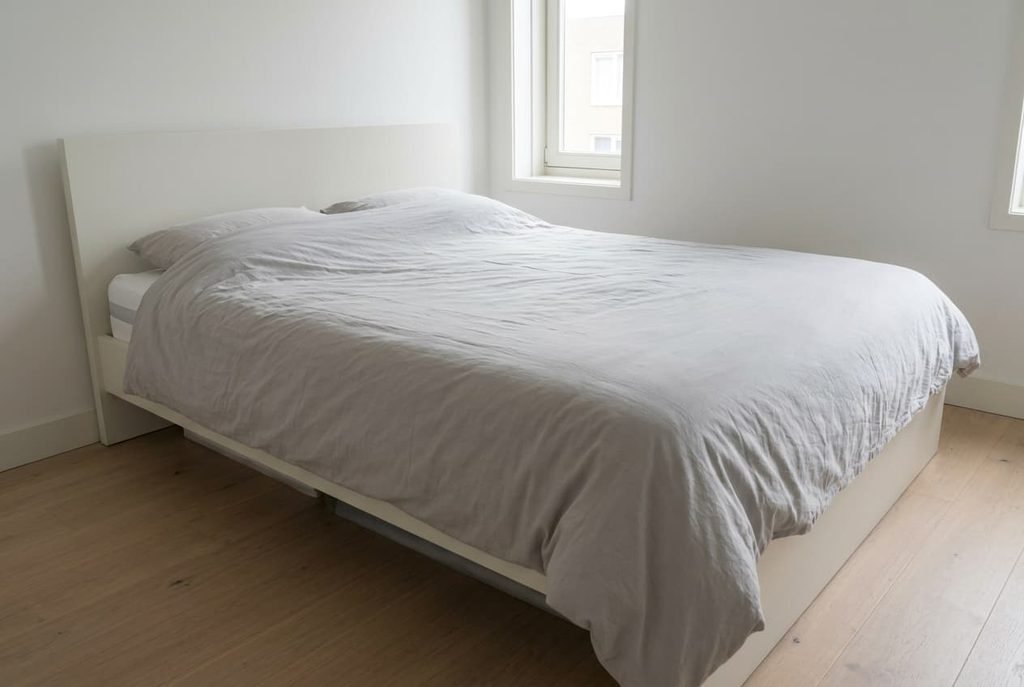
A bed is the largest flat rectangle in a bedroom, so the eye checks it first and judges it by its edges. Take a 180 × 200 cm bed, a mattress 28 cm tall and a duvet measuring 200 × 220 cm. Each side of the duvet hangs just 10 cm down, so 18 cm of mattress stays bare. If it sits 6 cm off-centre, one side drops 4 cm and the other 16 cm. A difference of 12 cm reads as sloppy from across the room.
Light does the rest. A window beside the bed sends low light across the cover, and a glossy fabric lights up every crease. Pillows add a third problem when their tops stand at different heights, because they draw a ragged line against the wall.
Most owners blame the making, yet the unmade look comes from the edges and the light, and tucking harder fixes neither. People remake the bed three times a week and the result looks the same. The fabric and the proportions haven’t changed, and the eye notices.
The next section lets you see which faults you have.
Five Checks to Make From the Doorway
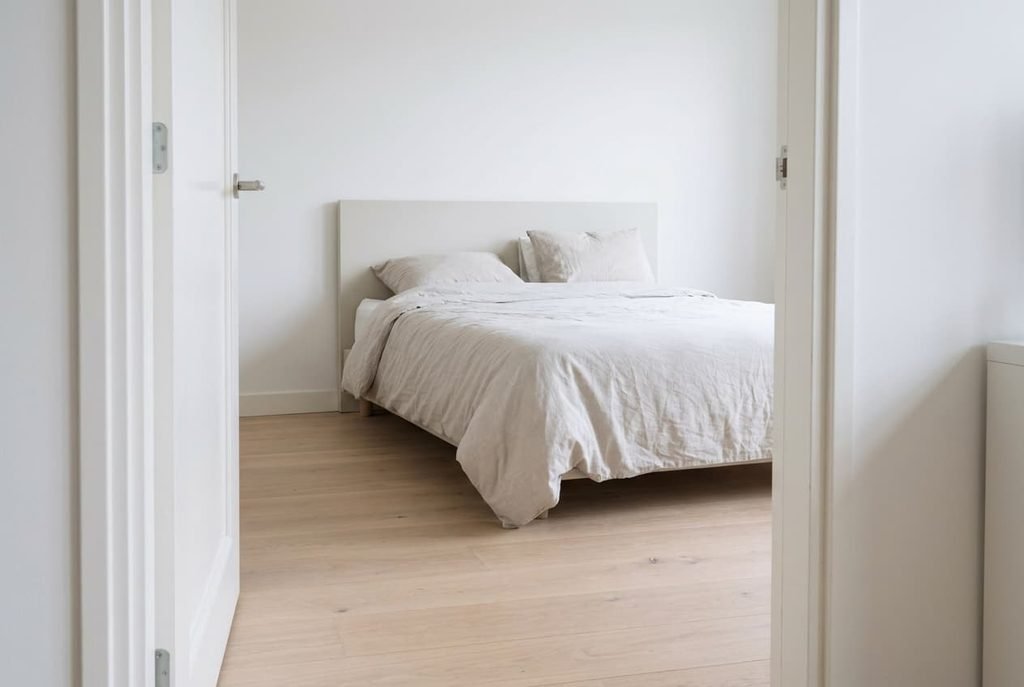
Make the bed as you normally would, then walk to the door and turn round. Does the bed still look unmade from there? Give it a slow thirty seconds and run five checks in this order.
1. Drop: is the duvet’s drop equal on both sides, within 3 cm? Ours measures 4 cm at the left and 16 cm at the right.
2. Hem: does the foot hang level, or does one corner sit lower than its partner?
3. Light: do the creases glint when you crouch level with the window?
4. Line: do the pillow tops stand within 3 cm of each other? Ours range from 40 cm to 55 cm, a spread of 15 cm.
5. Anchor: does the centre of the pillows sit under the centre of the headboard?
If three of the five checks fail, all the faults below apply. A bed that looks right from the pillow end but wrong from the door suffers mostly from the drop and the pillow line. Note which checks failed before you read on, since each fault answers a different one.
Three Faults That Make a Bed Look Unmade
The duvet barely clears the mattress. Set a 200 cm duvet on a 180 cm bed and each side hangs just 10 cm, far less than the 28 cm of mattress it should hide. At no cost, pull the cover from the foot until both sides show the same drop, and check each one against the width of your palm. Rearranging comes next: lay a spare blanket, folded to 40 cm wide, over the foot, which covers the short hem and gives the bottom edge some weight. The purchase is a duvet one size wider, at 220 cm. Each side then hangs 20 cm, so it’s the dearest option here, yet it cures the fault for good. Count the matching cover in that cost, since a wider duvet needs a wider cover.
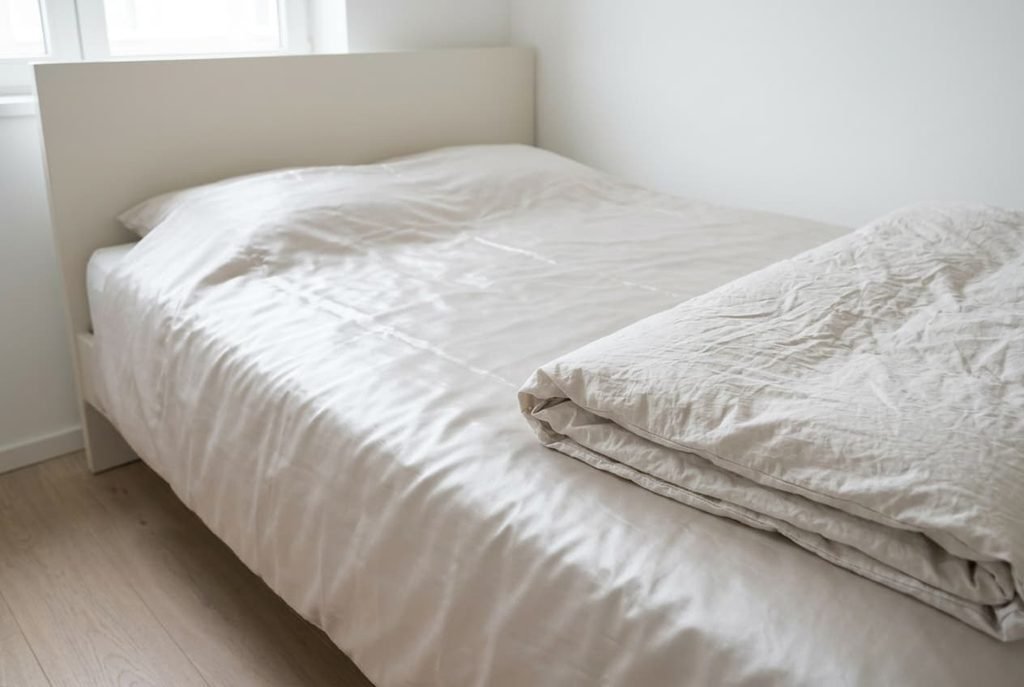
The cover catches light along every crease. A smooth cover in one tone, with a sheen, turns low window light into a bright line wherever it folds. At no cost, smooth the cover from the foot with flat palms and then fold the top 30 cm back, because that’s where creases gather most. To rearrange, draw a net curtain so the light crosses the bed more softly, or swap to a duller cover you already own. If you buy, look for a washed, crinkled weave, since its texture hides creases by design. It costs little and ends the daily smoothing. Strong low sun will still glint on any smooth cloth in the afternoon, so judge the bed at the hour when it’s seen most.
The pillows draw a ragged line. Ours range from 40 cm to 55 cm in height, and the wall behind exposes every centimetre of that spread. Begin at no cost: stand the two tallest upright and centred on the headboard, then lay the others flat. Rearrange by swapping pillows until the two upright ones match within 3 cm. If the line still wanders, buy a matching pair. That’s the cheapest purchase of all, and it settles the line for years. A very wide headboard may need three upright pillows to look balanced.
Habits That Keep a Bed Looking Made
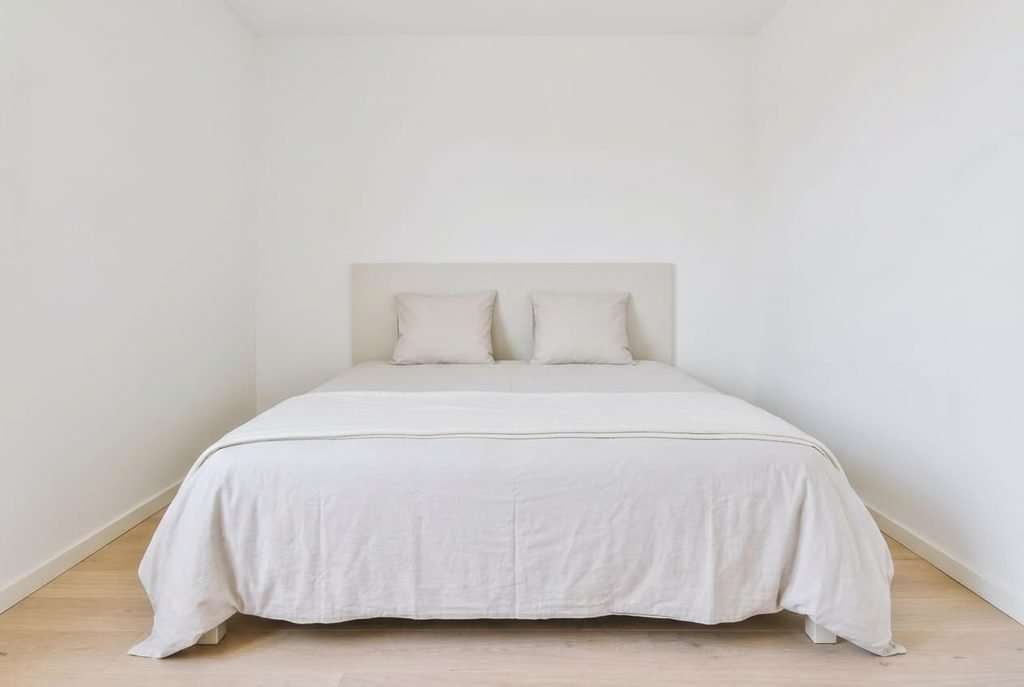
Sew one stitch of contrasting thread onto the top edge of the duvet, halfway along it. Align that stitch with the headboard whenever you make the bed. Keep the two upright pillows as a matched pair. Wash the cover on a fixed weekday, so the fabric stays crisp.
Why does a bed still look unmade a week after a good reset? The drop drifts by a few centimetres each night as you turn, and nothing pulls it back. A glance at the stitch shows whether the cover has crept.
Repeat the five points on the first of each month. Keep the spare blanket folded at the foot, ready for the day the cover shrinks in the wash. Turn the duvet end to end every month so the wear spreads. That also keeps the stitch easy to find.
The Fix That Isn’t Worth Making
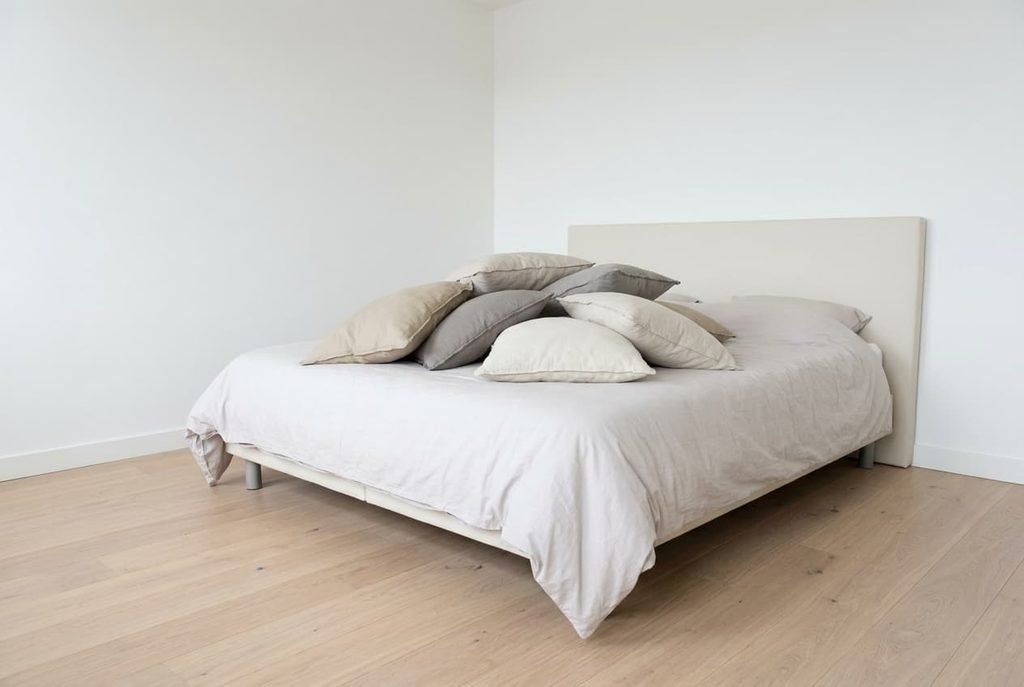
Piling on extra cushions to disguise the problem is the usual last resort, and it backfires. Each cushion brings two new edges and a new height, so a bed with six of them gives the eye six more lines to judge. The short drop and the shiny creases still sit beneath the pile. A cushion heap also needs rebuilding every morning, which lengthens the routine you wanted to shorten, and a heap on one side pulls the whole bed off balance.
Ironing every day gains nothing either.
A pressed cover looks smooth for an hour before the creases return, while the drop of 10 cm and the ragged pillow line stay as they were. The hour you spend ironing buys nothing that lasts, and the cover wears sooner under the heat.
Why does a bed still look unmade after another layer? Every layer sits on the same short duvet and the same shiny cover. Run the five checks tonight and work through the faults one at a time, starting with the changes that cost nothing. After each change, stand at the doorframe, take a photo, then compare the shots. Most beds improve a lot with the cheapest changes, and only a short duvet needs a purchase. Keep the photographs for a month. They show how fast the drop creeps back and when it’s time for another reset. Put a note in your diary for the first of next month, and repeat the check then.
Questions Readers Keep Asking
What is the most common cause?
A duvet that’s too narrow for the mattress. When the drop is only 10 cm on a mattress 28 cm tall, the bare side shows. Any off-centre pull then looks sloppy. Measure the drop at both sides. The figure usually points straight at the cause, whatever else the bed does.
Is there a quick fix before guests arrive?
Yes. Centre the duvet so both drops match, smooth it from the foot, fold the top 30 cm back and stand the two matched pillows upright and centred. That takes roughly three minutes, and it removes the loudest faults. Draw a net curtain if the window rakes across the bed.
Can I fix it without buying anything?
Mostly, yes. Smoothing and folding back cost nothing, and swapping pillows doesn’t either. Only a short duvet needs a purchase, and a spare blanket across the foot can cover that gap for a while. Test each change from the doorway, and spend money only on whichever fault remains.