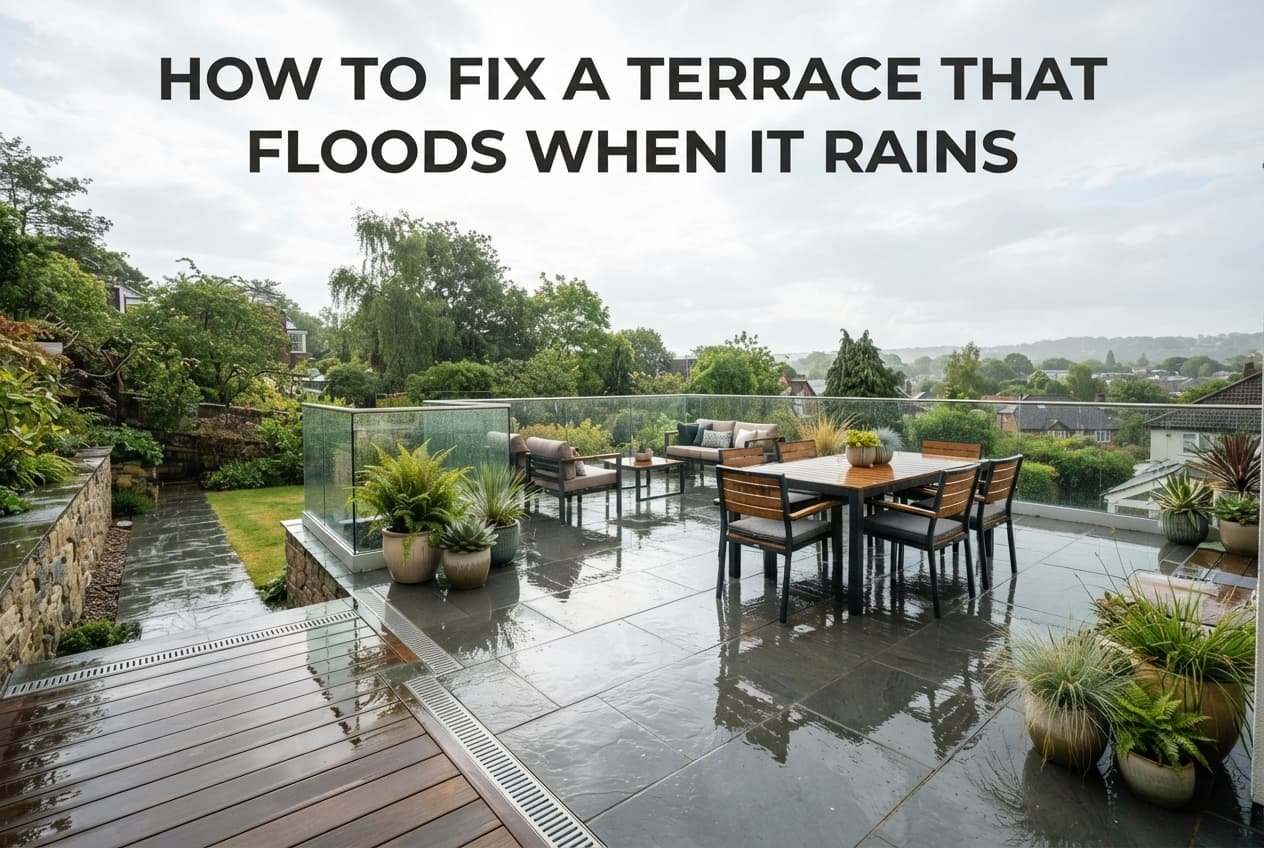
A terrace that genuinely floods with every single rain usually isn’t a space with no possible fix at all – it’s a space where specific, addressable drainage factors are combining to prevent water from actually moving away as it genuinely should, which is a fundamentally different problem than simply having a terrace in an inherently poor location entirely. Understanding which factor is actually driving the flooding determines whether the fix is simple and immediate, or genuinely requires a more substantial change.
What is actually happening
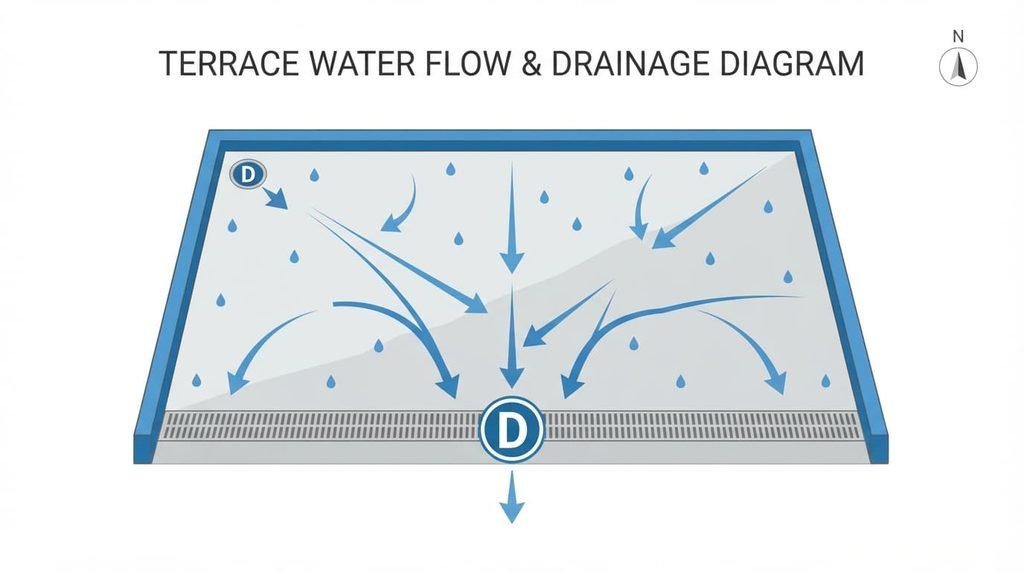
A flooding terrace typically stems from a combination of inadequate surface slope directing water away, genuinely blocked or insufficient drainage points, and surrounding landscaping or structures that redirect additional water onto the terrace rather than away from it. A terrace surface without a genuine, deliberate slope toward drainage points will pool water regardless of how well those drainage points themselves function, which compounds with any actual blockage to produce the flooding you’re experiencing.
This matters because “the terrace just floods when it rains” often gets treated as an unavoidable property of outdoor spaces generally, when the actual issue is frequently this specific combination of factors, meaning a fix addressing only one – simply clearing visible debris, for instance – may not fully resolve genuine underlying slope or drainage capacity issues.
Confirm which pattern you have
Check quite specifically where water tends to pool during or after rain – evenly across the whole surface, or concentrated in particular low points – since this distinguishes a genuine overall slope issue from a more localised drainage point problem specifically.
Check your terrace’s actual drainage points directly for visible blockage – leaves, debris, sediment buildup – since this represents an addressable cause quite distinct from the terrace’s underlying structural slope or capacity.

The fixes, in order of cost
1. Clear and maintain your terrace’s existing drainage points regularly, removing debris and buildup that restricts water flow. This costs relatively little beyond the effort involved and directly addresses one of the most common, easily overlooked causes of drainage problems that were otherwise structurally adequate.
2. Redirect surrounding landscaping or downspouts that may be adding additional water onto your terrace specifically, rather than directing it away. This is a modest addition to the total cost but directly addresses an external water source compounding your terrace’s own drainage demands beyond what it was originally designed to handle.
3. Add supplementary surface drainage solutions – channel drains, additional drainage points – specifically at locations where water genuinely pools most persistently. This costs more than the fixes above but directly addresses genuine capacity limitations in your terrace’s existing drainage system without requiring a full structural rebuild.
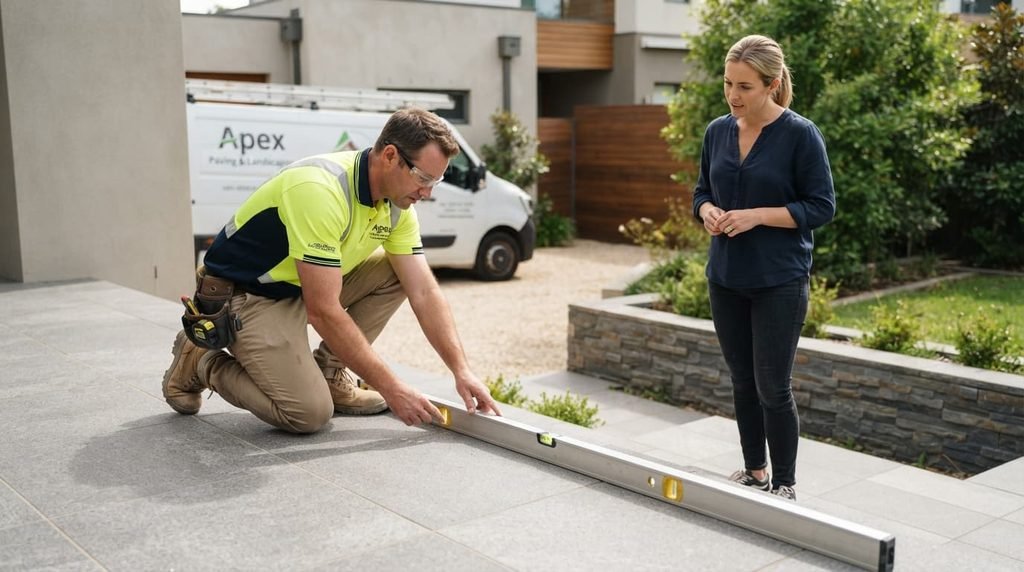
4. For a terrace with a genuine, persistent flooding problem the fixes above don’t resolve, consult a licensed contractor about the surface’s actual structural slope and drainage capacity, since this may indicate the terrace’s original construction lacks adequate slope entirely. This is a professional consultation, not a DIY project – genuine structural slope issues need proper assessment before further attempts are likely to succeed.
What isn’t worth doing
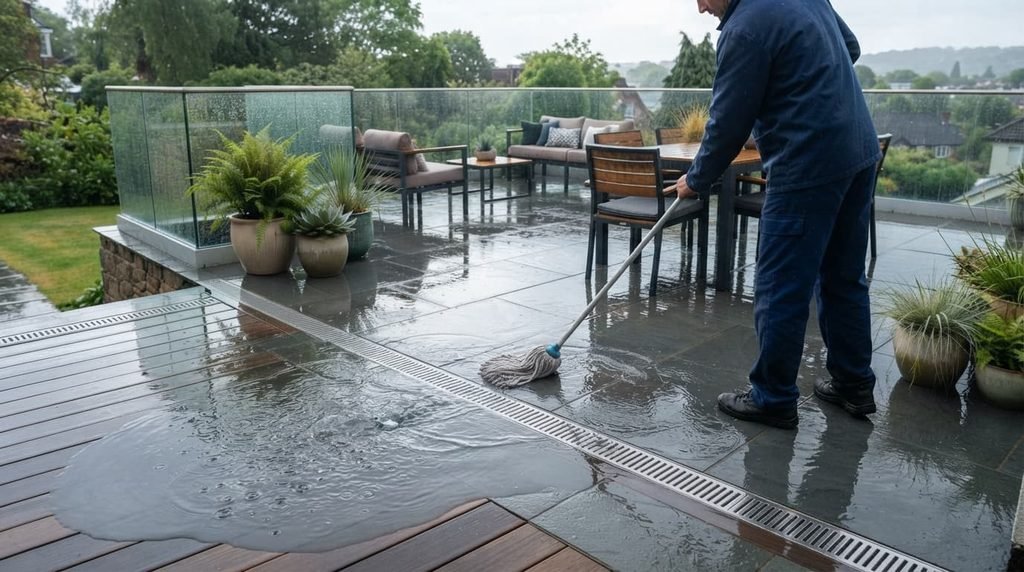
Relying entirely on temporary water removal – mopping, a wet vacuum – as your complete solution after every rain, without addressing genuine drainage or slope issues, isn’t worth doing as an ongoing approach.
Temporary removal addresses the immediate symptom but doesn’t address why water accumulated there in the first place, meaning a household relying purely on this approach continues experiencing the same underlying issue after every single rain, rather than genuinely resolving it.
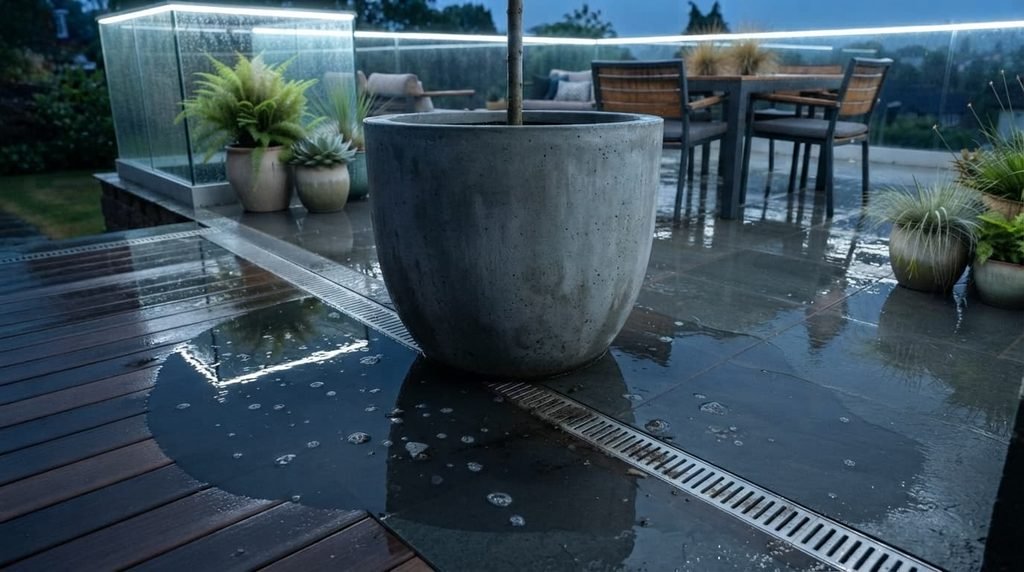
Furniture and planters positioned directly over drainage points can also genuinely compound this specific problem, since even genuinely clear drainage can be effectively blocked by items placed directly on top of or immediately adjacent to these points, restricting water flow despite the drainage itself being otherwise structurally functional and adequate.
What people get wrong about fixing this
The most common mistake is assuming terrace flooding is simply an unavoidable consequence of rain, when the actual cause is frequently a specific, addressable combination of slope, drainage, and external water factors rather than something inherent to outdoor spaces generally. Two similar terraces can vary considerably in this specific issue because of these addressable differences, not because rain itself affects every terrace equally regardless of its actual drainage design.
A second common mistake is addressing flooding reactively only after it’s already occurred, rather than proactively checking drainage points before anticipated heavy rain specifically. A brief, simple check before a forecasted significant rain event, clearing any visible debris genuinely thoroughly, prevents flooding that predictable, routine seasonal maintenance would have otherwise avoided entirely.
What changes if your situation is different
If your terrace’s flooding is genuinely limited to particularly heavy rain events rather than every rain, prioritise the drainage-clearing and redirection fixes specifically for that more extreme condition, over a more substantial structural change, since the actual problem threshold may not justify additional cost and complexity for typical, lighter rain.
If you’re renting and structural slope changes genuinely aren’t available to you, the drainage-clearing and water-redirection fixes become your practical ceiling, and a genuinely well-chosen combination of these can meaningfully address most flooding issues without requiring any structural change to the space at all.
The one thing to check before you commit
If you’re pursuing the licensed contractor option specifically, confirm with them whether your terrace’s flooding is genuinely isolated to the surface itself or connected to a broader structural or foundation drainage issue affecting the surrounding area, since this determines both the scope and cost of any recommended fix.
This matters more for this specific option than for the other fixes above, since those remaining fixes are all fully reversible, low-cost, and require no professional assessment at all, while a structural slope or foundation issue carries genuine cost and complexity worth confirming clearly before any further planning proceeds.
Questions readers keep asking
How often should I actually check and clear my terrace’s drainage points?
Checking before and after any significant rain event specifically, alongside a routine seasonal check even without rain, catches debris buildup before it becomes severe enough to meaningfully restrict water flow during an actual rain event.
Can standing water on a terrace genuinely cause structural damage over time, beyond just being inconvenient?
Yes, genuinely – persistent standing water can contribute to material deterioration and, in more serious cases, affect the underlying structure over time, making this worth addressing directly rather than treating flooding as purely a cosmetic or convenience issue.
Does the specific material of my terrace surface affect how likely flooding is to occur?
To some degree, yes – certain porous materials allow some water absorption that can reduce visible surface pooling somewhat, though material alone doesn’t substitute for genuine adequate slope and drainage, meaning a porous surface with poor underlying drainage design can still experience significant flooding despite this material characteristic.
When is it worth considering a full terrace resurfacing instead of the simpler drainage fixes?
If you’ve genuinely tried clearing drainage points, redirecting external water sources, and adding supplementary drainage, and flooding persists significantly, that’s the point worth consulting a licensed contractor about resurfacing with proper slope, rather than starting there before trying the simpler, lower-cost fixes first.