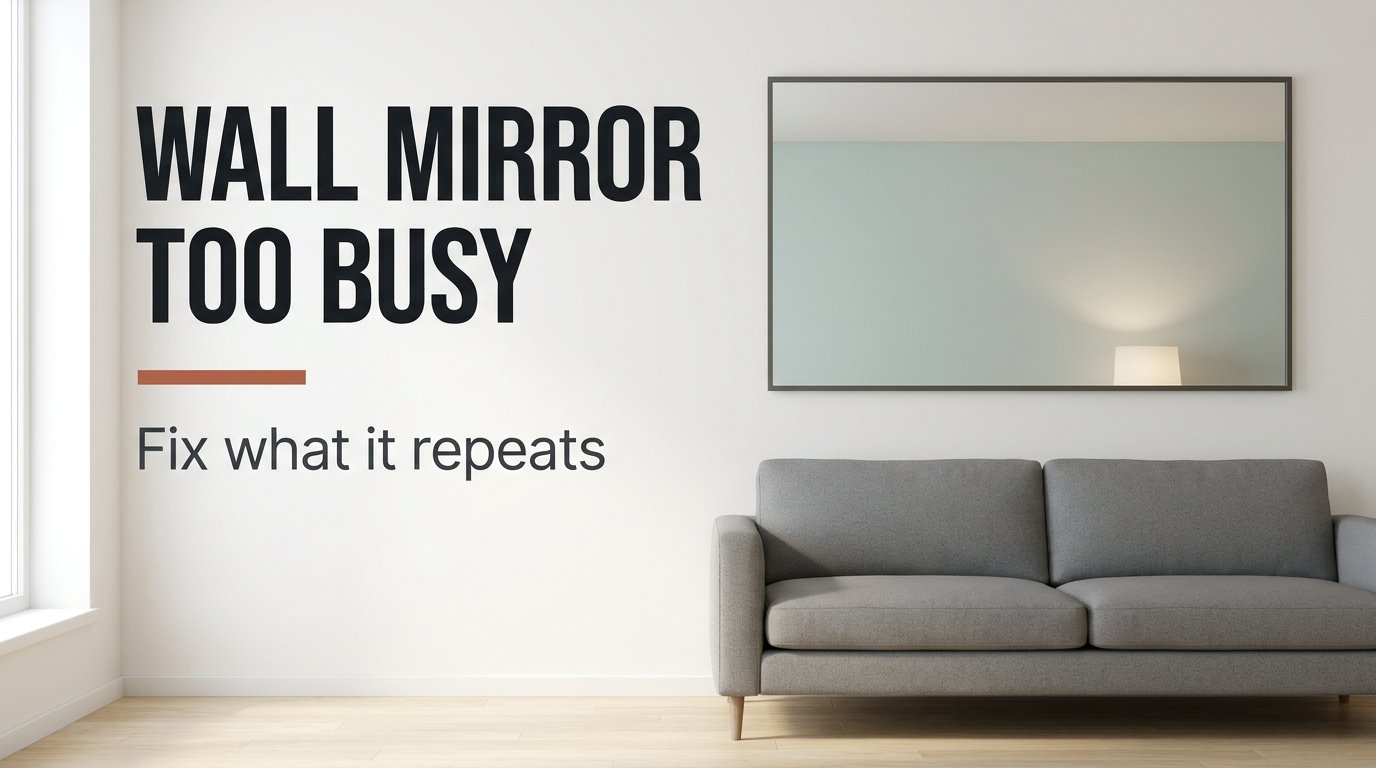
Hanging a large wall mirror should open a room, and it stings when the room looks more crowded by the next evening. The tape measure says nothing has changed, yet your eye now has twice as much to read, and the evening view across the lounge shows it. Taste is rarely the cause. This page follows one living room in Utrecht, 380 cm by 500 cm, where a 100 × 130 cm mirror hangs above the sofa. It explains what the glass really does, offers a five-point check from the doorway and sorts the trouble into three faults, with remedies for each that go from free to bought.
How a Large Wall Mirror Copies What Faces It
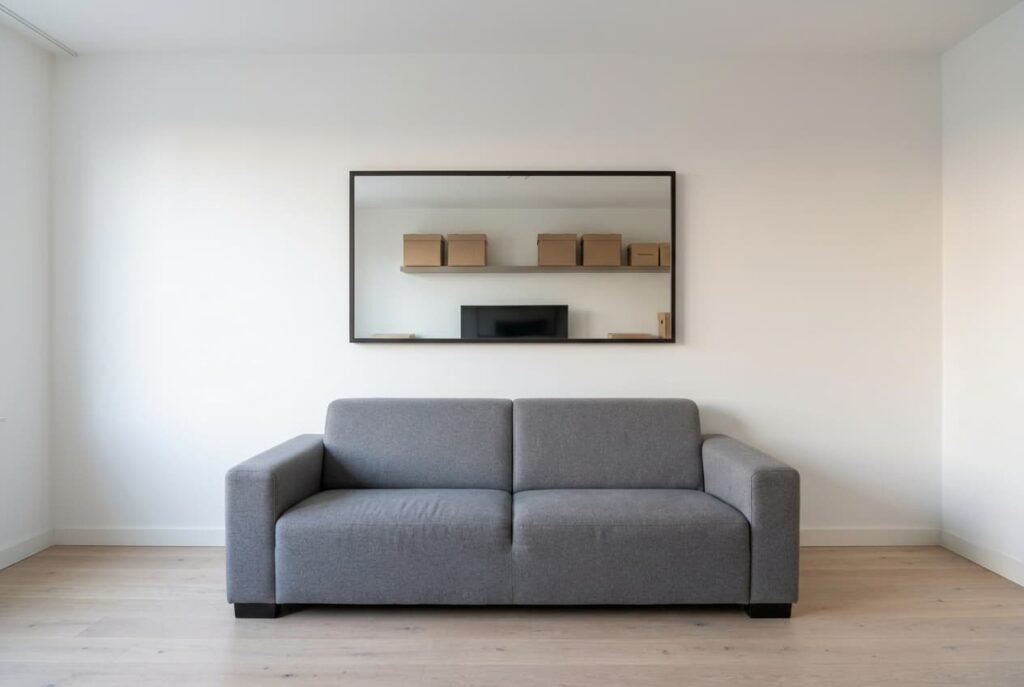
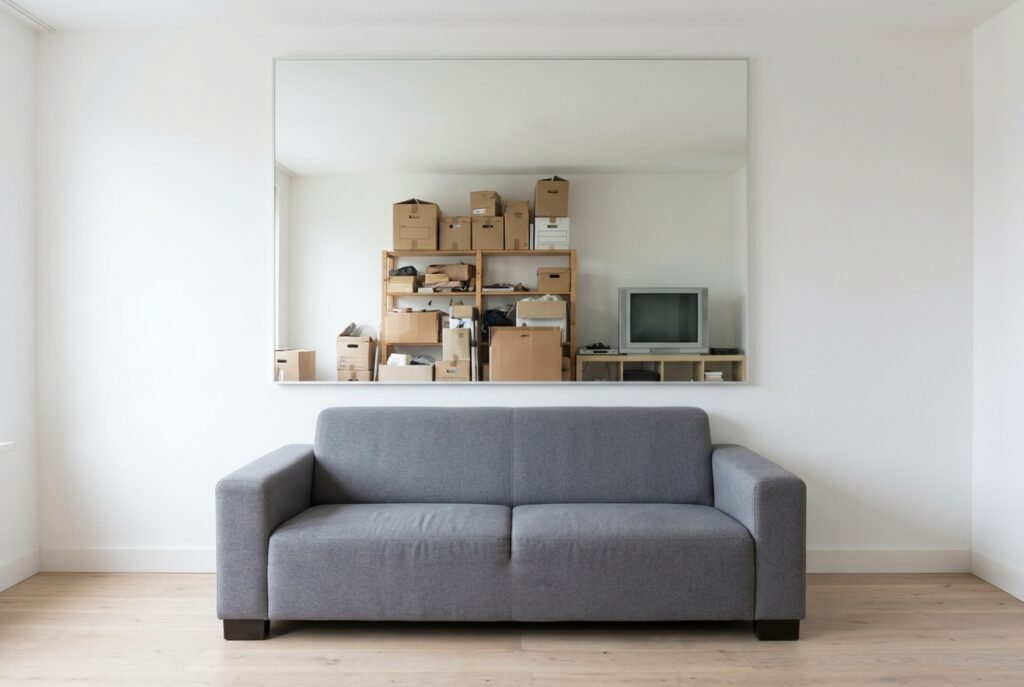
A mirror doesn’t add floor. It shows a second room behind the wall, exactly as deep as the real one, and each object facing the glass appears again at its own distance behind it. In our flat the opposite wall stands 380 cm from the mirror. The view in the glass therefore runs 380 + 380 = 760 cm across, though the room measures only 380.
That doubled view carries whatever stands opposite. Our far wall holds a television with its router and two speakers. A window sits beside a shelf of loose boxes at the far end. The eye counts 12 separate objects there, and the mirror lifts that to 24 in one glance. A cluttered corner has simply been printed twice.
Owners tend to blame the size of the mirror or their own judgement, but a mirror adds no space, only an extra copy of everything that faces it. Because of this, one mirror can make a bare hallway seem wide and a crowded lounge feel restless.
Misreading the cause is expensive, because the same clutter simply turns up in the next frame.
Five Looks at the Glass From the Door
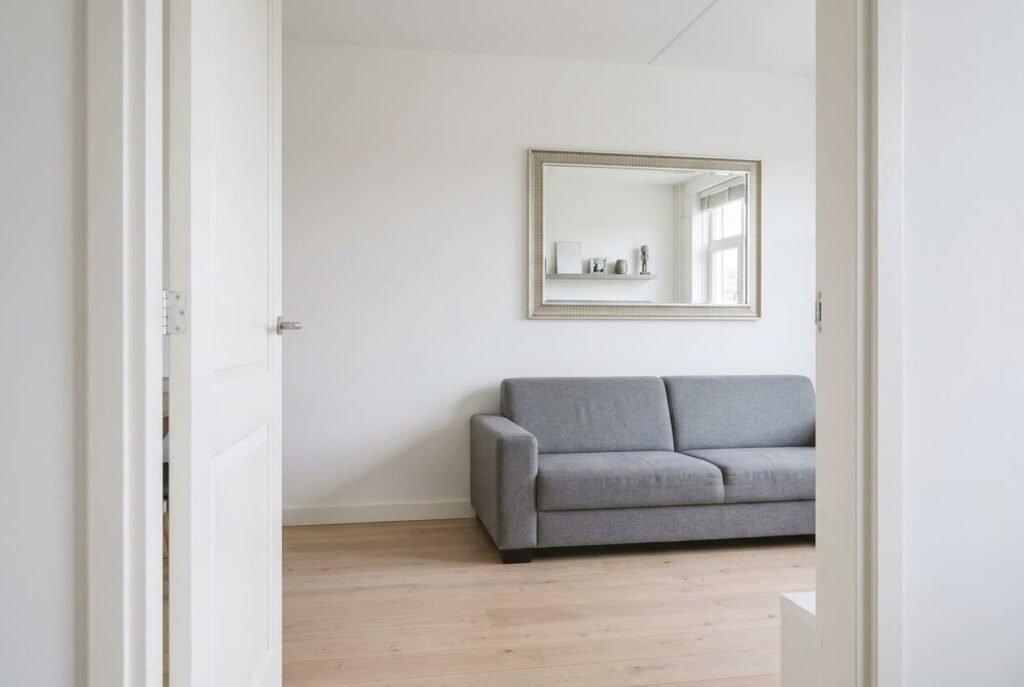
Start at the door with the lights on, then repeat at dusk. A mirror that reads wrong tends to trip a couple of the checks below and seldom all five.
1. Name the first thing your eye lands on in the glass. If it’s the television wall or a pile of boxes, the mirror is advertising them.
2. Count the objects a large wall mirror shows on the far wall. More than eight makes a busy view, and our 12 clears that line easily.
3. Compare the mirror’s width with the furniture under it. Ours is 100 cm over a 220 cm sofa, which is 45%, whereas two-thirds of the sofa would be 147 cm.
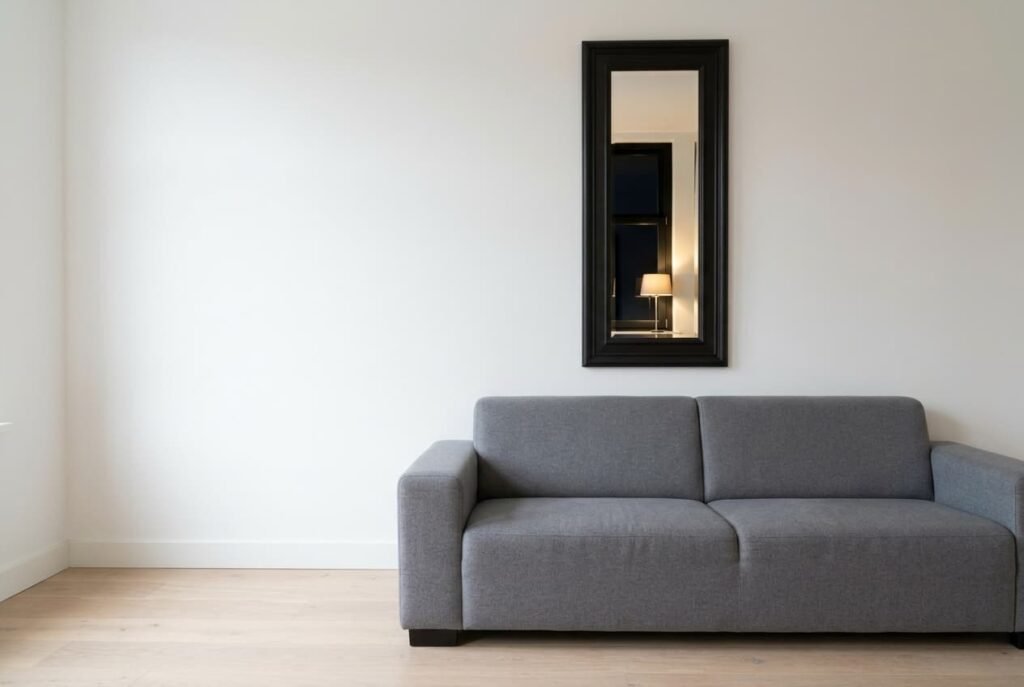
4. Switch the lamps on at night. If the glass shows a black rectangle where the window sits, that dark is being repeated inside a lit room.
5. Measure the frame. Ours is 6 cm wide and adds about 3,000 cm² of dark outline round 13,000 cm² of glass. An outline that loud can drown the reflection.
Three Reasons a Large Mirror on a Wall Reads Wrong
The mirror reads as a slit. It covers 45% of the sofa’s width, and the eye meets a narrow slab in place of a window of light. Start free: lower it until the bottom edge hangs 20 cm above the cushions’ back rail, which ties the pair into one group. Rearranging comes next: hang a framed picture on each side at the same height, widening the group to about 190 cm without touching the glass. The purchase is a wider mirror, 150 cm across, which crosses the two-thirds line. It is the dearest of the three remedies, and the least urgent. Even a modest 100 cm mirror looks settled once the group around it is wide enough, since the eye judges the whole arrangement and doesn’t dwell on the glass alone. Test the first two moves for a week before paying anything.
The mirror shows a black hole at night. The window opposite is a bright rectangle by day and a dark one after sunset, and the glass repeats that void beside your lit lamps. Draw the curtains at dusk, and a large wall mirror shows soft fabric in place of black glass; that costs nothing. Should the curtains stay open, shift the mirror 60 cm sideways so the window no longer faces it. Spending comes last. A small wall light beside the frame bathes the reflection in warm light and breaks up the dark patch. A shaded lamp is enough, as long as the bare bulb stays out of the view. Aim for the same warm tone as the lamps already in the room.
The mirror faces the messiest wall. Twelve objects become 24 because the glass sits opposite the shelf of boxes and the television cables. Clear four and the view drops to 16, with no money spent. Boxes you rarely open can live in a wardrobe. Then shift the television unit 80 cm towards the window. The busiest zone then falls outside the reflection. A closed cupboard is the bought answer, and it swallows eight small items at once. Cable trunking in the wall colour tidies the rest, though that’s only a finishing touch.
How to Hang the Next Mirror So the View Stays Calm
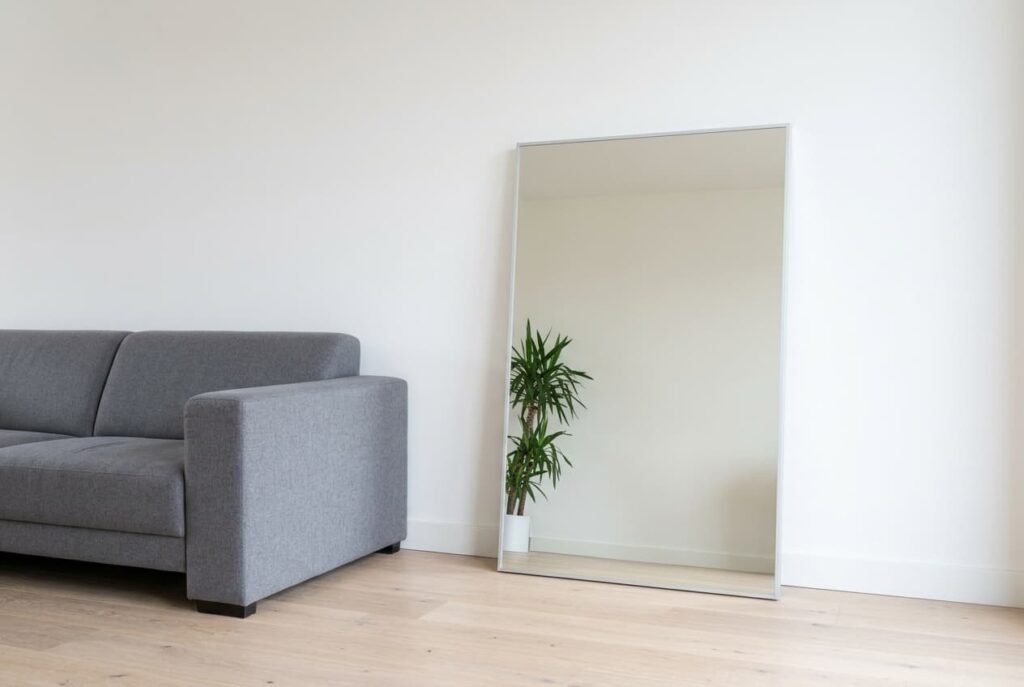
Prevention starts before the drill. Prop the mirror up where it will hang and watch it from the spots where you sit and pass. Walking past it twice a day will reveal more than any plan.
Photograph the glass at dusk and count what shows in it.
Decide what a large wall mirror should repeat. A bare wall or a plant is a gift, while a television makes a poor subject. Match its width to the furniture under it, aiming for at least two-thirds, and keep the frame below 5 cm if the wall is pale. Hang the centre at about 150 cm, the eye height of most standing adults, and drill only once the photo looks calm. If the answer is still unclear, ask a friend what they notice first.
The Fix That Isn’t Worth Doing
Many people try buying a bigger mirror to dilute the clutter, and it backfires. Our 100 × 130 cm glass has 1.3 m² of surface. A mirror of 150 × 200 cm has 3 m², more than twice that. It copies far more of that wall, and the 12 objects become nearly all of them. The room then looks busier than before, since the glass fills the whole stretch.
Covering the glass with a throw or a poster is no better. It hides the fault together with the mirror, and the money has bought nothing. Another idea is a second mirror on the facing wall. Two mirrors that face each other repeat the room again and again, and the view only gets stranger. A darker frame only outlines the busy view more firmly.
The quiet answer is to edit what the first mirror sees. Clear the far wall, match the width to the sofa and keep the window out of the glass at night. A modest mirror in the right place does more for a living room than a huge one in the wrong place. Once the reflection is calm, the glass finally does its job: the room gains depth without gaining a single extra thing to tidy, and the evening view across the sofa becomes the quietest part of the room. That’s the test worth passing before any further spending, and one calm photograph proves it.
Questions Readers Keep Asking
What usually causes a mirror to make a room feel busier?
Most often it faces a cluttered wall. The glass shows that wall again at the same distance behind it. A dozen objects become two dozen in one look. Count what the mirror shows from the door and you’ll usually spot the cause at once.
What is the quickest fix?
Clear the far wall first. Taking four of our 12 objects away drops the view from 24 to 16. Then lower the mirror by 20 cm so it sits with the sofa. Both moves fit into one evening and need no purchase and no extra drilling.
Can it be fixed without renovation?
Yes. Every remedy here moves objects or hangs a picture, and one adds a lamp. None touches the walls beyond one extra screw. Even the dearest option, a wider mirror, swaps one piece for another. The faults arise from where things stand, and positions are cheap to change.