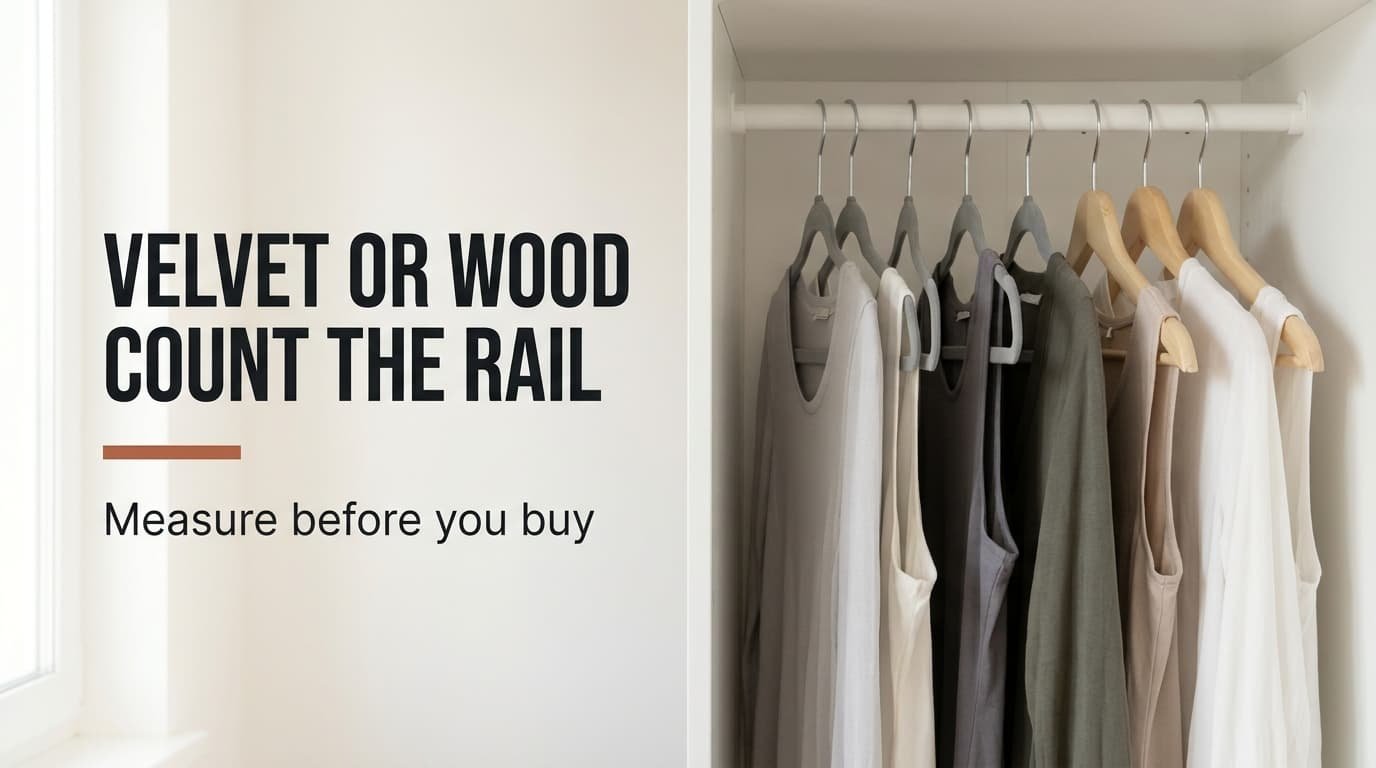
How much rail does one hanger really use? For the same 40 garments, slim hangers need 88 cm and wooden ones need 120 cm, which is 36% more. The choice of velvet hangers or wooden hangers seems to be about looks, yet it decides how much of a wardrobe rail you can use. Most advice on the choice stops at appearance. A rail can’t see appearance. It only has centimetres to give, so this article counts them. The example flat is rented, in Haarlem, with a hanging section 120 cm wide. Count each number as a made-up round value, and let your own tape measure give the real answer.
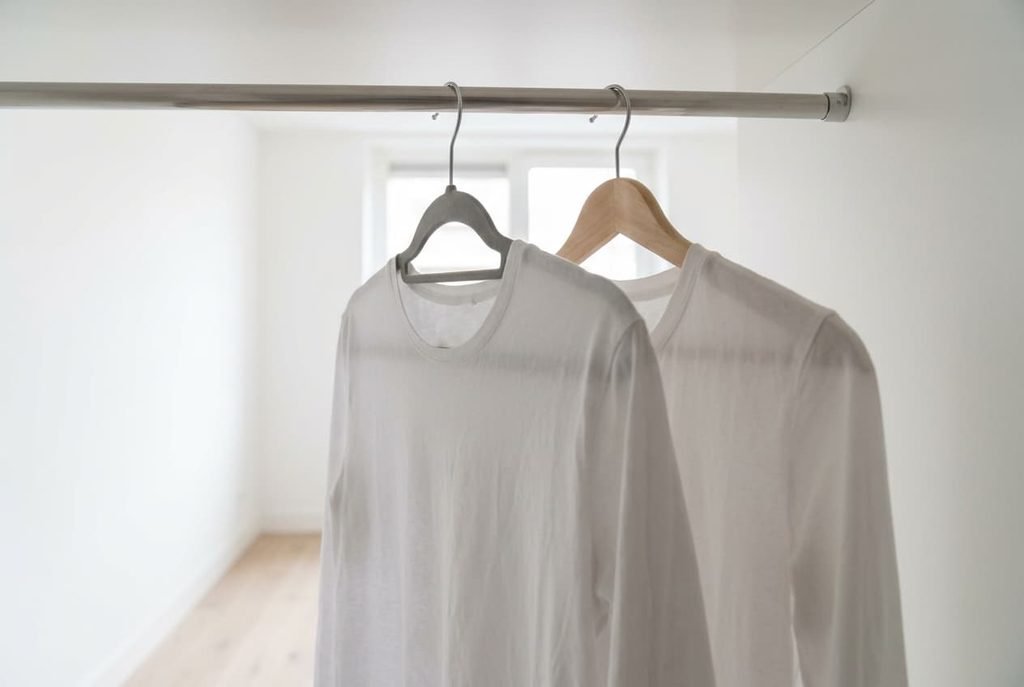
Velvet Hangers or Wooden Hangers: What Really Differs
Two hangers can look alike on a shelf and behave differently on a rail. They differ in how thick they are at the shoulders and in how they grip. Stiffness of the core adds a further difference that only shows under a heavy coat. A slim core is the thin rod inside the flocking, whereas a wooden hanger is solid all the way through, so it resists bending better.
A simple model shows why thickness matters. Each hung garment takes up the thickness of its hanger plus an allowance for the fabric. A thin shirt adds 1.0 cm of fabric and a jumper or jacket adds 2.5 cm. Coats add 4.0 cm. Velvet hangers are 0.6 cm thick, wooden ones 1.4 cm.
That makes a shirt 1.6 cm on velvet and 2.4 cm on wood, half as much again. The gap narrows as garments get bulkier. A jumper takes 3.1 cm against 3.9 cm, which is 26% more, and a coat takes 4.6 cm against 5.4 cm, 17% more. The hanger decides rail use most for thin garments, because its thickness is most of the space they take.
Our wardrobe holds 40 garments. Of those, 28 are thin garments. The other 12 split into 8 jumpers or jackets and 4 coats.
The thin garments are the ones that move the numbers.
Six Properties Side by Side
Before the table, a note on method. Each row compares something that stays true for years. Thickness and stiffness are examples. Anything that changes with the season, such as what a shop happens to stock, is left out.
Thickness, in the first row, moves the numbers most. The others describe how the hanger behaves once it’s on the rail, and the second row uses the 40 garments counted above. Rows with numbers follow the same model as the previous section, which lets you verify the totals by hand. Rows about grip and wear are judgements about materials and carry no figures.
| Property | Velvet hangers | Wooden hangers |
|---|---|---|
| Thickness at the shoulders | about 0.6 cm | about 1.4 cm |
| Rail used by the 40 garments | 88 cm | 120 cm |
| Hold on straps and silk | grips well | straps can slide off |
| Support for a heavy coat | a slim core can bend | holds its shape |
| Upkeep | collects lint | wipes clean with a dry cloth |
| Wear | flocking can rub off at the grip points | the neck can crack if dropped |
Between velvet hangers or wooden hangers, the first wins on thickness and the second wins on strength. Which of those facts matters most comes down to the rail total in your wardrobe.
Where Velvet Hangers Earn Their Place
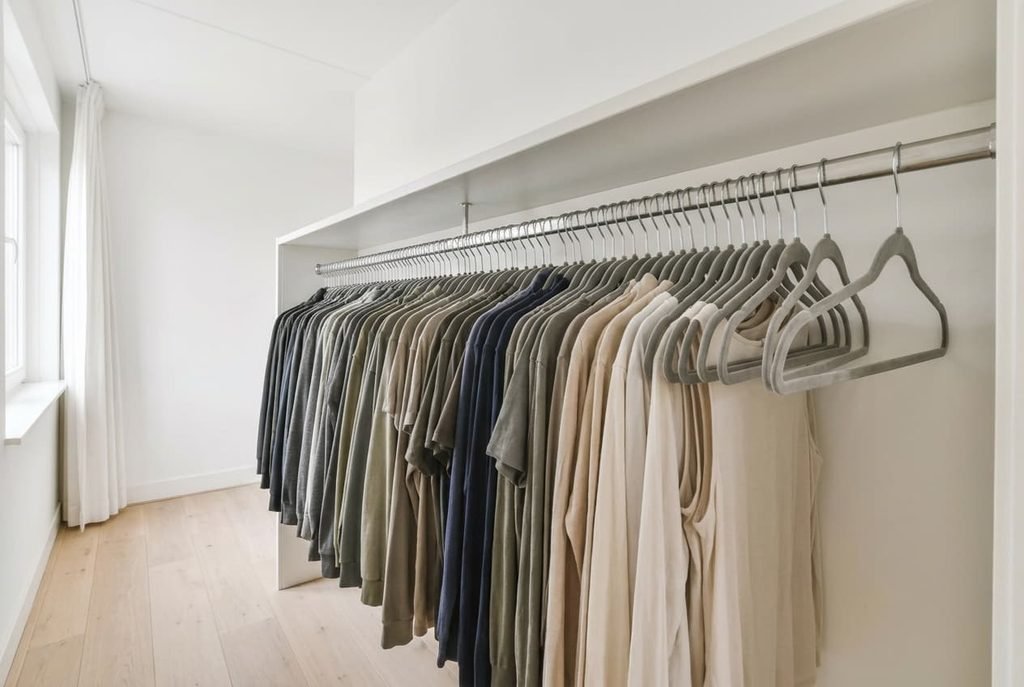
The 40 garments need 88.0 cm on velvet. Thin garments take 1.6 cm each, and there are 28 of them. The 8 jumpers and jackets take 3.1 cm, and the 4 coats take 4.6 cm. That leaves 32 cm free on the 120 cm rail, which is 27% and room for 20 more thin garments at 1.6 cm each.
The flocked surface grips straps and slippery blouses. Many have notches or a textured top edge that hold them too. Garments stay where they hang, which matters in a wardrobe that gets bumped when the door closes. Because the hanger is thin, the garments also hang in a slimmer column. That makes each one easier to see and to pull out without dragging its neighbours.
The weaknesses lie elsewhere. A slim core can bend under a heavy coat, and the bend shows as drooping shoulders. The flocking rubs off at the grip points over the years and leaves fluff on dark clothes. Lint collects on the surface, so a quick brush now and then keeps it presentable.
Where Wooden Hangers Earn Their Place
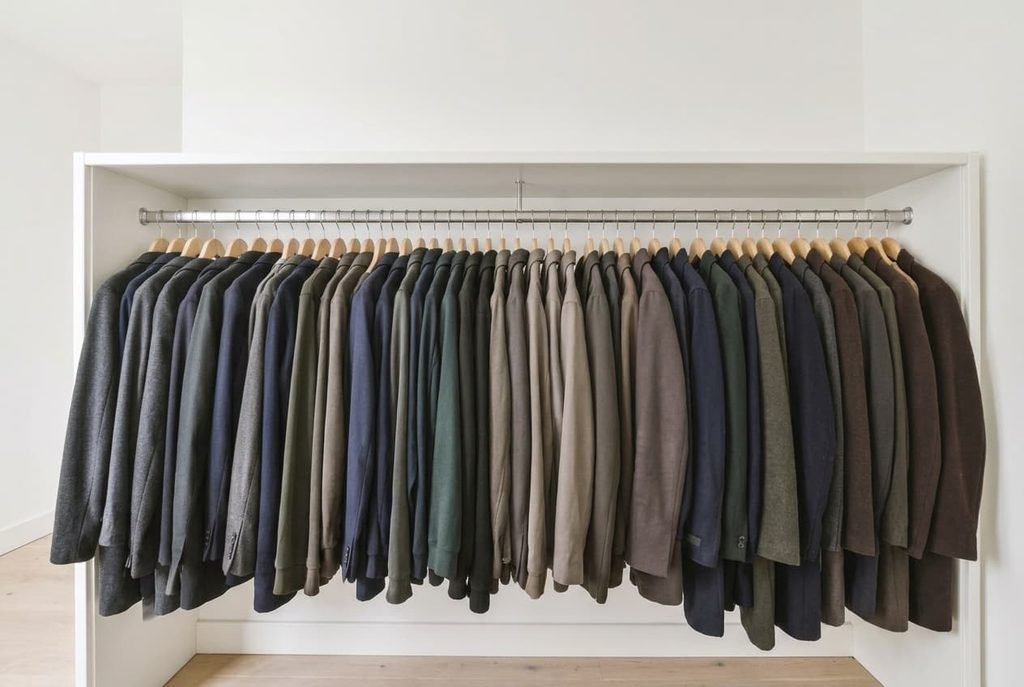
The same 40 garments need 28 × 2.4 + 8 × 3.9 + 4 × 5.4 = 120.0 cm on wood. That fills the whole rail with nothing spare, which means every new purchase forces something out.
What the extra thickness buys is a stiff, contoured shoulder. People who compare velvet hangers or wooden hangers for heavy garments usually end up here. A coat or tailored jacket keeps its shape on it, because the curve follows a shoulder, whereas a flat slim hanger leaves the fabric to find its own line. The core won’t bend under the load. A wooden hanger also wipes clean with a dry cloth. It has no surface to shed either.
Wood wins on strength and loses on space.
Weight is a minor point. Wooden hangers weigh more, and an ordinary wardrobe rail is built to carry that. The grip is the real weak point. The smooth finish lets straps and silky fabrics slide off, which is annoying in a crowded wardrobe. A dropped hanger can crack at the neck, and a loose swivel hook is a common first failure.
Keeping the Hangers You Already Own
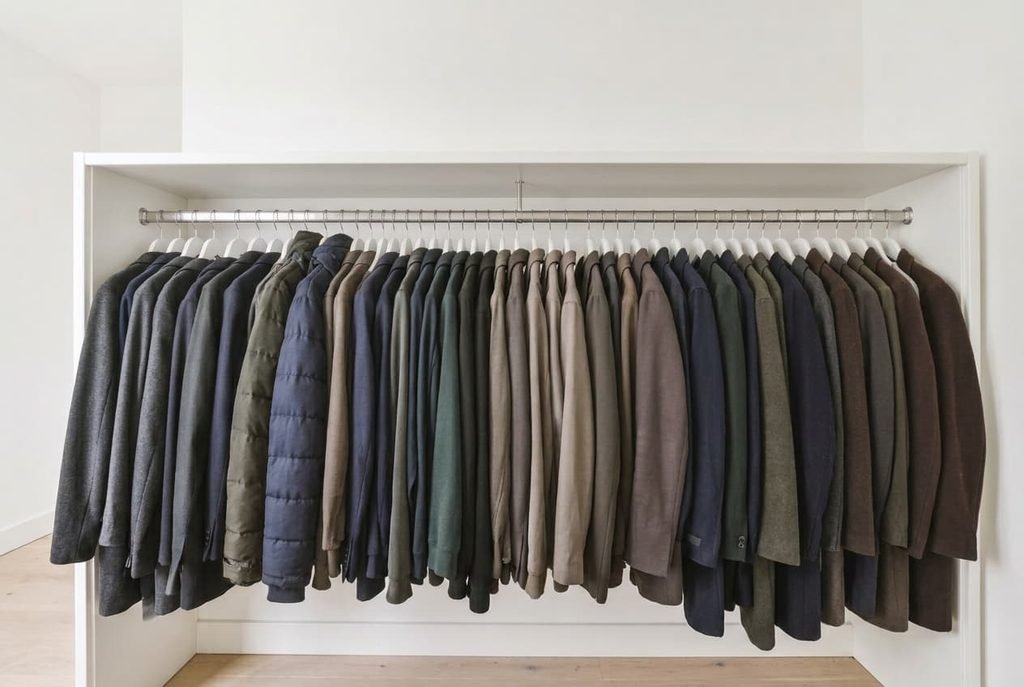
You may need neither. Suppose the wardrobe already holds ordinary plastic hangers about 1.0 cm thick. A shirt then takes 2.0 cm, a jumper 3.5 cm and a coat 5.0 cm, so the 40 garments need 28 × 2.0 + 8 × 3.5 + 4 × 5.0 = 104 cm. That uses 87% of the rail and leaves 16 cm free.
Compare that with the alternatives. Switching to velvet would gain another 16 cm, room for about 10 thin garments. Switching to wood would lose 16 cm and leave the rail jammed. Between velvet hangers or wooden hangers and what you own, the gain from changing is smaller than the gain from clearing out clothes. The average garment takes 2.6 cm, so removing 10 unworn items frees 26 cm.
Before you buy anything, measure the rail and count what it holds. Push the garments together, measure the width they fill and divide by the rail length. If the figure is under 90%, the rail isn’t short of space, and a new set of hangers won’t solve anything.
Choosing Between Velvet and Wooden Hangers
If the rail is nearly full and most garments are thin, choose velvet. The cost is a weaker hold on heavy coats and flocking that wears at the grip points. You gain 32 cm, which is room for 20 more thin garments.
If you hang heavy coats or tailored jackets, choose wood. The cost is rail space, since the example fills all 120 cm. You gain a stiff, wide shoulder that keeps the garment’s shape. Check the table’s wear row before you decide. Flocking and wood fail in different ways. Sort the wardrobe first in either case, because 10 unworn items freed 26 cm earlier and that may settle the question before any purchase.
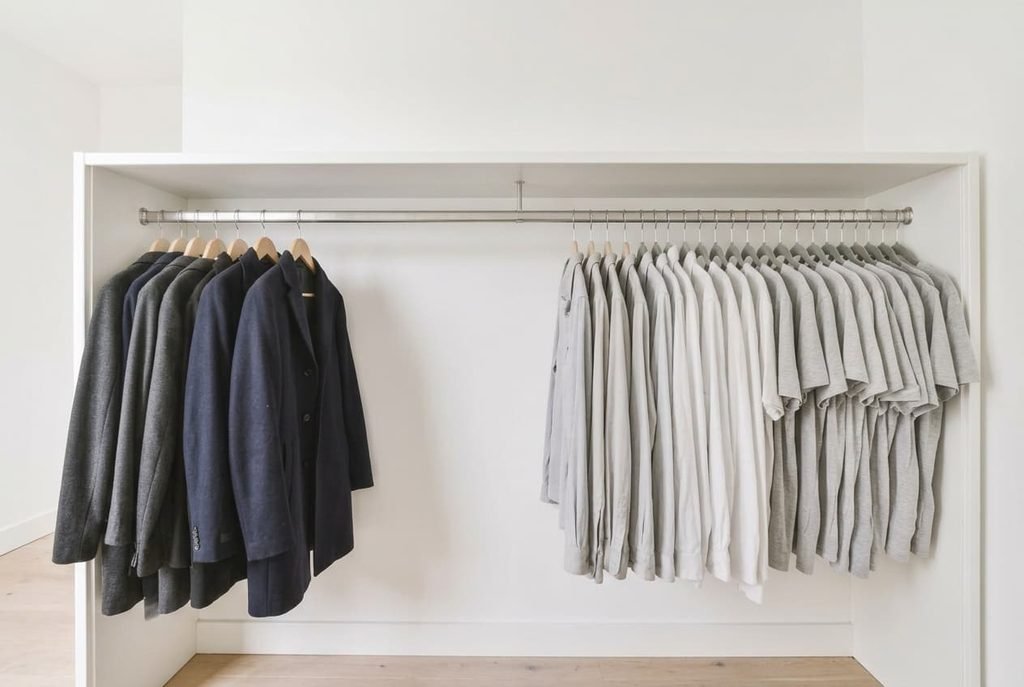
Many wardrobes end up split. Put wooden hangers on the 4 coats and velvet ones on the other 36, and the rail uses 91.2 cm, leaving 28.8 cm. That keeps the strong hanger where weight needs it and the thin one where space does. That’s a sensible default for most households, and it lets you replace hangers gradually, starting with the four coats. Measure your own rail before you commit, because all figures here are samples.
Questions Readers Keep Asking
Which lasts longer?
Wooden hangers usually outlast flocked ones under heavy use. Flocking rubs off at the grip points, whereas wood only fails if the neck cracks after a drop. A slim hanger that has bent under a coat rarely returns to shape, so keep velvet for light garments.
How do I keep them clean?
Brush lint off velvet with a dry cloth or a soft brush a couple of times a year. Wipe wooden hangers with a dry cloth, which works on velvet too. Soaking suits neither, so let anything damp dry completely first.
Which suits a narrow rented wardrobe?
A short rail gains most from velvet, because rail length is the limit. In the example it frees 32 cm. If the same wardrobe holds a few heavy coats, give those wooden hangers. Everything else can go on velvet, as in the split above, and you’ll still have rail to spare.