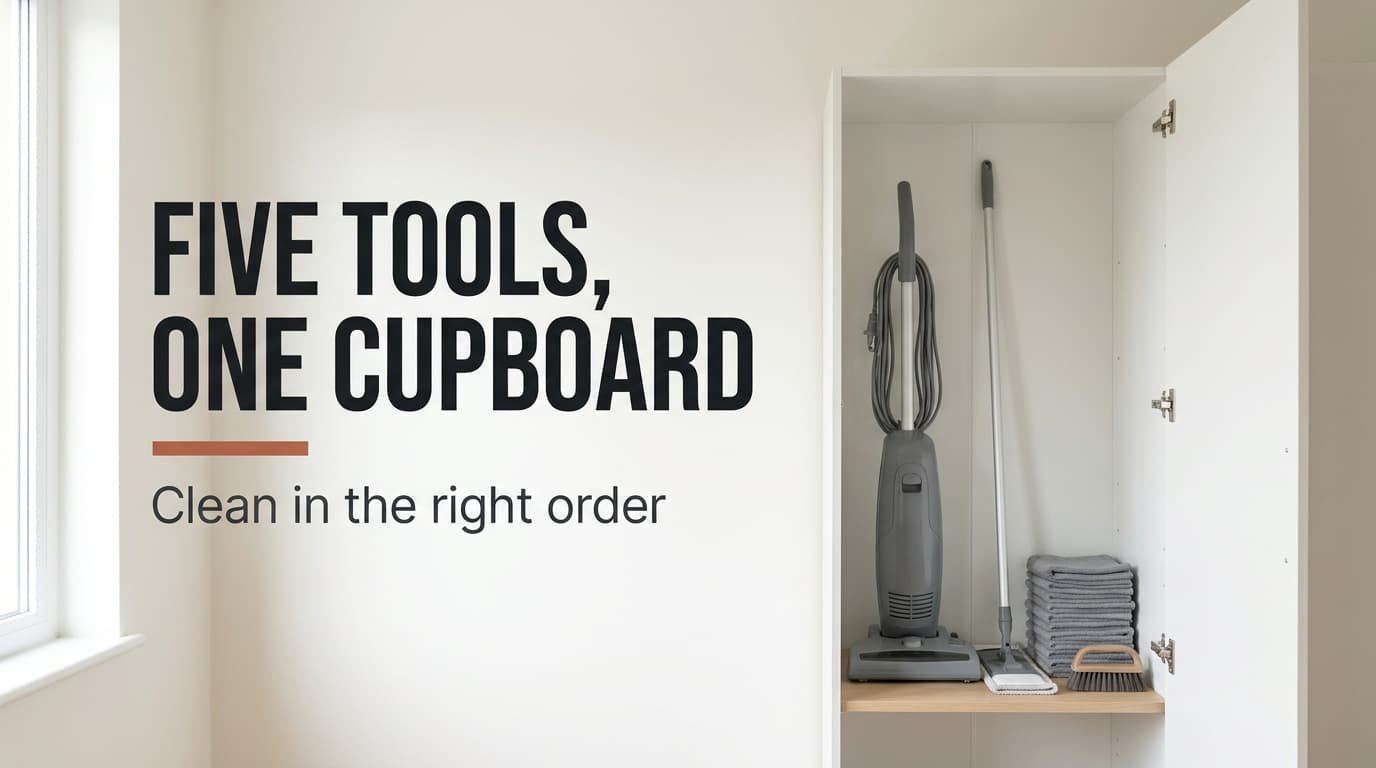
A first flat needs far fewer cleaning tools than a supermarket aisle suggests, and the sequence of buying matters more than the brand. Our example is a 41 m² flat in Utrecht with a laminate floor and a tiled bathroom, plus a hall cupboard of 50 × 45 cm that stands 180 cm tall. The tenant owns one sponge and cleans for about 30 minutes each Saturday. Move down the order and stop once that half hour leaves the flat tidy. These figures describe one flat, so carry a tape measure of your own to the cupboard, because it isn’t the same everywhere.
A Cleaning Cupboard for a First Flat Starts With the Mess You Make
A first flat holds fewer kinds of mess than people fear. Our tenant’s Saturday boils down to four jobs. Dust and crumbs settle on the floors. Scale builds on the bathroom taps. Grease coats the hob, and the toilet needs a brush.
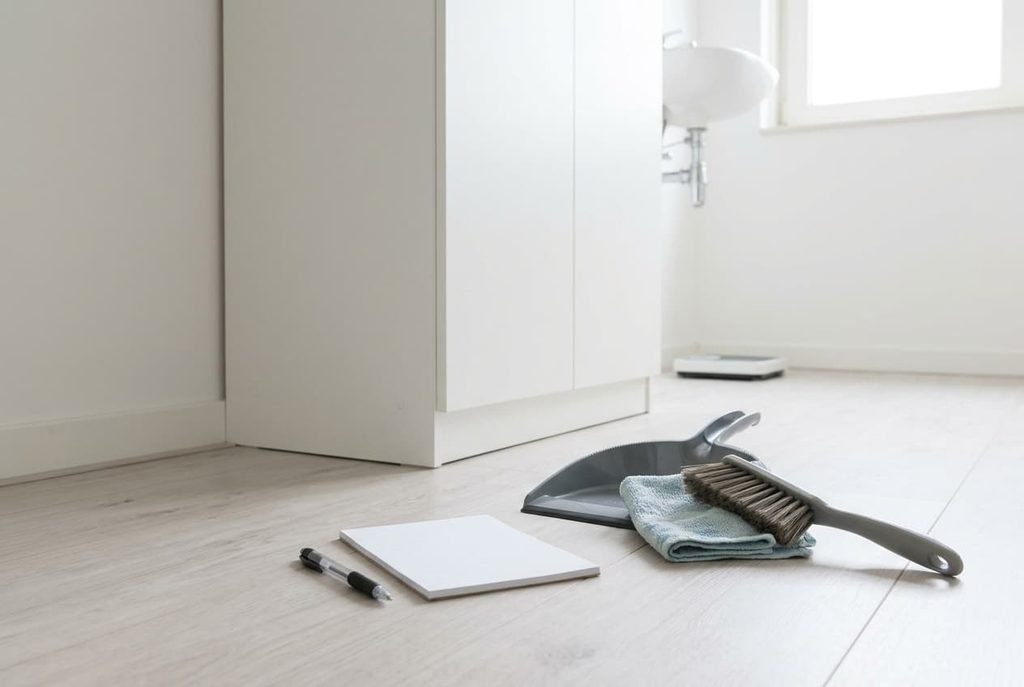
List what really needs cleaning on an ordinary Saturday before spending anything, because that list shows which tools can wait. Walk round with a pen and write the tool beside each job. Circle any tool that turns up twice. For our tenant, the vacuum answered the dust and a cloth answered the grease. Brushes handled the other two jobs. No single tool did it all. Floors take 12 of the 30 minutes. The bathroom takes 10, and the kitchen takes the remaining 8.
Floors set the second limit. Her 24 m² of laminate and 6 m² of tile share one wide, soft nozzle. A carpet wouldn’t have given the same answer.
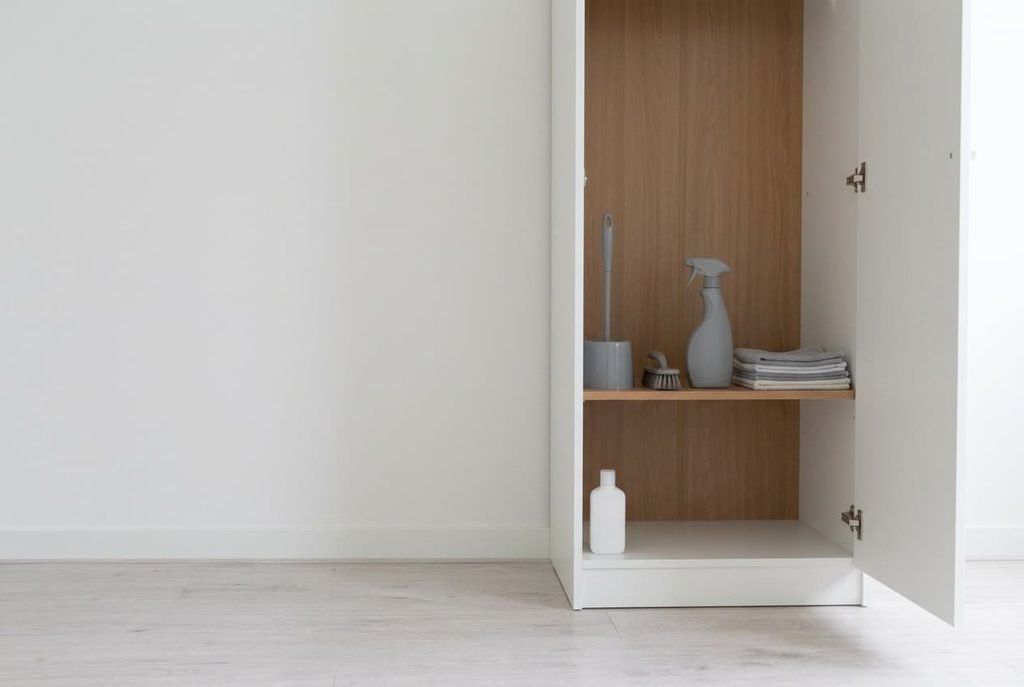
Storage sets the third limit. Whatever you buy must stand upright in the space, with the tallest piece shorter than 125 cm. A tool left lying across the shelf blocks the door and ends up in the hall.
[IMAGE 2 HERE – replace this box with the generated image]
Five Buys for a First Flat Cupboard, Costliest Mistake First
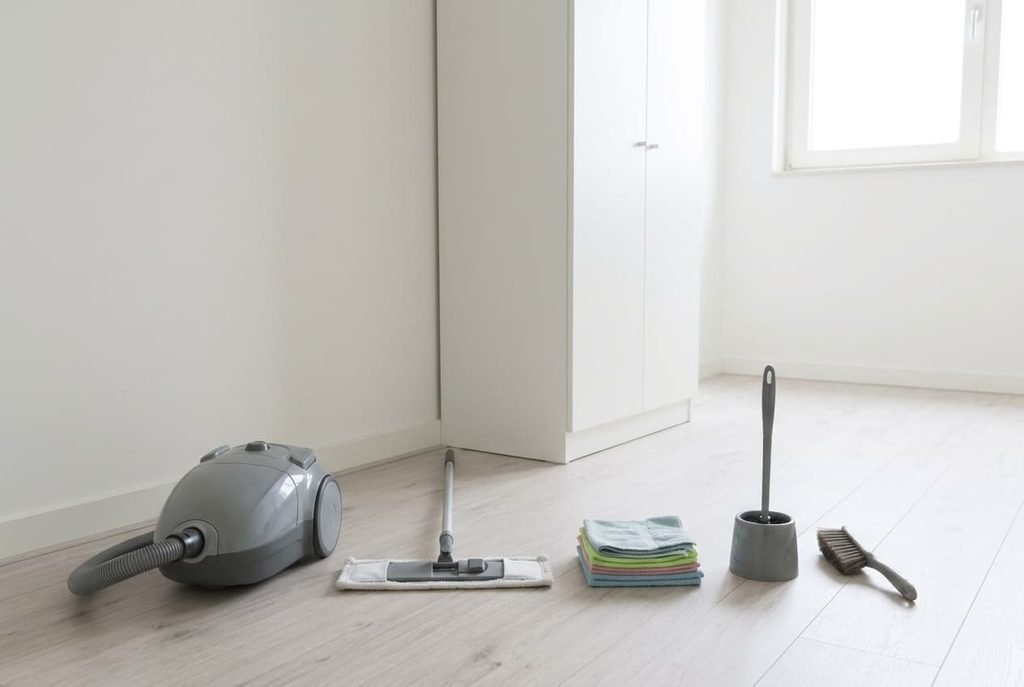
1. A corded vacuum with a sealed body and a 7 m cord earns first place. Dust returns daily, and a cloth can’t lift it from 30 m² of floor in a week. Tier: BUY ONCE, as a sealed body holds suction for years. A body with open seams leaks fine dust back into the air, so the machine undoes its own work. In the shop, shake the body gently. Listen for rattles, then bend the hose sharply. Reject a hose that kinks and any panel that flexes under your thumb.
2. A flat mop with a 40 cm washable pad comes next, and it handles all of the hard floor. Tier: MID. A swivel joint on a metal pin lasts for years, whereas a clip-in plastic joint snaps within a season. The pad should wash at 40 °C, since a pad that needs hand-washing ends up unused. Check how the pad attaches, because weak hook-and-loop strips peel after a dozen washes and the pad slides off mid-stroke. Stand the mop against a wall and confirm that the head sits flat without tilting.
3. Six microfibre cloths come third. They look after the taps and hob. Tier: BUY CHEAP, because cloths wear out at the same rate whatever the label says. Hold one against a window. A dense weave blocks most of the light, while a loose knit lets light through and sheds lint. It also smears grease across the surface, so retire a cloth that stops absorbing.
4. A toilet brush in a closed holder comes fourth. Tier: BUY CHEAP, as bristles splay within months and the whole brush gets replaced. An open holder drips onto the tile, whereas a lid that snaps shut keeps the floor dry. Squeeze the bristles to see that they spring back, and pick a holder with a base wide enough not to tip.
5. A stiff brush 2.5 cm wide for grout and scale completes the kit. Tier: BUY CHEAP. Nylon bristles stay stiff when wet, whereas natural fibre rots in a damp cupboard. Press the tip against the counter, because short bristles that bend flat do little on limescale and wear out within weeks.
Why the Mop Is the Item to Scale Down
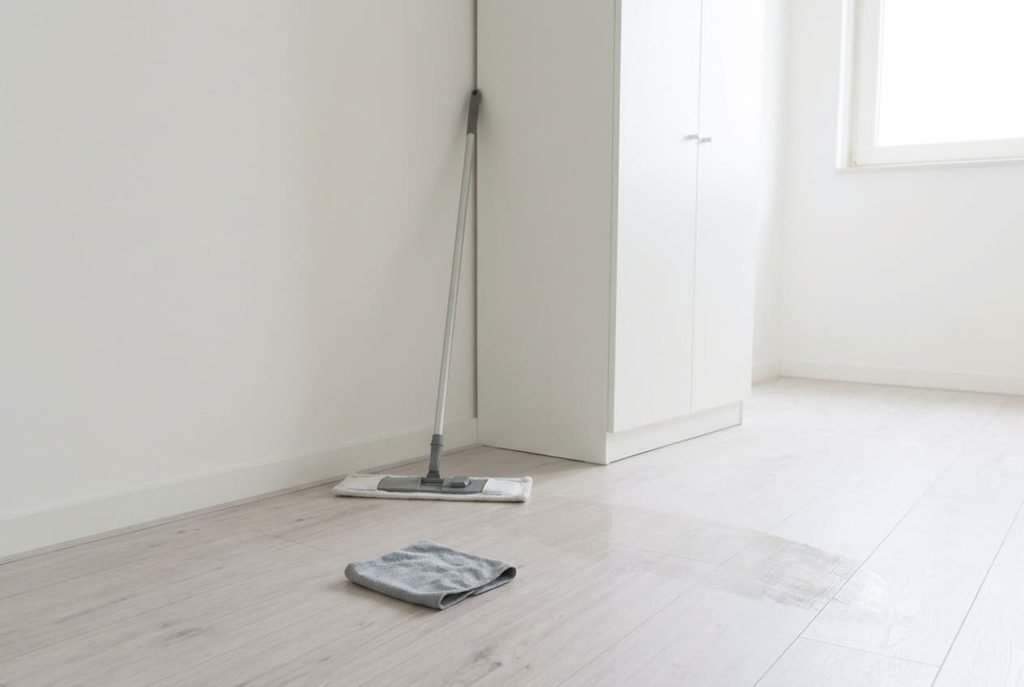
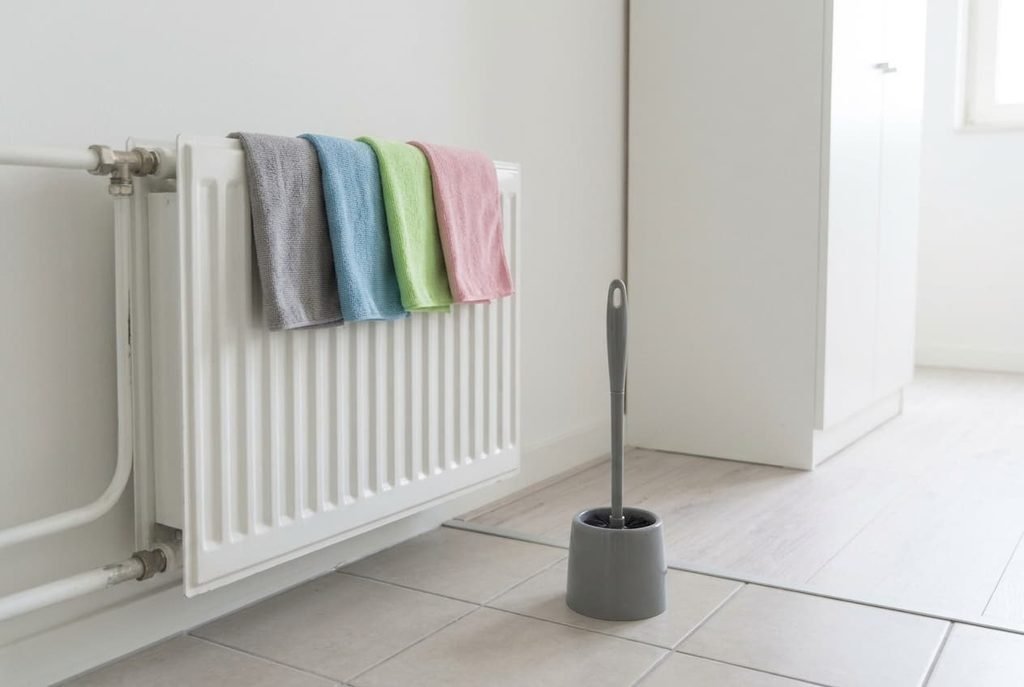
Of everything a cleaning cupboard for a first flat could hold, the mop is the first piece to drop. It stands 120 cm tall, takes up a quarter of the width and needs a hook by the radiator so its pad dries after each use. A cloth dries in minutes on a rail, so there’s no pad to hang.
A damp microfibre cloth does nearly everything the mop does, and it needs no storage. Fold a cloth into quarters, kneel, then wipe a square metre per pass. Twenty-four square metres of laminate means 24 passes at 25 seconds each, which is 10 minutes. The mop covers the same floor in 6 minutes.
Four minutes saved matter only if you wash the floor every week. If you wash it every second week, the cloth wins on space and costs nothing extra.
Use the cloth for six Saturdays. If the laminate comes out clean and your knees cope, you’ll leave the mop in the shop and let the money improve the vacuum.
The mop earns its place only on a floor that gets washed weekly.
Habits That Keep the Tools Working Week After Week
A cleaning cupboard for a first flat stays useful only while its tools are clean. Rinse every cloth after use and wash the six weekly at 40 °C with no softener. Softener coats the fibres and stops them lifting grease. A cloth that smells sour has stopped being clean however often it’s rinsed. Bin it and open a fresh one from the six. Empty the vacuum once the bin reaches its fill line, since a heavy bin weakens suction.
Hang the mop pad to dry if you kept the mop, and never leave it in the cupboard, where a damp smell can build. Let the toilet brush drip over the bowl for a minute before it returns to its holder.
Stand every tool upright with the vacuum at the back. Once a month, run a finger along the nozzle seals and replace anything cracked, then check the cord for kinks. Five minutes a month keeps small faults from stretching the weekly clean.
What to Skip
Skip the boxed kit with a separate spray for every surface, because a shelf of ten bottles does four jobs between them. You pay for four sprays that all clean in nearly identical fashion. One neutral all-purpose cleaner covers most of the flat, and one descaler handles the taps.
A steam gadget tempts too. Wet cloths and a stiff brush reach the same places. Scented sprays add nothing to the result, and disposable wipes cost more every Saturday while adding to the bin. A reusable cloth from the same drawer does the job dozens of times. A second bucket has no home in a cupboard only 45 cm deep, and a feather duster just moves dust around.
Five tools covering four jobs is the finish line for a cleaning cupboard for a first flat. Stop there and let the saving go into a vacuum that lasts. When a season ends, empty the cupboard onto the floor. Test each seal, then swap out the single tool that has worn most. Pin the Saturday list inside the door so a shop display can’t talk you into a sixth bottle. That one habit stops the cupboard from creeping back to a dozen tools.
Questions Readers Keep Asking
How many pieces do I need to start?
Two: the vacuum and a handful of cloths. They handle dust and crumbs on the floor and grease on the hob, which is most of a first flat. Add the brush or the mop when a job turns up that they can’t manage. Watch which chore feels awkward before you buy more.
Which piece should I buy first, and which can wait?
Start with the piece that costs most when it fails. A leaky vacuum spreads dust daily, so it opens the order. The cloths follow in the same week. The toilet brush and the grout brush wait until the job needs them, and the mop waits longest of all.
How do I judge a vacuum in the shop?
Tap the body and listen for rattles. Pull the hose through a tight bend and watch for kinks. Lift the machine to feel its weight, since a heavier body often hides thicker seals. Check that the filter comes out and rinses clean.