A flat where footsteps echo down to the neighbours below is a problem you rarely hear yourself. You cross the room, they hear a dull thud, and the first warning is a polite note on your door. Neighbours seldom speak up until the sound has gone on for weeks. A calm check now saves a harder conversation later. This page explains how the thud forms and shows how to check that it’s your steps and not your voices. It then lays out four fixes, starting with the free one and ending with a builder. One popular fix wastes your money, and the page names it.
How Footsteps Echo Down to the Neighbours Through the Floor
A step is a small collision. The heel lands and the boards flex. That movement passes into the joists and the ceiling underneath, which spreads it as a low thud. This is impact sound, and it behaves differently from a voice or a television. It travels through the structure of the building, so the fix is to soften the step before it reaches the boards.
Two things set the size of the thud. One is how hard the heel lands, and the other is how easily the floor structure moves under it. Bare timber on joists that span 4 m moves a great deal, while a concrete slab hardly moves at all. That explains why the same person sounds louder above a timber ceiling.
Frequency adds a twist. Heel strikes produce low thuds, and low sound passes through walls and ceilings far better than a high rattle does. A thin layer on the floor can quieten the clicks while leaving the thud almost untouched.
Count the impacts as well. Take a living room 5 m long, where a walk from sofa to kitchen takes about 7 steps. Forty trips on a busy evening put 280 impacts on one strip of boards. That strip matters far more than any other part of the floor.
Confirming Which Sound Your Neighbours Hear
Before you spend anything, find out which sound is the problem. Voices and a television travel through the air, and that’s a different case from the one on this page. Footsteps travel through the floor.
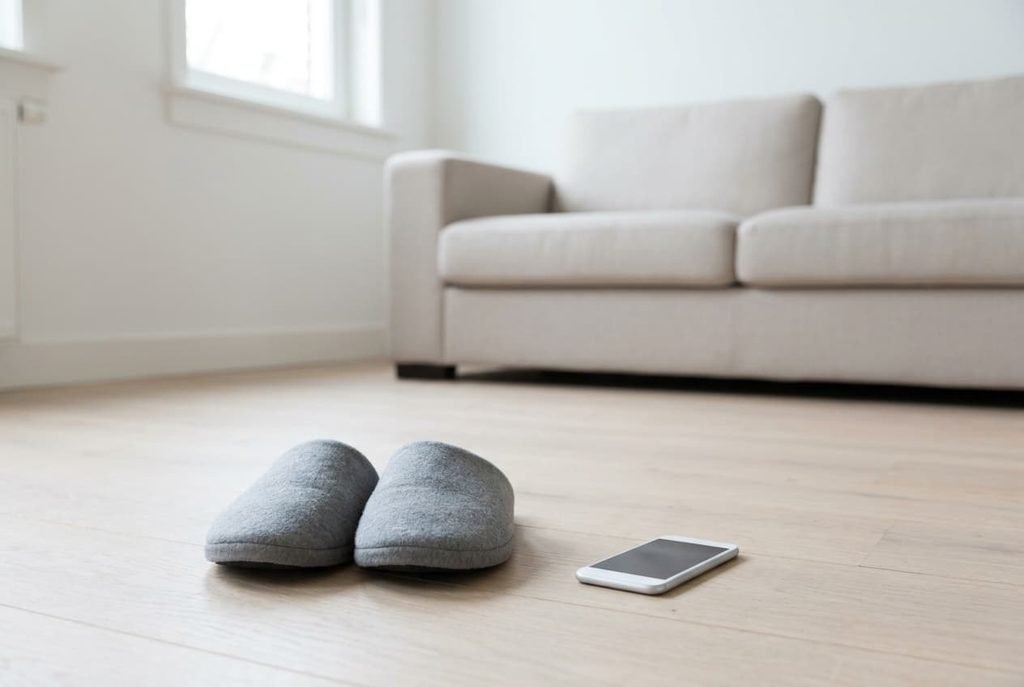
Run a simple test with a neighbour who’s willing to listen, or record on a phone left in their room. Walk the same 5 m route ten times at your normal pace, then ten times in soft house shoes with a slow, flat step. Play speech at a normal volume in the room as well. If the slow walk is much quieter and the speech is barely heard, you have your answer. Footsteps echo down to the neighbours through the structure, and the four fixes below apply.
If the speech is the loud part, the cause is airborne sound and the fixes belong in a different article. Should both sounds be clear, solve the thud first, because a rug can reach that one.
Run the test after dinner, when the building is quiet and the thud is easiest to judge.
Four Fixes When Footsteps Echo Down Into the Neighbours’ Flat
Change the route and the step: the free fix targets the force of the heel from the second section. Wear soft-soled shoes indoors and walk heel-flat instead of heel-first. Floors move least near their supports. Keep the busiest route close to a wall, where a step shakes the boards less. It costs nothing, but it relies on habit, so it helps with you and cannot help with children or guests. Give it a week and rerun the test, since the change shows up quickly when the heel is the main cause.
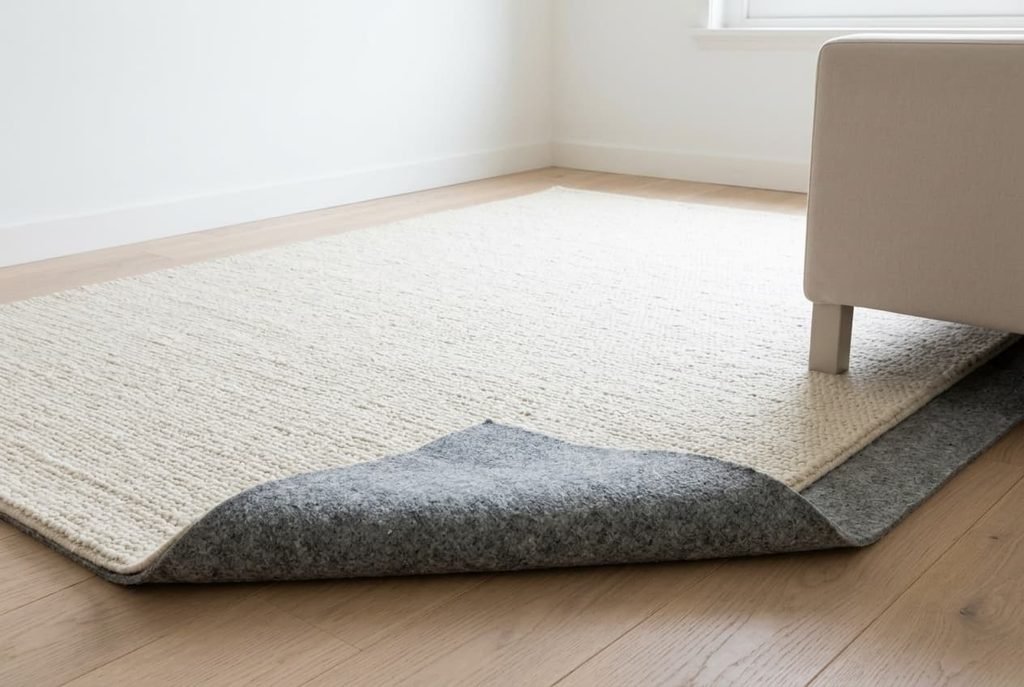
Lay a dense rug on the busy strip: the first purchase adds a soft layer, so go for thick. A rug with a heavy underlay spreads the heel’s force over a wider area. It slows the collision, so the floor moves less. Put it along the 5 m route rather than centring it in the room. It’s cheap, though it works only where it lies, since a rug quietens just the steps that land on it. Choose a pile that feels firm underfoot. A deep springy rug feels soft yet lets the heel sink through to the boards.
Add a resilient layer under a new floor covering: when the floor is being replaced anyway, a dense acoustic underlay beneath the new covering separates the surface from the boards. Ask for an underlay rated for impact sound. Keep a small gap at the walls so the new surface never touches the structure. The surface can still move, yet it can no longer pass that movement down so directly. This costs more because the whole room is involved. In a rented flat a landlord must agree. Doors may need trimming for the extra height, and some leases rule out hard floors altogether.
Build a ceiling on the other side: the professional fix is carried out from below, with a second layer of board hung on resilient fixings under the existing ceiling. A single firm layer fixed straight to the old ceiling would carry the thud along, so the resilient fixings matter. Mass and separation together stop the thud before it enters the room. This option costs the most, and it needs the neighbour’s agreement because it’s their ceiling. They also lose several centimetres of height.
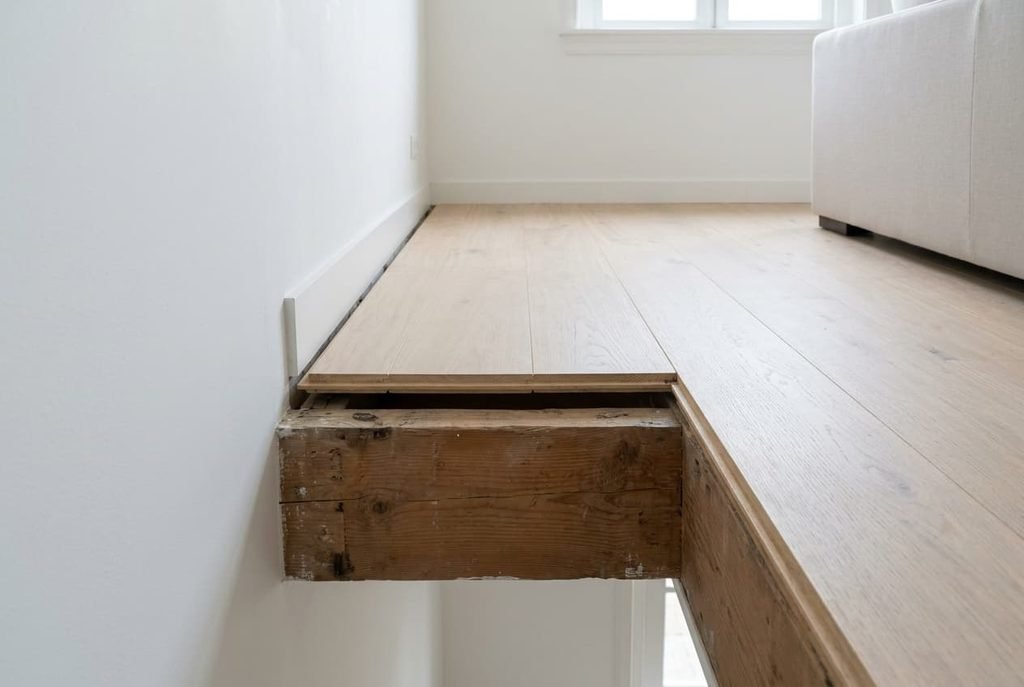
What Your Own Floor Allows
Start by finding out what your floor is made of.
Your building fixes some limits that no purchase can move. On a timber floor a rug with underlay will help. The structure will still flex more than concrete, so a complete cure may be impossible. If the floor is a concrete slab, the thud is usually duller already, and a rug may be all you need.
A top-floor flat has no neighbour above to worry about, whereas a mid-floor flat carries both sides of the issue. A long span between supports moves most under a heel, and you can’t alter it in a rented room. Knowing this early keeps expectations honest. Footsteps echo down to the neighbours at some level in almost any timber building. The aim is to make the thud ordinary instead of removing it.
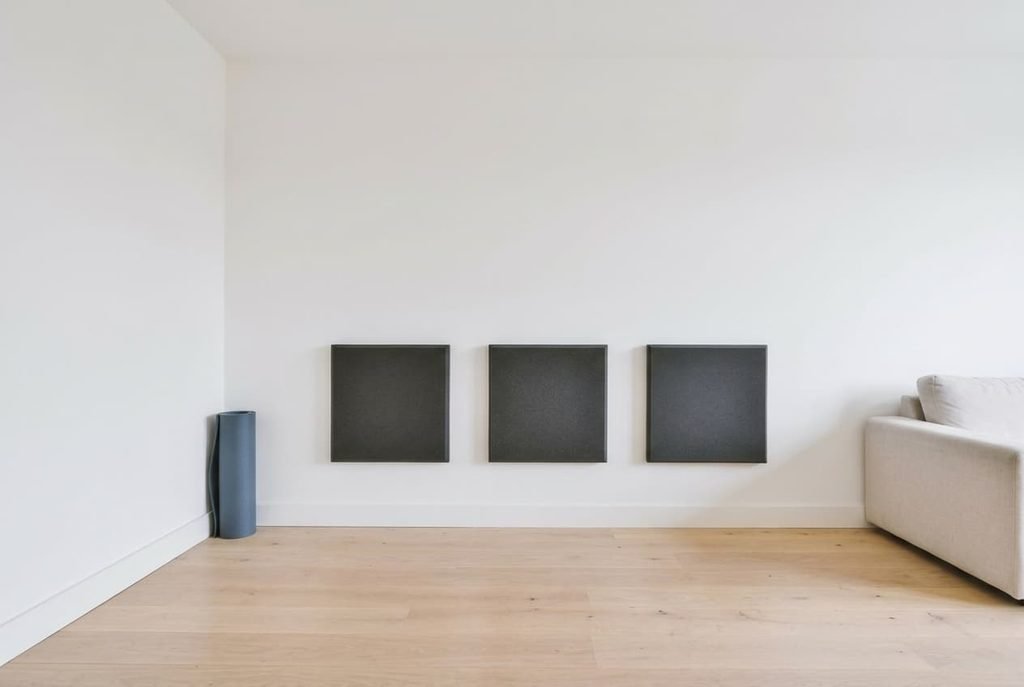
The Fix That Doesn’t Work
Foam wall panels and hanging blankets are the popular answer, but they absorb echo inside your own room and do nothing for sound already travelling through the floor. A thin yoga mat or a sheet of foam tiles falls short in the same manner. It’s too light to slow a heel. The same trap catches an extra-thick bath mat or a spare duvet spread on the boards, which look soft yet weigh almost nothing. Weight matters because a heavy layer resists the heel.
A cheap foam layer can even tempt you to stop there, since the room sounds calmer to you. Your neighbours won’t notice the difference, and you’ll have spent the effort without gaining anything. The quick measure is the test you ran earlier. A much quieter slow walk means that only a different step or a stiffer floor will help.
Begin with the free fix. Put a heavy rug on the busy strip next, and keep the build for last. Footsteps echo down to the neighbours because of the structure. A small change in how and where you walk often delivers most of the quiet. Rerun the walking test after each fix and keep the result. A measured change is easier to share with a neighbour than a promise.
Questions Readers Keep Asking
Can this be fixed completely in a flat?
Not always. In a concrete building a rug and softer steps can end the problem. In a timber building you can reduce the thud a great deal, but you may not remove it. Aim for a sound your neighbours can live with, and agree the target with them.
How much should I spend?
Start with nothing, then buy a heavy rug and a thick underlay for the route you walk most. Resilient flooring and ceiling work cost much more, and both need someone else’s agreement. Go further only when the rug and softer steps leave the thud clearly audible.
What’s the most common cause?
Hard heels on bare boards along one busy route, usually the walk from sofa to kitchen. The same 280 impacts land on one strip every evening. Treating that strip with a dense rug and soft house shoes usually brings the biggest change.