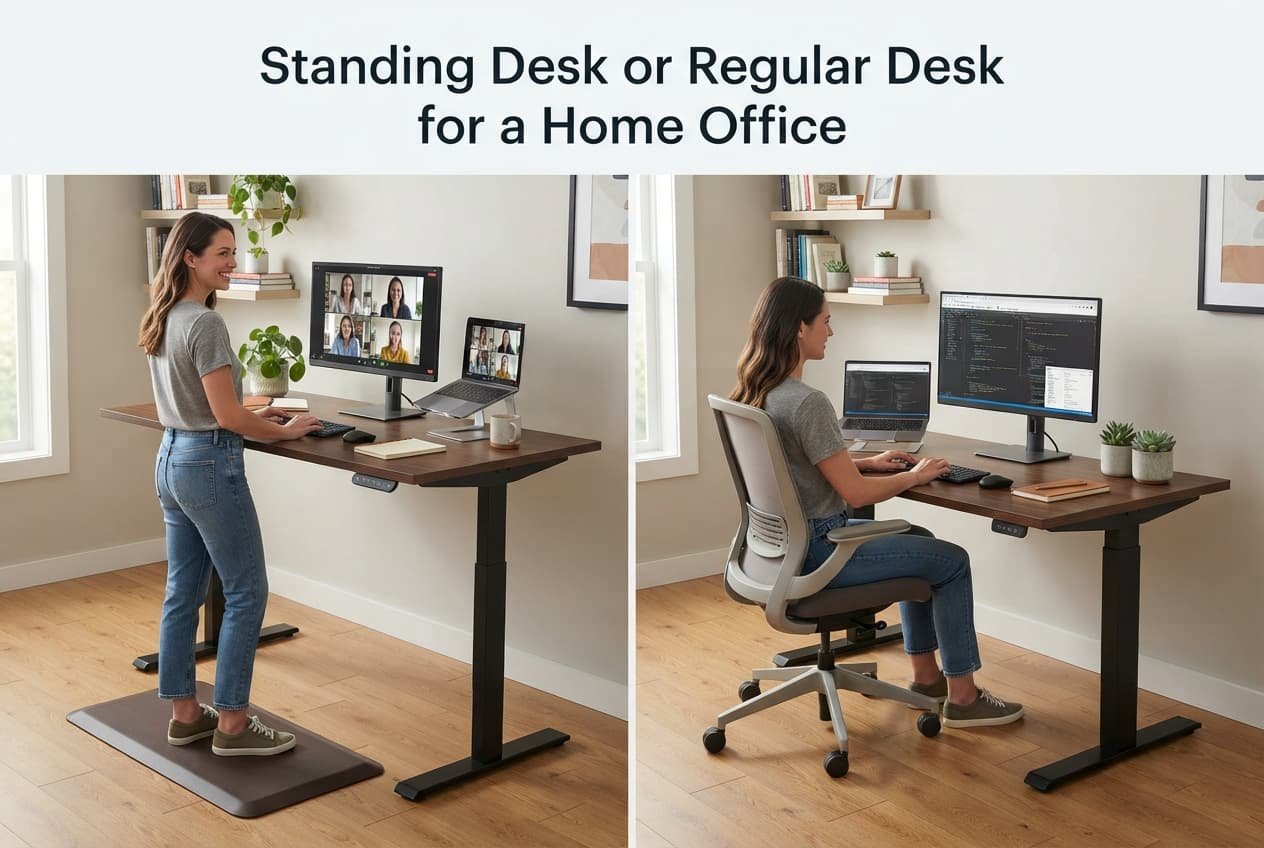
The right desk type for a home office isn’t decided by which one seems more impressive or health-conscious – it’s decided by how each one actually fits your specific work pattern and physical comfort needs once it’s part of your daily routine. A standing desk and a regular desk solve genuinely different problems, and choosing based on trend alone misses what actually determines whether either one works well for you specifically.
The one property that decides it
The deciding factor is how your body actually responds to your current sitting pattern throughout a working day, not simply whether standing desks are currently popular. A standing desk directly addresses genuine discomfort from prolonged sitting specifically, while a regular desk suits someone whose sitting posture and habits don’t currently cause the kind of discomfort a standing desk is actually designed to relieve.
This matters because a standing desk purchased purely because it seems like the healthier choice, without an actual sitting-related discomfort it’s meant to address, often goes underused once the initial novelty wears off, while someone with genuine posture-related discomfort benefits meaningfully from the option to change position throughout the day.
Head to head
| Standing Desk | Regular Desk | |
|---|---|---|
| Helps with sitting pain | Directly, when used consistently | Not directly |
| Typical cost | Higher | Lower |
| Space and stability needs | Often bulkier mechanism | Simpler, more compact |
| Requires habit change | Yes – remembering to switch positions | No |
| Suits focused, still work | Less naturally | More naturally |
| Genuine health benefit without use | None – requires consistent use | Not applicable |
The row that surprises people most is the “requires habit change” factor specifically. Many assume simply owning a standing desk automatically improves health outcomes, but the actual benefit depends entirely on genuinely and consistently using the standing function regularly, not merely having the capability available if it goes unused in daily practice.
Where a standing desk wins
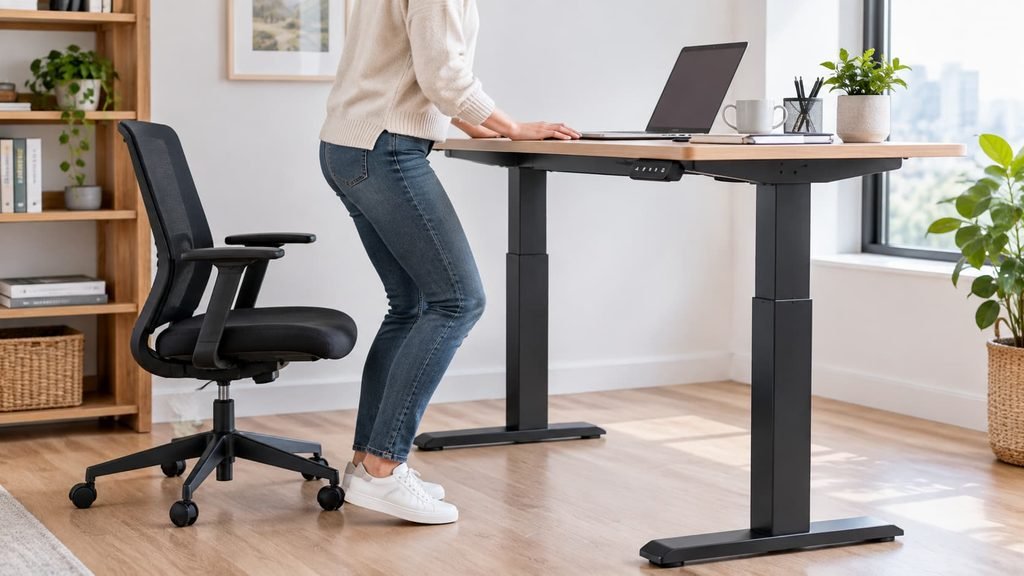
Anyone experiencing genuine discomfort from prolonged sitting specifically – lower back tension, stiffness after long work sessions – benefits from a standing desk’s ability to directly address that specific physical pattern, since alternating position throughout the day can meaningfully reduce the discomfort prolonged single-position sitting causes. The unglamorous reason: a standing desk also tends to encourage more natural movement and brief breaks throughout the day, since shifting position periodically becomes a natural part of using the desk as intended.
Anyone who tends to lose track of time while deeply focused, sitting motionless for hours without noticing, also benefits from a standing desk’s built-in prompt to change position, since the physical act of standing serves as a natural, unavoidable reminder to move that a regular desk simply doesn’t provide on its own.
Where a regular desk wins
Anyone whose work genuinely benefits from sustained, focused stillness – detailed close work, tasks requiring fine motor precision – benefits from a regular desk’s stable, consistent working position, since standing desks can introduce a degree of physical instability that isn’t ideal for work genuinely requiring sustained fine control. The unglamorous reason: a regular desk is also considerably simpler and more affordable, which matters more than it might initially seem for anyone without an existing sitting-related discomfort a standing desk is actually meant to solve.
Anyone genuinely uncertain which category they fall into benefits from paying closer attention to their own body’s actual signals during a typical working day specifically – noticing whether discomfort genuinely develops during prolonged sitting, or whether current comfort levels remain consistent throughout – rather than assuming a standing desk is necessary purely because it’s a commonly recommended, popular choice regardless of individual physical experience.
When neither is right
Choosing a standing desk purely because it’s currently trending, without an actual physical need or genuine intention to consistently use the standing function, is worth ruling out regardless of which desk type you’d otherwise consider.
A standing desk that goes unused as a standing desk, permanently left in the sitting position out of habit, provides no meaningful benefit over a considerably cheaper regular desk while costing meaningfully more upfront. The actual value depends entirely on genuine, consistent use of the feature the higher price specifically pays for.
How to decide in thirty seconds
If you experience genuine discomfort from prolonged sitting, choose a standing desk. Its ability to alternate position directly addresses a physical need a regular desk structurally can’t accommodate.
If you don’t currently experience sitting-related discomfort, a regular desk is a reasonable, more affordable choice. Its simplicity and lower cost directly suit work that doesn’t require the specific benefit a standing desk provides.
What changes the answer later
Developing genuine sitting-related discomfort after previously being comfortable – a change in your typical daily routine, increasing hours at the desk – is worth reconsidering the choice at, since a standing desk’s benefit becomes more relevant once this specific physical need actually develops.
Finding that you genuinely never use a standing desk’s standing function after purchasing one is also worth reconsidering, since continuing to pay for and accommodate the desk’s bulkier mechanism without using its actual distinguishing feature provides little genuine benefit over switching to a simpler regular desk instead.
What people get wrong about standing desks
The most common misconception is assuming standing itself is inherently healthier than sitting in any amount, when the actual research-supported benefit specifically comes from alternating between positions regularly, not from replacing sitting entirely with standing all day. Standing continuously for an entire workday can introduce its own genuine discomfort – leg fatigue, foot pain – making the alternation itself the actual point, not standing as a permanent replacement for sitting.
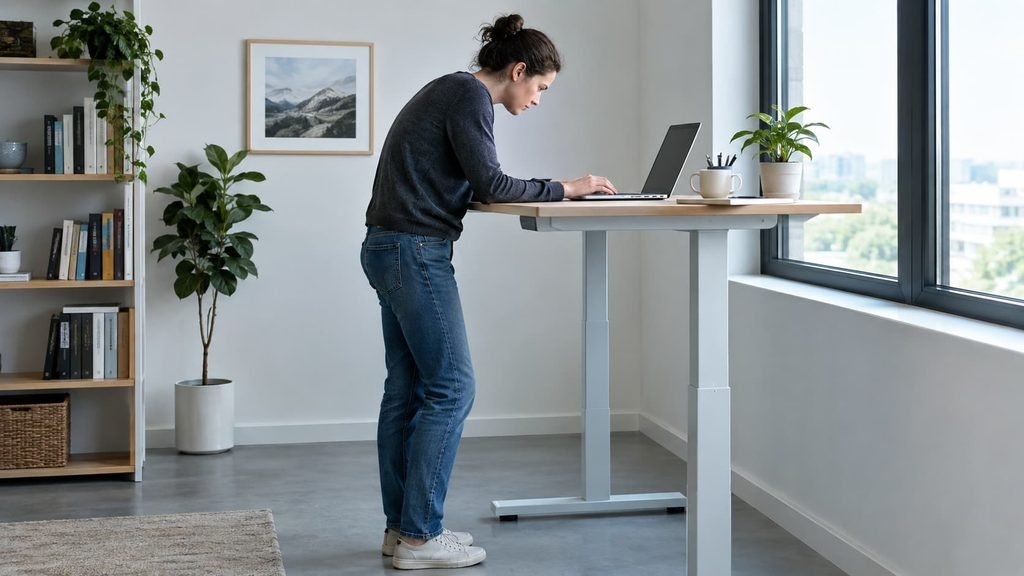
A second common misconception is assuming a standing desk automatically improves posture without any conscious effort. A standing desk provides the option for better posture, but genuinely poor standing posture – slouching, uneven weight distribution – can develop just as easily as poor sitting posture can, meaning the desk itself doesn’t guarantee better posture without some genuine attention to how you’re actually standing.
Questions readers keep asking
Is a standing desk genuinely healthier than a regular desk if I rarely use the standing function?
Not meaningfully – the health benefit specifically depends on actually alternating position regularly, so a standing desk left permanently in the sitting position provides essentially the same experience as a regular desk while having cost considerably more.
How often should I actually stand if I get a standing desk?
This varies by individual comfort and work pattern, but alternating every thirty to sixty minutes is a reasonable general starting point many people find comfortable, adjusting based on your own genuine physical response rather than following a rigid universal schedule.
Can I try a standing desk without committing to the full cost upfront?
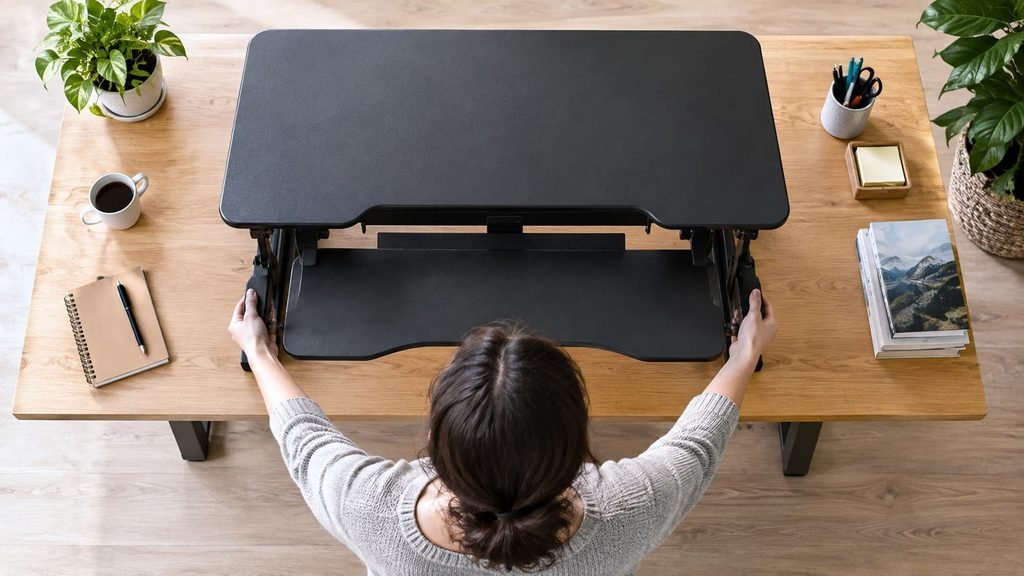
Yes, a desk converter that sits on top of an existing regular desk offers a lower-cost way to genuinely test whether you’ll actually use the standing function regularly, before committing to a full standing desk if it proves genuinely worthwhile for your specific situation.
Do standing desks require any special flooring or mat?
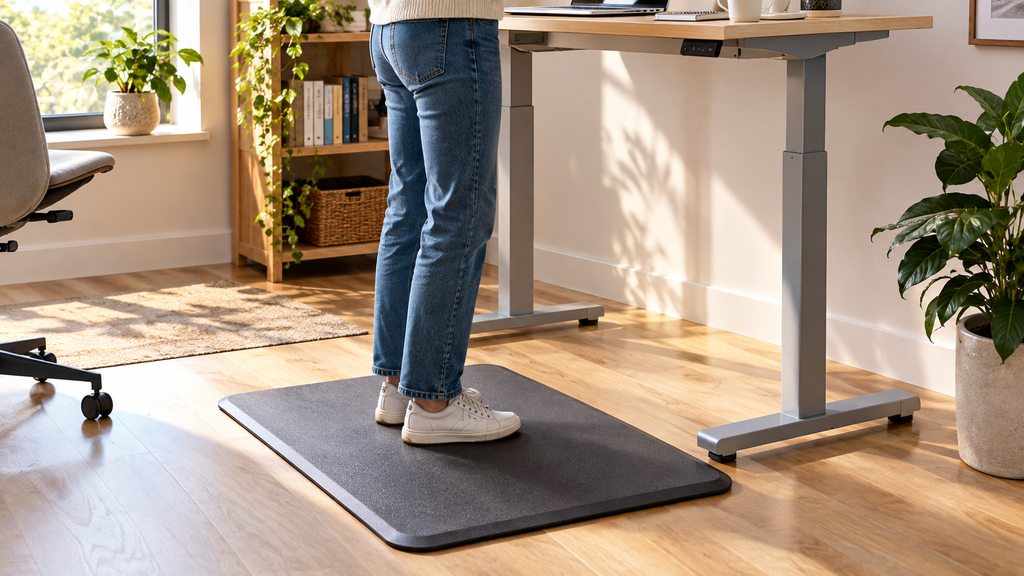
A cushioned anti-fatigue mat is commonly recommended and genuinely helps reduce foot and leg discomfort during standing periods, though it’s not strictly required – some people find standing on regular flooring for their typical standing intervals perfectly comfortable without one, particularly if those intervals are relatively short.
Yes, a desk converter that sits on top of an existing regular desk offers a lower-cost way to genuinely test whether you’ll actually use the standing function regularly, before committing to a full standing desk if it proves genuinely worthwhile for your specific situation.