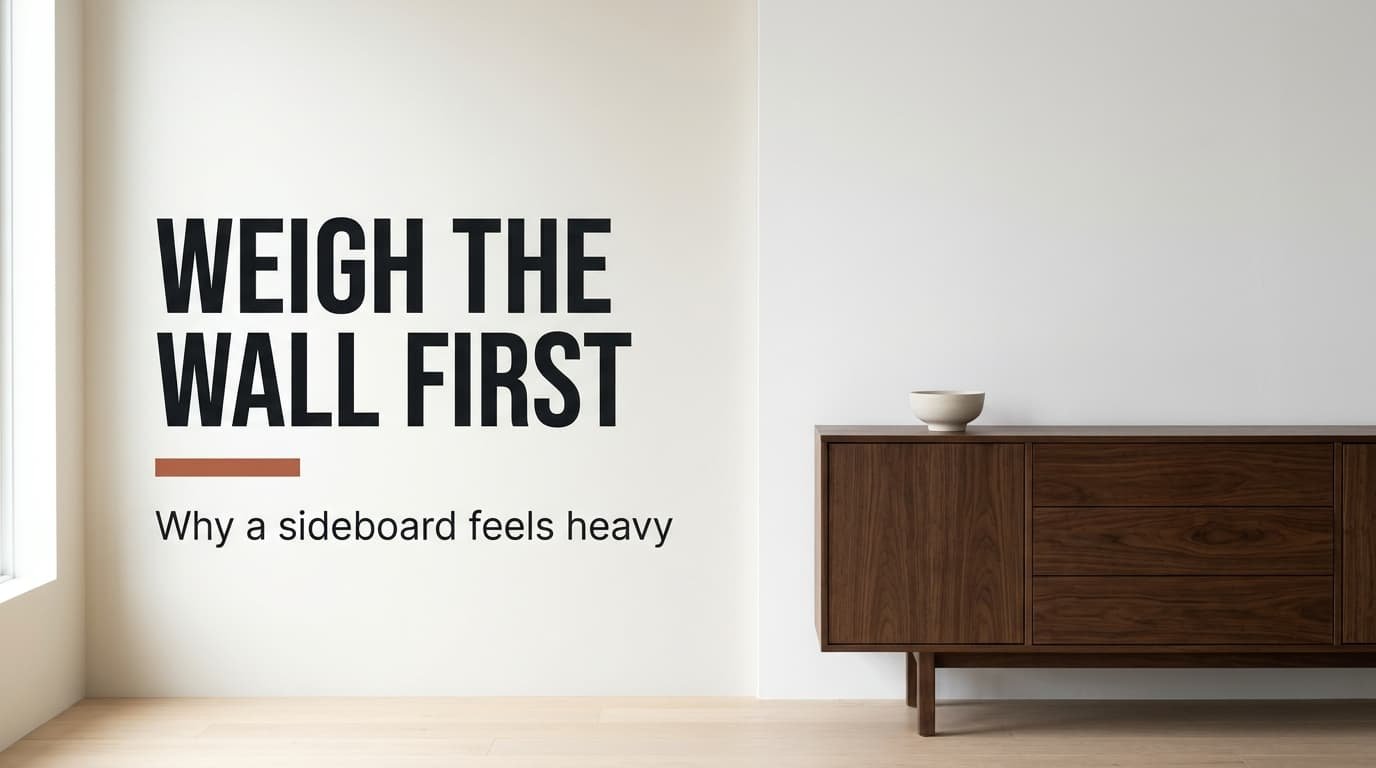
Does the sideboard look too heavy in your dining room even though the numbers say it fits? A room of 340 × 420 cm has space for a unit 180 cm long, and the tape measure agrees. Yet the eye reads a dark block pressing on the wall, and every meal confirms the impression. You may even have wondered whether the piece was a mistake. This page shows where the weight comes from, then walks through a quick visual check and three measurable faults. Each fault has a fix that runs from free to bought, and the page names the repair that isn’t worth doing.
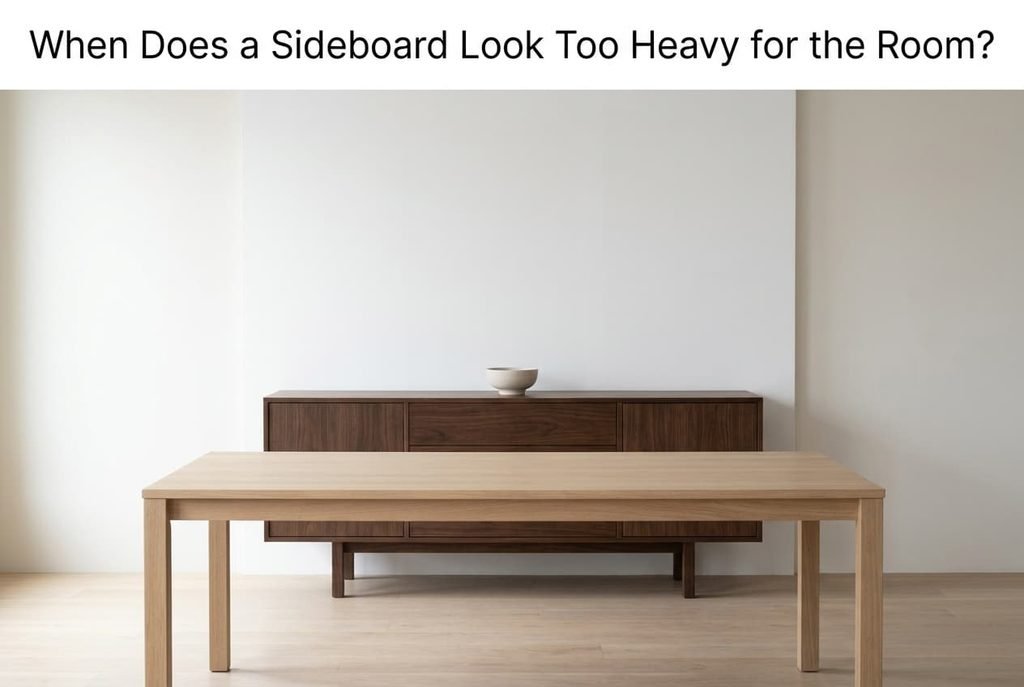
When Does a Sideboard Look Too Heavy for the Room?
Weight is something the eye adds up, and kilograms barely come into it. The eye weighs how much of the wall the piece covers, then how far its colour sits from the wall, then where it stands. Take a walnut sideboard 180 cm wide and 85 cm high on a 340 cm wall of white. It covers 53% of the width and makes a dark band across the bottom third of the wall, with 165 cm of bare plaster above it. Three numbers sum up the problem: a 53% share, a tone gap of six steps and a bare strip 165 cm high.
Most owners blame the piece, yet the heaviness usually comes from how the sideboard relates to the wall around it. That’s why the same unit looks calm in a showroom and dense at home. A showroom has high ceilings and wide floors, and your wall has neither.
The misdiagnosis costs money. People sell a good sideboard and buy a narrower one. The room still feels bottom-heavy, because the contrast hasn’t changed, and neither has the bare wall above.
Diagnose the relationship first, and the piece itself may need nothing.
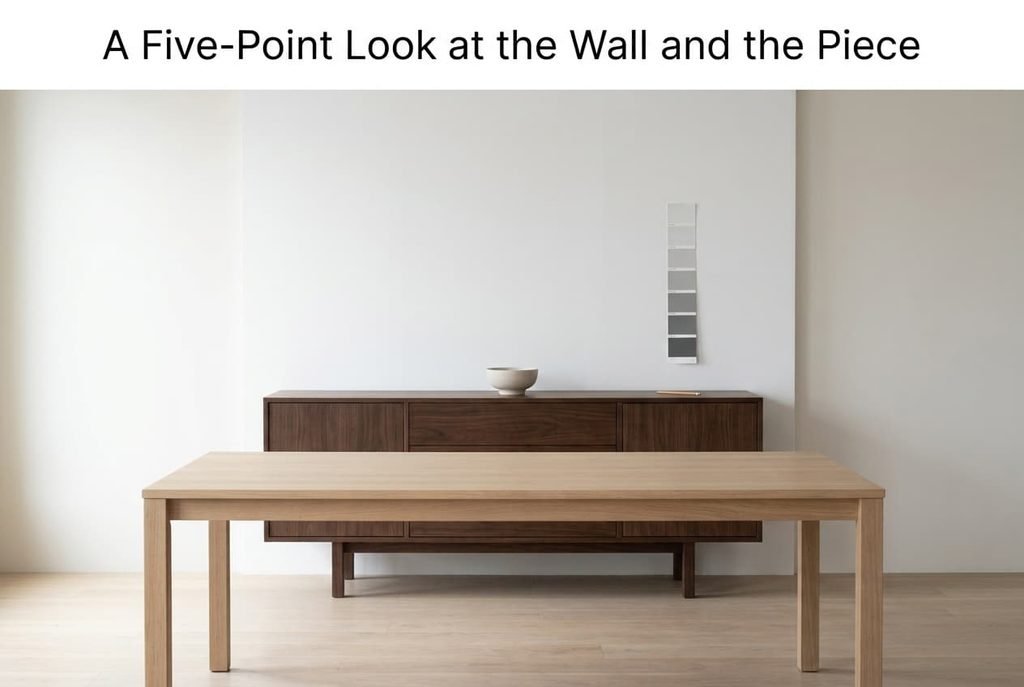
A Five-Point Look at the Wall and the Piece
The five checks below answer one question: what makes the sideboard look too heavy in this particular room? Bring a pencil and a strip of paint chart to the doorway. A heavy-looking sideboard usually fails two or three of the checks, rarely all five.
1. Glance at the room from the door. If your eye goes first to the sideboard, it has won the contest for attention, and the remaining checks explain why.
2. Compare width with width: 180 cm of sideboard against 340 cm of wall gives 53%. Past roughly half, the unit turns into something like a section of wall.
3. Rate the wood and the plaster from 1 (palest) to 9 (darkest) using the chart strip. Five steps or more between them gives a hard edge.
4. Measure the clear wall at each end. A difference above 20 cm means the unit sits to one side, and the lines of the room then lead the eye elsewhere.
5. Check the wall above. With nothing hanging up to 150 cm, the unit turns into a dark block beneath a blank sheet.
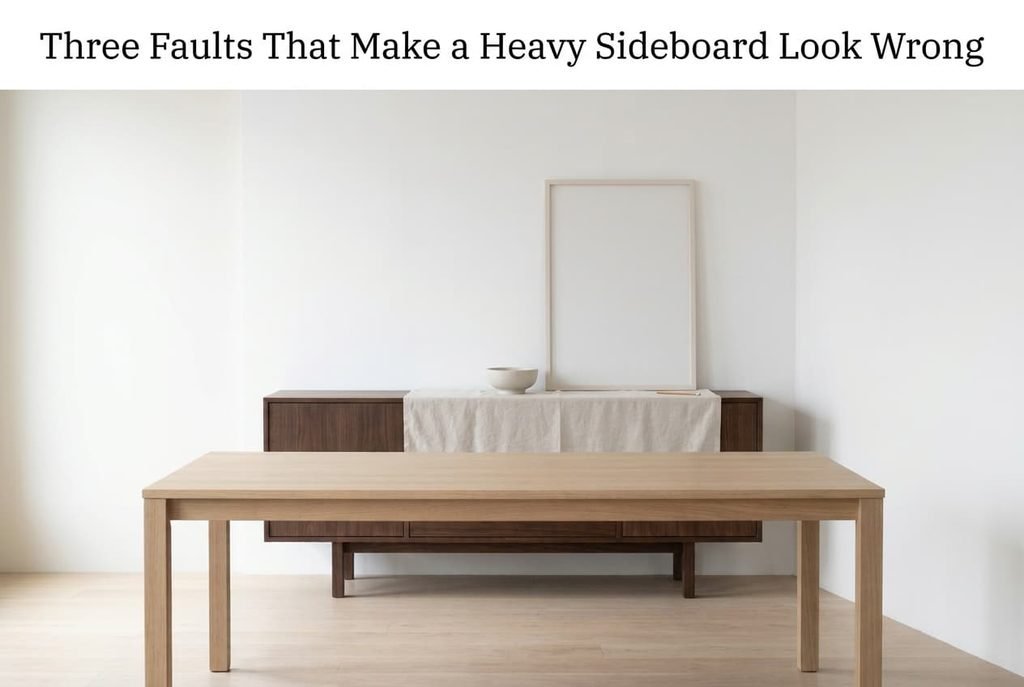
Three Faults That Make a Heavy Sideboard Look Wrong
The unit is too wide for its wall. It covers 53% of 340 cm, so it dominates the wall. Begin by sliding it 30 cm toward the middle and clearing the top, which makes the block feel shorter. Clearing the top matters because a row of tall objects adds height to the dark band, and the band is what the eye measures. Next, give it company, such as a plant stand beside it, so it no longer fills the wall alone. A companion 40 cm wide splits the wall into two masses, and the eye sees a composition rather than one slab. Buying comes last: a lower unit of 150 cm brings the share down to 44%. That route is the dearest, and it works least, so try the first two moves before it.
The wood sits too dark against the plaster. A gap of six tone steps makes a hard edge, and a hard edge looks heavy. The free move is to cover the top with pale linen and a pale ceramic bowl, so the darkest area shrinks. Linen works because it swaps the darkest 180 × 45 cm surface for a pale one. That surface is what you meet first from a seat at the table. Rearranging helps next: hang a large pale frame above. It lifts the eye and shares out the contrast. If you want to spend, a tin of mid-tone paint for the wall behind the unit cuts the gap to three steps for very little money. The paint needn’t cover the whole wall. A panel 200 cm wide behind the unit is enough, and it can be painted over when you leave.
The unit sits wrong in the room. It hugs the corner, 15 cm from the side wall, with nothing above it. Slide it until the gaps at both ends match within 10 cm, and that costs nothing. An off-centre unit reads as an accident, and the eye keeps returning to the gap that looks too big. Then centre a mirror or picture above it at 150 cm, which gives the wall a focal point. The purchase is one slim wall lamp, which turns the empty strip into a feature and lights the wood. Choose a shade about 30 cm across, so that the glow lands on the wall and not on the ceiling.
How to Choose a Piece So the Weight Stays Light
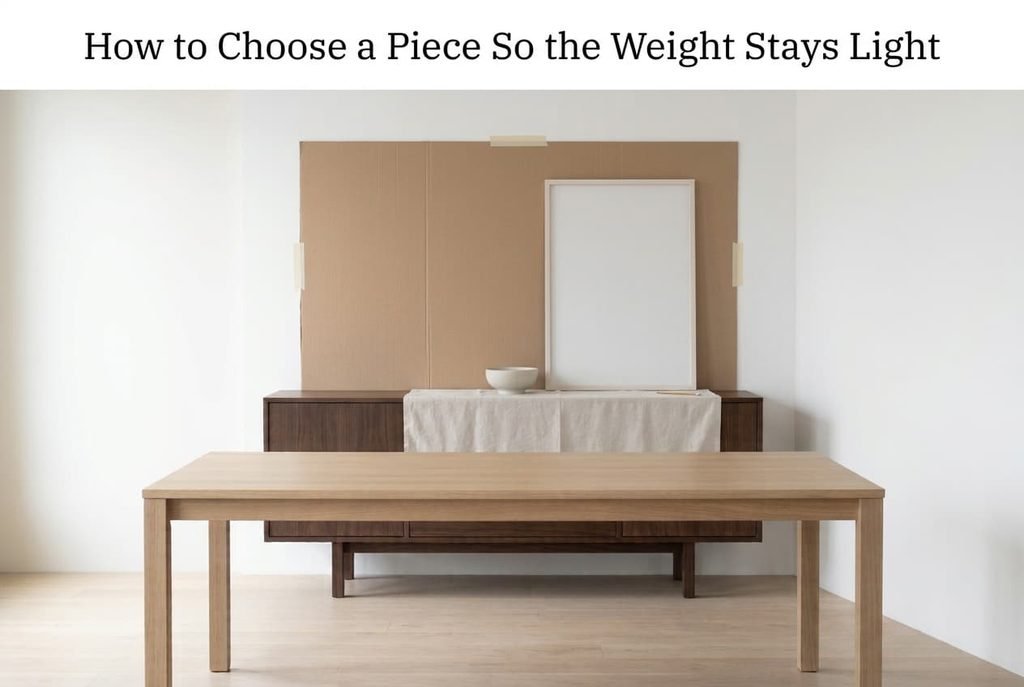
Prevention is cheaper than repair. Before you buy, ask a plain question: would the sideboard look too heavy on your actual wall? Cut a cardboard template of its front, 180 × 85 cm, and tape it up. From the doorway, judge it over a whole day, and if the template covers more than half the wall, choose a shorter unit. A second item beside it can also split the mass.
Check the tone as well. A piece within three steps of the wall melts into the room, whereas one five steps darker needs something pale above it. Compare two candidates by the same two measures, the share of wall plus the tone gap, since the lower number on both usually wins.
Leave a 30 cm margin of wall at both ends, and plan what hangs above before the sideboard arrives.
The Fix That Isn’t Worth Doing
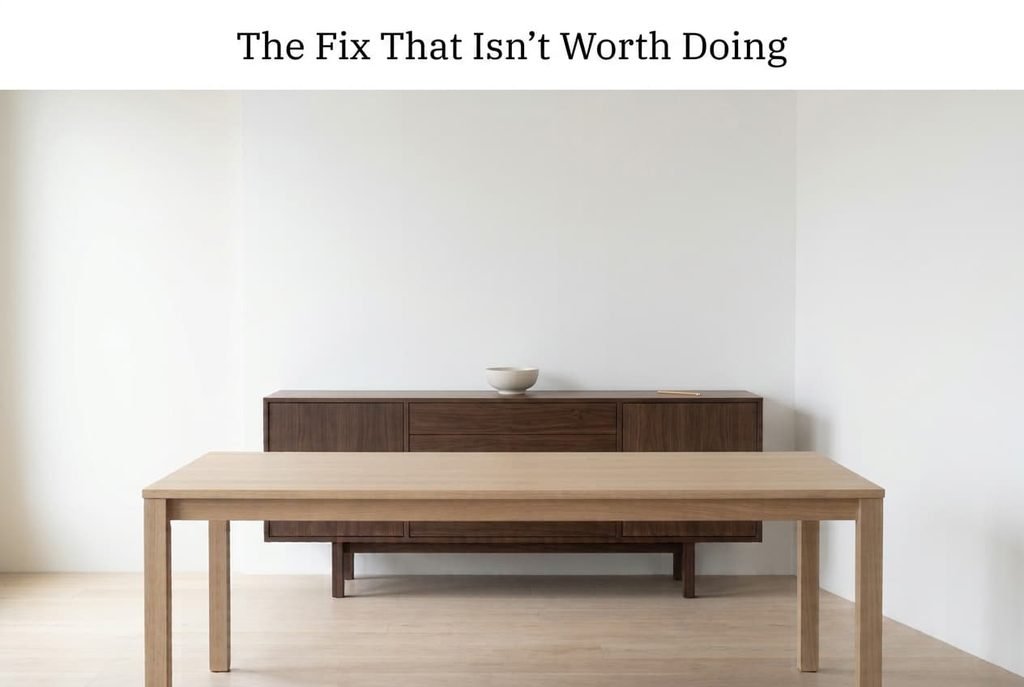
Many owners reach for swapping the sideboard for a narrower one, and it’s the least effective option. If the cause is contrast or position, a smaller unit carries the same faults in a smaller package. It also costs the most, and you lose a piece that was never the problem. A narrower unit may even look worse, because the empty wall on both sides grows. A heavy rug under the unit adds a second dark patch to the same view, so it makes the weight feel doubled.
Painting the walnut white falls into the same trap. It lowers the contrast, yet it also removes the grain that made the piece worth owning, and the wall above still sits empty. Dark wood is an asset when the wall around it is ready for it.
Fix the relationship and keep the piece. The wall nearly always has more to say than the furniture does. Measure the share of the wall it covers. Then measure the tone gap and the empty strip above, and change whichever fails first. Most rooms need one move from the free list, perhaps two. Put any money into paint or a frame before a new unit, because those change the relationship for far less money. Then look once more from the doorway and ask again. Does the sideboard look too heavy, or has the dark block settled into the wall?
Questions Readers Keep Asking
What usually makes the unit look heavy?
Width against the wall is the commonest cause. Above about half the wall’s width, the piece begins to merge with the wall. A dark tone against pale plaster adds to the effect, and an empty wall above makes the block feel low and dense.
What is the quickest fix?
Slide the unit toward the middle and clear its top, then hang one pale frame above it. Both changes take minutes and cost almost nothing. They shrink the darkest area and give the eye something higher to settle on, which is usually enough to lift the weight.
Can it be fixed without renovation?
Yes. Sliding the unit and hanging a frame need no building work. A tin of mid-tone paint behind it is the biggest step you’ll need, and a rented room often allows that. Replacing the sideboard is rarely required, and you’d only consider it after every cheaper move has failed.